



Shedding the light on Germany’s unique 50+1 ownership model

Football in Germany enjoys widespread popularity due to its top-tier play, the highest average attendances in world football, affordable ticket prices, and a vibrant fan culture. A significant factor contributing to this is the 50+1 ownership rule.

Borussia Dortmund CEO Hans-Joachim Watzke famously once said in 2016 via the Bundesliga website:

“The German spectator traditionally has close ties with his club, and if he gets the feeling that he’s no longer regarded as a fan but instead as a customer, we’ll have a problem.”

The 50+1 rule safeguards this – the rule refers to the requirements that club members hold 50 percent plus one additional vote of the voting rights to ensure a majority. Essentially, it means that clubs, and consequently, the fans retain the final say in their management, rather than external influences or investors.

According to the German Football League (DFL) regulations, football clubs are prohibited from participating in the Bundesliga or the second division if external investors hold the majority control.

Essentially, this means that private or commercial investors cannot take control of clubs and implement measures prioritising profit over supporters’ interests. The regulation protects against irresponsible owners and preserves the democratic traditions of German clubs.

Historically, German football clubs were non-profit institutions managed by member associations, and private ownerships was entirely prohibited until 1998. The introduction of the 50+1 rule that year helps explain why debts and wages are kept in check and why ticket prices remain significantly lower compared to other major European leagues.

It should be noted that clubs have adapted to these changes in different ways, resulting in various forms of member ownership. Many Bundesliga teams are legally structured as limited or joint-stock companies, established as subsidiaries of the main club, which often includes other sports departments and/or women’s teams, to manage the men’s first team. Some of these companies are even publicly traded. Clubs in leagues below the DFL-regulated Bundesliga and Bundesliga 2 also follow similar approaches, partly to ensure compliance in the event of promotion.

Using Bayern Munich as an example, the shareholders of the men’s first team (FC Bayern München AG) are the members’ club (FC Bayern München e.V. – 75%), Adidas (8.3%), Allianz (8.3%) and Audi (8.3%). With Bayern’s now 300,000+ members being the largest membership of any sports club in the world, it is not difficult to comprehend why they are one of the well structured football clubs in the world, by primarily being debt-free which German clubs are.

In Germany, discussions of financial issues or Financial Fair Play violations are virtually non-existent, whereas news of economic struggles and FFP sanctions is common in other European leagues.

German football fans have turned their passion for football and for their clubs into power and forcing change whenever they are not content with a decision such as when the DFB confirmed that Bundesliga football would be televised on Monday night, fans boycotted the initial Monday night matches, it was then cancelled by the DFB.

While private investment could elevate German football to new heights, the fans are opposed to it.

It’s the fans and their principles that make football in Germany so special. The 50+1 rule may appear outdated in the modern era, but it’s a model that many fans have advocated for in other places. Football is for the fans, and in Germany, things are as they should be.

The 50+1 rule would greatly benefit the decisions and the structure of football in the Isuzu UTE A-League men’s and Liberty A-League women’s with all the controversy that has plagued the game over the years. If there is transparency and communication between member fans and the clubs hierarchy, it would put the priority of fans to the top as they are the most important aspect of where the revenue comes from and would improve the decision making process.

For members of an A-League team, they are essentially ticket holders with some additional rights and privileges that non-members lack. However, these do not involve any participation in the club’s management.

From the football landscape in Australia where the fans are often unhappy with the relationship between them and their club’s ownership, German football seems to have got that blend working positively.

Previous ArticleNext Article

Brisbane Roar partners with PlanPay for 2026/27

TWELVE months ago, as the 2025/26 A-League Men’s season kicked off, Brisbane Roar’s active supporter group surged back to life.

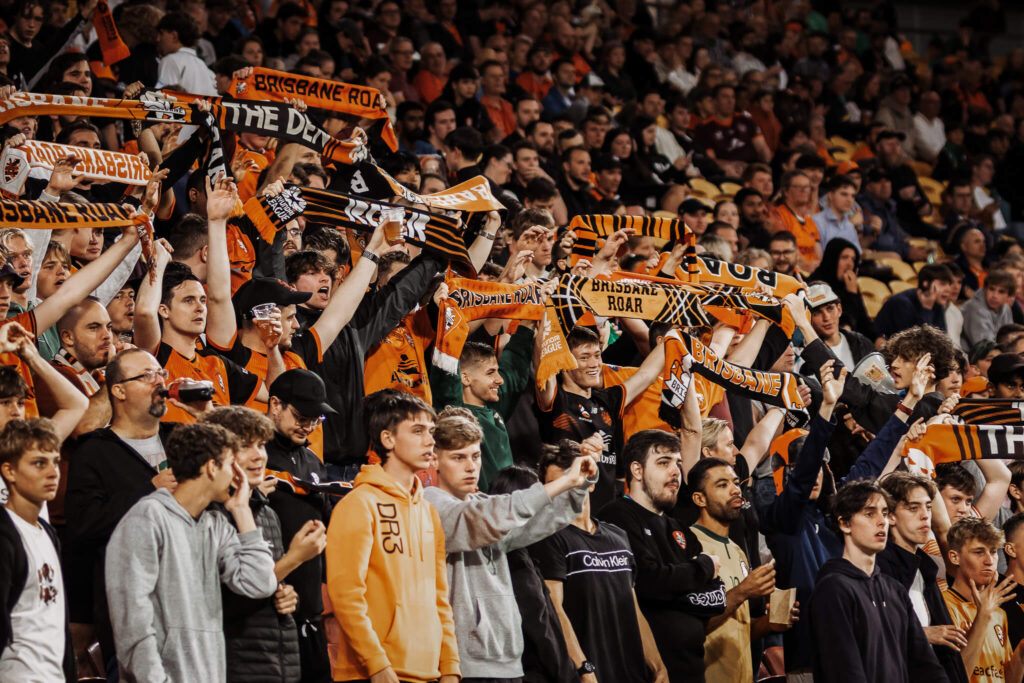
‘The Den’ – as they’re known – had been a famous feature of the Roar’s Championship-winning glory years. Now heavily re-populated by a younger wave of supporters, their enthusiasm through early-season results against Macarthur, Melbourne City and Newcastle made them, momentarily, the talk of the A-League.

The Roar’s administration understand what a crucial role their supporters play in the health of the club – be they the new generation at the front of The Den, or the loyalists who have ridden the ups and downs of their 21 A-League seasons.

So, they have partnered with Australian-founded company PlanPay, to soften the financial barriers and increase fiscal flexibility for those wanting to cheer on the Roar’s men’s and women’s sides, helping to get them in the stands as early as possible.

‘Membership is the most important thing we offer, but given the current cost of living crisis, it’s also the hardest ask at the moment,’ Roar’s Head of Public Relations and Communications, Joseph Esposito, told Soccerscene.

‘When you’re targeting families of four, or youngsters, a full membership can be a big hit in one go. It’s important to be realistic, so having an option like PlanPay lets members spread that cost over time with no interest and no credit check.’

‘It also means we can get people to commit to membership earlier, to come on board and be part of something. It works on both ends, allowing us to offer an earlier price point for potential members – and most importantly, we’re not asking them to spend beyond their means.’

One of PlanPay’s key advantages is its ability to align payment schedules with how Australians actually earn their income.

According to Australian Bureau of Statistics payroll data from March 2024, approximately 86% of Australian employees are paid weekly or fortnightly, with 33% receiving weekly wages and 53% paid fortnightly. In comparison, just 12% are paid monthly.

Despite this, many traditional membership payment options are structured around upfront or monthly payments, which don’t necessarily align with household cash flow.

By offering weekly, fortnightly or monthly instalments, PlanPay allows Roar supporters to choose a payment schedule that suits their payday and household budget, making football memberships more manageable without relying on credit, interest or debt.

The partnership is also timely in a local sense; the ABS has also found sports participation costs in Brisbane rose 9.6% in the year to June 2025. Furthermore, as of March 2026, 41% of Australians had used a BNPL service in the past six months (Finder).

‘From our end, it’s essentially a bit like a modern layby. You choose your membership, pay a small deposit, and then pay the rest in instalments on the schedule that suits the individual,’ said Esposito.

‘Once the first payment is made your membership is fully active. We have previously had monthly payments to ease the pinch, but opening it up to have fortnightly or weekly options, more often makes it a whole lot easier to have people in.’

PlanPay was founded in Sydney in 2022 as a digitised lay-by for travel, and has since moved into ticketing, sports, and live events alongside expansion into the US and UK.

The company is now based in Charlotte, North Carolina, while maintaining its engineering, customer support and onboarding presence in Australia. PlanPay continues to partner with merchants globally to bring another way to pay, to more fans, Brian Learst, Chairman of PlanPay said:

‘We are thrilled to help Brisbane Roar FC lower the total cost of attending their matches by providing fans with debt-free, interest-free flexible payment plans.’

‘PlanPay allows fans to purchase the best seats early and customise their payment size and timing.’


Both the Roar’s men’s and women’s side present as fascinating prospects this season.

Newly-appointed women’s manager Johnathan Clemente is the youngest manager in A-Leagues history, with his charges looking to better last season’s impressive semi-final finish.

Meanwhile, the men’s outfit kicked off their second season under Michael Valkanis on Friday at Suncorp Stadium with an impressive win over Perth Glory, and will again rely on the energy and passion of those in the stands to drive their success both on and off the field.

‘Our fans are not just the present, but the future. In that regard, it’s not about getting them to spend beyond their means; it’s about allowing them to get in earlier, and in an easier way,’ continued Esposito.

‘Lots of younger fans are students, or they’re early in their working lives. Being realistic about it, paying a full season membership can sometimes be a real barrier, especially if they’re living out of home, paying rent for the first time.

‘Having PlanPay allows them to have the option that isn’t acquiring interest or debt, makes it easier for them to budget, and most importantly allows them to do what they do, without spending beyond their means.’

Make Membership More Accessible for Your Fans — Talk to PlanPay

Sydney Derby viewership revealed as Network 10 back football on primary channel

Friday night’s opening fixture of the 2026/27 A-League Men’s season reached reached an audience of 434,000 people nationally across the free-to-air 10 Network. Less than a week on from the 207,000 that watched the Australia Cup final, it represents further reason to be cautiously optimistic about the season ahead.

Network 10 broadcast the Sydney Derby on it’s primary station, as opposed to last season’s airing on 10 Drama. The shift gives the opening match of the season a more prominent place on free-to-air television; whether the network continues to select choice matches to enjoy this status remains to be seen.

The figures show a positive trend in comparison to January’s meeting of the same sides, which attracted total broadcast audience of 114,000 and a national reach of 258,000 on Channel 10. Both matches faced fierce TV competition with January’s match rivalling the Australian Open on Nine and the 2026/2027 opener with the 2026 Men’s & Women’s Rugby League World Cup airing matches across the Seven Network on the same night.

The opening-round figure offers an early indication of the audience the competition can attract. Future rounds will show whether the A-League can maintain that reach across the season. The league will also look to convert that television exposure into sustained interest in its clubs and matches. Strong viewing figures can help strengthen the case for football in the Australian sporting market.

For now, the 434,000 national audience alongside strong attendance at the Australia Cup final provides a positive starting point for the 2026/27 campaign. The next challenge is to build on that audience as the season progresses.

Most Popular Topics

Editor Picks

Send this to a friend