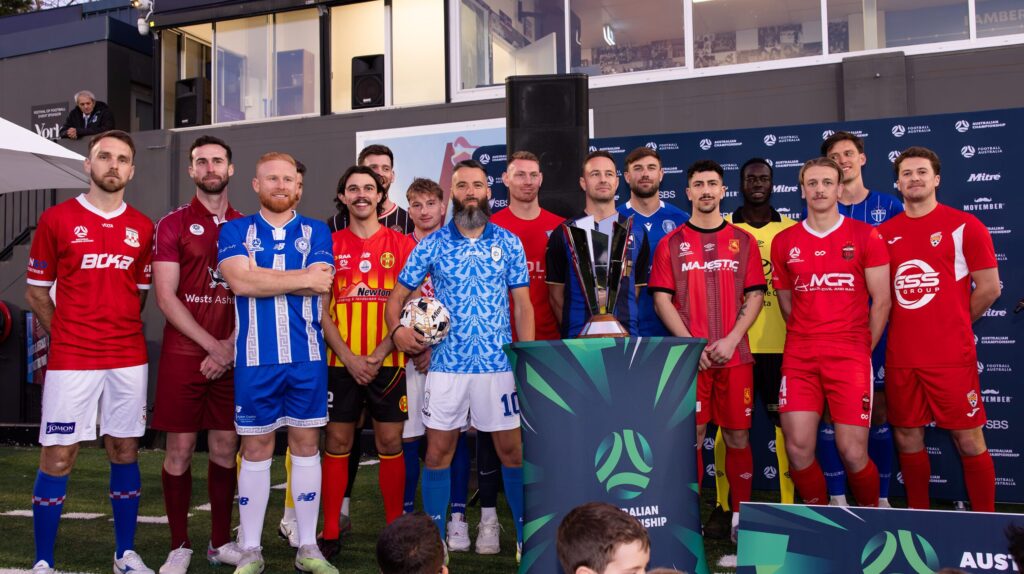


The A-League may be independent, but that won’t get in the way of the big plans for a second division with promotion and relegation.
While it may seem like a barrier, Australian Association of Football Clubs (AAFC) chairman Nick Galatas is an optimist.
He has recently spoken about how these changes should be considered, despite the A-League being independent. There’s no reason why it shouldn’t be put on the table, with a revamp for Australian soccer not outside the realms of possibility.
“We have no reason to believe that the A-League owners will do anything other than support what we’re trying to do with a national second division,” Galatas said.
“We think it will help the whole game. It will create great excitement throughout the country when it’s formed.
“We see what the A-League is doing and we see that they are trying to raise the profile of their competition and of football and we believe that what we are doing will assist that and help to expand the game throughout Australia.
“We see a national second division as a necessary condition for promotion and relegation because we need to fill the gap that currently exists between the A-League and NPL.”
Having been involved in the game during the transition from the old National Soccer League to the A-League, Galatas believes he has a new model will help positively shape the future of soccer.
“No doubt many of our constituents will feel there was a time when they were left behind as the focus shifted on the professional side of the game at A-League level at the exclusion of others,” he said.
“But I’m seeing a lot of goodwill and I think everyone is starting to realise that the game as a whole benefit when everyone is involved and invested.
“Whether you’re an A-League club or a team below that with potential to grow and reach its potential, why shouldn’t that be welcomed?”
Since the AAFC has been formed, it’s made massive inroads for the potential of introducing a national second division, which came to light in a meeting between Victorian clubs.
“We always thought that the clubs would bind together because they have a common interest and the environment they were operating in has been difficult for them,” he said.
“I guess I’m pleasantly surprised with the level of commitment over a long period between so many different clubs from all across Australia.
“There are very, very different types of clubs across Australia and the fact that we’ve been able to keep everyone together, informed and moving in the same direction has been great.
“We were new at the time the old board’s tenure was coming to an end.
“I guess we weren’t on the landscape and we were a new organisation and there were a lot of pressures on that board at that time, so perhaps we were last on their mind.
“But we were still invited by them to all the critical meetings in which FIFA was involved so ultimately they accepted us and collaborated with us even before the new board was elected.
“We’re working very well with the new board as well and they’ve been very accepting of us and in particular Chris Nikou and Remo Nogarotto, which has been very encouraging.”
Galatas has had talks with the FFA board, the PFA and other related stakeholders, with the plan being a new second division should come into effect by the 2021-22 season.
“When we started we really sought to have a voice and be recognised on the congress, which we’ve made progress on,” he said.
“That’s obviously opened up the discussions around a second division and conducting and completing a national review of the NPL, so we’ve worked through some of the big-ticket items, I guess now the focus is on doing what we’re here to do and work with our club members and the issues they face from state to state.
“We’re here to make sure the NPL clubs are properly represented at every level, including at the FFA level and making sure their concerns are addressed through the FFA and the state federations.
“In Victoria, we’ve had a lot to do with the new NPL structure there, we’ve liaised with our clubs to liaise with Football Victoria to ensure it’s implemented as smoothly as possible.
“We’re getting involved in state-based issues and each director has an eye on their state.
“We believe a national second division will help in this area because it will help develop stronger clubs and unleash new investment in the game at this level.
“It will encourage greater participation and supporters which will lead to better facilities.
“As we develop as an organisation we’ve been able to put people in place who assist clubs in providing know-how and IP and general assistance we share amongst our clubs to help show them how to access grants and investment from local, state and federal government, the private sector as well as sporting trusts.
“It’s so important to our game because it’s lasting and can lead to exponential growth.”
Originally published as Second division dream still alive