The importance of the professional football coach in Australia

Bobby Walker was the first professional football coach appointed in Australia when he took the helm at the Gladesville-Ryde club in 1939. Walker had played professionally in Scotland for Motherwell FC and Falkirk FC.

He was the first of many from the British Isles to venture to the footballing outpost that was Australia for much of the 20th century. The contributions that he and many others made played an important role in the growth and development of the game.

Sadly, the notion of fully professional coaches mentoring young players in their formative years has been more of a dream than a reality in Australian football. Enthusiastic parents often took on official duties at a grass roots level and the number of officially qualified coaches in schools has traditionally been low.

The reality for players blessed with talent not deemed worthy of representative level play; those perhaps destined to bloom and flourish as a player a little later in life, is that the influence of a professional to guide and nourish their football development is rarely a reality.

In recent times, parents keen to encourage and fast track their child’s development have sought other avenues. As a result, the unregulated and often absurdly expensive academy system has become a necessary evil for parents of talented and enthusiastic young footballers.

It is a somewhat surprising reality that it took nearly 80 years from the time of Walker’s appointment for a fully professional coaches association to appear. It is long overdue. There is a current and urgent need to ensure that the hundreds of thousands of young people playing football in Australia are given qualified and professional instruction.

Conjointly, immediate action is required to reform/rewrite the National Curriculum which has proven nothing but a failure.

With an intention to represent, advocate, develop and support professional coaches, Football Coaches Association (FCA) will play a key role in addressing such issues.

The association’s work extends beyond the obvious need to continually improve coaching standards in Australia. It is also focused on providing opportunities for professional and community based coaches to contribute to Australia’s football narrative.

As an extension of both a raising of the bar in terms of professional standards and providing a supportive, community based and inclusive environment for all coaches involved in the game, FCA also aims to enhance the reputation of Australian football and its coaches on the world stage.

As we speak, former Socceroo manager Ange Postecoglou stands within a handful of wins and just a few weeks of becoming Australia’s most successful coaching export. Should Yokohama F.Marinos manage to seal the deal over the final month of the J-League season, his achievement would be considerable and well deserved.

Postecoglou forms part of a group of Australian coaches who have dominated the top flight of domestic football since the inception of the A-League. Alongside Socceroo and Olyroo boss Graham Arnold, current Perth manager Tony Popovic and former Victory coach Kevin Muscat, Postecoglou completes an impressive quartet.

As a collective, the four men possess six A-League championships, countless grand final appearances and a staggering seven premierships. Their sustained success confirms the importance and value of a proven coach. In spite of playing personnel changes, injury concerns or absences due to international duty, their message always remained consistent, firm and effective.

Now, Western United’s Mark Rudan and Sydney FC’s Steve Corica loom as the new generation of Australian coaches, yet with only Popovic employed on the domestic scene, the stocks do look a little thin elsewhere.

It is potentially where Australian football is slightly off the mark when it comes to player development. Rather than mad capped international searches to find the right visa player or marquee man, A-League and NPL clubs would be better served investing more heavily in the person they ultimately choose to mentor their playing squad.

Acquiring the services of an elite international coach would do far more for young Australian players seeking to learn and develop their footballing nous.

Playing professionally alongside an experienced ex-La Liga or Bundesliga journeyman will no doubt count for something. However, young players like Riley McGree, Elvis Kamsoba and Al Hassan Toure will benefit far more from time spent under a truly world class manager than mingling with an ageing veteran merely visiting our shores.

Postecoglou, Arnold and Popovic have all had a taste of coaching abroad and our best minds will now always attract Asian Confederation interest. What remains on their departure will always be young and developing coaches, coaching young and developing players.

Redressing that cycle is vital and something within which the FCA can play a key role; both in improving standards and enunciating the importance of the coach at all levels of football.

Previous ArticleNext Article

The Young Socceroos exposed one of Australian football’s biggest problems

Australian football has spent years trying to create a clearer structure for the game.

But one question keeps resurfacing: who is actually responsible when the interests of Australian football collide?

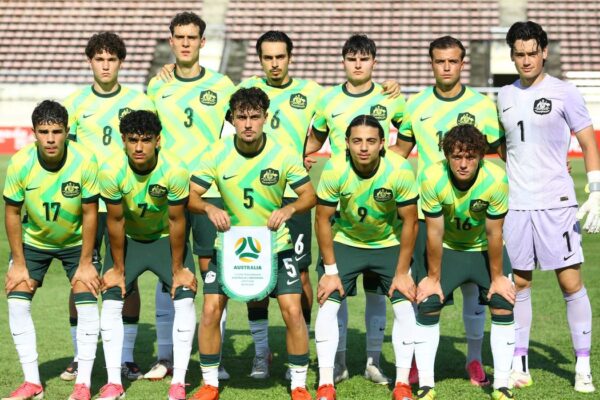
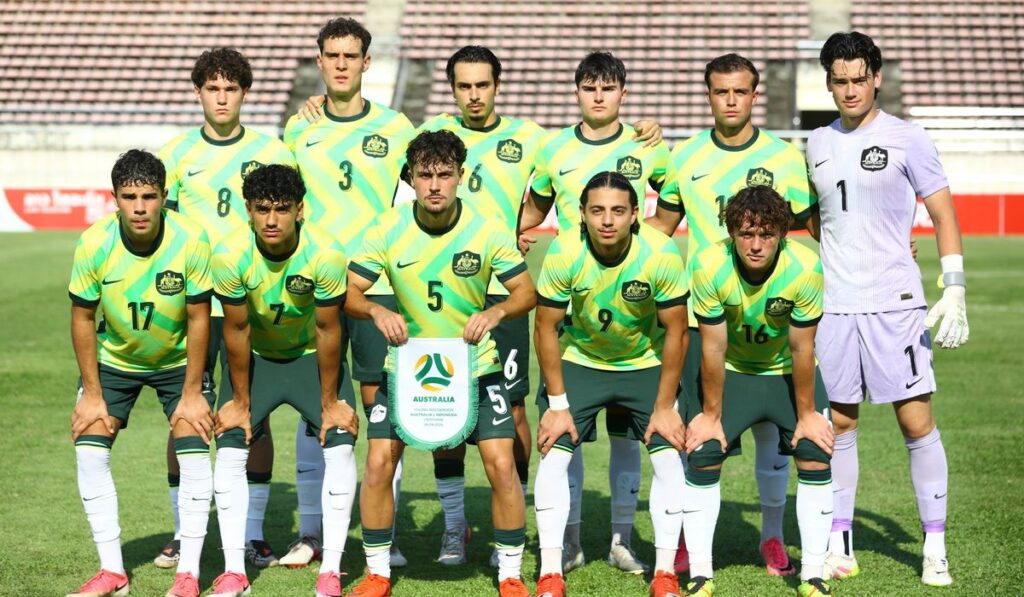
The Young Socceroos failing to qualify for the 2027 AFC U20 Asian Cup is the latest example.

Australia finished third in its qualification group after a 2-0 defeat to Indonesia, failing to qualify for a tournament it won in 2025.

The result itself was disappointing. But the circumstances around the squad selection were arguably more so.

Several A-League players were unavailable because their clubs did not release them for the qualification campaign. Melbourne City’s Lawrence Wong and Medin Memeti and Adelaide United’s Amlani Tatu were among those affected.

The reason is straightforward. The U20 qualification tournament fell outside a FIFA international window, meaning clubs were not obliged to release players. A previous agreement between Football Australia and A-League clubs had allowed national teams to select domestic players outside those windows, but that arrangement expired.

That leaves a much bigger question than whether three players should have been available.

Why was there not a structure in place that could resolve this conflict before it became a problem?

One game, multiple priorities

The answer is partly structural.

Football Australia is responsible for the national teams and the broader national framework. The APL operates and commercialises the A-Leagues. State federations oversee their own competitions and development structures, while clubs have their own commercial, sporting and player-development priorities. Meanwhile, the PFA represents the players.

Football Australia’s own governance outline acknowledges the unbundling of Football Australia and the APL was completed at the end of 2020, while noting the two organisations still need to collaborate across areas including pathways, community football and national teams.

On paper, that separation makes sense.

In practice, difficulties emerge when the model is tested and conflicts of interest emerge.

A club has an obligation to its competition and its squad. Football Australia has an obligation to its national teams. Players have career considerations, while the APL has commercial and scheduling interests. State bodies have their own competitions and pathways.

None of those interests in isolation are necessarily unreasonable.

The problem comes when they point in different directions.

The cost of fragmentation

This is not the first time the club-versus-country question has reared its head.

The same issue has affected Australia’s youth pathways before. In 2012, then-national technical director Han Berger acknowledged the particular difficulty Australia faces because many young players are overseas and youth international tournaments are often held outside FIFA windows, meaning clubs are not obligated to release their players.

And there is a broader irony here.

Australian football is producing young players good enough to attract serious international interest. A-League clubs are increasingly important development environments, with 15 A-League players included in Australia’s 2025 U20 World Cup squad.

Yet the system seems to struggle coordinating those same players when the national team needs them.

That is not necessarily a club problem.

It is a system problem.

Who gets the final say?

The answer cannot simply be that Football Australia should have more power.

Nor should clubs be expected to sacrifice their own interests whenever national teams come calling.

The real issue is whether Australian football has clearly defined the points at which the interests of the national team, professional clubs and players intersect and importantly, where they take priority.

If it has, those rules need to be understood and consistently applied.

If it hasn’t, this should be the catalyst to fix them.

Because the consequences extend beyond one U20 tournament.

Australia’s youth national teams are part of the country’s player-development pathway. International tournaments provide players with experience, exposure and opportunities to progress. The U20 Asian Cup also serves as a pathway towards the FIFA U20 World Cup.

Missing that pathway matters.

At the same time, A-League clubs are investing in academies, recruiting young players and trying to build sustainable professional businesses. They cannot simply operate as talent suppliers for national teams without considering their own competitive and commercial interests.

That tension is natural, and not going away.

Australian football needs alignment, not another power struggle

The answer may therefore be less about deciding who is in charge and more about establishing who is responsible for what.

Football Australia, the APL, clubs, state federations and the PFA do not need identical objectives.

But they do need a common framework for the moments when those objectives collide.

That could mean clearer player-release agreements, longer-term scheduling coordination and defined mechanisms for resolving disputes before squads are announced.

The alternative is a cycle of arguments.

Clubs blame national team scheduling. National teams point to player availability. Players find themselves caught between employers and country. Fans are left wondering why a supposedly connected football system cannot agree on something as fundamental as making Australia’s best young players available for an international tournament.

That is why the Young Socceroos’ failure to qualify should prompt a bigger conversation than whether three A-League players were released.

Australian football has spent years building separate professional, national and community structures.

The next challenge is making those structures work as one.

Because when nobody has the authority or responsibility to resolve the competing interests, everyone can have a legitimate position and Australian football can still lose.

Has football become too expensive for its own supporters?

Football has never been more valuable.

Broadcast rights continue to generate billions of dollars, commercial partnerships are growing in scale, and clubs are investing heavily in new stadiums, technology and fan experiences. On the surface, the business of football appears to be in excellent health.

But there is a question worth asking.

As clubs continue searching for new revenue streams, are they making it harder for the very people who built the game to remain part of it?

The Rising Cost of Being a Football Fan

Over the past decade, supporting a football club has become increasingly expensive. Ticket prices have risen, particularly at Europe’s biggest clubs; for example, Manchester United have recently increased ticket prices for a fourth consecutive year.

The debate reached a global audience during the 2026 FIFA World Cup. Ticket prices prompted widespread criticism from supporter groups, with concerns over dynamic pricing and the overall cost of attending matches.

For many travelling fans, the cost extended well beyond admission, with flights, accommodation and local transport adding to an already significant financial commitment.

Even national team kits surged in price: Nike’s replica kits for nations such as England, France and Brazil retailed for €110 ($178 AUD), while the official match versions blew out as far as €110 ($260 AUD)

FIFA defended its adoption of the United States’ dynamic pricing model, arguing low prices would lead to inflated secondary market prices, which meant less money going back into football.

Yet the backlash highlighted a growing tension between maximising commercial returns and preserving accessibility for the game’s loyal supporters. Football Supporters Europe released a statement following the release of tickets, describing the prices as a “monumental betrayal to the tradition of the World Cup.”

None of these decisions exist in isolation.

Football clubs face rising operating costs, increasing player wages and growing expectations around facilities, technology and supporter engagement.

Stadium redevelopments, academy investment and player recruitment all require significant financial investment. Finding new sources of revenue has become a commercial necessity rather than a luxury.

Football Clubs Are Becoming Entertainment Businesses

Modern football clubs are no longer operating solely as sporting organisations. Many have evolved into entertainment businesses, with stadiums hosting concerts, corporate events, hospitality experiences and conferences alongside football matches.

From Tottenham Hotspur Stadium to Real Madrid’s redeveloped Santiago Bernabéu, clubs are investing in assets designed to generate income every day of the year, not just on matchday. 

Since moving to Tottenham Hotspur Stadium, matchday revenue has more than doubled over the last ten years and commercial revenue has nearly tripled during that same period

That strategy makes practical business sense.

The concern is whether supporters are gradually becoming customers first and fans second.

Loyalty Isn’t Transactional

Sport has always been different from other forms of entertainment because loyalty is rarely transactional. Supporters do not simply choose another club if prices rise or performances decline.

Many inherit their club through generations, travelling thousands of kilometres and investing countless hours because of an emotional connection that cannot be measured on a balance sheet.

That relationship is one of football’s greatest commercial strengths, but it also creates a responsibility.

Every pricing decision, whether it involves tickets, memberships or merchandise, should consider not only the revenue it generates today but the supporters it may exclude tomorrow.

The Cost of Watching Football

The cost of supporting a club doesn’t end once the final whistle blows. For many supporters, following football now also means paying for access to the game itself.

In Australia, broadcast rights are spread across multiple platforms, meaning fans who want to watch the A-League, Premier League, UEFA competitions and other major European leagues need several subscriptions. 

Individually, each service may represent reasonable value, but collectively they have increased the cost of following football throughout an entire season.

Broadcast Deals Come With Benefits

There is, however, another side to the argument. Broadcast rights are one of football’s biggest revenue streams, funding everything from player wages and production quality to grassroots investment and the continued growth of women’s football.

Broadcasters are paying significant sums for exclusive rights because live sport remains one of the few forms of content capable of attracting large audiences in real time. Without those investments, many competitions would struggle to maintain their current standard both on and off the pitch.

The issue, then, isn’t that football is harder to watch. It’s that following it has become increasingly fragmented. With matches spread across different platforms and services, football may be more accessible than ever, yet actually keeping up with the game can feel more challenging than ever before. 

A supporter shouldn’t need multiple subscriptions simply to follow their club, their national team and Europe’s biggest competitions. As football’s media landscape becomes more complex, convenience risks becoming another cost borne by supporters.

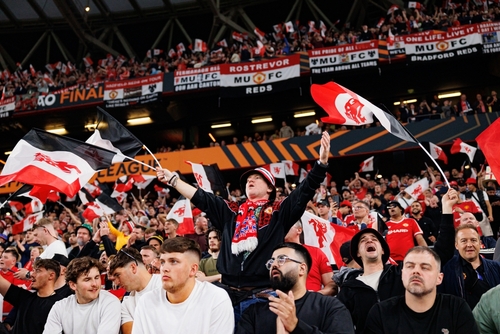
The recent Australia Cup match between South Melbourne and Preston Lions offered a timely reminder of what football looks like when supporters feel connected to their clubs. An official crowd of 6,673 created a vibrant atmosphere that translated brilliantly on television, or free on Football Australia’s YouTube channel.

The spectacle wasn’t driven by premium hospitality or corporate experiences. It was driven by passionate fans filling the stands and creating a classic football environment.

Finding the Balance

The challenge for football is finding the balance between commercial success and supporter accessibility.

Clubs, leagues and governing bodies don’t necessarily need to lower every ticket’s price or abandon lucrative broadcast deals. But they should continue asking whether growth is making the game easier to experience or simply more expensive to follow.

That could mean preserving affordable ticket categories, simplifying access to live broadcasts, investing in community initiatives or ensuring stadiums remain places where families and lifelong supporters feel welcome. Commercial innovation and supporter accessibility do not have to be mutually exclusive.

Football’s commercial growth is essential. Without it, clubs cannot invest in players, facilities or community programmes.

But growth should never come at the expense of accessibility.

The most successful clubs of the future will not simply be those that generate the highest revenues. They will be the ones that continue to fill their stadiums with supporters who feel they belong.

After all, football’s greatest asset has never been its broadcast deals or sponsorship agreements.

It has always been the people in the stands.

Most Popular Topics

Editor Picks

Send this to a friend