


Stan Lazaridis – Taking Perth Back to the Glory Days

In March 2024, Perth Glory made a significant personnel decision by appointing former Socceroo great, Stan Lazaridis, as its Football Director.

After a challenging season in 2023/24 when Glory was placed in administration, the cobwebs were removed with the purchase of the club by the Pelligra Group.

It was none other than Harry Redknapp, the legendary West Ham manager, who witnessed the talents of the flying wingback on a preseason tour Downunder in May, 1995 and immediately penned Lazaridis’ signature.

A distinguished career followed from 1995 to 2006 when he played 260 league matches for West Ham and Birmingham City, while becoming a crowd favourite with his brilliant and penetrating runs out of defence which made even the toughest opponents cringe with fear.

Lazaridis was also a mainstay for the Socceroos, appearing in 60 internationals from 1993-2006 and fulfilling his greatest moment as part of the squad which qualified for the World Cup Finals in West Germany after a 32-year absence.

However, Stan Lazaridis faces a new challenge in his new role at Perth Glory after their rock bottom performance last season.

Nevertheless, if anybody can make it happen, it’s the mild mannered and creative thinker who knows how critical this season is for A-League football in Perth.

In this interview with Roger Sleeman, Stan Lazaridis talks about his new role, the patient rebuilding of the club under the watchful eye of new owner Ross Pelligra and the dawn of a new era for the once great club.

Stan Lazaridis addresses the media as Football Director. (Photo by Paul Kane/Getty Images)

ROGER SLEEMAN

What is your feeling after coming back into the game after an absence of 11 years?

STAN LAZARIDIS

It feels Iike I’m starting all over again when I was a player because I never thought I’d ever get another opportunity again in Perth.

I was almost resigned to this impasse but after meeting the new Board and owners, it just fell into place.

When you’re out of the game you miss it so much and you wonder to yourself how your approach could’ve been different.

I can really thank Marco Bresciano and Vince Grella but also the director, Jason Bon Tempo, who played a major part in my appointment.

It was Bon Tempo who facilitated my introduction to Ross Pelligra and after our first meeting, the new owner remarked it’s almost like I know you well and know all about you.

Significantly, Pelligra is trusting me with his money and granted me the power to achieve the best outcomes for the club.

Marco Bresciano and Stan Lazaridis after the 2-2 draw in the FIFA World Cup Germany 2006 Group F match between Croatia and the Socceroos. (Photo by Robert Cianflone/Getty Images)

R.S.

What is Ross Pelligra’s commitment to the club?

S.L.

He’s a very passionate man and a winner. He started business at a young age when he was pouring concrete at 13, so he earned money the hard way and learned to value it more.

Apart from his investment in real estate, his company owns basketball and ice hockey clubs, but he saw the opportunity to acquire Perth Glory and turn its fortunes around.

Pelligra knows the club’s potential, particularly in light of the success of Tony Popovic at the club and in previous seasons.

Also, he knows how hard it is to beat the team in Perth after you’ve travelled five hours and have to confront that special kind of atmosphere when there’s a full stadium.

R.S.

How hard will it be to restore the wonder days of Perth Glory in the NSL under the ownership of Nick Tanna?

S.L.

You have to go back to why it was successful when it was an honest and entertaining system of play.

The players were heroes which has been lacking and we now have players like Faisal who is being compared to Mohamed Salah and is getting more hits than Taylor Swift.

Adam Bugharia is like an old fashioned Hristo Stoichkov who the fans can identify with and can hit the ball on target from distance with considerable power.

Nathanael Blair, an old fashioned striker, is over 1.9 metres tall and is strong as an ox with speed to boot and the Vietnamese striker Khoa Ngo has the skills of a Maradona.

I firmly believe these players will create great atmosphere this season.

Stan Lazaridis in action for the Socceroos in 2005, during the Australia v Iraq international friendly match. (Photo by Robert Cianflone/Getty Images)

R.S.

How does the club erase the disappointing season of 23/24 in terms of overcoming financial problems and a better place in the A-League?

S.L.

This is why I was brought in and we released 15 players. Everything is new with my team, new owner, new staff and the signing of 17 players.

There’s no point dwelling in the past because we know we were well off the pace and we can’t place the blame on former coach Alen Stajic because he simply wasn’t given the tools to succeed.

Surviving the administration gave us a second chance to go out and get the people back by investing more and playing a brand of football which the fans will want too see and which will also inspire the kids.

After our recent Australia Cup match against Melbourne City, the fans stayed back and clapped for the performance for over 30 minutes.

Also, I believe we’re going to develop some young players who will eventually play for the Socceroos and that will be one of my legacies.

Goalkeeper Cameron Cook alongside Stan Lazaridis.

R.S.

What led to David Zdrilic’s appointment as head coach?

S.L.

After my first week in the job, I sat round the table with the CEO Anthony Radich and coach Alan Stajic, and they asked me which team do you like in the A-League and I replied Sydney FC.

It’s not just their playing group, there’s an energy and entertainment value which reminded me of past Glory outfits which I wanted to bring back to the club.

I started looking at young players who could play this high energy system and with four experienced players to complete the combination.

I told them we’re not fit and I expected fitness levels comparable with Sydney FC.

I started trying to recruit top players but with a seven million dollar debt, that wasn’t going to be easy.

After the disaster of the last five games in 2023/24  the situation had to be reversed. I remember clearly after one match we were trailing 4-0 and Ross Pelligra called me and told me to fix it because we can’t have his club with an image like this.

We conducted a review, and after Alan Stajic had received the offer from the Wanderers, I spoke to three or four coaches but it just didn’t click as there style of play didn’t register with me.

Co-incidentally, I bumped into David Zdrilic one day and we had a brief talk despite knowing he’d received offers from other clubs. He liked the idea of being able to start fresh with a new club and it just connected when we talked about players.

It was like the stars just suddenly lined up as we were remarkably on the same page.

Interestingly, Zdrilic was prepared to take a pay cut because he could see this opportunity and after I spoke to Kevin Muscat for two hours, he advised you have gut instinct, so trust that.

All those feelings came true with Zdrilic and fortunately he could be released by Sydney FC and the deal was done.

Stan Lazaridis (left) with David Zdrilic and Glory CEO Anthony Radich at the A-League Head Coach announcement. (Photo by Paul Kane/Getty Images)

R.S.

Are you happy with the new signings and confident the squad can vastly improve from last year?

S.L.

I’ve picked players who will entertain and Abdul Faisal is a winger who takes players on but needs more coaching to know when to use his weapons.

Adam Bugarija as previously mentioned is a great talent, Taras Gomulka doesn’t know how good he is and Zach Lisolajski – who we call Alexander the Great – didn’t get a chance with Western United.

For Nathanael Blair, the sky is the limit and Lochie Barr from Adelaide is a great addition in defence.

Remember we also have Brandon O’Neill, David Williams and Adam Taggart who scored all those goals last year.

Fortunately, we have the luxury of virtually having two players in every position.

R.S.

How much have you tried to reconnect the former Perth Glory players with the club?

S.L.

I’ve reached out to Dino Djulbic and Bobby Despotovski and we must talk to people like Scott Miller and Gary Marocchi amongst others.

It’s not going to be a token gesture because we want them involved as much as possible.

Stan Lazaridis in action during Round 19 of the A-League between Perth Glory and Central Coast Mariners at Members Equity Stadium in 2008. (Photo by Paul Kane/Getty Images)

R.S.

What is the general feeling about the Glory brand from the Perth football community?

S.L.

At first, there was a reaction to the signing of young players as there were question marks whether they could do the job.

We were asked; why weren’t we signing major names but after three or four matches the response has been unbelievable.

The talk around town is the style of play we’re playing and some older supporters are thanking me for it.

Even when you play from home you can still play attractive football.

However, we have the basics in place with our structure at the back.

Also, the pattern of play involving shape and pressing is a work in progress but it takes three to six months to perfect this.

R.S.

How do you rate the standard of the A-League?

S.L.

Overall, every team has three or four outstanding players and I want to see young players from every club given a chance and a pathway leading to a super Socceroos team.

We have some great local coaches in Zdrilic, Sterjovski, Corica and Stanton who all have their own style of play which bodes well for the League.

However, financial considerations are centre stage, especially in light of the reduction in funding to the clubs from the APL.

Stan Lazaridis in Perth Glory’s boot room.

R.S.

How is your Academy progressing?

S.L.

We’re reshaping it because it needs work and it’s a work in progress.

However, it’s part of the overall revival of the club which will take time, remembering I’ve only been in the job since March.

R.S.

Can the glory days of the club be relived?

S.L.

I think they can if we reconnect with the fans and business community, while showcasing a good brand of football and achieving favourable results.

We have a great Board and competent staff and I’ve witnessed nothing but strong unity since I started the job.
Previous ArticleNext Article

Media Mega-Mergers, Minor Leagues: Why Global Consolidation Should Be a Wake-Up Call for Australian Football

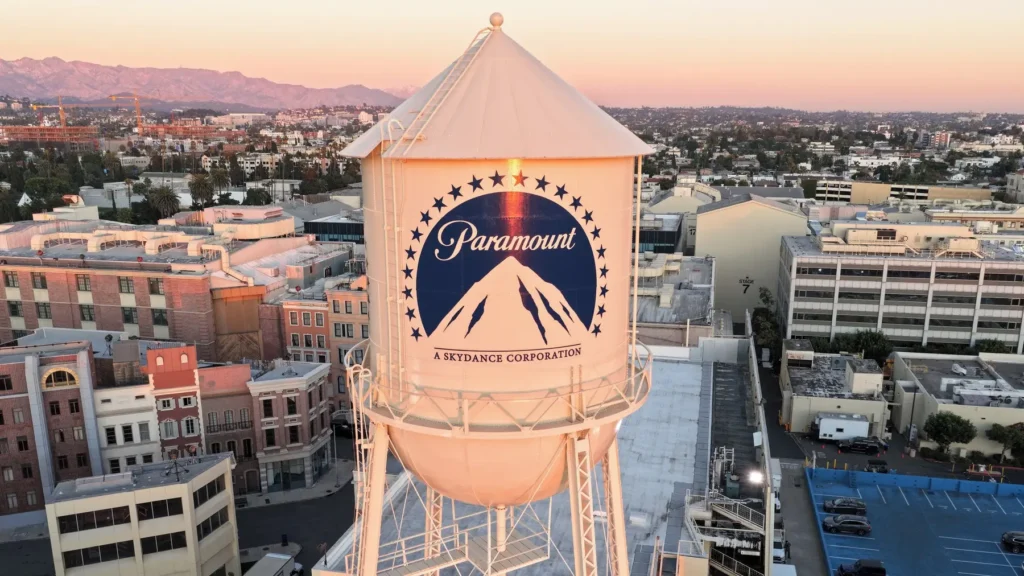
The approval of a reported $113 billion merger between Warner Bros. Discovery and Paramount Global is being framed as the creation of a “next-generation media and entertainment company.”

But beyond Hollywood headlines, the deal signals something far more consequential for sport: a global media landscape rapidly consolidating into fewer, more powerful hands.

For Australian football, particularly the A-League, this is not just background noise. It is a structural shift that could define the league’s future.


A shrinking marketplace, a growing imbalance

The merger brings together an enormous portfolio of assets, such as film studios, broadcast networks and streaming platforms, under a single corporate umbrella. It reflects a broader industry trend: scale is no longer an advantage in media, it is a necessity.

Yet with that scale comes concentration. Fewer buyers now control more platforms, more audiences, and more capital. Critics of the deal have warned that such consolidation risks reducing competition and narrowing the range of voices in global media.

For sport, the implications are immediate.

Broadcast rights are no longer negotiated in a diverse, competitive market. Instead, leagues are increasingly competing for space within vertically integrated media ecosystems. This is because decisions are driven not just by audience demand, but by global strategy, bundled content offerings and long-term platform growth.


Why the A-League is particularly exposed

This shift lands unevenly across the sporting landscape.

Leagues like the Australian Football League (AFL) and National Rugby League (NRL) remain dominant domestic products, commanding billion-dollar broadcast deals and consistent mass audiences.

The A-League, by contrast, operates from a more fragile commercial base.

Despite its global game status, the league continues to face:

  • Inconsistent crowd figures
  • Fluctuating visibility
  • A comparatively modest broadcast deal with Paramount

In a fragmented media environment, this is manageable. In a consolidated one, it becomes a vulnerability.

Because as the number of broadcasters shrinks, so too does the margin for leagues that are not seen as “must-have” content.


From open market to closed ecosystem

The critical shift is not just economic, it is also structural.

In the past, leagues could leverage competition between broadcasters to drive rights value. Now, with fewer but larger players, the balance of power tilts toward the platforms.

Content is no longer simply acquired, it is curated.

And in that environment, only properties that deliver one (or more) of the following will thrive:

  • Guaranteed audiences
  • Global scalability
  • Year-round engagement
  • Strategic value within a broader content ecosystem

This is where the A-League faces both its greatest challenge—and its greatest opportunity.


The overlooked strength of Australian football

While often positioned as a “developing” product domestically, football offers something no other Australian code can replicate: global alignment.

As the world’s most popular sport, football operates within an international ecosystem that extends far beyond national borders. Australia’s geographic position, bridging Asian and Western markets, adds further strategic value.

For a global media entity like Paramount, this matters.

The A-League is not just local content. It is potentially exportable, scalable and aligned with global football narratives. It also taps into younger, more digitally engaged audiences, who are increasingly driving subscription-based streaming growth.

In a media environment defined by platform expansion, that is not a weakness. It is an underutilised asset.


Why consolidation should drive MORE investment

The instinct in a consolidating market is often caution by tightening budgets, focusing on proven performers and minimising risk.

But for Australian football, that approach is self-defeating.

Because without investment:

  • Production quality stagnates
  • Storytelling weakens
  • Audience growth plateaus
  • Commercial value declines

And in a system that rewards scale and engagement, stagnation is equivalent to irrelevance.

Instead, consolidation should be seen as a trigger for strategic investment:

  • Elevating broadcast presentation
  • Strengthening club identities and narratives
  • Expanding digital and streaming integration
  • Positioning the league within the broader global football conversation

In short, making the A-League indispensable, rather than optional.


The real risk: being left behind

The emergence of media giants like a merged Warner Bros. Discovery and Paramount Global signals a future where content is filtered through fewer, more powerful gatekeepers.

In that world, leagues that fail to assert their value risk being sidelined, not because they lack potential, but because they fail to meet the evolving demands of the platforms that distribute them.

For the A-League, the danger is not collapse. It is marginalisation.

A slow drift into irrelevance while larger codes capture the attention, investment, and audiences that define modern sport.


Conclusion: a defining moment

This merger is not about Hollywood. It is about power.

Power over distribution. Power over audiences. Power over what gets seen and what does not.

For Australian football, the message is clear.

In a world of media consolidation, visibility is earned through value, not assumed through presence.

And if the A-League is to secure its place in that future, investment is no longer optional.

It is existential.

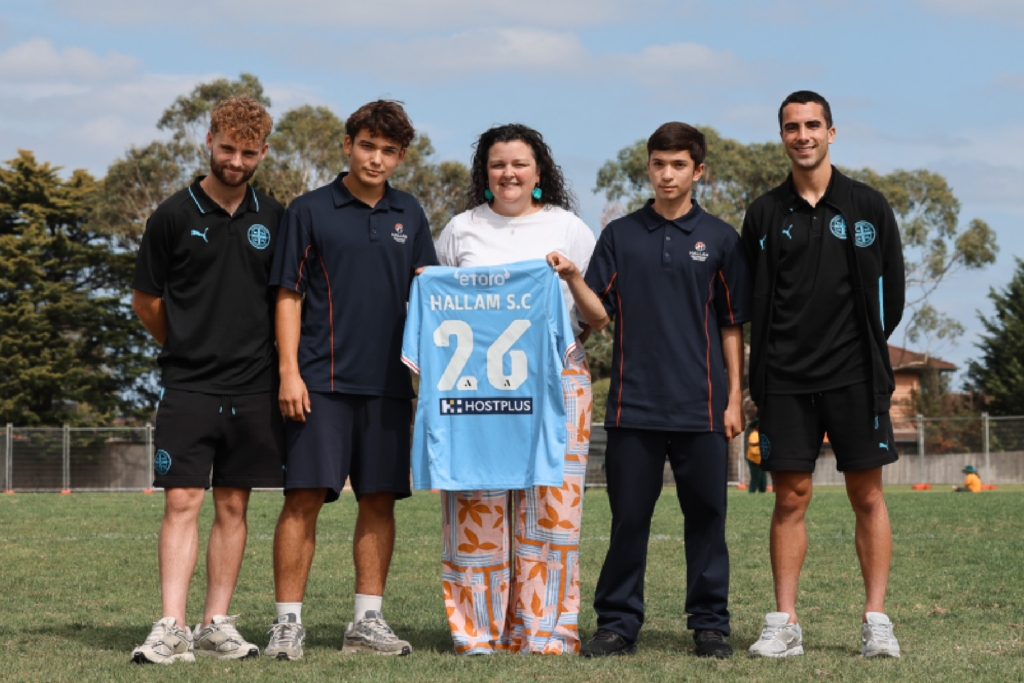
Melbourne City expand youth program with Hallam Secondary College

The school will join the City Futures Program in its mission to consolidate pathways and community bonds for students.

From pupils to players

Hallam is the latest school in Melbourne’s South-East to join the City Futures Program. Also backing the program’s ambitions are Narre Warren South P-12 College, Gleneagles Secondary College and Timbarra P-9 School.

Partnerships between professional clubs like Melbourne City and local schools help to promote community connection, as well as providing pathways from the classroom to the stadium.

“City Futures is about creating genuine opportunities for young people to stay engaged in their education while feeling connected to something bigger,” said Head of Community, Sunil Melon, via press release.

“By bringing the Club into schools and providing access to our environment, we’re helping students build confidence, explore future pathways and see what’s possible both within football and beyond.”

Gone are the days when young players must choose between football and education. Through the City Futures Program, they can enjoy both worlds and still have the opportunities to develop.


What City Futures provides

Hallam sudents will be at the centre of the benefits provided by the connection to Melbourne City.

For example, high-quality coaching sessions delivered twice a week will instill confidence and teamwork skills into young participants. And as Melbourne City coaches are set to deliver the sessions, the students will truly learn from the best in Australia’s footbal landscape.

Furthermore, participants can visit Casey Fields, home to the City Football Academy, where they can experience the ins and outs of how an A-League club operates and trains.

“We’re proud to be part of the City Futures Program,” outlined Acting Principal at Hallam Secondary College, Shelly Haughey.

“Seeing our students come together and commit to their training is setting them up for success both on and off the pitch, and we look forward to building a strong and lasting partnership with Melbourne City FC.”


The future of football pathways

This isn’t the first – nor will it be the last – partnership to connect football and education in Australia.

Earlier this year, Queensland-based John Paul College embarked on an exciting journey with Spanish outfit, RCD Espanyol, to provide unique coaching support, player education, and pathway opportunities.

But these partnerships aren’t merely about giving young talents a place in the starting XI.

They are designed to ensure all participants develop into confident young people – whether their future lies on the pitch, in the dugout or in the boardroom.

Most Popular Topics

Editor Picks

Send this to a friend