


777 Partners declare bankruptcy, Melbourne Victory to move on

According to Josimar Football, American-owned 777 Partners, whose ownership portfolio includes seven football clubs worldwide, was declared bankrupt on Monday.

It has been confirmed that creditors A-Cap are now in control of the shares at each of the clubs but have been urged to sell those stakes ‘as soon as possible.’

One of those seven football clubs are Melbourne Victory, who accepted 777’s bid for a minority share in the club in October 2022.

The Miami-based 777 Partners bought just 19.9 per cent of the club at a price of $8.7m, with the option of the company eventually taking a controlling stake of 70 per cent in the club.

The other clubs 777 took over were Genoa (Italy), Standard Liege (Belgium), Hertha Berlin (Germany), Red Star (France) and Vasco da Gama (Brazil), while having minority stake in Melbourne Victory and Sevilla (Spain).

777’s shady history and poor business dealings

This financial collapse of the private equity investment firm had been forthcoming, after news in May earlier this year that co-founders Josh Wander and Steven Pasko were removed from the board and had stepped back from their roles as managing partners amid financial struggles.

On the football side of their operations, Hertha Berlin and Standard Liege active fans made banners attacking co-founder Josh Wander for his ‘corrupt’ way of running the clubs transfer and sponsorships dealings. Hertha Berlin in particular had fans aggressively protest outside the Olympiastadion after their relegation in the 2022/23 season.

Co-founder Josh Wander also has a serious criminal history, involving being arrested for possession of stimulants, that is rumoured to have affected his ability to take over Premier League side Everton after he needed to pass the Fit-and-proper owners test regulated by the FA.

From the way they dealt with Bonza to their shocking football club record, everything about this investment group is dubious.

Not a serious situation for Victory

Fortunately for Victory, the stake is minor and unlikely to have too much of an impact on the club’s business dealings or financial situation. With 777 being forced to sell that share in the club, Victory will have to look to acquire a new stakeholder, this time a partner with a bit of stability.

A club spokesman talked about the situation at hand.

“777 is still a 19.9 per cent shareholder of Melbourne Victory,” a club spokesman said.

“As a minority shareholder, the latest on 777 has had no effect on Melbourne Victory and its operations.”

This situation has already left an awkward mark on the club last season with 777’s own Bonza Airlines falling into administration in May.

Bonza subsequently became the Victory’s principal, front-of-shirt sponsor and collapsed just days before the 2024 A-League Grand Final in Gosford, forcing a quick shirt change to insurance company AIA.

Turkish Airlines replaced Bonza as the flying partner of the club and joined the club in March, potentially as a backup plan for the inevitable Bonza implosion.

Conclusion

This news is positive for Melbourne Victory despite the negative implications on the surface level. It allows the club to get away from the disreputable, unreliable 777 Partners and focus on handing the 19.9% stake to partners that are more responsible.

Victory’s business dealings have been superb in recent seasons, growing their already large corporate portfolio and continuing to be one of the richest clubs in the A-League.

Under new manager Patrick Kisnorbo, Victory will look to get back to A-League glory for the first time since 2017/18, whilst also consistently providing some of the largest attendance numbers in the country.

Previous ArticleNext Article

South Canberra FC Breaks the Mold: Equity-Driven Model Earns ‘Club Changer’ Honour

South Canberra Football Club has been named Club Changer of the Month for April, in a recognition that reflects a broader shift across Australian football toward rewarding clubs that are actively dismantling the structural barriers limiting women’s access to the game.

The AFC Women’s Asian Cup has just delivered record crowds and unprecedented visibility for women’s football in Australia, and the Club Changer program is now asking what comes next. Its decision to name South Canberra Football Club as Club Changer of the Month for April signals a clear shift in how the program defines contribution: away from participation numbers alone, and toward the equity frameworks that determine whether women stay in the game once they arrive.

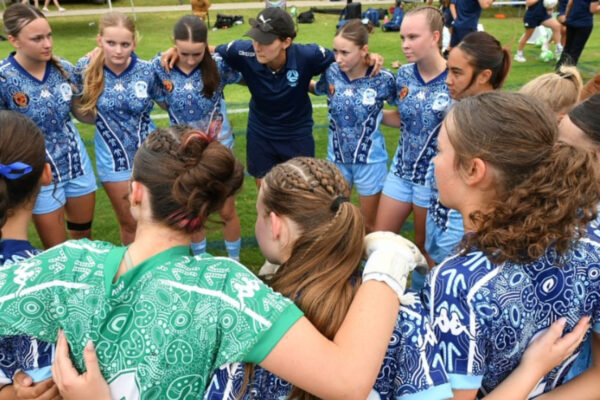
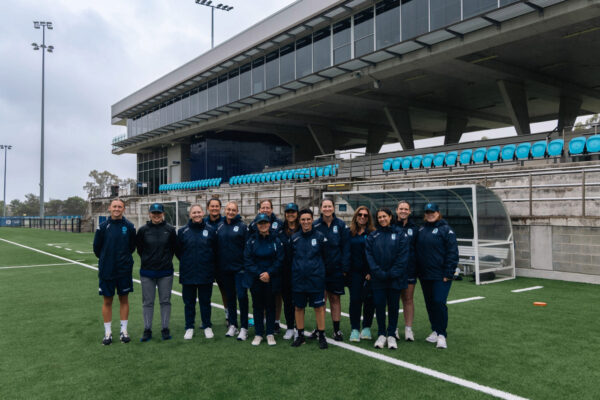
South Canberra FC built that framework from the ground up. Established in 2021, the club set out to give women and female-identifying players a safe, inclusive environment to play football at any level. It runs entirely on volunteers, operates as a not-for-profit, and is governed by an all-female committee with 13 of its 14 coaches identifying as female.


Building the infrastructure of inclusion

In 2026, the club secured grant funding and put it to work immediately. Two coaches are completing their C Licence qualification, and ten coaches, players and community members have undertaken the Foundations of Football course, which directly tackles the cost and accessibility barriers that exclude women out of coaching pathways.

The club also commissioned a female-specific strength and conditioning program with sports physiotherapists ahead of the 2026 season, targeting injury prevention and explicitly supporting players returning after childbirth.

SCFC’s leadership team draws from LGBTIQ+ individuals, First Nations people and veterans, strengthening the club’s connection to the communities it was built to represent.

The Club Changer program is backing clubs that do this work- clubs that treat equity as infrastructure rather than aspiration. At a moment when Australian football is under pressure to turn its biggest-ever surge of women’s interest into something lasting, SCFC’s model offers a clear answer to the question of how.

How Husqvarna Is Helping Stadiums Cut Costs Without Cutting Quality

At a time when operational costs are rising across global sport, stadiums and football clubs are being forced to rethink one of their most overlooked expenses: turf maintenance.

From diesel consumption to labour hours, maintaining elite playing surfaces has traditionally been both resource-intensive and environmentally taxing. But new data emerging from venues like CBUS Super Stadium suggests a smarter, more sustainable model is already taking hold.

Leading that shift is Husqvarna, whose autonomous turf technology is quietly reshaping how professional venues manage their playing surfaces. Their product delivers measurable cost savings without compromising quality.

Cutting fuel consumption costs

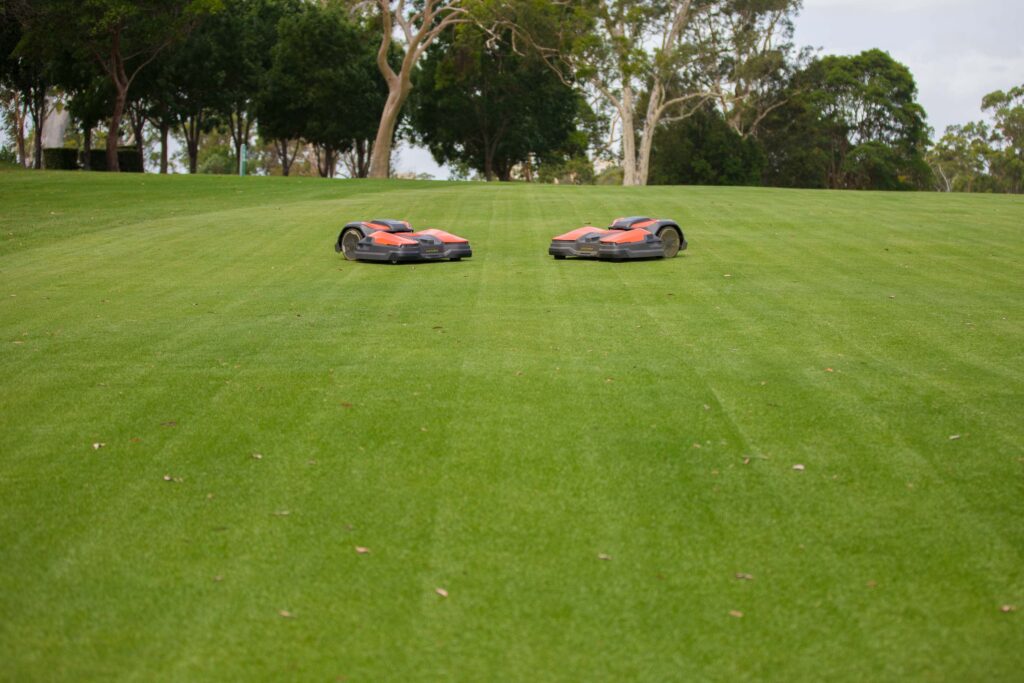
At CBUS Super Stadium, the introduction of Husqvarna’s CEORA™ robotic mowing system has reduced diesel usage by approximately 20–30 litres per week. Over the course of a season, those savings compound into a significant reduction in both fuel spend and carbon emissions. This is particularly efficient for stadiums hosting regular fixtures and large-scale events.

CBUS Super Stadium General Manager Kristian Blundell said the robotic mower was a game-changer for the venue:

“This technology is not replacing staff but rather giving our grounds team the ability to do what they do best by helping to improve turf management processes, better manage fatigue and decrease our environmental footprint”

But the impact goes beyond fuel.


Time efficiency

By automating routine mowing, Husqvarna’s technology enables grounds teams to focus on higher-value maintenance tasks, from pitch recovery to detailed surface management. The result is not only greater operational efficiency but also improved turf consistency, which is an increasingly critical factor in elite football performance.

The benefits are being mirrored beyond stadium environments. At Oatlands Golf Club, Husqvarna’s autonomous mowing has delivered savings of up to 60 litres of fuel per week while freeing up staff for precision work. Quiet, round-the-clock operation also ensures surfaces are maintained without disrupting play—an advantage that translates directly to multi-use stadium settings.

Image Credit: Husqvarna

Importantly, Husqvarna’s lightweight robotic systems reduce the wear and tear typically caused by traditional heavy machinery. This not only protects the integrity of the playing surface but also reduces the need for costly repairs over time.

Football clubs navigating tight budgets at grassroots and semi-professional levels could benefit from such cost savings.

With rising energy prices, increasing sustainability expectations, and limited staffing resources, the ability to cut costs while improving performance is no longer optional. Solutions like Husqvarna’s CEORA™ are positioning clubs to operate more efficiently today, while preparing for a more environmentally accountable future.

As the sports industry continues to evolve, one thing is becoming clear: the next competitive edge may not just come from what happens on the pitch—but how it’s maintained.

Most Popular Topics

Editor Picks

Send this to a friend