

Women’s football reinforced by 118 new community grants

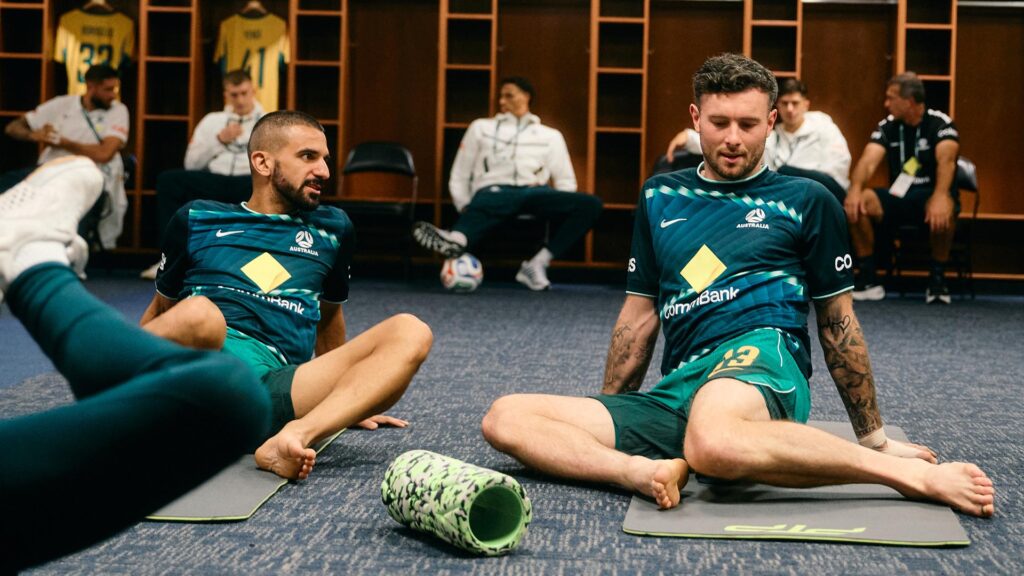
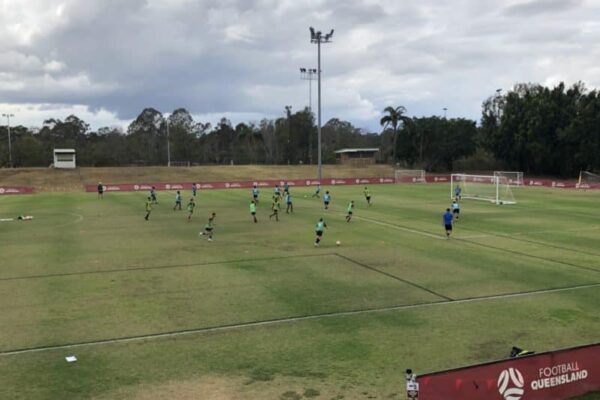
Football Australia has celebrated the latest round of the Growing Football Fund Community Grants, with 118 clubs and associations awarded up to $5000 to support women’s football programs. 

In conjunction with the Commonwealth Bank, the latest grants from Football Australia built upon the first round of the program from March 2024 that saw 121 clubs and associations rewarded with grants.

The grants aim to strengthen women’s football through number of initiatives:

  • Assisting the development of female coaches by subsiding coach training programs
  • Assisting the hosting of ‘come and try’ days and participation programs
  • Assisting health and training workshops for women and girls
  • Assisting the allocation of professional female fitting uniforms

Through the program, Football Australia also illustrated its desire to bolster rural women’s sport by providing 38% of the grants to organisations from regional areas.

Football Australia General Manager of Women’s Football, Carlee Millikin, explained the impact the grants would have on community women’s football.

“We are thrilled to see the clubs and associations that have been awarded the grants demonstrating a strong commitment to long-term investment in women and girls’ football within their communities that goes beyond the financial,” she said in a press release.

“It means the Growing Football Fund can play its role to help supercharge their ambitions that result in positive outcomes for female participants. The wide breadth of projects is exciting, as it shows a deepening understanding of what is required to develop inclusive and safe environments.

“In partnership with CommBank, we have already seen great results from the round one clubs delivery of initiatives and look forward to witnessing how the latest cohort creates a lasting impact through their programs.”

CommBank’s General Manager of Brand, Sponsorship and Content, Di Everett, expressed their pride to sponsor the grants.

“We are so proud of what this fund has achieved so far, and congratulate the recipients of the Round Two grants,” she said via press release.

“We are passionate about making community sport more accessible for all. These grants have enabled clubs across the country to assist coaches through training opportunities and support local families through an expansion of programs to drive participation for young women.”

The clubs awarded with grants from Round Two of the program are listed below via member federation:

Capital Football 

  • BellaMonaro Women’s Football Club
  • Belsouth Football Club
  • Canberra Juventus Football Club
  • Canberra White Eagles Football Club
  • Tigers FC
  • Tuggeranong United Football Club

Football NSW

  • AC United Football Club
  • All Saints West Oatley Soccer Club
  • Ashfield Pirates FC
  • Austral Soccer Club
  • Balgownie Junior Football Club
  • Box Hill Rangers AFC
  • Collaroy Cromer Strikers Football Club
  • Colo Soccer Football Club
  • Enfield Rovers Football Club
  • Fairfield Bulls Football Club Inc.
  • Figtree Football Club
  • Football Canterbury Association
  • Forest Rangers Football Club
  • Future Leaders Australia Football Club Incorporated
  • Gordon Football Club
  • Gosford City Football Club
  • Leichhardt Saints Football Club
  • Leppington Lions Soccer Club
  • Lindfield Football Club
  • Millthorpe Junior Soccer Club Inc
  • Narooma Football Club
  • Narromine Soccer Club
  • North Epping Rangers Sports Club
  • North Turramurra
  • North West Sydney Football Association
  • Pennant Hills Football Club
  • Pitt Town Football Club
  • Ropes Crossing Strikers Football Club
  • Russell Lea Women’s Soccer Club
  • Sydney Uni Soccer Football Club
  • Wagga United Football Club
  • Warradale FC
  • West Griffith Soccer Club

Northern NSW Football 

  • Charlestown Azzurri FC
  • Coffs City United Football Club
  • Cooks Hill United Football Club
  • Corindi Red Rock Sports Association (Football Club)
  • Great Lakes United Football Club
  • Inverell Football Club
  • Moore Creek Football Club Inc
  • Norths United Football Club Incorporated
  • Old Bar Barbarians Football Club
  • Shores United Soccer Club

Football VIC

  • Barwon Heads Soccer Club
  • Bayside Argonauts Football Club
  • Berwick City Soccer Club
  • Boroondara Eagles Football Club Inc
  • Craigieburn city Fc
  • Croydon City Soccer Club Inc.
  • Darebin Women’s Sports Club
  • Daylesford & Hepburn United Soccer Club
  • Deakin Ducks Fc
  • Drysdale Soccer Club
  • Fitzroy Lions Soccer Club
  • Footscray United Rangers Football Club
  • Gippsland United Football Club
  • Glen Eira FC Football VIC
  • Keilor Park Soccer Club
  • Leongatha Knights Football Club
  • Middle Park Football Club
  • Officer City Football Club Incorporated
  • PEGS Soccer Club Football VIC
  • Phillip Island Breakers Soccer Club
  • Spring Hills FC
  • Swan Hill Soccer League
  • Traralgon Olympians Soccer Club
  • Truganina Lions Soccer Club

Football QLD

  • Annerley Recreation Club
  • Bluebirds United Football Club Inc
  • Brighton District Soccer Club Inc
  • Burdekin Football Club Inc
  • Centary Stormers FC
  • Dayboro and Districrs Football Club
  • Gold Coast Knights Football Club
  • Holland Park Hawks Football Club
  • Logan Village Falcons All Sports
  • Mackay Wanderers Football Club
  • Moreton City Excelsior FC
  • Rebels Football Club
  • Redlands United Football Club
  • The Gap Football Club
  • Townsville Warriors Football Club Inc
  • Woombye Snakes Football Club Inc

Football SA

  • Adelaide Ateltico
  • Adelaide Jaguars Football Club Incorporated
  • Campbelltown City Soccer and Social Club
  • Flinders United Women’s Football Club
  • Mount Barker United Soccer Club
  • Sacred Heart Old Collegians Soccer Club
  • South Adelaide Panthers FC
  • Sturt Lions Football Club Incorporated
  • The Pulteney Old Scholars Soccer Club Incorporated

Football West 

  • Baldivis Districts Sporting Club Incorporated
  • Country Coastal Junior Soccer Association
  • Esperance Soccer association
  • Forrestfield United Football Club
  • Karratha Glory Soccer Club
  • Kingsley Westside Football Club
  • Perth Atheletic FC
  • Twin City Saints Soccer Club
  • Westnam United Soccer Club

Football TAS

  • Clarence Zebras Football Club
  • Hobart City Football Clug
  • Launceston United Soccer Club
  • North Launceston Eagles Soccer Club
  • South Hobart Football Club
  • Woodbridge Football Club

Football NT

  • Darwin Olympic Sporting Club
  • Litchfield Football Club
  • Palmerston Rovers Football Club Incorporated
  • Stormbirds
  • Verdi Football Club

For more information on the grants, click HERE.

Previous ArticleNext Article

All Six Female Officials at the 2026 World Cup Come From Concacaf, a Shift From Qatar’s Wider Spread

Six women are among the 170 referees, assistant referees and video assistant referees FIFA named to its 2026 World Cup officiating list in April, matching rather than exceeding the number appointed at Qatar in 2022. All six, however, come from countries within Concacaf, a change from four years ago, when the same total was drawn across five separate confederations.

Referees Tori Penso of the United States and Katia Itzel García of Mexico were joined by assistant referees Brooke Mayo and Kathryn Nesbitt, both of the United States, and Mexico’s Sandra Ramírez, along with Nicaragua’s Tatiana Guzmán as video assistant referee.Penso took charge of the Group A match between Czechia and South Africa on 18 June alongside Mayo and Nesbitt, the first all-female on-field trio to officiate a men’s World Cup match, becoming only the second woman to referee at that level, after France’s Stéphanie Frappart at Qatar 2022.García refereed Netherlands against Tunisia in Kansas City on 25 June to become the third woman, and the first Mexican woman, to referee a men’s World Cup match.

By contrast, Qatar’s six women were drawn from UEFA, CAF, AFC, CONMEBOL and Concacaf: Frappart of France, Rwanda’s Salima Mukansanga and Japan’s Yoshimi Yamashita as referees, and Brazil’s Neuza Back, Mexico’s Karen Díaz Medina and the United States’ Kathryn Nesbitt as assistants.

A pathway built through Concacaf’s development system

FIFA Chief Refereeing Officer Pierluigi Collina described the 2026 appointments as drawn from the largest group of World Cup match officials in the tournament’s history, the product of three years of monitoring, seminars and assessment, with selection based, in his words, on officials being “the very best in the world.”

Penso’s own record illustrates how that system has worked for Concacaf officials specifically. She joined the FIFA international panel in 2021, the same year she became the first woman to lead an all-female team in a men’s competition organised by Concacaf, refereeing a World Cup qualifier.She had already become the first woman in two decades to referee a regular-season Major League Soccer match, in 2020, and went on to take charge of the 2023 Women’s World Cup final, the first World Cup final overseen by an American referee.García’s path ran through Liga MX, where she became the first woman in more than 20 years to referee a men’s match in March 2024.

Australia’s own contingent at the tournament, referee Alireza Faghani and assistant referees Andrew Lindsay and George Lakrindis, along with video match official Shaun Evans, does not include a woman among its four officials,positioning the current pipeline into men’s World Cup officiating as one running through a narrower set of confederations than the sport’s broader referee development system overall.

Research on performance shows a mixed but instructive picture

The appointments sit alongside a growing body of research testing assumptions about female officials in men’s football. A study in the Journal of Human Sport and Exercise, examining five seasons of the Maurice Revello Tournament, found female referees were not weaker than their male counterparts in adjudicating men’s matches.Separate research by Atılgan and Tükel, cited in a 2025 study of fan perceptions of referees, found women outperformed men specifically at the decision-making stage, with men showing greater hesitation and avoidance.

Findings on physical output are less uniform. A systematic review of physical demands in high-level matches found male and female referees covered broadly comparable ground, averaging 10.5 and 9.9 kilometres respectively, with similar volumes of high-intensity running.A separate comparison of Spanish first and second division referees found male officials produced higher peak-intensity output than female referees across the shortest, most demanding windows of match play, a gap researchers linked to aerobic capacity and flagged as requiring further study at international level specifically.Academic research published this year estimates women still make up roughly one in ten of the world’s accredited match officials across all levels of the game.

FIFA’s next major appointment cycle for women’s officiating is already under way, with match officials named this year for the 2026 FIFA U-20 and U-17 Women’s World Cups as part of preparations for the 2027 Women’s World Cup in Brazil.

Northern NSW Football’s Leadership Program Reaches 98 Graduates as Sport Moves Toward 2027 Gender Parity Targets

Northern NSW Football has concluded its 2026 Women’s Leadership Program, with 13 participants taking the total number of graduates to 98 women across the region since the program launched in 2023. The five-week program combined online modules with a two-day conference at Rydges Resort in the Hunter Valley, bringing together club volunteers, committee members, administrators and NNSWF staff from Newcastle, Macquarie, Northern Inland and Football Mid North Coast zones.

The program’s growth has been uneven year to year. It launched with two intakes in 2023, drew 25 scholarship recipients in 2024,then settled to 12 in 2025, which brought the cumulative total to 85 before this year’s cohort of 13.

The program was facilitated by Ann Odong, who founded The Women’s Game, Australia’s first dedicated women’s football website, in 2008,and later spent six years as Football Australia’s Media and PR Manager steering the Matildas’ program through multiple World Cups and Olympic Games,before moving into independent consulting work.

A pipeline built against a 2027 deadline

The program fits within a wider set of national targets football and the broader sport sector have committed to reaching within the next twelve months. Football Australia’s Our Game initiative, launched in 2021, set a goal of 50:50 gender parity across players, coaches, administrators and referees by 2027.Separately, the federally backed National Gender Equity in Sport Governance Policy requires all funded national and state sporting bodies to reach 50 per cent women or gender-diverse board directors by 1 July 2027, with funding to be withheld from organisations that fall short.As of the most recent Australian Sports Commission data, 22 per cent of chief executives and 25 per cent of board chairs across 65 federally funded national sporting organisations were women.

Programs built around confidence, networking and committee-level skills, the model NNSWF has run since 2023, are the mechanism most sporting bodies are relying on to close that gap, since board and executive vacancies typically draw from an organisation’s existing pool of committee members, volunteers and administrators rather than external recruitment.

This year’s cohort

University of Newcastle FC’s Charlotte Carey, one of this year’s participants, said the program had given her the confidence to pursue a career in football while developing skills applicable across other areas of her life. Fellow participants included representatives from Cooks Hill United, Westlakes Wildcats, Newcastle Olympic, Lake Macquarie City FC, Western Wolves, Gunnedah and District Soccer Association, Wauchope FC and Stockton Sharks, alongside three NNSWF staff members.

NNSWF Participation and Women’s Football Officer Jamie Bressan said the program had continued to provide women across the game with an opportunity to connect and build leadership skills, with topics covering effective communication, personality styles and team dynamics. Bressan pointed to the network the program builds among participants, drawn from clubs and committees across the region, as one of its central functions rather than the training content alone.

The 2026 cohort’s spread across four zones, Newcastle, Macquarie, Northern Inland and Football Mid North Coast, continues a pattern of the program drawing participants from outside the Hunter region’s largest population centres, consistent with its original design to make the conference and online components accessible to women in regional and remote parts of northern NSW through funded travel and accommodation.

Most Popular Topics

Editor Picks

Send this to a friend