




PFA issues legal threat to Premier League over new financial rules

The Professional Footballers’ Association (PFA) has issued a legal threat to the Premier League, warning of potential legal action if new financial rules are passed without union consultation and approval.

The PFA alleges that the league and its clubs have deliberately withheld critical information about the proposed squad cost rules (SCR) and top-to-bottom anchoring (TBA). These changes, according to the union, could severely impact player wages and club finances.

Legal Warning Over SCR and TBA

The Premier League and its 20 clubs voted on the proposed rules during a meeting on 13 February. In a letter addressed to the league and its stakeholders, the PFA’s legal team stated they “anticipate being instructed to commence legal proceedings” if the rules are approved without adequate consultation with the union.

The union has demanded a written guarantee from the league by 4 pm on 11 February, confirming its intention to fully consult the PFA on the matter. Failure to do so will also trigger legal action.

The PFA described the proposed squad cost rules and top-to-bottom anchoring system as “fundamentally flawed” and expressed deep concerns about their potential consequences for players and clubs alike.

What Are the SCR and TBA?

The squad cost rules (SCR) would limit clubs to spending a maximum of 85 per cent of their revenue on squad-related expenses, aligning with similar rules introduced by UEFA. From next season, UEFA plans to reduce its revenue-to-spending cap to 70 per cent for clubs involved in its competitions.

The top-to-bottom anchoring (TBA) system, however, is more contentious. It would enforce a strict cap on how much a club can spend on squad costs, calculated as five times the amount received by the club earning the least from central Premier League funds.

Critics, including the PFA, argue that TBA effectively introduces an indirect cap on player salaries. Some clubs, such as Manchester United and Manchester City, have also expressed opposition to the proposal, fearing it would weaken their ability to compete with elite European teams.

Accusations of Withholding Information

The PFA has accused the Premier League of failing to follow proper consultation protocols, which are required for any matters impacting player wages or conditions.

Under the rules, the Premier League and English Football League (EFL) must consult with the PFA through the Professional Game Negotiating and Consultative Committee (PFNCC). Any changes that affect players cannot proceed without the union’s agreement.

However, the PFA’s lawyers, Mills and Reeve, claim the Premier League missed its own deadline to provide an updated version of the SCR before Christmas. Instead, clubs received the document on 9 January—too late for meaningful discussions during a PFNCC meeting held on 8 January.

The union further alleges it only received the full 87-page SCR manual after an ad-hoc PFNCC meeting on 20 January, despite indications that clubs had access to the document as early as July last year.

PFA’s Position on the Financial Rules

The PFA remains firmly opposed to the introduction of TBA, stating it imposes an unnecessary cap on player wages under the guise of financial regulation.

The union believes such measures are not only unfair to players but also risk undermining the competitiveness of Premier League clubs on the international stage.

In their letter to the Premier League’s legal team at Linklaters, the PFA’s lawyers described the handling of the proposed financial rules as “flagrant breaches” of the league’s obligations to consult with the union.

As the 13 February vote has taken place, the tension between the PFA and the Premier League appears to be escalating, with the prospect of legal proceedings looming should the union’s demands for consultation remain unmet.

Previous ArticleNext Article

Arsenal FC announce Saint Lucia as new destination partner

Starting in the 2026/27 season, the deal will see Saint Lucia become Arsenal‘s Official Destination Partner.


Global reach of a football giant

As one of the most popular clubs in the world, Arsenal’s influence expands far beyond the boundaries of North London.

And with its latest partnership, alongside the Saint Lucia Tourism Authority (SLTA), the reigning Premier League champions will help to promote the Caribbean island to the UK market.

Furthermore, the agreement will see additional benefits for both parties, including the development of an Academy Hub in Saint Lucia, brand visibility at the Emirates Stadium for both Premier League and Women’s Super League games, and more.

“We are entering an exciting term as Arsenal’s Official Destination Partner, aligning with a club that has a loyal, global supporter base,” said Saint Lucia’s Minister for Tourism, Commerce, Investment, Creative Industries, Culture and Heritage, Dr. Ernest Hilaire via media release.

A partnership extending from one side of the Atlantic to the other, uniting communities through football.


Sport and culture go hand-in-hand

This isn’t the first time, however, that Saint Lucia Tourism Authority has ventured into the commercial world of global sport.

In the past, for example, the organisation built firm relationships with several other iconic outfits including the New York Yankees (baseball), Toronto Raptors (basketball), Toronto Maple Leafs (ice hockey) and Brooklyn Nets (basketball).

But with an iconic club like Arsenal the latest addition to the lost, it further proves that sport, culture and commerce are by no means seperate entities.

In fact, in a deal such as this, all three can grow and thrive.

Arsenal are one of several clubs to establish ties with tourism boards and destination groups across the world. Notable partnerships include:

  • Manchester City and Visit Abu Dhabi
  • Fulham FC and Visit Mongolia
  • Manchester United and Visit Malta

Exposure for international tourism boards at Premier League grounds holds immense economic potential, thus a key aim in the alliance between Saint Lucia and Arsenal is to drive the island’s economy through tourism.

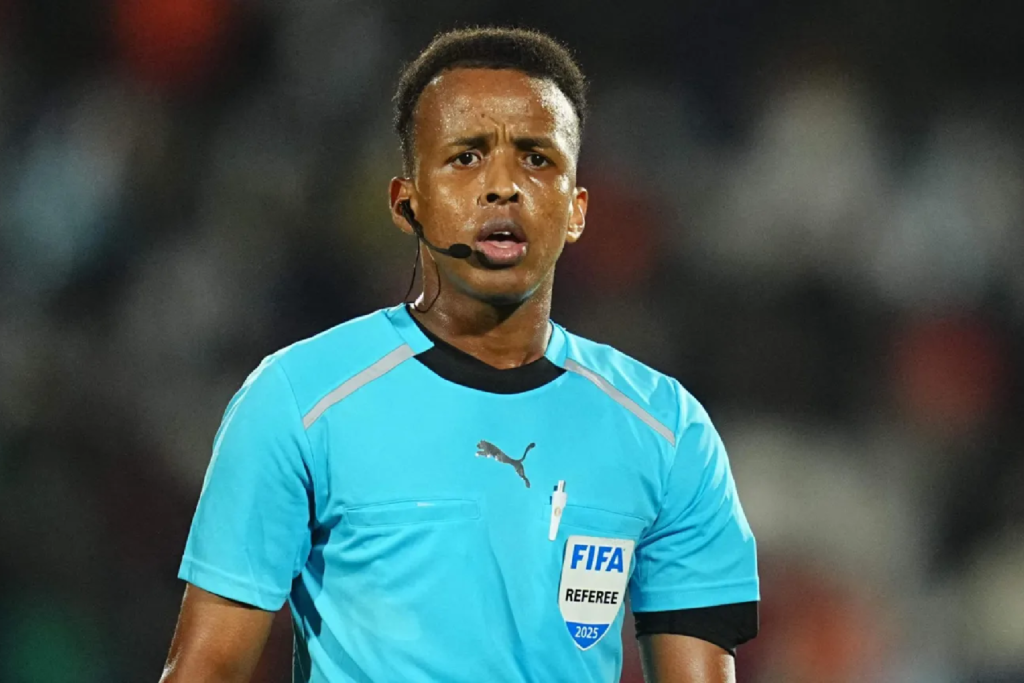
Referee Omar Artan appointed to UEFA Super Cup Final

The Somali referee will officiate the 2026 UEFA Super Cup in August between Paris Saint-Germain and Aston Villa.


World Cup controversy to Super Cup support

As 2025’s CAF Men’s Referee of the Year, Artan stands as one of the world’s leading match officials.

His expertise and skill allowed him to enter FIFA’s international list in 2018, and has since proved an outstanding ability as a referee, culminating in the CAF Men’s Referee of the Year award last year.

Despite Artan’s capabilities and reputation, his dream of officiating this summer’s World Cup tournament met a premature ending. The referee couldn’t enter into the US after arriving on a diplomatic passport and single entry visa, and was subsequently forced to return home to Somalia.

But Artan’s journey as a referee on the global stage is far from over, as UEFA and CAF confirmed that Artan will officiate the UEFA Super Cup clash between Champions League winners, PSG, and Europa League winners, Aston Villa, in Salzburg this August.


Upholding the partnership

In April of this year, UEFA and CAF signed a new Memorandum of Understanding (MoU), which promised to utilise mutual support to encourage development, inclusion and wellbeing in football.

The MoU aligns unity, cohesion and partnership between two powerhouse continents of world football.

And now, the alignment is stronger and clearer than ever. In the midst of a major blow to Artan’s personal and professional dreams, UEFA and CAF’s partnership provided an opportunity.

“Omar is an excellent young but already experienced referee, who has proven himself at the highest competition level of the Confederation of African Football,” said UEFA President Aleksander Čeferin via media release.

“Football is made to connect people, and UEFA wants to show its respect to Omar and his outstanding officiating skills, which had earned him such a prestigious nomination.”

Furthermore, CAF President, Dr Patrice Motsepe, outlined why the initiative perfectly embodies the nature of a partnership between UEFA and CAF.

“This is a great honour for Omar Artan and for African referees and is also an excellent example of football bringing together and uniting people from Africa and Europe and worldwide.”


Final thoughts

Out of bitter disappointment and controversy comes a far more positive reflection of football’s influence and impact. It also proves that an MoU is more than just signatures, but a genuine promise to support the game and all within it.

A partnership like this has the power to help millions at once.

But sometimes, helping just one person is all it takes to prove its worth.

Most Popular Topics

Editor Picks

Send this to a friend