


TSG Hoffenheim extends partnership with SAP until 2030

TSG Hoffenheim has confirmed a long-term extension of its partnership with SAP, one of the most established and technology-driven sponsorships in German football. The renewed agreement, running through to 2030, will see SAP continue as main sponsor, front-of-shirt partner, and official technology partner — while expanding its involvement across the women’s and academy teams.

This extension highlights the strong commitment from both parties and reinforces the growing importance of tech-focused partnerships in shaping modern football strategy and infrastructure.

Among the Bundesliga’s Longest-Standing Sponsorships

SAP has featured on Hoffenheim’s kits since the 2013/14 season, making it one of the Bundesliga’s three longest-running front-of-shirt sponsors. The expanded deal includes:

  • Continued main sponsorship of the men’s first team
  • Sleeve sponsorship for the TSG Hoffenheim women’s team from the 2025/26 season
  • Shirt sponsorship for the club’s academy sides (U16–U19)
  • Branding on training gear and matchday apparel
  • In-stadium branding, including façade signage and TV-facing boards
  • Naming rights to specific stands and hospitality areas at Hoffenheim’s home ground

Managing Director of Marketing and Sales at TSG Hoffenheim, Tim Jost, underlines the club’s strong commitment to SAP and the future of their joint venture.

“Two strong brands from the region are stepping into the future together. We are delighted to extend our intensive partnership with SAP for the long term.

“SAP’s commitment goes far beyond that of a main and shirt sponsor. SAP’s technical expertise is the basis for our role as an innovation leader. In addition, the extension shows once again that TSG have a loyal partner in SAP, who by agreeing to a long-term extension are sending a strong signal of trust in times of change,” he said via press release.

This renewal comes at a time when stability and strategic partnerships are more important than ever in football sponsorship, especially given evolving economic conditions and club ownership models.

A Broader Partnership Beyond Branding

SAP will continue as Hoffenheim’s official technology partner, providing data integration, analytics, and digital performance tools to support both sporting and business operations.

For Hoffenheim, the agreement extends beyond financial support — SAP’s involvement helps position the club as one of the Bundesliga’s most innovation-driven organisations, with projects spanning player tracking, injury prevention, and fan experience enhancements.

The partnership also reflects a strong regional connection, both SAP and Hoffenheim are based in Baden-Württemberg, fostering shared community values and a regional identity.

A Model of Stability and Regional Collaboration

This extension exemplifies a regionally grounded sponsorship with global impact. SAP, a multinational company with over 108,000 employees, remains a locally rooted partner in Walldorf, just 20 kilometres from Hoffenheim’s home base.

From a commercial standpoint, this ongoing alliance strengthens TSG Hoffenheim’s reputation as a long-term, values-aligned sponsorship platform for premium, tech-focused brands.

Previous ArticleNext Article

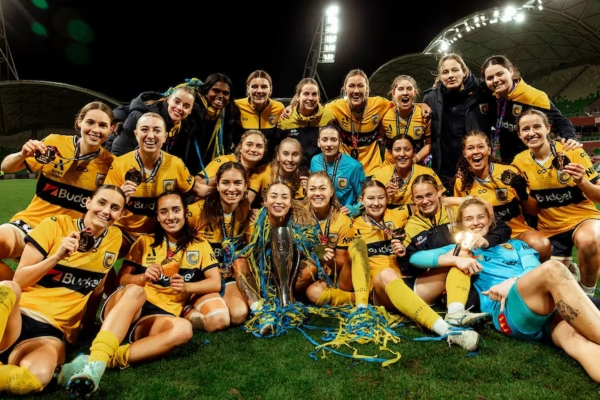
Central Coast Mariners Women secure future under Holman Barnes Group

The future of the Central Coast Mariners Women has been secured after the Holman Barnes Group (HBG) reached an agreement to become the new operator of the club’s A-League Women program. The deal ends uncertainty surrounding the team’s participation in the 2026/27 season.

The agreement between HBG, the Australian Professional Leagues (APL) and Total Soccer Growth Holdings (TSG) ensures the Mariners will remain in the Ninja A-League Women competition. It also introduces a new operating model designed to provide long-term stability.

The uncertainty emerged following TSG’s acquisition of the Central Coast Mariners’ men’s side and academy in June. The women’s program was excluded from the original takeover. TSG already owns English football side Queens Park Rangers (QPR) and MLS club Los Angeles FC. The omission placed the future of the 2025 A-League Women champions in doubt. It also prompted the APL to seek a sustainable solution ahead of the new campaign.

A new operating model

Under the new arrangement, HBG will oversee all operational aspects of the women’s team. This includes the football program, staffing and day-to-day management. TSG will retain the club licence and continue overseeing the men’s program and academy. It will also support the women’s operation through its broader football network.

The agreement represents an innovative partnership between the three organisations. It has been designed to strengthen the long-term sustainability of professional women’s football on the Central Coast. HBG’s plans extend beyond the senior team. They include a strong focus on developing participation pathways and creating greater opportunities for female footballers throughout New South Wales.

Attention turns to the new season

The transition comes at a crucial time with preparations for the 2026/27 Ninja A-League Women season underway ahead of its October 16 start. The new operators are expected to begin managing the program immediately. This remains subject to the completion of the remaining regulatory processes. The team currently has no sponsors and games are expected to be moved away from Central Coast Stadium.

The A-League had previously set a July 31 deadline for new owners to be found to secure a place in the upcoming competition. With that now achieved, HBG will be on the clock to ensure the season begins without disruption and becomes a commercial success.

For the Central Coast Mariners Women, the agreement delivers certainty after a turbulent off-season. It also allows the club to shift its attention to the 2026/27 campaign and the team’s on-field performance.

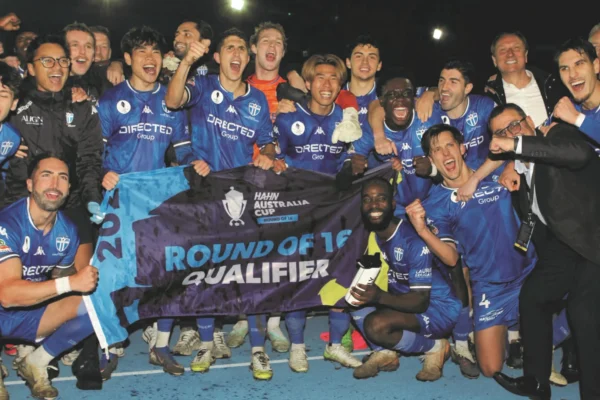
South Melbourne’s Australia Cup triumph reignites promotion and relegation debate

South Melbourne FC’s dramatic 2-1 victory over Adelaide United in the Hahn Australia Cup Round of 32 has reignited debate around promotion and relegation in Australian football, with Co-President Bill Papastergiadis stating the result is further proof that ambitious National Premier Leagues clubs deserve a pathway to the top tier.

The Victorian powerhouse produced one of the competition’s biggest upsets at Lakeside Stadium, overturning an early deficit to eliminate the Isuzu UTE A-League side and secure a place in the Round of 16.

While the result was celebrated as another example of the magic of the Australia Cup, Papastergiadis believes the victory carries a much broader message about the strength that exists outside Australia’s professional league.

Speaking following the win, Papastergiadis said South Melbourne’s performance demonstrated why the Australian football landscape should move towards a connected pyramid featuring promotion and relegation.

“The result was South Melbourne FC’s revenge 22 years in the making,” Papastergiadis said.

“It also demonstrates that clubs in the National Premier Leagues have the quality, professionalism and ambition to compete with A-League opposition when given the opportunity.”

For years, South Melbourne has been one of the strongest advocates for structural reform within Australian football, consistently calling for an open pyramid that rewards sporting merit rather than maintaining a closed league system.

Papastergiadis argued that Australia Cup fixtures continue to showcase the depth of talent throughout the domestic game, with NPL clubs regularly proving they can challenge and defeat professional opponents despite operating with significantly fewer resources.

He believes these performances should not simply be viewed as isolated “cupsets”, but as evidence that Australia’s football ecosystem is ready to embrace a promotion and relegation model that provides ambitious clubs with a genuine pathway to the top flight.

The result against Adelaide United adds another significant chapter to South Melbourne’s storied history. One of Australia’s most successful clubs, South Melbourne has long maintained aspirations of returning to the national stage, backed by a passionate supporter base, strong infrastructure and a proud footballing tradition.

For Papastergiadis, victories such as Thursday night’s reinforce the argument that clubs should earn opportunities through performances on the pitch.

“The Australia Cup continues to show what’s possible when clubs from different levels of the football pyramid compete against one another,” he said.

“Our football should be built on opportunity and merit. Clubs that perform consistently and invest in their communities should have the chance to progress to the highest level.”

South Melbourne will now turn its attention to the Round of 16, where it will look to continue its impressive cup run.

Beyond the result itself, however, the victory has once again fuelled discussion around the future of Australia’s football structure and whether the growing strength of clubs outside the A-League should accelerate the push towards a fully connected national competition.

Most Popular Topics

Editor Picks

Send this to a friend