


Beaumaris SC: Building more than a Football Family

From its origins as a small men’s club with just a handful of junior teams, Beaumaris Soccer Club has grown into one of the largest and most respected community clubs in Melbourne’s Bayside region. With over 600 members, including more than 500 juniors and nine senior teams across men’s and women’s competitions, the club continues to thrive—both on and off the pitch.

Built on the core principle of doing “what’s best for the kids,” Beaumaris SC prides itself on being more than just a football club. It’s a welcoming, inclusive space where players and families from all backgrounds can enjoy the game in a fun, safe, and supportive environment. The club places equal value on player development and community involvement, nurturing not only future athletes but also strong values of respect, sportsmanship, and teamwork.

Speaking with Soccerscene, President of Beaumaris SC Joe Mottola, who has led the club for 16 years, shares insights into Beaumaris SC’s evolution, its community-first approach, and what lies ahead for the club in 2025 and beyond.

Can you share some insight into your role as President, and how Beaumaris SC has evolved since you first stepped into that position?

Joe Mottola: I’ve been President for 16 years, and the transformation has been incredible. When I first came on board, we didn’t have any women’s teams, now we have close to 300 girls playing at the club, which is one of our proudest achievements.

Back then, we were a small men’s club with just a handful of junior teams. Today, we’ve grown to over 600 members. It’s been amazing to watch. A major milestone was the construction of our new pavilion, the Council built us a million-dollar facility complete with a kitchen, which has become a real hub for our community.

We also have a fantastic committee made up of dedicated volunteers who each bring something valuable to the table. Their work has been crucial in helping us evolve.

On the pitch, both our senior men’s and women’s teams now compete in State League 1. The men’s team even reached NPL level for a couple of years, but the financial demands were enormous. Sponsorship requirements at that level are tough to sustain, so we made the decision to step back. Still, our juniors have gone from strength to strength.

We’re operating under a very different model now. In the past, we relied heavily on volunteer coaches but the expectations from parents and players have risen. These days, all of our coaches are paid, which helps us deliver a higher standard across the board.

While the committee remains volunteer-based, we’ve had to bring in paid staff, including a club administrator to keep things running smoothly. It’s become increasingly difficult to run a club of this size purely on goodwill. Financial sustainability is now critical, whether it’s through sponsorship, council funding, or government support. That’s the reality for community clubs in this era.

Image Credit: Beaumaris SC Facebook

​​Beaumaris SC has over 500 junior players and 9 senior teams. What do you think makes the club such a strong community hub in the Bayside area?

Joe Mottola: It’s not just one thing,  it’s a combination of everything. The committee, the characters, the volunteers, the facilities, they all play a part. A strong community club needs good coaching, a committee that puts the club first without self-interest, and everyone working together on the same page.

Our volunteers are absolutely critical. They help run every aspect of the club, from administration to setting up the grounds, and we try to make things as seamless as possible for parents to register their kids and for the players to enjoy their football. That sense of order and identity takes a huge effort, and when it works, it really shows. I’d say we’re one of the better-run clubs in that regard, from my experience.

But volunteers are always an issue, you can never have too many. On a typical Saturday morning, I might have 12 to 14 volunteers doing short shifts. I still pitch in myself, whether it’s vacuuming, cleaning the changerooms, or chopping tomatoes for the souvlaki!

We do have paid kitchen staff now because it’s such a large operation, and it’s just not sustainable to run something like that entirely with volunteers. But overall, it’s that mix, strong facilities, passionate people, and a shared commitment to the club, that makes Beaumaris SC such a valuable part of the Bayside community.

How is Beaumaris SC investing in junior development and coach education through initiatives like the SHIVER Programme?

Joe Mottola: The SHIVER program is designed to provide advanced coaching for kids of all ages who want to improve their football outside of their regular team training. It’s a program that’s really popular with parents because it offers extra-curricular sessions led by highly qualified and experienced coaches, different from their usual team coaches.

These specialised coaches run the program entirely within the club, offering training twice a week. Players can subscribe to join the sessions, which gives them additional skill development opportunities. Over the years, SHIVER has been enormously successful.

Image Credit: Beaumaris SC Website

Beaumaris SC’s Junior Director of Football Jamie Hollywood will lead SHIVER which is an integrated and structured coaching and development programme designed to facilitate junior players to achieve their full potential with a focus on making it an enjoyable player experience.

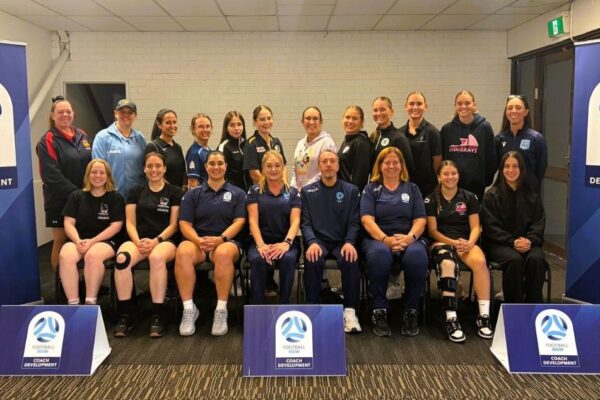
Complementing SHIVER, our coach development is absolutely vital for our club. Last night [14th May], we hosted a Football Victoria coaching course [Foundation in Football] right here in our dining room, with about 40 coaches attending. That’s nearly our entire coaching group. The course combines theory sessions on the big screen with practical drills on the pitch, delivered by Football Victoria’s expert coaching team. It runs over four weeks and offers a fantastic opportunity for our coaches to upskill and become qualified.

We’re always looking for ways to improve and support our coaches because ultimately, better coaches mean better players. It’s a big job, but we’re committed to making the process as easy and accessible as possible. Our goal is to keep improving for the benefit of both our kids and coaches.

Can you tell us about the recent lighting upgrade at Beaumaris Reserve and what it means for the club’s sustainability and match-day experience?

Joe Mottola: The lighting upgrade at Beaumaris Reserve was primarily for training purposes rather than match days, as we’re only allowed to play games during the day due to being in a residential zone on council-owned grounds. This limitation definitely holds us back because if we owned private land, we could play football 24/7 and fill it all year-round.

We share the grounds with cricket during the off-season, which is unfortunate since soccer is really a year-round sport and we could use the facilities more extensively if it were up to us.

That said, Bayside City Council does a lot to support us. Sometimes we’re not on the same page, but we get there eventually. The lighting upgrade itself has improved training conditions slightly, mainly making things more efficient in terms of power and billing, though there’s still more to do.

Luckily, we also have access to another fantastic facility at Beaumaris Secondary College, which we rent from the Melbourne Cricket Club (MCC). It’s a fantastic facility with a FIFA-approved pitch where we can play night games, sometimes until 10pm. While it’s also near residents, having this facility nearby has been a godsend and we’re very grateful to the MCC for their support over the past five years.

Are there any new sponsors or partnerships this season, and how are they helping BSC grow both on and off the pitch?

Joe Mottola: Yes, we’ve welcomed a few new sponsors this season, most notably Optus, who’ve come on board as our major sponsor. They’ve been absolutely fantastic, they’ve provided our playing kits for around 600 kids over a two-year period, which is just extraordinary. They’re not just a name on a jersey either; they’re really hands-on and visible at the club, attending our events and even bringing along outdoor entertainment like inflatables for the kids.

Bendigo Bank has also been a long-term supporter, and we really value that consistency. We make sure to give our sponsors front-and-centre visibility whenever we can. For example, Marshall White Real Estate recently sponsored all the shirts for our Goal Kick junior program. So on the first day, I gave their representative, Jason Swift, the mic for 20–30 seconds to thank him in front of all the families, with a bit of cheeky encouragement to sell their houses through him!

There’s always plenty of humour around the club, we don’t take ourselves too seriously, and I think that’s what makes BSC such a likeable place. We’ve worked hard to create a positive, welcoming culture. For over a decade now, we’ve been feeding players after matches — win, lose or draw — and it’s become part of the fabric here. We’ll even do light interviews with players, referees, and coaches. It’s a fun way to reflect and build community. At the end of the day, If the volunteers and players aren’t enjoying themselves, something’s wrong. That’s the motto we live by, and it’s a big reason why we’ve built such a strong, lasting community.

Image Credit: Beaumaris SC Facebook

What would you say is next for the club in 2025 and beyond? Are there any upcoming initiatives or areas of focus you’re particularly excited about?

Joe Mottola: For us, it’s about continuing to build on the foundations we’ve already laid, particularly when it comes to the development of our kids and coaches. That’s always been at the heart of what we do, and it’ll stay that way.

We don’t necessarily have one big, shiny initiative on the horizon, but we do have aspirations. We’d love to see both our men’s and women’s senior teams promoted into the next leagues, the women stepping up from State League 1, and the men doing the same. That’s something we all strive for. At the same time, we’re happy where we are too, it’s about balance. You can be ambitious and still content with what you’ve built.

What’s most important is maintaining a strong, supportive environment where kids can enjoy their football, develop their skills, and grow into good players and even better people. That’s what’s made this club what it is — a well-respected, community-driven club, both with Football Victoria and within the broader football world.

We’ve been fortunate to have some strong personalities involved, including people who’ve played at the highest level. But more than anything, it’s about continuing to do what we do, and doing it well. That’s how we’ll move forward.


Previous ArticleNext Article

‘We’re on our own’: Malvern City’s fight for a fair go

At Malvern City Football Club, the problem isn’t finding girls who want to play football.

It is finding appropriate facilities for their growing cohort of young girls to play at.

The club now has close to 100 girls in its female program, built up over the past six years. But at Sir Zelman Cowen Park, which Malvern City has called home for decades, there are no dedicated female change rooms or toilets.

Instead, there are shared facilities, public toilets and, according to club President John Hatzis, situations in which parents, coaches and team managers have had to effectively stand guard so girls can use the toilets without others entering.

“The problem we’ve got is that the public toilets are often locked, or they’re just not accessible,” Hatzis told Soccerscene

The result, he says, is a bizarre and frankly uncomfortable workaround: adults physically blocking the toilets so girls can use them.

That is the human face of what has become a much bigger argument about sporting infrastructure in the City of Stonnington.

It is the sort of arrangement that might have been observed decades ago.

Not something we see in 2026.

Malvern City isn’t a small club asking ratepayers to build it a palace.

It has more than 800 registered players. Its female program is approaching 100 participants. Its junior high-performance program is thriving, while its senior men’s side just earned promotion to VPL1.

And yet its president says the club has spent years being told, essentially, to wait.

“We’re doing everything right as a club,” Hatzis says.

“But every year around this time, we get teams of girls, we get teams of boys coming over to us and we’re saying, ‘We can’t help you. We just don’t have the facilities.’”

That should concern more than just football people.

Where Stonnington chooses to spend

Stonnington is not a municipality that pinches its pennies on sport – far from it.

The council recently completed the Stonnington Sports Centre at Percy Treyvaud Reserve, a $49.9 million project described by council as its largest-ever investment in community sport. The project delivered new facilities for tennis, lawn bowls, cricket, lacrosse, netball and basketball, as well as four indoor courts and more than 200 undercover car spaces. A project where the council contributed $45.9 million.

There are also millions more in the current and forward capital programs.

The 2026-27 budget includes $600,000 for maintenance and renewal works at Malvern Valley Golf Course. Sports-ground asset renewal and oval reconstruction programs amount to about $13.5 million over the forward program to be carried over the next decade. Pavilion renewal is worth roughly $7.3 million over the same period, while outdoor tennis facilities have a forward renewal program of about $3.3 million.

There is a roughly $10.4 million forward program attached to Central Park Pavilion and about $7 million for Waverley Oval Pavilion.

None of this means football is entitled to an equal slice of every dollar.

Many of these facilities are shared between sports. A cricket oval can also be an AFL ground. A sportsground renewal program can benefit soccer as well as football. Money allocated to floodlights or pavilions cannot simply be stamped with one sport’s logo.

A $66 million gap — and a question of priorities

There is no doubt Stonnington, too, has a legitimate argument on the other side.

Council has identified an enormous backlog of sporting infrastructure needs. Its own figures suggest about $124 million in required investment, with only about $58 million currently funded over the coming decade.

That leaves a gap of roughly $66 million.

The council cannot fix everything at once.

But that is precisely why the argument over Malvern City is worth having.

Hatzis does not dispute there are competing demands. In fact, one of the more revealing parts of our conversation was his admission that football itself bears some responsibility.

For years, he says, football clubs have simply found a way to survive.

“The squeaky wheel receives the oil,” he said.

“Obviously, we haven’t been squeaking enough over many decades and we’ve just made do with what we’ve got.”

That is a remarkably candid admission from a club president trying to make a case against his local council.

But Hatzis believes patience has run out.

A decade of planning, but no clear timeline

Malvern City has been at Zelman Cowen for almost half a century. The club says the pavilion dates back to the late 1980s, and despite repeated approaches to council, there is still no funded redevelopment of the facility in the current budget.

The council is now undertaking a 10-year Sport and Recreation Plan for Zelman Cowen, following consultation with more than 400 community members. The park contains five sports fields covering roughly 47,500 square metres and caters for football, Australian rules football, baseball, cricket, athletics and ultimate frisbee.

Council acknowledges that the precinct is under increasing pressure and that its future planning needs to consider accessibility, safety, gender equity and universal design.

But planning is not building.

And a plan without funding is a very long way from a toilet that actually works.

That is Hatzis’ frustration.

“We’re being constantly told that there’s a plan to redevelop Zelman Cowen,” he says.

“But the problem is that there is no funding.”

His estimate is that Malvern City could be seven-to-ten years away from seeing meaningful redevelopment.

Fair Access in policy, barriers in practice

That is where the council’s own rhetoric around women’s sport becomes important.

Stonnington’s sports infrastructure planning recognises that many older sporting facilities were not designed for equitable participation by women and girls.

That is not an abstract policy problem at Zelman Cowen.

There are girls standing outside a toilet.

There are parents being asked to intervene.

And there are young players who, he fears, could eventually decide that the inconvenience isn’t worth it.

“If they’re not willing to fund it, then how long can clubs fund it?” he asks.

That is the question Stonnington needs to answer.

Not because Malvern City should automatically jump to the front of the queue, but because the council needs to be able to explain why it has placed this particular queue in the order it has.

The comparison with other sporting facilities is inevitably going to be uncomfortable.

Hatzis points to the state-of-the-art facilities available to some AFL and cricket clubs. He points to major investment at Toorak Park and the new Stonnington Sports Centre.

His argument is that Malvern City would be prepared to meet council halfway.

Malvern City is willing to meet council halfway

The club would lobby state and federal governments. It would seek private funding. It would even ask its own support base to contribute.

“We’d be happy to go and lobby the state and federal government to help us with the funding,” Hatzis says.

“And even creating some private funding. I’d be happy to get our support base to help with that also.”

That matters, because this isn’t simply a demand that ratepayers write Malvern City’s club a cheque.

It is a demand for a pathway. Give us a plan. Give us a timeframe. Give us something to work towards.

Instead, Hatzis says, the message from council has become increasingly difficult to accept.

“The communication coming down the line that we don’t have any funding is absolutely wearing thin.”

Football’s missing support

One of the more damning parts of our conversation wasn’t even about the council.

Hatzis says he has repeatedly contacted Football Victoria seeking support. He says he has been told someone would contact him to begin an engagement process and that Malvern City is an important part of the fabric of Victorian football.

That call is yet to come, which raises an uncomfortable possibility: perhaps Malvern City’s problem isn’t just that it has failed to convince Stonnington; perhaps it’s that football itself has historically been too willing to accept second-best facilities and making do.

Football has grown enormously in the past 25 years, while girl’s and women’s football in particular has exploded across the past decade. Clubs are increasingly expected to provide pathways from junior participation to elite competition.

Yet the infrastructure beneath that growth has not kept pace.

A story bigger than one club

That is where Stonnington’s own Fair Access Policy becomes particularly difficult to reconcile with what is happening at Zelman Cowen.

The council says the policy is designed to address “known barriers” experienced by women and girls in accessing community sport facilities, before acknowledging in its budget that implementing Fair Access will require “significant new funding”.

It is a remarkable admission: the council recognises the barriers, recognises that its sporting infrastructure needs to change, yet the girls at Malvern City are still being asked to wait for the money to make that change happen.

Malvern City’s story is therefore bigger than one pavilion.

It is about what happens when a sport grows faster than the facilities designed to accommodate it.

And it is about whether councils can continue to promote female participation while asking girls to accept facilities that would be considered unacceptable in other parts of community life.

Stonnington says it has limited resources.

That is undoubtedly true.

But scarcity does not remove the responsibility to explain the choices being made.

If there is $600,000 available for one year’s renewal and maintenance at a golf course, if millions are flowing through tennis, pavilion and sports-ground programs, and if a $49.9 million flagship sporting centre can be delivered, then telling Malvern City simply that there is “no funding” is not really an answer.

It is only the beginning of the question.

Why that facility?

Why now?

Why them?

And why not Zelman Cowen?

Malvern City has spent decades making do.

Its president admits the club has not always been loud enough.

But over the last decade, that has changed.

“We’re doing everything right as a club,” Hatzis says.

“We need to be heard”

Perhaps the real test for Stonnington now is not whether it can find enough money to fix every sporting facility in the municipality.

It clearly cannot.

The test is whether, when the council sits down to decide who waits another decade and who moves forward. Malvern City, a club with more than 800 players, a senior men’s program that is among Victoria’s elite, and a growing cohort of girls can make a convincing enough case to finally move up the list.

Because asking girls to wait years for a proper place to change is not a particularly convincing way to build the future of women’s sport.

Gold Coast International drives futsal growth as international interest surges

The 2027 Gold Coast International is set to be the biggest year of growth in the tournament’s history. The tournament has become one of Australia’s premier futsal events. Attracting the best teams from not just Australia but around the world. Andrew Parkes is the founder and managing director of the Gold Coast City Futsal Association and an advisory board member at Football Queensland. He says the tournament, and its international reputation, is only strengthening.

“Registrations are actually a step up from what they were last year,” Parkes said.

“We’ve got several teams from New Zealand. At the moment, we’ve got some Pacific Island teams that have expressed interest in coming. We got interest from Japan, and from England as well.

“We’ve got over 140 teams so far, and that’s not including anything from the local areas.”

Over 200 teams attended the 2026 edition, and the Gold Coast International is well set to break that record next year. The figures show the tournament is becoming more than a local competition. It is building a strong national and international presence.

Football Queensland and Football Australia unite behind growth

Parkes believes collaboration has played a major role in the development of futsal in Queensland. The tournament is sanctioned by both Football Queensland and Football Australia. He praised Football Queensland for its work across the sport. He said the organisation has helped create a stronger and more professional futsal system. This relationship between state and national bodies and the event has allowed the Gold Coast to play host to the national competition as well. This ensures shared resources including referees and courts.

“Football Queensland have been a major driving force and a godsend in relation to the development of futsal,” Parkes said.

“We’ve got the nationals the week before the Gold Coast International now. We’re working in harmony and synergy and supporting each other.

“I think the proofs in the pudding, not just with the Gold Coast International, but with the exposure and obviously the diversity of teams that attend. But then the further development in our local leagues, and that’s resulted in.”

E-sports adds another pathway for players and clubs

E-sports has become another major part of the Gold Coast International. Parkes said he had explored the idea for several years and that the tournament allows the community to grow beyond just the physical players on the court. The use of e-sports also allows friends and families to have an interactive experience with simulators and games whilst at the Gold Coast International.

“We launched e-sports about 2 years ago, just with a bit of a light feel. We’ve incorporated the competition into the tournament fees, which is excellent. So it doesn’t cost anybody anymore to be part of it,” Parkes said.

“It actually allows the clubs and academies to extend on their current offerings as it is at the moment and allows gaming players to be part of the club, to be part of the atmosphere and to join and that unity and be part of that sporting community.”

“We had three times the amount of teams that we had from the first year of e-sports. We’re looking to probably even double that again this year, which is really exciting as well.”

New pathways shape the tournament’s future

Parkes wants the Gold Coast International to keep expanding. He is now looking at ways to create pathways beyond the tournament itself. He said the use of its international experiences that can be earned through the tournament is not only about investing in players. But ensuring coaches have a more time-efficient avenue to be involved with futsal. It also gives more coaches the chance to work with players at an international tournament.

“We’ve now created the Gold Coast International All Stars, which is now embraced by many of the coaches and the players,” Parkes said.

“That also provides coaches who don’t have the time or the ability or whatever for the state teams, and the commitment that they need to put in the state teams throughout the year.”

“It allows us to have a lot more outreach to far more coaches that have a lot of passion and enthusiasm, and be part of the Futsal community. They want to build on the players’ abilities but may not have that year-long or eight-month-long exposure that is required by the state Futsal team coaching staff.”

For Parkes, the future is about widening access while continuing to raise standards. The tournament is growing its international reach, strengthening partnerships and creating new opportunities for both physical and e-sports players. The Gold Coast International is no longer just a tournament. It is becoming a broader platform for the development of futsal and its wider community.

For more information on the Gold Coast International and to inquire about competing in the 2027 edition, visit their website.

Most Popular Topics

Editor Picks

Send this to a friend