

Australia’s sleeping giant: the commercial reality of the A-League

The A-League has immense commercial potential, just waiting to be realised.

As Australia’s premier football competition, it has access to a growing fan base and a flourishing global market.

As of late, there is also interest in both the men’s and women’s game. This has been capitalised on to some extent, with steady gains across sponsorship, broadcasting, and ticket sales.

The latest data regarding the A-League’s growth was released in June 2024. Statistical analysis compared the 2023/24 season to previous seasons.

The following was reported:

  • Television viewers for the A-League Men’s 2023/24 season were up 53% on Paramount+, 33% on 10 Play and 16% on Network 10.
  • Men’s and women’s club memberships increased 31% from the previous season.
  • Overall attendance across the A-League Men was up 7% year-on-year, with an average attendance of 8,600.
  • The A-League Men Grand Final reached 1.12 million on television, up 12% year-on-year.
  • Outbound transfers from A-League Men surpassed AUD 17 million since July 2023, marking a 79% increase on the previous season.
  • U23 player minutes in the A-League Men saw a 46% jump year-on-year.
  • Local and international sponsorship revenue grew 17%.
  • Total social community size grew to 9 million fans, a 44% increase year-on-year.

Despite this growth, the A-League’s true commercial value remains untapped.

A-League sponsorship growth

As mentioned above, the A-League’s sponsorship revenue increased 17% during the 2023/24 season.

The growth in sponsorship revenue can be largely attributed to two key deals: Isuzu UTE as the league’s naming rights sponsor and eToro as the Official Trading and Investing Platform.

Further, in September of 2024 – after the latest A-League sponsorship data was released – SharkNinja was announced as the new naming rights partner of A-League Women.

This partnership highlights the increasing interest in the A-League’s commercial offerings and the growth of the women’s game.

While these developments are promising signs of commercial momentum, they simply do not hold up to what other sports entities are doing in Australia and beyond.

Comparison to other leagues

According to SportBusiness, in 2021, Australia’s top five major sporting bodies collectively generated just under AUD 330 million in sponsorship revenue.

  • Tennis Australia: AUD 116.9 million.
  • Australian Football League: AUD 76.85 million.
  • National Rugby League: AUD 62.8 million.
  • Cricket Australia: AUD 53.1 million.
  • Rugby Australia: AUD 19.2 million.

While the A-League’s exact sponsorship revenue remains undisclosed, it is considered to fall substantially short of these figures.

With the combined revenue spread across 140 sponsorship deals, it is clear that these sports have a far broader commercial footprint than the A-League.

Currently, the A-League has only 12 sponsors in total; three principal partners, three major partners, three official partners and three broadcast partners.

By comparison, the National Rugby League has 12 major sponsors alone, with a total of 48 commercial partners.

This highlights the need for an expanded sponsorship base.

The A-League is also behind other football leagues.

Of course, it is unrealistic to expect it to compete with industry giants such as the Premier League or La Liga.

However, even smaller leagues are leaving the A-League behind.

The J.League and the A-League share a similarity in that they operate on domestic calendars that are offset from European leagues.

Despite this, the J.League currently has 43 official partners – nearly 4x as many as the A-League.

The official J.League 2024 financial report revealed their sponsorship revenue to be AUD 59.5 million (YEN 5.8 billion), reflecting the discrepancy in commercial scale between the two leagues.

Comparisons to the J.League and major Australian sporting bodies highlight the A-League’s limited sponsorship reach and the resulting constraints to its commercial revenue potential.

Conclusion

Interest in football is undeniable – it is the most popular sport in the world and the most widely played team sport in Australia.

Following the success of the Matildas in the 2023 FIFA Women’s World Cup, women’s football is also on everyone’s radar.

The men’s and women’s games are attracting a growing audience, and the global market is at an all-time high.

The A-League’s commercial footprint over the last five years suggests it has capitalised on this to some extent.

However, more needs to be done. It is still trailing too far behind other sports in Australia and overseas football leagues.

The right steps need to be taken to fully capitalise on the A-League’s commercial potential and strengthen the status of football in Australia.

In a sense, the A-League is a dormant strength, with the potential to make big waves in Australia’s sporting landscape.

Now is the time to tap into that potential.
Previous ArticleNext Article

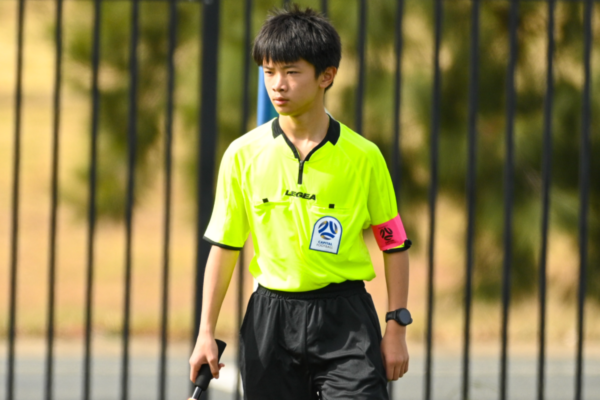
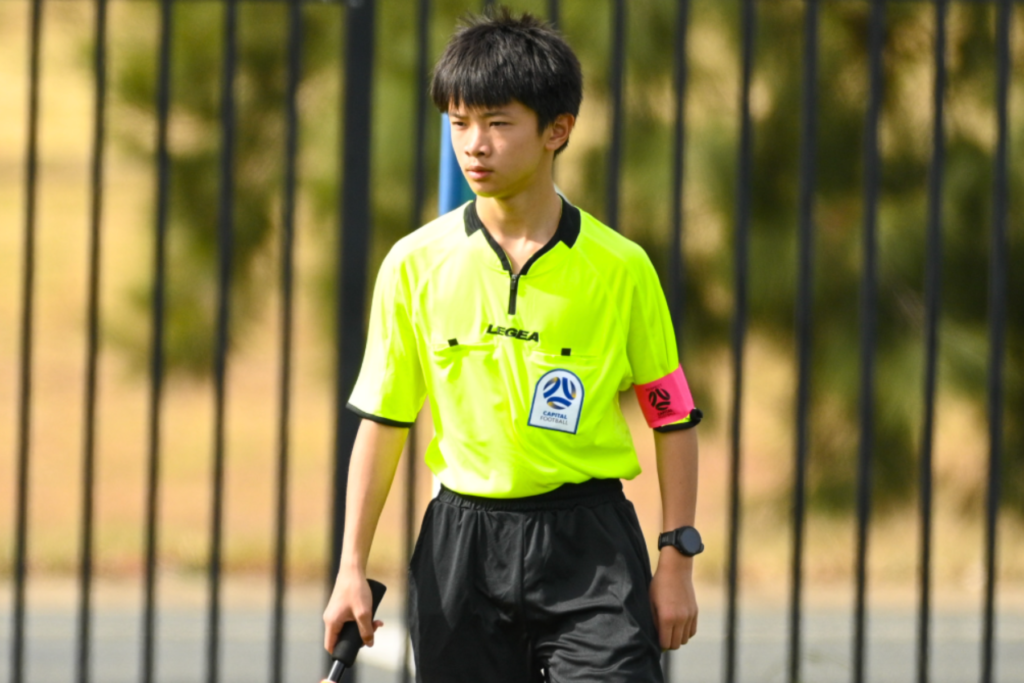
Capital Football Introduces Pink Armband to Protect Junior Referees

Capital Football has launched a visible identification program for referees under 18, requiring them to wear a pink armband during matches. It’s intended to build awareness surrounding the concern across Australian football about the abuse driving young officials out of the game.

The Pink Armband Initiative, effective immediately across Capital Football’s competitions in the ACT and surrounding region, makes junior referees identifiable to players, coaches and spectators. The federation says the marker is designed to set clear behavioural expectations and signal that many match officials are minors still developing their skills.

Capital Football acknowledged a referee crisis as far back as 2022, at which point it restructured its entire referee department in partnership with Football Australia. The pink armband program is the latest layer of that response; this time by targeting the cultural conditions on match day rather than systems of recruitment and pay.

A problem that spans codes and states

Research has consistently linked referee abuse to declining retention rates, with officials quitting in growing numbers due to sustained mistreatment, a trend researchers warn will reduce the pool of skilled match officials available at all levels of the game. Studies also show that young, less experienced referees are disproportionately likely to be subject to abuse.

Capital Football is not alone in reaching for a visible solution. Similar programs operate across Football Queensland, Football South Australia, Football South Coast and several other federations, while Basketball Victoria and Basketball South Australia have adopted comparable measures through the Green Whistle initiative. The spread of these programs across codes and states reflects a shared administrative problem: many grassroots referees are teenagers and volunteers who do not officiate for money but because they love the game, and abuse is eroding that foundation.

For a federation overseeing nearly 29,000 registered players, fewer referees means fewer matches. Fewer matches means reduced participation. The pink armband is a low-cost intervention with structural consequences if it works.

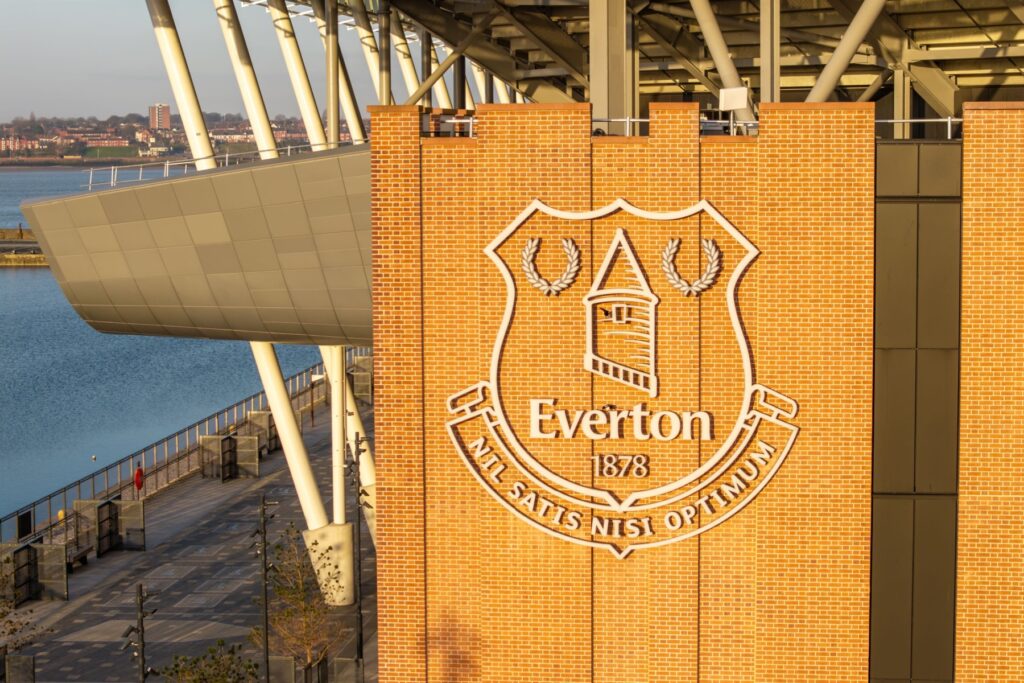
Compliance and competition: Everton ordered to pay compensation following major verdict

In a landmark decision by the Premier League Independent Disciplinary Commission, Everton must now pay Burnley upwards of AUD 66 million (£35 million) after breaching financial rules in the 2021-22 season.

Behind the verdict

Playing in the Premier League is, in itself, one of the most lucrative positions for a club to be in. This year’s Championship Play-off final – a contest deemed ‘the richest match in football’ – guaranteed winners Hull City a revenue uplift of AUD 389 million (£205 million) according to Deloitte’s Sports Business Group.

It is no wonder, therefore, why teams are so desperate to stay at the top of the pyramid, especially given that relegation can lead to heavy financial hits in revenue, wage reduction and transfer spending power.

Competition is certain – and the football is all the better for it. But when this competitive edge overtakes compliance, what happens off the field is just as impactful.

In 2023, the Premier League charged Everton with breaching financial rules during the 2021-22 season – the same season which saw the Toffees finish just four points above relegated Burnley. Everton received an initial 10-point deduction, which ultimately decreased to six points on appeal.

That season, Everton stayed up. But for Burnley, had the points deduction come at an earlier date, their survival in the top-flight may have been secured.


What did the ruling find?

In its verdict, the Premier League’s Independent Disciplinary Commission deemed that Everton gained a competitive advantage over Burnley as a result of financial breaches.

Burnley will now receive AUD 66 million (£35 million) in compensation from Everton, although the Merseyside club will appeal the  commission’s decision.

“This ruling sets a dangerous and unworkable precedent for English football, given it is constructed on a principle that a club can be in breach of financial rules at any point in a financial year,” Everton said via an official club statement.

Burnley, on the other hand, reaffirmed its position that the case was a question of fair play and ensuring a level playing field.

“Our action has always been about making football fair,” the club said via an official statement.

“Clubs that comply with the rules deserve to compete on a level playing field. Fans deserve it. The sport demands it.”


The impact of the case

This is a landmark decision which may have profound effects on the future of financial compliance in English football.

In the past, financial breaches remained within the realm of just that – finances. But with the ruling between Everton and Burnley, it now opens up further questions on what compliance is actually worth in the game.

And whether future investigations may lead to similar – or even higher – compensation packages to affected clubs.

Most Popular Topics

Editor Picks

Send this to a friend