



FIFA World Cup 26 Mascots and Why FIFA’s New Videogame Title Is Interesting

Did you know FIFA has already unveiled the mascots for next year’s FIFA World Cup? Did you also know the mascots will be FIFA’s first “interactive mascots” in an upcoming video game?

Being held all over North America (Canada, the United States, and Mexico), the colourful trio, Maple the Moose, Clutch the Bald Eagle and Zayu the Jaguar, will represent their respective countries in the FIFA World Cup 2026.

The FIFA World Cup mascot is made to represent the country hosting the game, its culture, and, more importantly, the game of football and FIFA. As ambassadors of the game, carefully designed by a team of experts, they are made to advertise football as a family-friendly event, especially to appeal to children in hopes of future generations of supporters.

FIFA President Gianni Infantino stated in the press release announcing the mascots that they are central to the incredible, entertaining atmosphere the governing body has created for the game-changing tournament.

“They’ll win hearts and spark celebrations across North America and around the world,” he said.

“I can already picture them on children’s shirts, high-fiving football legends, and—in another first for this tournament—staring in video games played by millions worldwide.”

The video game he’s referring to is FIFA Heroes, FIFA’s new licensed title where professional football teams and the tournament itself are replaced by playable mascots. From the first-ever mascot, Willie, to the current group, you can put in teams of five.

To put it into context, the videogame, which will release on all current-gen consoles and mobile next year in line with the beginning of the World Cup, is made for younger fans. The videogame will also be a part of the growing portfolio of FIFAe, the electronic entertainment and esports department of the governing body, to make digital football accessible to more fans, the press release said.

FIFA are also partnering with Roblox to deliver in-game events and host quests illustrating each mascot’s role with themed rewards, which, in my humble opinion, may not be a good idea after the news surrounding how the site polices itself this year.

All up, the news is very clear: FIFA are going to try to engage young fans through video games next year. But this isn’t a new move for them.

FIFA’s Videogame Franchise

FIFA has always had a significant presence in the videogame market. The body’s nearly annual titles are shipped by the millions across the world, and that’s only counting the physical copies. If the current year’s game is a little too pricey, you can go over to the bargain bin and grab a previous year for the same console.

Furthermore, since the 1980s, World Cups have had video game tie-ins to celebrate the tournament and the qualifying teams when they play in them. It’s only since 2018, when the 2018 World Cup was relegated to a DLC (downloadable content) for FIFA 18.

The audience of these games are primarily young males and people who enjoy the sport recreationally; not to mention, the games usually score well with critics.

So, why make a grand new title when the franchise you’ve created works? There’s not a clear enough answer, but we can guess creating a brand-new game with three times the stadiums and locations and then having national football team branding as well as being able to know which ones will qualify for next year in time is more expensive to make than using already owned mascots in a 5v5 football game.

So, What Makes The News Interesting?

By FIFA creating a game, developed and published by ENVER in partnership with Solace, for an event that changes location every event, it is more cost-effective and could be successful in bringing more attention to the FIFA World Cup by breaking the mould of tie-ins like done with the Olympics.

Also, FIFA Heroes having mascots from every World Cup appear allows the governing body and the creators of the game the ability to use the title for the next event and maybe continue the game into a larger franchise through FIFAe.

Though, to be fair, since it will be on mobile and it’s aimed at children, FIFA would definitely have to watch and safeguard against predatory advertisements and incentives in regard to microtransactions, which could negatively affect their children player base. Think more stealing their parents’ credit card than loot boxes.
Previous ArticleNext Article

How Australian Support for the World Cup Has Changed Since 2022

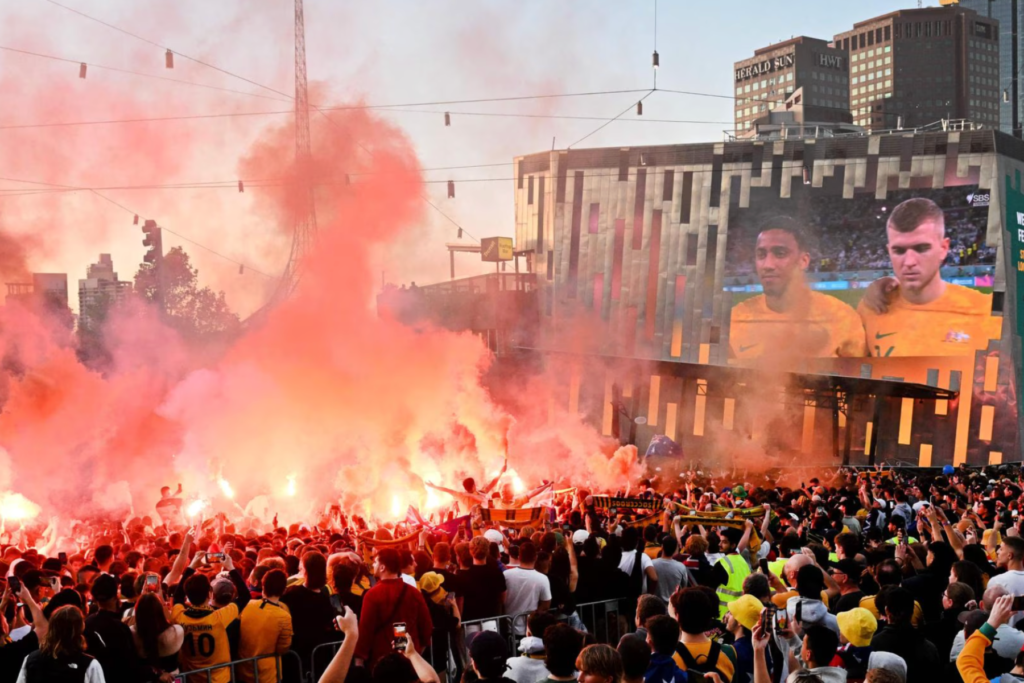
Sodden, rowdy and 7,000-strong, the crowd that gathered at Federation Square before dawn on Saturday for Australia’s clash with the United States offered a vivid illustration of how much, and how little, has changed in Australian football support since Qatar 2022.

The scenes themselves were familiar: fans queuing from 2am, flares lit during the anthem, a barrier breach as the precinct hit capacity within minutes of opening. But the fact the screening happened at all says something about the shifting institutional weight football now carries in Australia.

Just this May, the Melbourne’s Arts Precinct had decided not to screen Socceroos matches at Fed Square this tournament, citing crowd damage and arrests during a 2022 World Cup screening. Football Australia publicly pushed back, and the Victorian Government ultimately overturned the decision, with security and police presence increased to manage the risk. That a state government intervened to guarantee a public screening reflects how central these gatherings have become to football’s standing in Australia, not just as a peripheral fan event but a piece of cultural infrastructure worth a premier’s political capital.

A Tournament Inherited, Not Just Attended

The scale of public interest now sits on a different foundation than it did in 2022. Football Australia’s most recent National Participation Report recorded an 11% increase in total participation to 1,911,539 people, with women and girls’ participation rising 16% to 221,436. Industry analysis attributes much of that growth to the “Matildas effect” following the home Women’s World Cup in 2023, projecting 407,000 new junior participants by 2027 on the back of that tournament and Football Australia’s broader infrastructure strategy. Whatever happens to the Socceroos in the United States, the crowd at Fed Square this year is drawn from a participation base substantially larger than the one watching from lounge rooms and pubs in Qatar.

That shift shows up in how fans say they’ll engage with this tournament regardless of results. New industry research found 79% of intended Australian viewers plan to keep watching the World Cup even if the Socceroos are eliminated, an 11-point increase on 2022, suggesting interest is becoming less tied to the national team’s results than it once was. The same research found television remains dominant, with 88% of viewers planning to watch on TV, rising above 90 per cent for evening and weekend matches, even as audiences increasingly split their attention across streaming and second screens.

Crowd Behaviour as the Unresolved Question

What hasn’t shifted is the tension over crowd conduct at public screenings, and what it costs football’s civic standing when things go wrong. The Melbourne Arts Precinct’s chief executive was explicit in 2026 that damage and behaviour during 2022 screenings were the basis for initially declining to host watch parties this time, despite trouble-free crowds during the 2023 Women’s World Cup.

Saturday’s flares and barrier breach will likely feed that same debate going into the knockout stages, even as the broader numbers tell a story of a sport with a far deeper public footing than it had four years ago. The Fed Square images from 2022 prompted other Australian cities to scramble together live sites once the Socceroos reached the knockout rounds, reflecting a pattern likely to repeat if Australia progresses from Group D, with Friday’s match against Paraguay now carrying outsized weight for a campaign that began with what fans, by their own description, considered horrible refereeing and a result short of expectations.

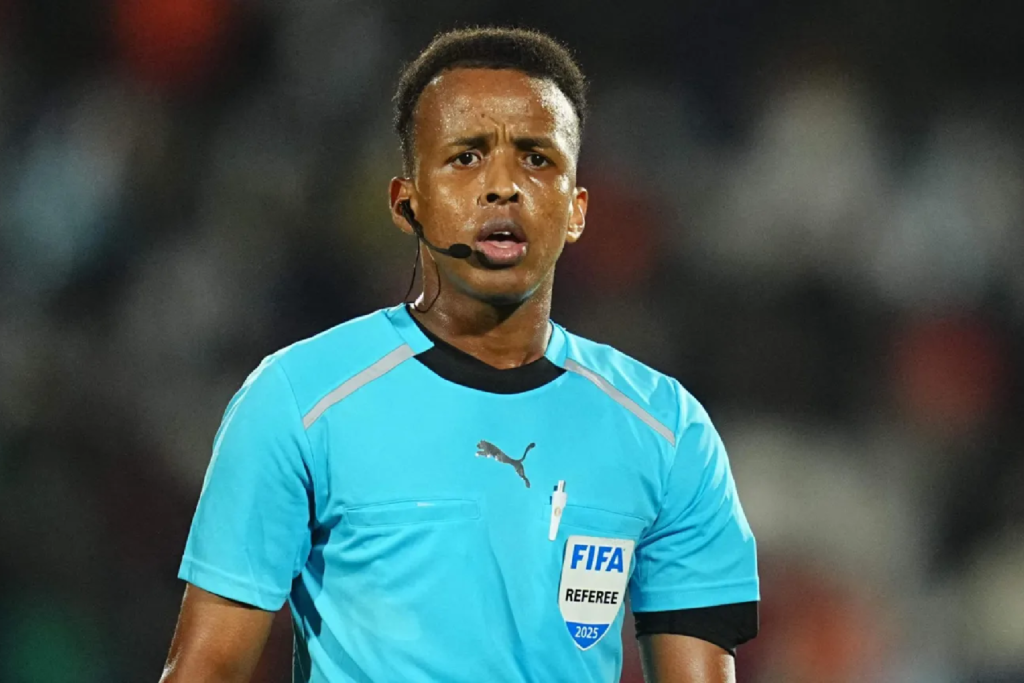
Referee Omar Artan appointed to UEFA Super Cup Final

The Somali referee will officiate the 2026 UEFA Super Cup in August between Paris Saint-Germain and Aston Villa.


World Cup controversy to Super Cup support

As 2025’s CAF Men’s Referee of the Year, Artan stands as one of the world’s leading match officials.

His expertise and skill allowed him to enter FIFA’s international list in 2018, and has since proved an outstanding ability as a referee, culminating in the CAF Men’s Referee of the Year award last year.

Despite Artan’s capabilities and reputation, his dream of officiating this summer’s World Cup tournament met a premature ending. The referee couldn’t enter into the US after arriving on a diplomatic passport and single entry visa, and was subsequently forced to return home to Somalia.

But Artan’s journey as a referee on the global stage is far from over, as UEFA and CAF confirmed that Artan will officiate the UEFA Super Cup clash between Champions League winners, PSG, and Europa League winners, Aston Villa, in Salzburg this August.


Upholding the partnership

In April of this year, UEFA and CAF signed a new Memorandum of Understanding (MoU), which promised to utilise mutual support to encourage development, inclusion and wellbeing in football.

The MoU aligns unity, cohesion and partnership between two powerhouse continents of world football.

And now, the alignment is stronger and clearer than ever. In the midst of a major blow to Artan’s personal and professional dreams, UEFA and CAF’s partnership provided an opportunity.

“Omar is an excellent young but already experienced referee, who has proven himself at the highest competition level of the Confederation of African Football,” said UEFA President Aleksander Čeferin via media release.

“Football is made to connect people, and UEFA wants to show its respect to Omar and his outstanding officiating skills, which had earned him such a prestigious nomination.”

Furthermore, CAF President, Dr Patrice Motsepe, outlined why the initiative perfectly embodies the nature of a partnership between UEFA and CAF.

“This is a great honour for Omar Artan and for African referees and is also an excellent example of football bringing together and uniting people from Africa and Europe and worldwide.”


Final thoughts

Out of bitter disappointment and controversy comes a far more positive reflection of football’s influence and impact. It also proves that an MoU is more than just signatures, but a genuine promise to support the game and all within it.

A partnership like this has the power to help millions at once.

But sometimes, helping just one person is all it takes to prove its worth.

Most Popular Topics

Editor Picks

Send this to a friend