‘We Can Do So Much More’: Players Take Control of the A-League Women’s Future

Professional Footballers Australia (PFA) has launched Ready For Takeoff – The Players’ Vision for the A-League Women, a player-led roadmap outlining the future direction of the domestic women’s competition.

Unveiled on Wednesday at Ultra Football in Melbourne, the initiative places current A-League Women players at the centre of discussion. Elevating the debate around professionalism, sustainability and long-term growth of the league.

The Players’ Vision for the A-League Women – Image Credit: One Nil

The vision, developed through consultation with players across the competition, calls for improved professional standards, greater investment and governance structures that reflect the specific needs of the women’s game. It comes amid ongoing conversations about contract security, season length and the transition toward full-time professionalism.

PFA Chief Executive Beau Busch – Image Credit: One Nil

PFA Chief Executive Beau Busch said players had been clear about the sacrifices required to continue competing in the league.

“We’ve heard from players about the struggle and sacrifices they continue to make to play the game they love, but we can do so much more than this,” Busch said. “A fully professional game here in Australia is crucial to creating the next generation of Matildas, but also to ensure we reach our potential and win a FIFA World Cup.”

PFA Deputy Chair Elise Kellond-Knight and A-League Women players Grace Maher and Dylan Holmes also addressed media, reinforcing the importance of player voices in shaping the future of the competition.

The PFA said Ready For Takeoff provides a clear, achievable framework for the continued evolution of the A-League Women. The initiative urges stakeholders to work collaboratively with players to ensure the league’s growth matches the talent, ambition and momentum of women’s football in Australia.

Previous ArticleNext Article

The Young Socceroos exposed one of Australian football’s biggest problems

Australian football has spent years trying to create a clearer structure for the game.

But one question keeps resurfacing: who is actually responsible when the interests of Australian football collide?

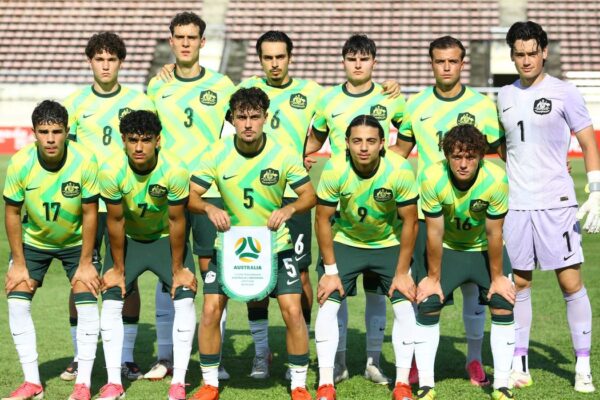
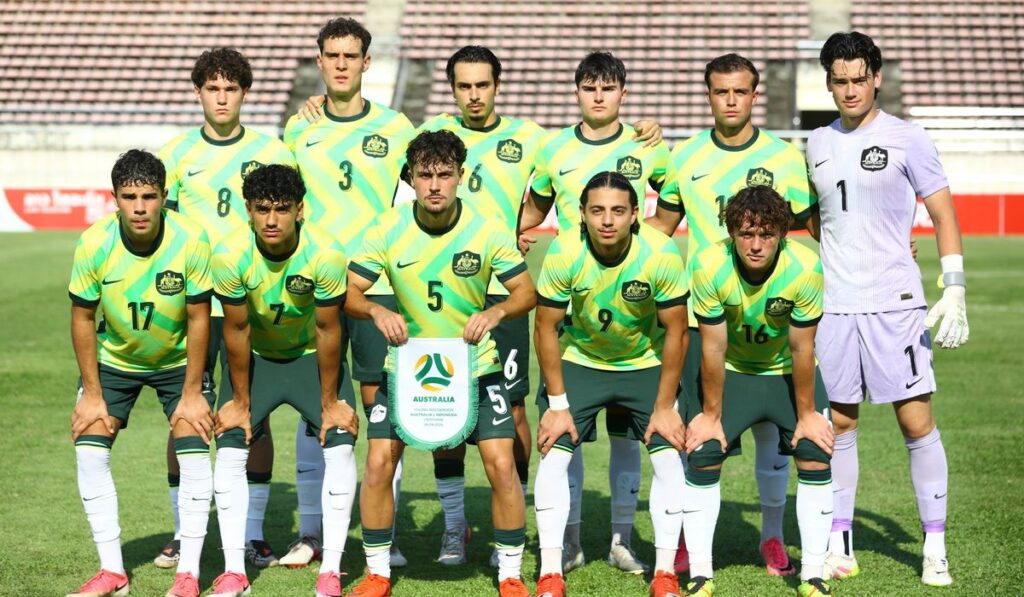
The Young Socceroos failing to qualify for the 2027 AFC U20 Asian Cup is the latest example.

Australia finished third in its qualification group after a 2-0 defeat to Indonesia, failing to qualify for a tournament it won in 2025.

The result itself was disappointing. Buthe circumstances around the squad selection were arguably more so.

Several A-League players were unavailable because their clubs did not release them for the qualification campaign. Melbourne City’s Lawrence Wong and Medin Memeti and Adelaide United’s Amlani Tatu were among those affected.

The reason is straightforward. The U20 qualification tournament fell outside a FIFA international window, meaning clubs were not obliged to release players. A previous agreement between Football Australia and A-League clubs had allowed national teams to select domestic players outside those windows, but that arrangement expired.

That leaves a much bigger question than whether three players should have been available.

Why was there not a structure in place that could resolve this conflict before it became a problem?

One game, multiple priorities

The answer is partly structural.

Football Australia is responsible for the national teams and the broader national framework. The APL operates and commercialises the A-Leagues. State federations oversee their own competitions and development structures, while clubs have their own commercial, sporting and player-development priorities. Meanwhile, the PFA represents the players.

Football Australia’s own governance outline acknowledges the unbundling of Football Australia and the APL was completed at the end of 2020, while noting the two organisations still need to collaborate across areas including pathways, community football and national teams.

On paper, that separation makes sense.

In practice, difficulties emerge when the model is tested and conflicts of interest emerge.

A club has an obligation to its competition and its squad. Football Australia has an obligation to its national teams. Players have career considerations, while the APL has commercial and scheduling interests. State bodies have their own competitions and pathways.

None of those interests in isolation are necessarily unreasonable.

The problem comes when they point in different directions.

The cost of fragmentation

This is not the first time the club-versus-country question has reared its head.

The same issue has affected Australia’s youth pathways before. In 2012, then-national technical director Han Berger acknowledged the particular difficulty Australia faces because many young players are overseas and youth international tournaments are often held outside FIFA windows, meaning clubs are not obligated to release their players.

And there is a broader irony here.

Australian football is producing young players good enough to attract serious international interest. A-League clubs are increasingly important development environments, with 15 A-League players included in Australia’s 2025 U20 World Cup squad.

Yet the system seems to struggle coordinating those same players when the national team needs them.

That is not necessarily a club problem.

It is a system problem.

Who gets the final say?

The answer cannot simply be that Football Australia should have more power.

Nor should clubs be expected to sacrifice their own interests whenever national teams come calling.

The real issue is whether Australian football has clearly defined the points at which the interests of the national team, professional clubs and players intersect and importantly, where they take priority.

If it has, those rules need to be understood and consistently applied.

If it hasn’t, this should be the catalyst to fix them.

Because the consequences extend beyond one U20 tournament.

Australia’s youth national teams are part of the country’s player-development pathway. International tournaments provide players with experience, exposure and opportunities to progress. The U20 Asian Cup also serves as a pathway towards the FIFA U20 World Cup.

Missing that pathway matters.

At the same time, A-League clubs are investing in academies, recruiting young players and trying to build sustainable professional businesses. They cannot simply operate as talent suppliers for national teams without considering their own competitive and commercial interests.

That tension is natural, and not going away.

Australian football needs alignment, not another power struggle

The answer may therefore be less about deciding who is in charge and more about establishing who is responsible for what.

Football Australia, the APL, clubs, state federations and the PFA do not need identical objectives.

But they do need a common framework for the moments when those objectives collide.

That could mean clearer player-release agreements, longer-term scheduling coordination and defined mechanisms for resolving disputes before squads are announced.

The alternative is a cycle of arguments.

Clubs blame national team scheduling. National teams point to player availability. Players find themselves caught between employers and country. Fans are left wondering why a supposedly connected football system cannot agree on something as fundamental as making Australia’s best young players available for an international tournament.

That is why the Young Socceroos’ failure to qualify should prompt a bigger conversation than whether three A-League players were released.

Australian football has spent years building separate professional, national and community structures.

The next challenge is making those structures work as one.

Because when nobody has the authority or responsibility to resolve the competing interests, everyone can have a legitimate position and Australian football can still lose.

Australia football needs to fix its football governance before it can fix its referees

The clearest image yet of Australian football’s refereeing crisis arrived on Wednesday night as Sydney FC and Melbourne Victory met in an Australia Cup semi-final at Jubilee Stadium.

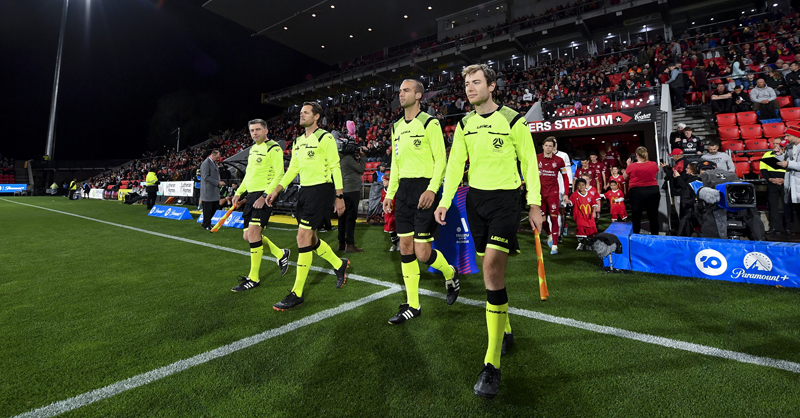
A first ever Big Blue in the competition – and towards it’s pointy end – should have been a showcase event for Australian football but instead, the referees were in the spotlight. Not because of the quality of their officiating, but because of the dire situation the game finds itself in and it’s present need to resort to international imports.


Four Singaporean referees were in charge of the fixture, which Victory won 2-0. Australian referees had refused appointments because of their ongoing dispute with Football Australia. The issue is no longer theoretical. Australian referees are not simply threatening industrial action – their absence has already changed how major matches are delivered. That is a governance failure on the part of Football Australia and the Australian Professional League.

What are the referees fighting for?

Around 90 elite Australian match officials are currently without contracts. That includes referees, assistant referees, fourth officials and video match officials working across the A-Leagues and Australia’s national competitions. The previous contracts expired last month. Some officials are also waiting for outstanding payments from A-League trial matches.

The Professional Football Referees Association (PFRA) has set three main requirements:

  • It wants the existing contracts extended until June 30, 2027, or until a new agreement or independent refereeing structure is established. 
  • It wants all outstanding match fees and expenses paid.
  • It wants a professional refereeing structure that does not place elite officials directly under the APL, which is controlled by the clubs they officiate. A new central structure is what the referees are demanding and should get.

Evgeny Vizelman, chairman of the PFRA, believes that whilst the strike action is extreme, it is necessary to protect Australian referees.

“We do not take the decision to stop officiating matches lightly,” Vizelman told Sydney Morning Herald last week.

“Our referees are being asked to perform in one of the most scrutinised roles in Australian sport without basic certainty around their employment and, in some cases, without even being paid for work already completed. That is not acceptable.”

Football Australia and the APL have been working towards a new structure, but one in which the two organisations contract separately for Australia Cup and A-League matches. The referees believe that is the wrong model.

Their concern is simple: The APL is 67.7% owned by the A-League Club Unitholders. Essentially, the clubs are appointing their own referees. That creates a perceived conflict.

If the referees sit under Football Australia as a regulator, it ensures there is no conflict of interest and that A-League clubs have no opportunity to influence the referees they may be appointed to matches.

England shows another way

England has already built the structure Australia is struggling to create. Professional Game Referees, or Pro Ref, is the central body overseeing refereeing across the Premier League, EFL, WSL Football and FA competitions. It is funded by those aforementioned competitions.

The important distinction is those competitions do not each run their own separate professional refereeing workforce. Pro Ref manages the system. It oversees appointments, development, training and performance. For the 2026-27 season, its new Professional Referee Group will service the Premier League and EFL Championship.

Officials work within the same professional structure and can be selected across competitions. That centralisation brings consistency. It also allows referees to be treated as a professional group rather than a collection of officials contracted separately by different competitions.

Whilst it is centralised, the system is not perfect. England has also recognised the need for greater independence in assessing referee performances due to Pro Ref being owned and funded by leagues and, as a result, the clubs they represent. However, as the body is also owned in part by the English FA, the governing body can oversee practices.

Pro Ref has also implemented world-leading officiating practices. Its Key Match Incidents panel includes former players and coaches, alongside representatives from the Premier League and Pro Ref, and reviews major decisions independently each week.

Pro Ref now has dedicated development groups, specialist coaching, sports science, psychology and performance analysis. 37 Pro Ref officials are currently on the FIFA International List. That does not prove centralisation alone creates better referees. But it shows what happens when refereeing receives a professional structure, long-term investment and consistent management.

Australian football needs to collaborate

This is where the Australian dispute becomes bigger than referees. Football Australia and the APL have been unable to secure agreement over who funds the referees over a long period of time, leading to this standoff; it comes at the same time as the APL’s difficulty in negotiating a new CBA with the players’ union.

Both organisations have a role in running their respective parts of the Australian game, but again an industrial dispute has the game appearing in shambles on the eve of another domestic season.

The most frustrating part of this dispute is that everyone needs the same thing. Football Australia and the APL need referees; there is no doubt the refs deeply value their employment at the elite level. With due respect to Wednesday’s flow-in Singaporean officials – themselves from a valued partner member through our shared position in the AFC – nobody wants to see the circumstances under which they were required on Wednesday continue any longer.

The PFRA dispute should therefore be treated as more than an industrial disagreement. It is an opportunity to fix the structure. Australia should learn from the principle behind Pro Ref and the English system. Centralise, professionalise and protect the officials who manage the game.

Most Popular Topics

Editor Picks

Send this to a friend