

Building the future: The Socceroo who has came home

In the modern football economy, the transition from elite athlete to administrator is rarely seamless. For two decades, David Williams’ existence was governed by the binary metrics of the professional game: goals scored, contracts signed, and minutes played. From the freezing training pitches of Brøndby to the humid pressure cookers of the Indian Super League, his career was defined by the relentless demand for performance.

Now, following his retirement in November 2025 due to a career-ending ACL injury, the former Socceroo is swapping the stadium penalty box for the grassroots pitch. As the newly appointed Program Development Lead at Football West (FW), Williams is tasked with reshaping the foundational layer of West Australian talent.

A Strategic Coup for the State

For the state governing body, securing Williams is a significant coup. The “ex-pro” circuit is often littered with tokenistic ambassadorial roles, but Williams offers tangible intellectual property. His journey began as a teenage prodigy at the Queensland Academy of Sport, carrying the heavy burden of being labelled the “best Australian prospect since Harry Kewell” by Miron Bleiberg.

He has lived the entire spectrum of the industry: the hype of a European transfer at 18, the volatility of the A-League loan system, and the cultural adaptability required to win titles in India. He understands the mechanics of the “football business” better than most.

“I’m very excited to have this opportunity to stay in football and work with young people,” Williams said. “I’m passionate about youth development and helping them grow, whether that’s as a coach, a mentor or just as a role model.”

The “Role Model” Mandate

In his new capacity, Williams will oversee the Coles MiniRoos, Football School holiday camps, and school clinics. On paper, these are participation programs. In practice, they are the first point of contact in the talent pipeline.

For FW, leveraging Williams’ heritage is a strategic necessity. As a member of the Indigenous Football Australia Council, Williams understands the structural barriers facing indigenous players. His presence provides a tangible pathway for kids who often feel disconnected from the metropolitan elite.

“Being indigenous, I would love to do some work in the regions and work with young indigenous children through football,” Williams noted. “It would be great to support the regional CPOs (community participation officers) and deliver sessions with these kids. That’s something I’m extremely passionate about.”

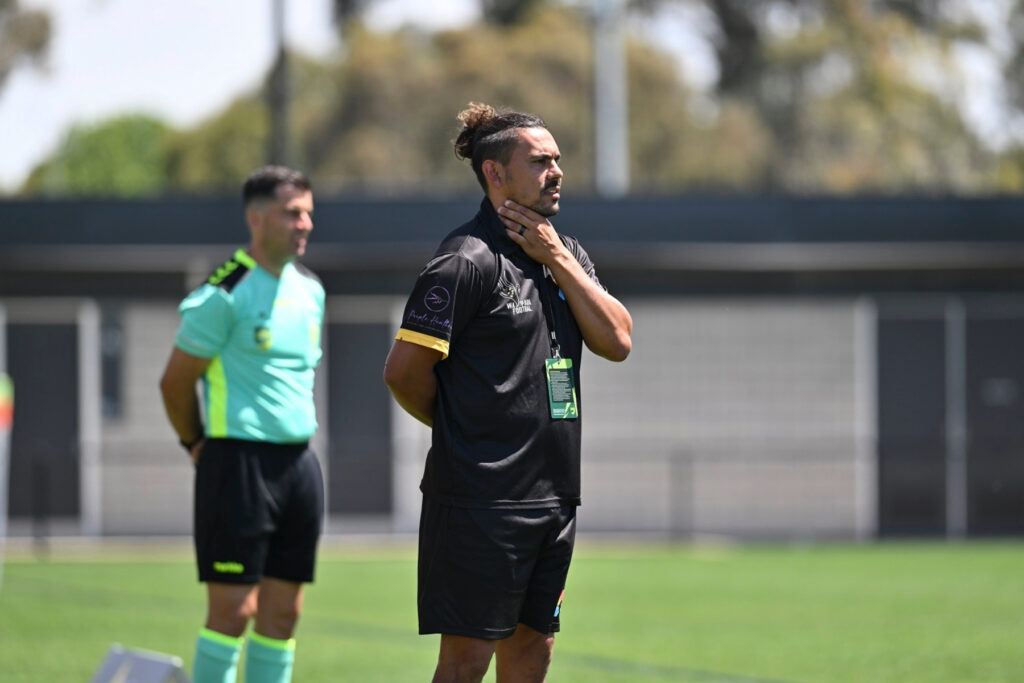
This is not a post-retirement affectation. Throughout 2025, while still nominally a Perth Glory player, Williams was already building his coaching resume as head coach of the Charles Perkins XI: Football Australia’s First Nations youth program. He isn’t just a figurehead; he is an operator actively closing the gap between regional talent and elite opportunity.

Proving the Concept: Success in the Dugout

Williams’ administrative portfolio is backed by growing tactical acumen. In December 2025, he coached the WA Paras State Team to their inaugural national title. For a squad that had frequently been the “nearly men” of the competition, Williams’ high-performance mindset was the catalyst for a historic breakthrough.

“That was an unbelievable experience, especially for the people who have been in the Paras program for a long time and seen them go close so often,” he reflected.

Crucially, this role sits alongside his appointment as Technical Director for NPL WA powerhouse Stirling Macedonia. Williams sits at the intersection of the state’s entire ecosystem as he drives grassroots participation for the federation by day and steers elite NPL structures for a club by night. It signals an ambition to master the technical direction of the game, not just the commercial side.

A Global Perspective, Locally Applied

Williams’ value to the WA system lies in his resilience. He was the first Indigenous player to represent Melbourne City. Williams scored in the UEFA Cup against Eintracht Frankfurt. He won the Indian Super League with ATK.

David Williams understands the technical demands of European academies and the harsh realities of the transfer market. When he speaks to a 12-year-old at a holiday clinic, he isn’t reciting a coaching manual. He is speaking from the experience of sharing a pitch with Alessandro Del Piero. He knows what “elite” actually looks like.

“After I finished at Perth Glory last year, I had some other great opportunities, but I am more passionate about my role within Football West,” Williams said. “This is different.”

As 2026 approaches, Williams faces a new kind of pressure. He is no longer responsible for scoring the winner at HBF Park. Instead, he is charged with ensuring that the thousands of kids in the MiniRoos programs fall in love with the game, and that the pathways he once navigated are accessible to them. It is a different game, but one David Williams is uniquely qualified to play.
Previous ArticleNext Article

JH Allan Reserve in Keilor East to undergo lighting upgrades

After strong backing from the community and Football Victoria, Moonee Valley City Council confirmed the green light for upgrades to proceed later this year.

Resounding support

Ahead of the council meeting on Tuesday 24 March, Football Victoria and five Moonee Valley Council clubs created a petition backing lighting improvements at JH Allan Reserve.

What followed was an astounding 624 signatures – a demonstration of the power of united, community support. As a result, main tenants Moonee Ponds United SC and four addition clubs (including Essendon Royals FC, Avondale FC, FC Strathmore and the Moonee Valley Knights) will all benefit from the developments.

“As one of the only facilities within Moonee Valley not shared with other codes, ensuring that JH Allan Reserve meets the needs of our participants is crucial for Football Victoria,” said FV Head of Government Relations and Strategy, Lachlan Cole.

“It was fantastic to see participants and officials from those five clubs come together, support this project, and unite to speak on behalf of their needs. And it was even more heartening to see the wider football community throw their support behind the development by signing the petition.”


A long-awaited verdict

The decision comes as a huge step forward for the local football community, arriving after an extended process of consultations and surveys.

In September 2022, Moonee Valley City Council endorsed the Moonee Valley Soccer Strategy, which sought to identify potential upgrades at JH Allan Reserve.

Furthermore, during the community consulation between March and April 2023, 365 people participated in a survey regarding the developments. In the end, 65% of responses supported or strongly supported the installation of sports lighting at the ground.

It is therefore clear that, for much of the community, this was a cause worth fighting for. Over three years since the initial endorsement from Moonee Valley City Council, JH Allan Reserve is now set for a vital upgrade.

Final thoughts

More importantly, however, are the current and future athletes who will feel the benefit from these developments.

Football participation is growing and will continue to do so, in Moonee Valley, Victoria and Australia as a whole. That is why developments like this are so vital.

They are not merely nice to have, but are fundamental to supporting future footballers in the community by providing them with the facilities and environment to play.

Football SA Commits $100,000 to Referee Fuel Subsidy as Cost-of-Living pressure Mounts

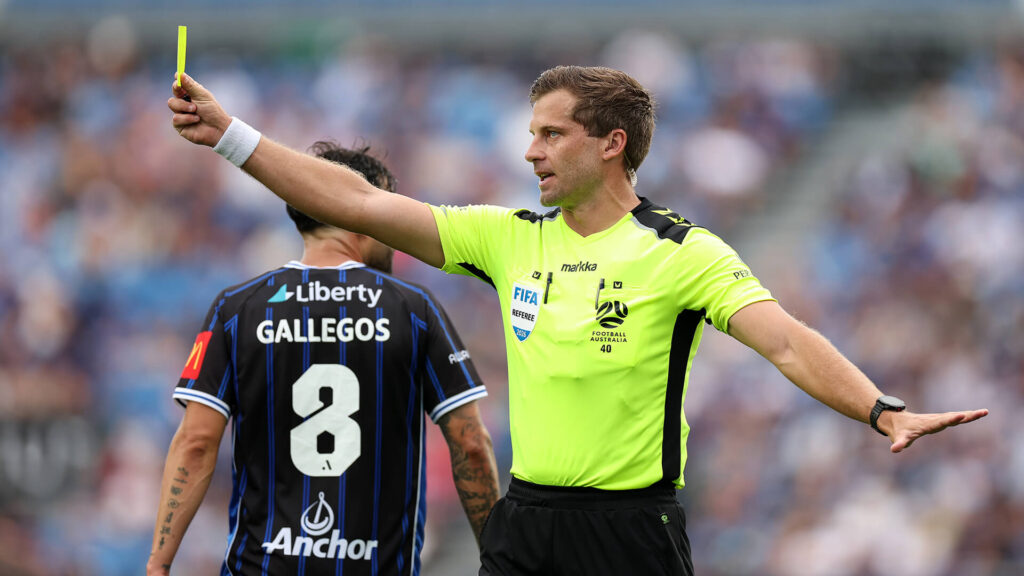
Football South Australia has announced a fuel subsidy scheme for match officials across its semi-professional competitions, allocating up to $100,000 for the remainder of the 2026 season in response to rising fuel costs that the governing body says are threatening the delivery of fixtures across the state.

The subsidy, effective immediately, covers referees officiating across the RAA National Premier League, Apex Steel Women’s National Premier League, Apex Steel Women’s State League, HPG Homes State League 1 and State League 2. The subsidy spans senior, reserves and under-18 competitions across both men’s and women’s football.

Under the metro scheme, reimbursements will be tiered against the average Adelaide unleaded petrol price recorded each Friday, applying to all matches played in the following seven-day period. Officials will receive $30 per match day when the average price sits at $3.25 or above, $25 between $2.75 and $3.24, and $20 between $2.35 and $2.74. No subsidy applies below $2.34. For regional matches, referees travelling to Port Pirie, Barossa and Whyalla will see their per-kilometre reimbursement rise from 88 cents to $1.26 when petrol prices exceed $2.35.

All subsidy payments will be funded directly by Football SA, with no cost passed to competing clubs.

The Economics behind the Whistle

Fuel prices in South Australia, as across much of Australia, have been running at elevated levels against the backdrop of an ongoing imperialist war on Iran that has sent shockwaves through global oil markets. Iran’s targeting of the Strait of Hormuz, through which a significant proportion of the world’s oil supply passes, has disrupted shipping and contributed to price surges that are being felt at service stations in Adelaide as acutely as anywhere.

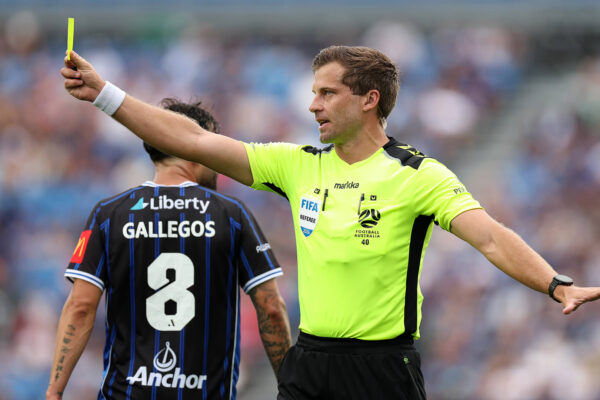
For match officials, who are overwhelmingly volunteers or low-paid part-time workers travelling to multiple venues across a season, those price surges are not an abstraction. They are a direct financial disincentive to take on appointments, particularly in outer metropolitan and regional areas where travel distances are significant and the cost of attending a game can approach, or exceed the payment for officiating it.

The consequences are cancelled fixtures, forfeited points, disrupted seasons and players who stop turning up to clubs that cannot guarantee them a game.

“This initiative recognises the critical role match officials play in delivering competitions,” CEO Michael Carter said in the announcement, “and aims to reduce the impact of travel costs across the 2026 season.”

A Structural Problem, a Seasonal Solution

The subsidy applies only to the 2026 season. Football SA has been careful to frame it as a response to current conditions rather than a permanent structural change. The $100,000 allocation is described as subject to fuel prices remaining at current levels, with the final amount invested likely to vary as the weekly threshold calculations play out across the season.

That framing is honest about what the scheme is and isn’t. It does not resolve the underlying question of whether referee payments in community and semi-professional football are adequate relative to the demands placed on officials. It remains a question that transcends the current fuel price environment and will outlast it. What it does is buy time and goodwill in a moment when both are in short supply.

Sport, and football in particular, depends on a volunteer and semi-volunteer workforce that is increasingly being squeezed by the same cost-of-living pressures affecting every other part of Australian life. When the price of petrol rises, the people who feel it first are not the players or the clubs, it’s the officials, the committee members and the volunteers who make the infrastructure of community sport function.

Football SA’s decision to absorb that cost rather than pass it to clubs is a recognition that the referee pipeline is fragile in ways that are not always visible until it breaks. The SAPA review into South Australian football, released earlier this month, identified referee development and retention as one of the most pressing structural challenges facing the game in the state, recommending greater investment in recruitment and suggesting affiliation fee subsidies for clubs that bring new officials into the system.

Friday’s announcement does not go that far. But in a season already defined by uncertain economic and geopolitical circumstance, the levy sends a clear enough signal about where Football SA’s priorities lie.

The fuel levy will be calculated each Friday using average Adelaide prices listed on Fuel Price Australia, with payments made to officials on the regular weekly schedule.

Most Popular Topics

Editor Picks

Send this to a friend