SGM and TX Football partner in support of grassroots football

In an announcement made last week via social media, Sports Group Melbourne (SGM) revealed that they will collaborate with TX Football to strengthen the grassroots game.

Dedicated to grassroots development

In the latest collaboration between SGM and TX Football, the focus will be on strengthening local grassroots football through local investment and community engagement at SGM competitions and events.

The alliance will see TX Football provide high-quality match balls for SGM tournaments and leagues including the Youth Super Cup, Junior Champions League and Junior Academy League. With TX Football backing multiple tournaments and leading event-day activations to unite players, families and clubs, the partnership stands as a testament to a mutual commitment to the grassroots game.

We spoke to Managing Director at SGM, Rolando Navas, about the ongoing work with TX Football for young footballers across Australia.

“The partnership with TX Football has been really good. We started partnering with them last year – they’ve supported us in the (Junior) Champions League and the Shepparton Cup,” Navas outlined.

“The feedback from all the kids, supporters, players [and] coaches was unbelievable.”

It is clear that SGM and TX Football are an alliance founded on a love for growing the grassroots game. Their history of work together is a testament to both parties’ dedication to supporting the next generation of players.

Responding to increasing participation

Football, despite its challenges and critics, remains a hugely popular and fast-growing sport. In fact, out of all the team sports played in Australia, football is clear at the top as the most participated at 1.93 million people.

Such immense growth at junior level is hugely promising for the sport’s future in Australia, and hasn’t gone unnoticed by the team at SGM in recent years.

“We have seen a massive growth in junior football in popularity, participation and skill level as well,” Navas continued.

Therefore, the team at SGM have committed themselves to creating more opportunities for the ever-increasing number of boys and girls playing the beautiful game. Through their hardwork, and with the backing of organisations like TX Football who share this commitment to supporting grassroots football, youth players are able to enjoy the sport they love all year round.

“Kids are playing all year round; whether it’s futsal, tournaments, the league, academies or for the school, they just want to keep playing,” Navas explained.

“We aim to provide an environment where the kids can compete at their level, get exposed to winning and losing, to development, to pressured times when they have to perform, but at the same time enjoy themselves.”

Previous ArticleNext Article

Brazil is coming. But what is the real price of bringing football’s giants to Australia?

There is something undeniably exciting about Brazil coming to Australia. The five-time World Cup winners will face the Socceroos twice in Queensland from Friday, with Townsville and Brisbane set to host the blockbuster fixtures.

For Australian football, these are the kind of games that should be anticipated, celebrated and capture the public’s attention. But they also raise questions: how much should Australian football pay to bring the world’s biggest nations here, and when does the bill become too big? 

The cost of bringing the big names

Australia has always paid up to bring big names down under. Last week’s NFL game in Melbourne, at a cost of between $10 and 15 million dollars to the Victorian Government, is just the latest example.

It could cost the same amount to bring Brazil to Queensland. A report in The Sydney Morning Herald last year revealed Brazil was reportedly seeking around $7.5 million per match to play in Australia. The fee is in line with other major international events; Western Australia reportedly faced a bill of around $12 million in taxpayer funding for the recent Perth Italian Football Festival.

I’m worried Football Australia won’t get return on investment to make this particular event worthwhile. The enormous fee to bring Brazil to Australia can’t immediately be justified as an investment in our footballing future. Instead, Football Queensland and the state government could have put these funds into grassroots facilities. Part of Football Queensland’s scrapped state headquarters investment plan was to spend $8.5 million to refurbish fields, lights, drains and irrigation at Mappas and Meakin parks. Instead of these plans to invest in the state’s youth players and academies, money has been spent on two international friendlies.

So ahead of the fixtures, the question remains: will these games inspire the future generation, and will participation grow? The NFL match was impossible to ignore: a sold-out MCG and a live audience of 2.1 million on free-to-air, not even including those watching on ESPN and Netflix. Football Australia is not simply buying 90 minutes of football; it is buying the attention that comes with Brazil. So let’s see if they can maximize returns. 

Ticketing Tells a Story

Ticket sales provide insight into the interest in the fixture. Brisbane has sold much quicker than Townsville, but neither have sold out as yet. The fact these games didn’t immediately sell out may be considered surprising as there is a genuine appetite in Australia for elite international football at the moment, evidenced by SBS’ World Cup viewership numbers of 17.1 million.

Brazil is bringing some of its brightest stars: Vinicius Junior, Raphinha, Bruno Guimaraes, Marquinhos and Endrick are among the headline names in their squad. The star power is there. So why haven’t these matches sold out? There’s a chance it comes down to the competition and the visibility of the event.

The viewing problem

The timing of this fixture could raise eyebrows amongst fans. As much as Australia and Brazil will draw huge crowds, both games fall on either side of the AFL Grand Final. The 2024 AFL Grand Final, which involved Queensland’s Brisbane Lions, drew over 4 million viewers on free-to-air. Brisbane, who have won the last two premierships, will feature once again on Grand Final day. Therefore, fans who could’ve attended may instead be making the trip to Melbourne.

Then comes the strangest part: one of the fixtures Australia will play will not even be available on free-to-air television. The Townsville match will be shown free on Network 10 and 10 Streaming, as well as Paramount+. The Brisbane match, however, will be available exclusively on Paramount+. That creates a disconnect. If governments and football administrators are spending millions to bring a global sporting brand to Australia, why should a large section of the Australian public need a subscription to watch the second match?

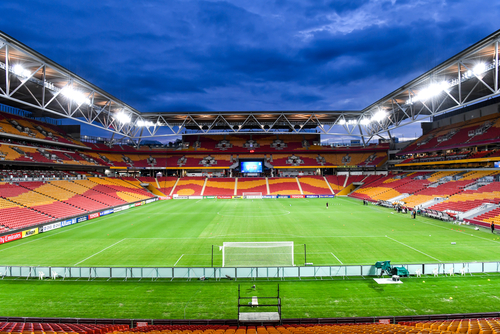
The Brisbane game is behind a paywall, limiting the national reach of the event. Reach is surely part of the justification for spending big on Brazil, it’s not just that 50,000 people get to sit inside Suncorp Stadium. It is that millions of Australians get exposed to the spectacle and if that audience is restricted, the value of this fixture is limited.

A solution could be to spend the money on advertising the match to the public to try to generate interest across streaming and free-to-air. With less than a week until the first game I don’t believe the advertising has done enough to generate enough interest to justify a $15 million price tag for the two game series. 

The Brazil friendlies will be spectacular. They should attract big crowds, create memories and give the Socceroos an excellent test against one of football’s most recognisable nations. But for the appropriate return, attention must be measured. Does this fixture carry on the Socceroos hype and keep the eyeballs of the general public on our sport? I’m not convinced. However, if these matches bring new fans to football, strengthen the national team and create lasting investment in the sport, the enormous price tag could still be justified. But if they simply produce two nights of football before the attention disappears, then Australian football has paid a premium for a very expensive show.

‘All this post-football, I never predicted’ – James Holland on settling in at Nottingham Forest

This article originally published by Box2Box


JAMES Holland says his transition from Austrian club football to management was never foreordained, but on reflection his exposure to top managers right through his playing days goes a way to explaining his rapid ascent on the touchline.

Still only 37, Holland is in his second season as an assistant manager at a Premier League club. Joining Oliver Glasner’s team at Crystal Palace last season saw highs, lows and a European trophy; Glasner then moved north to Nottingham Forest in the summer with a fleet of assistants – including his Aussie ‘transition coach’ – in tow.

Holland achieved plenty in a career that included sixteen Socceroos caps, a trip to the 2014 World Cup and Champions League football, but in holding his current position at a relatively young age – and at a time when respect for Australian managers is growing – he seems once again on the verge of big things – just as he was when coming through the AIS and Newcastle Jets in the A-League’s early years.

“Last season was my first year out of playing and as an Australian in Austria who landed in the Premier League, I was pretty irrelevant here in the grand scheme of things,” Holland told Box2Box from his Nottingham apartment, shortly after their 2-1 win over Aston Villa.

“Firstly, I was just trying to find my feet. As a footballer, I was always thinking ‘what’s next, what’s next?’ But as a coach, I’ve wanted to just be where my feet are. My philosophy last year was very much to just take it all in.”

It’s now well-documented Holland and Glasner first crossed paths at LASK Linz, one of two big Austrian clubs where the former enjoyed his most consistent years on the park. Glasner was mid-way through a four-year revival project at a heavyweight fallen on hard times – ‘it’s pretty incredible when you look at the story’ – when he signed Holland in 2017.

“LASK were traditionally a big club but had been relegated for financial reasons, and Glasner was the one that brought them back up. I went there during the period they’d landed back in the first league.

“Once I landed I could tell relatively quickly he was on it. There’s his attention to detail… his ability to make the complex simple and communicate it to a footballer who needs simple answers in high-stress situations. There’s his drive and sheer force of nature, and want to win and get better every day.

“I could tell relatively early on that as a player, I was going to learn a lot from him.”

Now working together at a third club, Holland speaks to the beneficial combination of both proximity to Glasner, and the intensity of the Premier League. It’s also not just a working relationship; shortly after we spoke Holland was off to make his gaffer’s tee time, called upon for a round of golf on their day off.

“We played 60 games [last season]…I was with him every day in the car, driving home. As a young coach, seeing the amount of stress with all that’s going on up close and personal was a little bit overwhelming, but also a masterclass in how to deal with it all.

“Watching how he works and seeing how big that leadership component is – not just on the pitch, which is such a small part of being a coach – but seeing him lead a group and organisation. Managing up, down, sideways, the media. We had an incredible amount of press.

“We also started 18 games unbeaten (including games spanning back to the previous season), but later had a 12-game streak where we didn’t win. So to see the ups and downs, and in the end to win the Conference League, to me was a masterclass. I wrote a lot of things down!”


Holland first made his name as a member of the Jets’ Championship squad of 2007/08, starting in the Grand Final as an eighteen-year-old. Highly rated and soon to captain Australia at an U20 World Cup, he played just 23 matches before moving to AZ Alkmaar in 2009.

The Dutch side were flying at the time; the older and more established Brett Holman played a hand in their drought-breaking 2008/09 title, but Holland never cracked a senior game at the club. But while he may not have been thinking about it at the time, he was already under the tuition of some top managerial minds.

“At the beginning of my European career my first three coaches were Louis van Gaal, Ronald Koeman and Dick Advocaat – a nice little list to be able to learn from!

“Even going back to my AIS days I had some really good coaches, and then Gary van Egmond gave me my start at Newcastle.

“But for the first three years [in Europe] I felt like I was on a treadmill working as hard as I could but going nowhere, but learning a lot of lessons along the way, which was a great experience. It was a fun time in my career – a difficult time, but a fun time in life.”

Also during this time Holland debuted for the Socceroos, and after waiting patiently under Pim Verbeek and Holger Osiek, momentarily found himself near the front of the midfield queue during Ange Postecoglou’s 2013-14 overhaul – right on the dawn of the Brazil World Cup. Holland has spoken previously of his disappointment in not making the very most of those opportunities.

But while Postecoglou has a reputation of maintaining a cold, professional distance from his players, there are also many stories of his benevolence towards fellow coaches. Over a decade on from their first meeting, so it’s now proved with Holland.

“Ange is someone that’s obviously massive for most young Australian coaches. I only touched base with him during the National Team and would have loved to have worked with him for a lot longer. As young up-and-coming Australian coaches, he gave us permission to dream.

“At least from my experience, he’s also someone that always takes the time whenever you reach out. I was lucky enough to meet with him a few times last year, almost as a mentor, just to pick his brain, which is something I’m really grateful for.”


Nottingham Forest’s new coaching staff have a serious task at hand. Postecoglou was one of four permanent managers to pass through last season, which had started with their owner dreaming of winning the Europa League but ended just five points safe from relegation.

“After we lost to Leeds in the cup, I spoke to a few of the staff and you could definitely feel the heaviness of last season. Just to observe people around the place, being like ‘oh no, not again.’”

“You feel they’ve had a lot of coaches in, a lot of voices… and last year was obviously tumultuous. I could almost feel in the stadium, and within the group and staff, the expectation of the worst as opposed to belief of what’s possible in a positive sense.

“As a new coaching staff we’re not just instilling a new philosphy…we’re trying to shift the mindset and culture. That’s been an interesting part for me personally as a young coach, and something Ollie is very aware of.

“But the club’s full of good humans, and it’s a really nice place for me to work personally, and the coaching staff are all enjoying it. Everyone’s been open, helpful, and hopefully we can kick on from the weekend now, as well.”

So although not yet in an outright managerial position of his own, Holland again finds himself on the list of Australians plying their football trade abroad, who those across his homeland feverishly check up on at the end of each weekend from afar – just as it was during his long playing career.

“All this stuff post-football, I never, ever predicted, to be honest. From my experience, most footballers overestimate their ability and underestimate the job, but I certainly didn’t do that.

“I knew coaching was a difficult gig, but was lucky enough to get the opportunity and I’m embracing it, mate.”

Most Popular Topics

Editor Picks

Send this to a friend