


How Husqvarna Is Helping Stadiums Cut Costs Without Cutting Quality

At a time when operational costs are rising across global sport, stadiums and football clubs are being forced to rethink one of their most overlooked expenses: turf maintenance.

From diesel consumption to labour hours, maintaining elite playing surfaces has traditionally been both resource-intensive and environmentally taxing. But new data emerging from venues like CBUS Super Stadium suggests a smarter, more sustainable model is already taking hold.

Leading that shift is Husqvarna, whose autonomous turf technology is quietly reshaping how professional venues manage their playing surfaces. Their product delivers measurable cost savings without compromising quality.

Cutting fuel consumption costs

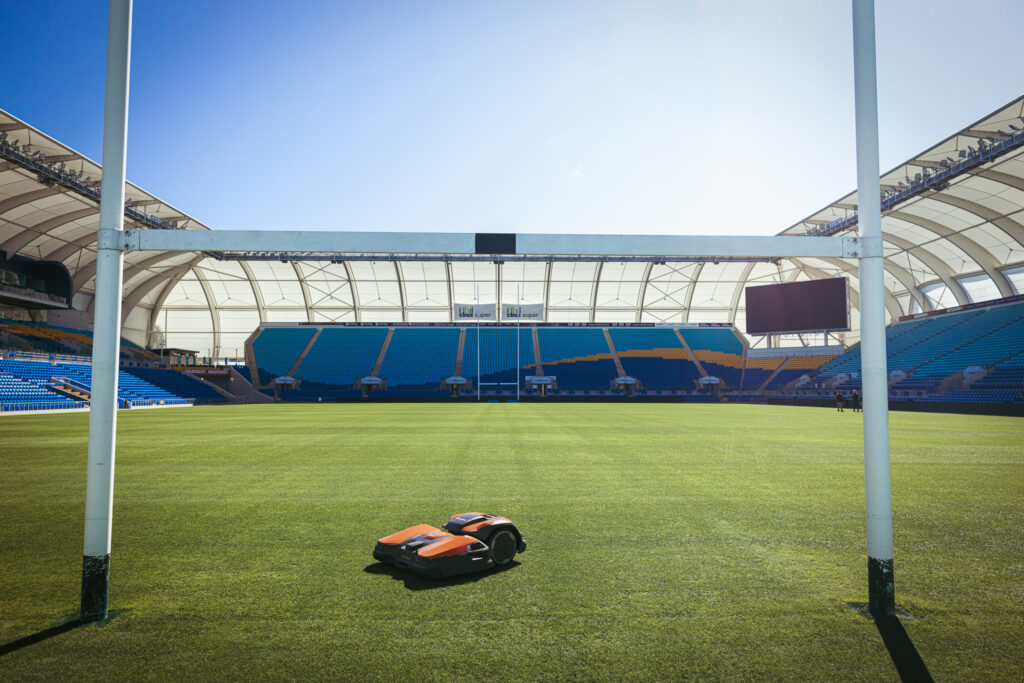
At CBUS Super Stadium, the introduction of Husqvarna’s CEORA™ robotic mowing system has reduced diesel usage by approximately 20–30 litres per week. Over the course of a season, those savings compound into a significant reduction in both fuel spend and carbon emissions. This is particularly efficient for stadiums hosting regular fixtures and large-scale events.

CBUS Super Stadium General Manager Kristian Blundell said the robotic mower was a game-changer for the venue:

“This technology is not replacing staff but rather giving our grounds team the ability to do what they do best by helping to improve turf management processes, better manage fatigue and decrease our environmental footprint”

But the impact goes beyond fuel.


Time efficiency

By automating routine mowing, Husqvarna’s technology enables grounds teams to focus on higher-value maintenance tasks, from pitch recovery to detailed surface management. The result is not only greater operational efficiency but also improved turf consistency, which is an increasingly critical factor in elite football performance.

The benefits are being mirrored beyond stadium environments. At Oatlands Golf Club, Husqvarna’s autonomous mowing has delivered savings of up to 60 litres of fuel per week while freeing up staff for precision work. Quiet, round-the-clock operation also ensures surfaces are maintained without disrupting play—an advantage that translates directly to multi-use stadium settings.

Image Credit: Husqvarna

Importantly, Husqvarna’s lightweight robotic systems reduce the wear and tear typically caused by traditional heavy machinery. This not only protects the integrity of the playing surface but also reduces the need for costly repairs over time.

Football clubs navigating tight budgets at grassroots and semi-professional levels could benefit from such cost savings.

With rising energy prices, increasing sustainability expectations, and limited staffing resources, the ability to cut costs while improving performance is no longer optional. Solutions like Husqvarna’s CEORA™ are positioning clubs to operate more efficiently today, while preparing for a more environmentally accountable future.

As the sports industry continues to evolve, one thing is becoming clear: the next competitive edge may not just come from what happens on the pitch—but how it’s maintained.

Previous ArticleNext Article

Football Queensland’s Logan hub plan rejected by council

Football Queensland’s plans for a major new football hub at Meakin Park have been rejected by Logan City Council. The proposed $76.1 million redevelopment aimed to create a state home for football in Queensland.

Council unanimously rejected Football Queensland’s request for longer-term leases and additional land at the Slacks Creek site. The decision leaves the organisation’s current leases in place. The proposed development would have delivered new playing fields, elite training facilities and a dedicated home for Football Queensland.

Three-stage development

The first stage of Queensland Football’s development carried an $8.5 million price tag. It would upgrade fields, lighting, drainage and irrigation across Meakin and Mappas parks. The goal was to create a six-field, international-standard training venue.

The second stage represented the largest investment. Football Queensland planned to spend $55.3 million on a new headquarters at the adjoining Queens Park site. The facility would include a Women and Girls Academy, sports science facilities, sports medicine and strength and conditioning services.

A third $12.3 million stage would add an indoor futsal academy and two synthetic fields. Football Queensland said the project could create a major football precinct for the region. It also saw the facility playing a role in Queensland’s preparations for Brisbane 2032 and beyond.

Lease decision creates roadblock

Queensland’s governing body sought a 25-year lease with an option for another 25 years. Chief executive Robert Cavallucci said longer tenure was essential to secure government funding and move the project forward. The organisation has around three years remaining on its existing leases.

Council took a different view. Concerns included community access, funding certainty, future costs and the level of use at the existing facilities. Councillors also questioned whether a long-term arrangement would deliver enough benefit to Logan residents and grassroots clubs. Logan Council has now ordered a review of Football Queensland’s performance under its current lease.

Grassroots football at the centre

The decision highlights a wider issue for football infrastructure. Major facilities can provide elite pathways, sports science and high-performance opportunities, but unless councils can ensure local players and clubs can access the fields, they will be rejected.

Meakin Park already serves several sporting organisations, including football users and community sporting groups. Football Queensland said it had invested almost $2 million at Meakin Park and Mappas fields. It also argued the precinct operates at around 130 per cent capacity. For Queensland football, the challenge now is finding a model that can deliver high-performance facilities while expanding access for the community.

The proposal may have been rejected, but the need for better football infrastructure remains. With participation growing and Brisbane’s 2032 Olympic Games approaching, the debate over where and how Queensland builds its next generation of football facilities is unlikely to disappear.

Premier League clubs record huge losses despite record revenue

A report from Deloitte says Premier League clubs are facing a growing financial challenge after combined pre-tax losses reached $1.8 billion (948 million pounds) in the 2024-25 season.

The figure marks a huge rise from the $258 million (135 million pounds) recorded the previous season. It comes despite clubs generating record revenue of $13 billion (6.8 billion pounds).

Revenue keeps rising

Premier League clubs increased their revenue by 8% during the season. Commercial income and matchday revenue both climbed. Broadcast income also increased. But higher revenue has not translated into stronger profits.

Wage costs rose by $730 million (381 million pounds). Player transfers also played a major role in the rise in losses. Only eight clubs reported an operating profit. That was down from 13 clubs the season before.

Spending drives losses

Transfer spending remains one of the biggest pressures on Premier League finances. Clubs continue to invest heavily to compete for trophies and European places. But those costs can quickly outweigh the extra revenue generated by success.

Net debt also increased. It reached $6.9 billion (3.6 billion pounds) in 2024-25. That was up from the previous season.

The financial pressure is not limited to the Premier League. Only three Championship clubs in the second tier reported a profit.

A warning for English football

The Premier League remains the financial powerhouse of English football. Its clubs generated $13 billion (6.8 billion pounds) in revenue. The Championship generated $1.8 billion (942 million pounds).

But Deloitte warned that football cannot rely on simply adding more matches to create future growth.

European competitions have expanded. The international calendar has also become more crowded. Yet there are concerns that the market could become saturated.

Clubs face tougher choices

The figures highlight a difficult balance for Premier League clubs. They need to spend to remain competitive. But rising wages, transfer fees and debt are putting greater pressure on their finances.

New regulations will also change how clubs manage their spending from 2026 onwards. The focus is now shifting towards sustainable growth and stronger commercial income.

The Premier League remains the richest domestic league in Europe. But these figures show that wealth does not guarantee profit.

For clubs across England’s top flight, financial discipline is becoming just as important as success on the pitch.

Most Popular Topics

Editor Picks

Send this to a friend