



NSW Football Associations Unite Behind AED Mapping Project for Statewide Safety Network

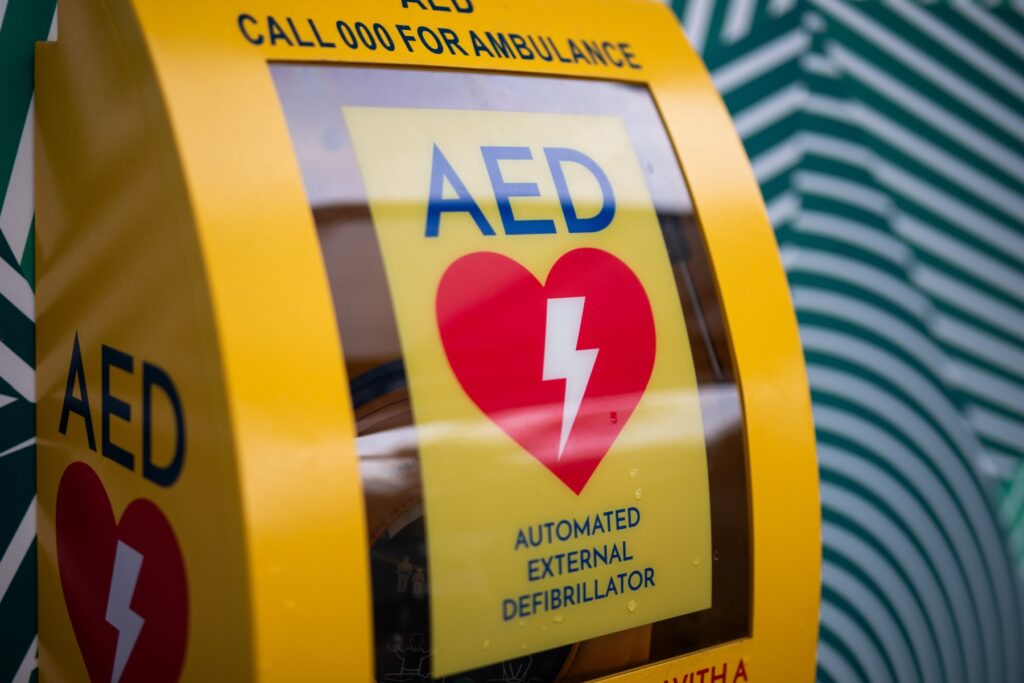
Twelve football associations across New South Wales have joined a statewide effort to map and register Automated External Defibrillators across sporting facilities, in a project that its organisers say will significantly improve emergency response times and save lives at community sport venues.

The Heartbeat of Sport AED Mapping Project, backed by funding from the Minns Labor Government to the Heartbeat of Football Foundation, represents the first comprehensive research into AED placement across NSW sports grounds. The data collected will be provided to NSW Ambulance and its GoodSAM team to enrich the existing AED registry available to ambulance and public first responders, and will feed into NSW Health’s newly released public AED map.

The project has drawn active participation from associations spanning the breadth of the state’s football community, including Eastern Suburbs, Manly Warringah, Granville, Southern Districts, Nepean, Northern Suburbs, Football Canterbury, Bankstown, Hills, Sutherland Shire, North West Sydney Football and Football South Coast.

When seconds matter

The urgency behind the project is not theoretical. At Doyalson Wyee Football Club, a 70-year-old player survived a sudden on-field cardiac arrest because an AED was available on site. The outcome of that incident – and the many others like it that occur across community sport each year – depends entirely on whether a defibrillator is accessible, charged and registered in the systems that emergency responders rely upon.

Sudden cardiac arrest kills without warning. The survival rate drops by approximately ten percent for every minute without defibrillation. In a community sport setting, where professional medical staff are rarely present, a registered and accessible AED is the difference between a player walking off a pitch and one who does not.

The mapping project addresses a gap that has existed largely unexamined. More than 2,400 defibrillators have been deployed across NSW sports and recreation facilities through the Local Sport Defibrillator Grant Program, with grants of up to $3,000 available to eligible organisations. But a device that exists without being registered in emergency response systems provides significantly less value than one that is accurately mapped and immediately locatable by ambulance crews responding to a call.

By encouraging clubs to complete AED registration surveys, the twelve participating associations are ensuring that the equipment already on their grounds is activated within the broader emergency infrastructure – translating a physical asset into a functional one.

Regional communities and the equity of safety

The project’s expansion of the #HeartHealthMatters Program, which brings CPR and AED familiarisation training to sporting organisations with a particular focus on regional areas, addresses a dimension of safety preparedness that often receives less attention than equipment access alone.

Knowing a defibrillator exists on site is insufficient if the people present during an emergency do not know how to use it. Regional clubs, which frequently operate with smaller volunteer bases and less access to formal training programs, face a compounded risk – less equipment, less training, and longer ambulance response times due to geography. The program’s regional focus acknowledges that safety infrastructure, like sporting infrastructure more broadly, is not evenly distributed.

The data gathered through the mapping project will also guide future investment decisions, identifying facilities that still lack AEDs and providing the evidence base for targeted grant funding to address those gaps.

Football associations that have already contributed AED data have demonstrated, in the words of the project’s organisers, strong sector leadership and a shared commitment to safeguarding participants at every level of the game.

For a sport that involves hundreds of thousands of players, officials and volunteers across the state each week, the ambition of the Heartbeat of Sport project is straightforward – that no preventable death occurs on a football ground because the right equipment was not there, or could not be found.
Previous ArticleNext Article

Football Australia Expands Mental Skills Program for Match Officials Amid Sustained Focus on Referee Retention

Football Australia has confirmed a second national webinar for match officials, led by sports psychologist Dr Liam Slack, extending a referee development series introduced after strong engagement with an initial session on managing match-day pressure.

The upcoming session, themed “parking with purpose,” will focus on decision-making strategies designed to help referees process on-field calls and reset attention quickly across a match that can present hundreds of individual decisions. Dr Slack, who also consults with The Football Association and the AFC Referee Academy and previously spent over a decade as a performance psychologist with the Professional Game Match Officials Limited in England, brings substantial elite-level experience to a program open to officials at every level, from grassroots to professional.

The theme builds on work Dr Slack has already delivered within Australian officiating. He recently led a session with Football Australia’s National Referee Academy on the same concept, framing the ability to consciously park a decision and refocus on the next phase of play as a trainable skill rather than an innate trait, one that separates officials who reset quickly under pressure from those who don’t. He has also addressed more than 100 Football Australia elite match officials and staff on developing a stronger match-day mentality, an indication of how embedded this psychological framework has become across the officiating pathway rather than remaining a one-off intervention.

The expansion of the webinar series reflects a broader shift in how football administrators are approaching referee attrition. Rather than treating retention purely as a recruitment or pay problem, the program signals an institutional acknowledgment that the psychological demands of officiating, particularly the compounding pressure of split-second decisions under public scrutiny, are a material factor in whether officials remain in the game.

It rests alongside other measures adopted across Australian football in recent years, including visible identification programs for junior referees and structural reviews of referee departments at state federation level, all aimed at the same underlying issue: a shrinking pool of match officials relative to demand.

Football Australia has not detailed metrics for assessing the program’s impact on referee numbers, though the recurring engagement of an internationally credentialed specialist across multiple tiers of the officiating pathway suggests sustained institutional investment in the approach.

How Australian Support for the World Cup Has Changed Since 2022

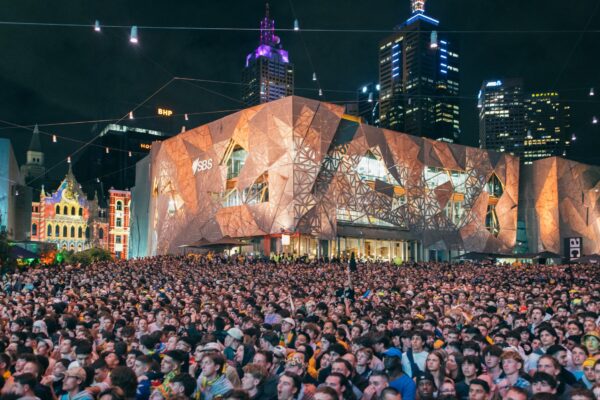
Sodden, rowdy and 7,000-strong, the crowd that gathered at Federation Square before dawn on Saturday for Australia’s clash with the United States offered a vivid illustration of how much, and how little, has changed in Australian football support since Qatar 2022.

The scenes themselves were familiar: fans queuing from 2am, flares lit during the anthem, a barrier breach as the precinct hit capacity within minutes of opening. But the fact the screening happened at all says something about the shifting institutional weight football now carries in Australia.

Just this May, the Melbourne’s Arts Precinct had decided not to screen Socceroos matches at Fed Square this tournament, citing crowd damage and arrests during a 2022 World Cup screening. Football Australia publicly pushed back, and the Victorian Government ultimately overturned the decision, with security and police presence increased to manage the risk. That a state government intervened to guarantee a public screening reflects how central these gatherings have become to football’s standing in Australia, not just as a peripheral fan event but a piece of cultural infrastructure worth a premier’s political capital.

A Tournament Inherited, Not Just Attended

The scale of public interest now sits on a different foundation than it did in 2022. Football Australia’s most recent National Participation Report recorded an 11% increase in total participation to 1,911,539 people, with women and girls’ participation rising 16% to 221,436. Industry analysis attributes much of that growth to the “Matildas effect” following the home Women’s World Cup in 2023, projecting 407,000 new junior participants by 2027 on the back of that tournament and Football Australia’s broader infrastructure strategy. Whatever happens to the Socceroos in the United States, the crowd at Fed Square this year is drawn from a participation base substantially larger than the one watching from lounge rooms and pubs in Qatar.

That shift shows up in how fans say they’ll engage with this tournament regardless of results. New industry research found 79% of intended Australian viewers plan to keep watching the World Cup even if the Socceroos are eliminated, an 11-point increase on 2022, suggesting interest is becoming less tied to the national team’s results than it once was. The same research found television remains dominant, with 88% of viewers planning to watch on TV, rising above 90 per cent for evening and weekend matches, even as audiences increasingly split their attention across streaming and second screens.

Crowd Behaviour as the Unresolved Question

What hasn’t shifted is the tension over crowd conduct at public screenings, and what it costs football’s civic standing when things go wrong. The Melbourne Arts Precinct’s chief executive was explicit in 2026 that damage and behaviour during 2022 screenings were the basis for initially declining to host watch parties this time, despite trouble-free crowds during the 2023 Women’s World Cup.

Saturday’s flares and barrier breach will likely feed that same debate going into the knockout stages, even as the broader numbers tell a story of a sport with a far deeper public footing than it had four years ago. The Fed Square images from 2022 prompted other Australian cities to scramble together live sites once the Socceroos reached the knockout rounds, reflecting a pattern likely to repeat if Australia progresses from Group D, with Friday’s match against Paraguay now carrying outsized weight for a campaign that began with what fans, by their own description, considered horrible refereeing and a result short of expectations.

Most Popular Topics

Editor Picks

Send this to a friend