



Australian football finds itself in a curious position.
From the outside, the game appears to be riding a wave of momentum. Attendances, visibility and public interest have all experienced significant uplift in recent years, while major international tournaments and growing discussion around football’s future continue to place the sport firmly within the national conversation.
Yet behind that momentum, Football Australia is now confronting a far more challenging internal reality.
A compounding deficit
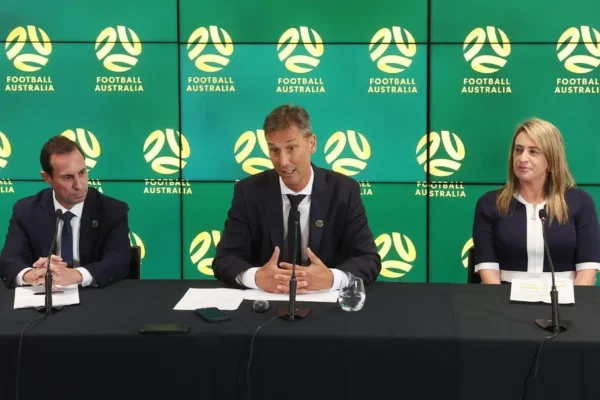
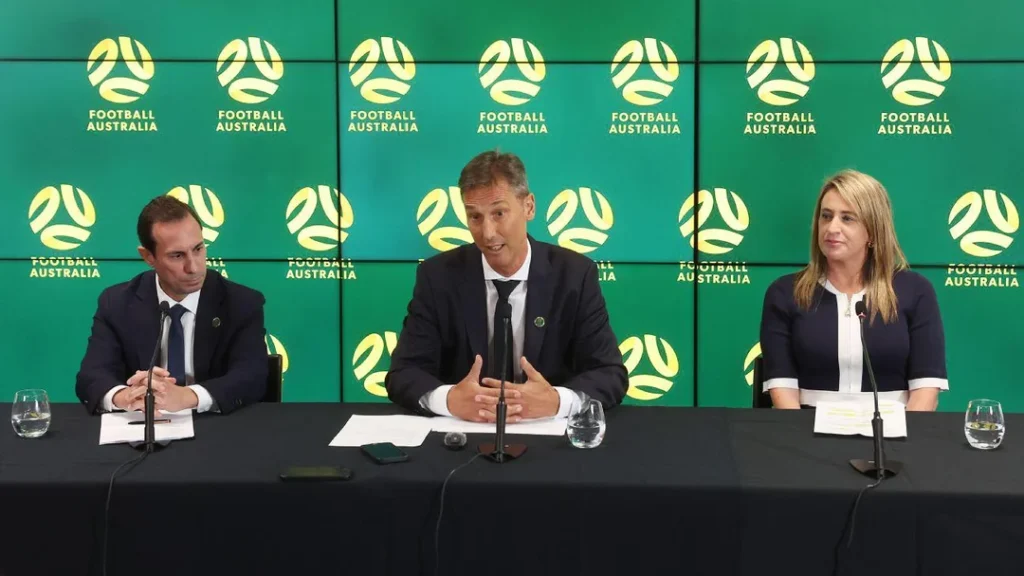
Chief Executive Martin Kugeler has reportedly indicated the governing body’s projected financial losses for 2025 are expected to exceed the organisation’s reported $8.5 million deficit from the previous year. Accompanying the financial outlook are substantial organisational changes, with reporting from Tracey Holmes indicating more than one in five Football Australia employees are expected to lose their positions through restructuring measures.
The figures represent more than a difficult balance sheet. They point toward a significant period of recalibration inside the organisation responsible for overseeing the sport nationally.
Losing the wisdom of existing staff members
For governing bodies, restructures are often framed as strategic necessities for future sustainability. However, workforce changes on this scale also raise broader questions around the challenges of such a transition.
People are often the carriers of knowledge, relationships and long-term strategic understanding. When organisations undergo significant structural change, the effects can extend beyond immediate financial outcomes.
Contradicting timing
The timing is what makes the developments particularly notable.
Football in Australia has spent recent years discussing expansion, growth and long-term opportunity. The conversation surrounding the game has increasingly centred on future potential. Often headlining stronger pathways, larger audiences, infrastructure development and greater visibility.
Against that backdrop, news of deep financial losses and substantial staffing reductions creates a different conversation: one focused not on where the game wants to go, but on what may be required to sustain that journey. Therefore, this announcement points toward stagnancy, rather than growth.
Further detail surrounding Football Australia’s strategy and long-term direction will likely emerge over coming months. For now, the developments serve as a reminder that growth stories are rarely straightforward.
Often, the periods that appear strongest from the outside can also be the moments organisations face their most significant internal tests.