Soccerscene the only online publication dedicated to the Australian and international football industry. It serves as a practical guide for those involved in the business of running a football club and bringing readers up-to-date research and development across all football matters providing insights, discussion and information related to topics that matter.
AC Milan and Puma have officially unveiled the clubs the new 2026/27 away kit, a timeless white kit that celebrates resilience, heritage and the winning mentality that has defined the Rossoneri for generations.
Inspired by the phrase “after Istanbul, there is always Athens” the kit pays tribute to AC Milan’s triumph in the 2007 Champions League Final in Athens following their defeat in Istanbul in 2005. The message printed on the back of the collar, reflects the club’s enduring spirit and serves as a reminder that every setback can become the foundation for future success.
Leading the campaign is club legend Filipo Inzaghi who scored two goals to lead AC Milan in the 2007 UEFA Champions League Final, embodying the determination, resilience and hunger that continues to define AC Milan’s identity.
Every detail on this years away kit reinforces this story. Gold accents and a laurel wrapped club crest celebrates a storied history of success, while the authentic version features the Greek inscription “Δύναμη Ψυχής” (“Strength of Spirit”) inside the collar. A subtle phoenix wing woven into the fabric symbolises renewal, resilience and the Club’s commitment to continually rising to new challenges.
The authentic jersey is engineered with PUMA’s advanced ULTRAWEAVE fabric, complemented by dryCELL and ThermoAdapt technologies to deliver lightweight feel and optimal performance. The replica version brings the same identity combining the same striking design with everyday wearability and is made with RE technology, incorporating 95% recycled polyester sourced from textile waste.
The new AC Milan 2026/27 Away Kit is available now through AC Milan Official Stores, the Club’s online store, PUMA and selected retailers worldwide.
If you’ve ever sat through a club’s end-of-season review, you’ll know the drill. A coach pulls out a folder of notes, someone half-remembers what a player was like back in Round 3 and a parent quietly wonders what they actually got for their rego fees beyond a team photo. Football club platform Majestri says it has a fix for that, and it’s built directly into its Player Assessment module.
Why clubs bother assessing players in the first place
According to Majestri, clubs run player assessments for one of three reasons – usually more than one at once. Some are chasing genuine development, using the data to lift the level across their high-performance squads. Others are after a fairer way to pick teams, putting every player on the same measurable scale so selection is based on evidence rather than a coach’s gut feel about who “looks the part.” And for clubs operating under a Football Australia or state federation licence, assessments at set intervals often aren’t optional – they’re a compliance requirement, with the paperwork to prove it when asked.
Whatever the motivation, Majestri’s pitch is the same: don’t let that assessment data die in a spreadsheet on someone’s laptop.
Build your own assessment, your way
There’s no one-size-fits-all template here. The Assessment Designer lets technical directors set their own criteria, sort them into whatever categories their coaching staff already use – think core skills, possession, defending, attacking – and decide what each point on the rating scale actually means. Crucially, every criterion also gets a comment field, because a bare number rarely tells the full story of a player’s development.
The Assessment Module Builder, showing an NPL Juniors assessment with a 1-10 rating scale banded from under performing through to excelling and role-specific criteria grouped into core skills, possession, defending and attacking. Source: Majestri.
Build it once and it’s reusable every time that assessment cycle comes around, so every player and every coach – is working off the same yardstick.
Something for the parents to actually take home
One of the more relatable pain points Majestri is targeting: most families never see much tangible return from a season of fees beyond a team photo. Player Assessment addresses that with report cards – colour-coded against the same scale coaches used, grouped by category with averages calculated automatically, and delivered as a PDF or an interactive web page a parent can read without needing a coaching badge themselves.
A report card for an under-15 player, colour-coded from under performing to excelling, with a score for every criterion and a group average across core skills, possession, defending and attacking. Source: Majestri.
Turning the numbers into something useful
The real value, though, sits in what Majestri calls the Player Analysis Lab. This is where clubs can plot a player against their team-mates or an entire age group across two categories at once, spotting clusters and outliers at a glance. Every score gets read against the group average – so a “7” actually means something in context – and clubs can report at the broad category level or drill into individual fields underneath. The results can be filtered down and exported for selection meetings or grading purposes.
The Player Analysis Lab comparing seven players across under-15 and under-16 squads, with a scatter plot, a sortable table of scores against the player average, and controls for choosing which categories and fields to report on. Source: Majestri.
The admin side nobody enjoys, made easier
Beyond the flashy analytics, there’s a practical layer built for the volunteers actually running the process:
Sweep monitoring – a quick view of which assessments are done and which are still outstanding, organised into defined assessment periods so progress can be tracked against peers.
Individual development plans – every player gets a personalised plan, and clubs can group common improvement areas to run cross-team training sessions that lift the whole club rather than just one squad.
Access control – coaches and technical staff can only see assessments for the teams they’re responsible for, and completed assessments are only visible to people linked to that player’s registration.
“Hard numbers to draw on when you review coaching staff and curriculum – and something tangible for the players and parents who pay the fees.” – Majestri
The bigger picture
Majestri frames all of this as sitting on top of the club’s own data – assessment results live on each player’s profile inside the platform rather than in a spreadsheet that walks out the door when a technical director moves on. For committees, it also means hard numbers to lean on when reviewing coaching staff or curriculum, rather than relying on anecdote.
It’s a fairly clear read on where club administration software is heading: less about digitising paperwork for its own sake, and more about making the data clubs already collect actually work for player development, team selection and compliance without adding to the workload of the volunteers who run the show.
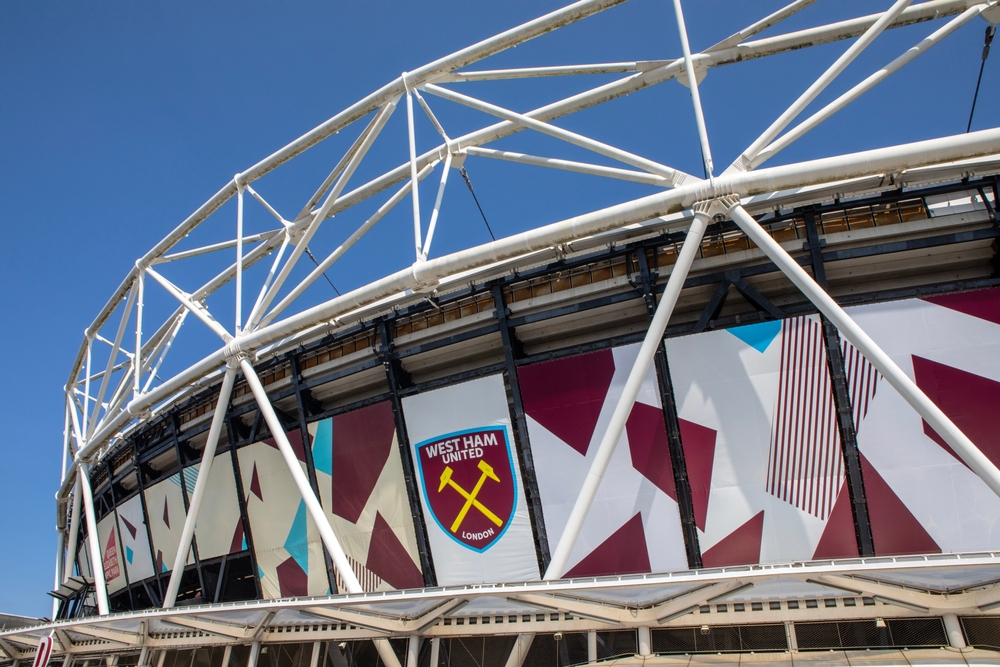
West Ham’s ownership battle has taken another turn. Amanda Staveley’s consortium reached an agreement to buy the Gold family’s 25.1 per cent stake in the club. The deal was confirmed in July, that Staveley would purchase the shares from Vanessa Gold, who is the current co-chair at West Ham. The club’s valuation stands at $1.1 billion (600 million pounds).
Gold’s shares in the club have come under intense speculation. Daniel Kretinsky originally agreed to take on Gold’s shares in June; this would have made him majority stakeholder with 43%. Kretinsky already owns 27 per cent of West Ham. He became a shareholder in 2021 after acquiring his stake from the club’s existing ownership group.
Gold now says the latest developments have turned, with Staveley set to purchase that stake in the club. Staveley is no stranger to Premier League ownership. She was part of the consortium that completed the takeover of Newcastle United in 2021. She later left her position at Newcastle after selling her stake in the club.
Her West Ham consortium has now targeted the shares held by the Gold family. The 25.1 per cent stake belonged to the family of the late David Gold. Gold co-owned West Ham alongside David Sullivan for many years. The pair acquired a controlling stake in the club in 2010. Their involvement began with a 50 per cent shareholding. They increased that position to 60 per cent later that year.
Sullivan subsequently became the club’s largest individual shareholder. Kretinsky’s arrival changed the balance of power. The Czech businessman bought 27 per cent of West Ham in November 2021. David Gold died in January 2023. His daughter, Vanessa, later became joint-chair alongside Sullivan.
Staveley’s consortium agreed a deal worth about $282 million (150 million pounds) for the 25.1 per cent holding, according to reports. It would instead give Staveley and her backers a major minority position. The club’s ownership structure remains divided between several significant shareholders.
Kretinsky already holds a larger shareholding than the stake Staveley is seeking to acquire. He has also been linked with ambitions to increase his control of the club. Existing stakeholders, including Kretinsky, have 30 days to implement a right of refusal. There is also an opportunity to purchase those shares instead. The deadline to block Staveley’s agreement expires this week.
The timing is also significant. West Ham were relegated from the Premier League at the end of the 2025-26 season. The club had spent more than a decade in the top flight before dropping into the Championship. That relegation came only three years after West Ham won the Europa Conference League.
The club is now attempting to rebuild on and off the pitch. Staveley’s presence adds another layer to that transition. She was also in attendance for West Ham’s Championship match against Wolves on the 1st of September.
Away from the pitch, however, the club remains at the centre of an ownership battle. The Gold family sale was expected to provide Staveley with a route into the club. Kretinsky’s potential challenge has now complicated that process.
The next stage will determine whether Staveley’s consortium completes its purchase or whether Kretinsky succeeds in increasing his own influence. Either outcome could have a major impact on West Ham’s future ownership structure. For now, the proposed sale remains the focus of a growing battle for control and influence at the London Stadium.