

AAFC Chairman Nick Galatas: “We want the best possible national second division”

AAFC Chairman Nick Galatas has outlined his plans for the organisation for 2021, with the continued pursuit of the introduction of a national second division at the top of his list.

Speaking with Soccerscene, Galatas explained that at the core of the organisation’s work on a national second tier, is the importance of producing the best outcomes for the sport.

“It’s about having the best possible national second division,” he said.

“That is front and centre of what we have put forward. What we’ve asked our clubs to put forward is not the minimum they can do, but the maximum they can do. Yes, we can always do less than the best, work below our capacity and set low targets that we can achieve.

“But we think we can do better than that.

“The clubs are assuming the risk, they are putting up the money and their resources, they think they can make it work from within their capability. Let’s use it, why wouldn’t we tap into that resource?”

FA CEO James Johnson recently spoke with Simon Hill on the Shim, Spider and So Much Moore podcast, praising the AAFC’s model and philosophically agreeing with the concept of a national second division with 12-16 teams.

However, Johnson believes that a more pragmatic model is a two-phase system where clubs will play out their local NPL season, with the best sides to then progress into a national-based “Champions League” group stage competition at the back-end of the year.

Galatas believes it is up to AAFC to convince Football Australia that the research they have conducted, in their feasibility progress report, will ultimately show that their model for a national second division is the appropriate way forward for the sport.

“Our job is to show Football Australia what they philosophically think is better, is in fact better and does in fact work,” he stated.

“We are not rejecting the outline of what James put out the other day, it may turn out to be better. We will explore that further and try and look at that and imagine it to its best level and work on that in good faith. If it looks good, and the risk associated with that is so much lower to make it more viable, then great.

“But, our work to date shows that it is not the case.

“The cost to the revenue side of a more limited model and the difficulty our member clubs will have in selling that to their own people, in terms of generating the relevant interest, isn’t worth it, as the savings it involves doesn’t compensate for the forgone revenue and interest. We look forward to seeing the FA model James mentioned in more detail when it’s ready, but we have anticipated such a model in our progress report before settling on our preferred model.”

AAFC hopes to complete its final report on its national second division plans by April, with Galatas anticipating a lot of the year to be occupied by Football Australia’s modelling of the second tier, something the organisation expects to play a notable role in.

Alongside this, they will look to navigate through all the changes to the game that directly affect the NPL clubs they are representing.

The organisation intends to conduct some work on advancing the women’s game in the country in the build-up to the 2023 Women’s World Cup, whilst also keeping abreast with recent announcements from the governing body.

“Going on to the domestic transfer system and the white paper FA has introduced, we are definitely looking at that. We’re preparing our position and contribution to that,” Galatas said.

“Football Australia also recently put out its domestic football calendar, so we are getting our heads around that as well and where we fit in.”

Possible reforms are also set to occur to NPL competition structures across Australia.

“We’ll be working with the member federations and with Football Australia in continuing to evolve that,” he said.

“There have been reviews into structures in Victoria, NSW and one now happening in Queensland, so we are constantly working on that part of it because most of our member clubs are involved in that.”

Galatas, based in Melbourne, believes on the back of the enthusiasm and movement on the second division front, strong crowds should turn out for the NPL season in Victoria.

“A lot of people want to see their teams play, practice match crowds are up from what I’ve heard and hopefully there are bumper crowds for the season.”
Previous ArticleNext Article

Brazil is coming. But what is the real price of bringing football’s giants to Australia?

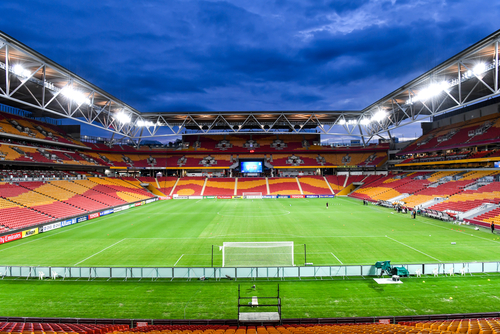
There is something undeniably exciting about Brazil coming to Australia. The five-time World Cup winners will face the Socceroos twice in Queensland from Friday, with Townsville and Brisbane set to host the blockbuster fixtures.

For Australian football, these are the kind of games that should be anticipated, celebrated and capture the public’s attention. But they also raise questions: how much should Australian football pay to bring the world’s biggest nations here, and when does the bill become too big? 

The cost of bringing the big names

Australia has always paid up to bring big names down under. Last week’s NFL game in Melbourne, at a cost of between $10 and 15 million dollars to the Victorian Government, is just the latest example.

It could cost the same amount to bring Brazil to Queensland. A report in The Sydney Morning Herald last year revealed Brazil was reportedly seeking around $7.5 million per match to play in Australia. The fee is in line with other major international events; Western Australia reportedly faced a bill of around $12 million in taxpayer funding for the recent Perth Italian Football Festival.

I’m worried Football Australia won’t get return on investment to make this particular event worthwhile. The enormous fee to bring Brazil to Australia can’t immediately be justified as an investment in our footballing future. Instead, Football Queensland and the state government could have put these funds into grassroots facilities. Part of Football Queensland’s scrapped state headquarters investment plan was to spend $8.5 million to refurbish fields, lights, drains and irrigation at Mappas and Meakin parks. Instead of these plans to invest in the state’s youth players and academies, money has been spent on two international friendlies.

So ahead of the fixtures, the question remains: will these games inspire the future generation, and will participation grow? The NFL match was impossible to ignore: a sold-out MCG and a live audience of 2.1 million on free-to-air, not even including those watching on ESPN and Netflix. Football Australia is not simply buying 90 minutes of football; it is buying the attention that comes with Brazil. So let’s see if they can maximize returns. 

Ticketing Tells a Story

Ticket sales provide insight into the interest in the fixture. Brisbane has sold much quicker than Townsville, but neither have sold out as yet. The fact these games didn’t immediately sell out may be considered surprising as there is a genuine appetite in Australia for elite international football at the moment, evidenced by SBS’ World Cup viewership numbers of 17.1 million.

Brazil is bringing some of its brightest stars: Vinicius Junior, Raphinha, Bruno Guimaraes, Marquinhos and Endrick are among the headline names in their squad. The star power is there. So why haven’t these matches sold out? There’s a chance it comes down to the competition and the visibility of the event.

The viewing problem

The timing of this fixture could raise eyebrows amongst fans. As much as Australia and Brazil will draw huge crowds, both games fall on either side of the AFL Grand Final. The 2024 AFL Grand Final, which involved Queensland’s Brisbane Lions, drew over 4 million viewers on free-to-air. Brisbane, who have won the last two premierships, will feature once again on Grand Final day. Therefore, fans who could’ve attended may instead be making the trip to Melbourne.

Then comes the strangest part: one of the fixtures Australia will play will not even be available on free-to-air television. The Townsville match will be shown free on Network 10 and 10 Streaming, as well as Paramount+. The Brisbane match, however, will be available exclusively on Paramount+. That creates a disconnect. If governments and football administrators are spending millions to bring a global sporting brand to Australia, why should a large section of the Australian public need a subscription to watch the second match?

The Brisbane game is behind a paywall, limiting the national reach of the event. Reach is surely part of the justification for spending big on Brazil, it’s not just that 50,000 people get to sit inside Suncorp Stadium. It is that millions of Australians get exposed to the spectacle and if that audience is restricted, the value of this fixture is limited.

A solution could be to spend the money on advertising the match to the public to try to generate interest across streaming and free-to-air. With less than a week until the first game I don’t believe the advertising has done enough to generate enough interest to justify a $15 million price tag for the two game series. 

The Brazil friendlies will be spectacular. They should attract big crowds, create memories and give the Socceroos an excellent test against one of football’s most recognisable nations. But for the appropriate return, attention must be measured. Does this fixture carry on the Socceroos hype and keep the eyeballs of the general public on our sport? I’m not convinced. However, if these matches bring new fans to football, strengthen the national team and create lasting investment in the sport, the enormous price tag could still be justified. But if they simply produce two nights of football before the attention disappears, then Australian football has paid a premium for a very expensive show.

Gold Coast International drives futsal growth as international interest surges

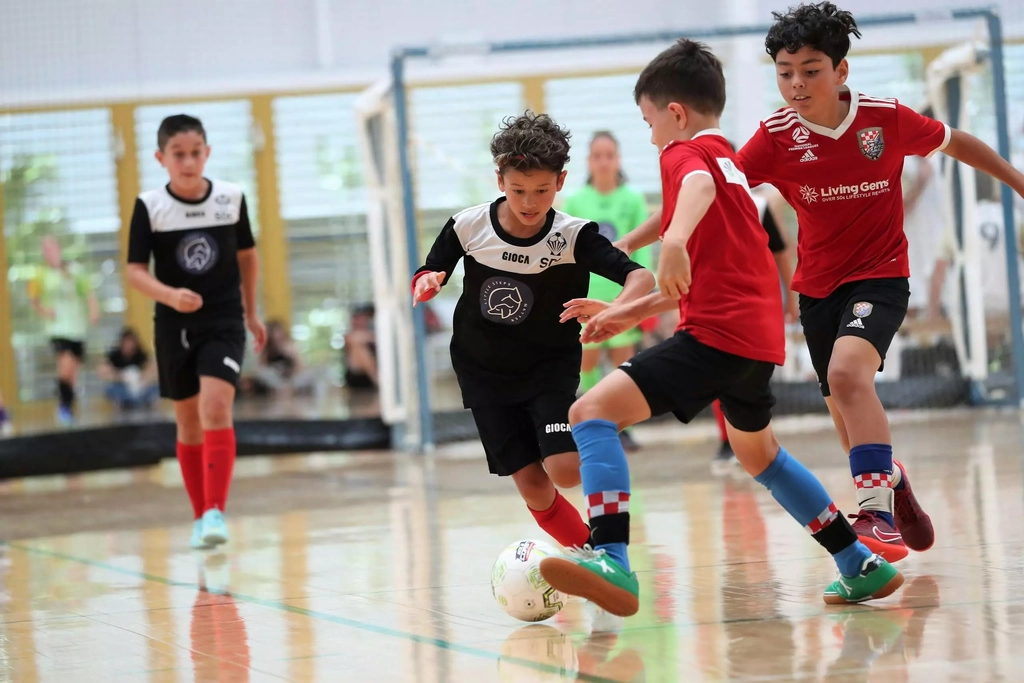
The 2027 Gold Coast International is set to be the biggest year of growth in the tournament’s history. The tournament has become one of Australia’s premier futsal events. Attracting the best teams from not just Australia but around the world. Andrew Parkes is the founder and managing director of the Gold Coast City Futsal Association and an advisory board member at Football Queensland. He says the tournament, and its international reputation, is only strengthening.

“Registrations are actually a step up from what they were last year,” Parkes said.

“We’ve got several teams from New Zealand. At the moment, we’ve got some Pacific Island teams that have expressed interest in coming. We got interest from Japan, and from England as well.

“We’ve got over 140 teams so far, and that’s not including anything from the local areas.”

Over 200 teams attended the 2026 edition, and the Gold Coast International is well set to break that record next year. The figures show the tournament is becoming more than a local competition. It is building a strong national and international presence.

Football Queensland and Football Australia unite behind growth

Parkes believes collaboration has played a major role in the development of futsal in Queensland. The tournament is sanctioned by both Football Queensland and Football Australia. He praised Football Queensland for its work across the sport. He said the organisation has helped create a stronger and more professional futsal system. This relationship between state and national bodies and the event has allowed the Gold Coast to play host to the national competition as well. This ensures shared resources including referees and courts.

“Football Queensland have been a major driving force and a godsend in relation to the development of futsal,” Parkes said.

“We’ve got the nationals the week before the Gold Coast International now. We’re working in harmony and synergy and supporting each other.

“I think the proofs in the pudding, not just with the Gold Coast International, but with the exposure and obviously the diversity of teams that attend. But then the further development in our local leagues, and that’s resulted in.”

E-sports adds another pathway for players and clubs

E-sports has become another major part of the Gold Coast International. Parkes said he had explored the idea for several years and that the tournament allows the community to grow beyond just the physical players on the court. The use of e-sports also allows friends and families to have an interactive experience with simulators and games whilst at the Gold Coast International.

“We launched e-sports about 2 years ago, just with a bit of a light feel. We’ve incorporated the competition into the tournament fees, which is excellent. So it doesn’t cost anybody anymore to be part of it,” Parkes said.

“It actually allows the clubs and academies to extend on their current offerings as it is at the moment and allows gaming players to be part of the club, to be part of the atmosphere and to join and that unity and be part of that sporting community.”

“We had three times the amount of teams that we had from the first year of e-sports. We’re looking to probably even double that again this year, which is really exciting as well.”

New pathways shape the tournament’s future

Parkes wants the Gold Coast International to keep expanding. He is now looking at ways to create pathways beyond the tournament itself. He said the use of its international experiences that can be earned through the tournament is not only about investing in players. But ensuring coaches have a more time-efficient avenue to be involved with futsal. It also gives more coaches the chance to work with players at an international tournament.

“We’ve now created the Gold Coast International All Stars, which is now embraced by many of the coaches and the players,” Parkes said.

“That also provides coaches who don’t have the time or the ability or whatever for the state teams, and the commitment that they need to put in the state teams throughout the year.”

“It allows us to have a lot more outreach to far more coaches that have a lot of passion and enthusiasm, and be part of the Futsal community. They want to build on the players’ abilities but may not have that year-long or eight-month-long exposure that is required by the state Futsal team coaching staff.”

For Parkes, the future is about widening access while continuing to raise standards. The tournament is growing its international reach, strengthening partnerships and creating new opportunities for both physical and e-sports players. The Gold Coast International is no longer just a tournament. It is becoming a broader platform for the development of futsal and its wider community.

For more information on the Gold Coast International and to inquire about competing in the 2027 edition, visit their website.

Most Popular Topics

Editor Picks

Send this to a friend