


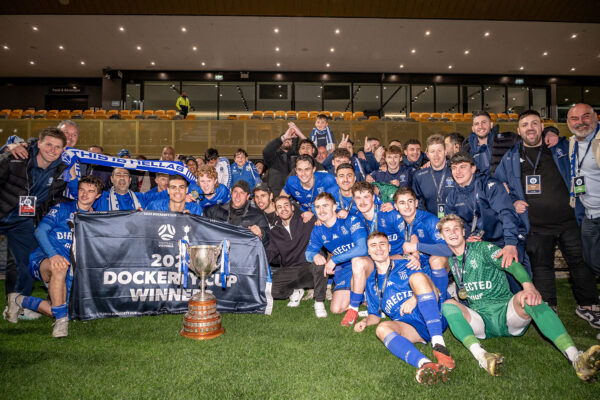

Heidelberg United’s Olympic Park to receive a further $7.5 million in funding

The State Labor Government is contributing $4.5 million to stages 3 and 4 of redevelopment at Olympic Park, alongside $3 million from Banyule City Council.

Olympic Park, home of National Premier League club Heidelberg United, will receive a combined $7.5 million in funding from local and state governments to continue improvements and development of facilities. 

Minister for Multicultural Affairs, Community Sport and Youth, Ros Spence, announced during a press conference at Olympic Park on Friday that the State Labor Government would contribute $4.5 million to stages 3 and 4 of redevelopment at the ground, alongside a $3 million contribution from Banyule City Council.

“These important projects will deliver local jobs in the short term and top-notch facilities for passionate sportspeople for decades to come,” Spence said.

“It’s vital that clubs can provide modern facilities for existing and prospective members – whether they are players, coaches, administrators, or supporters.”

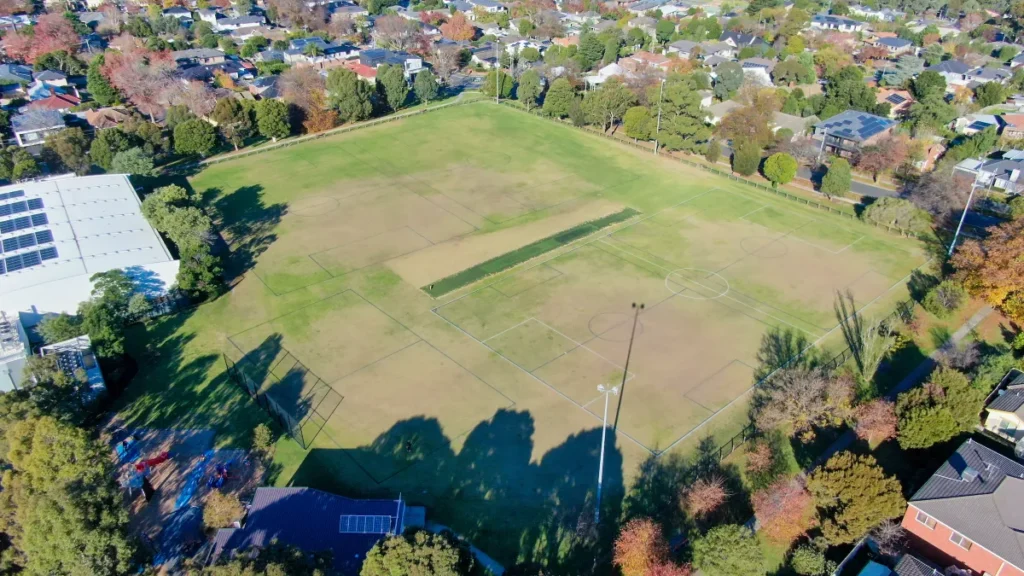
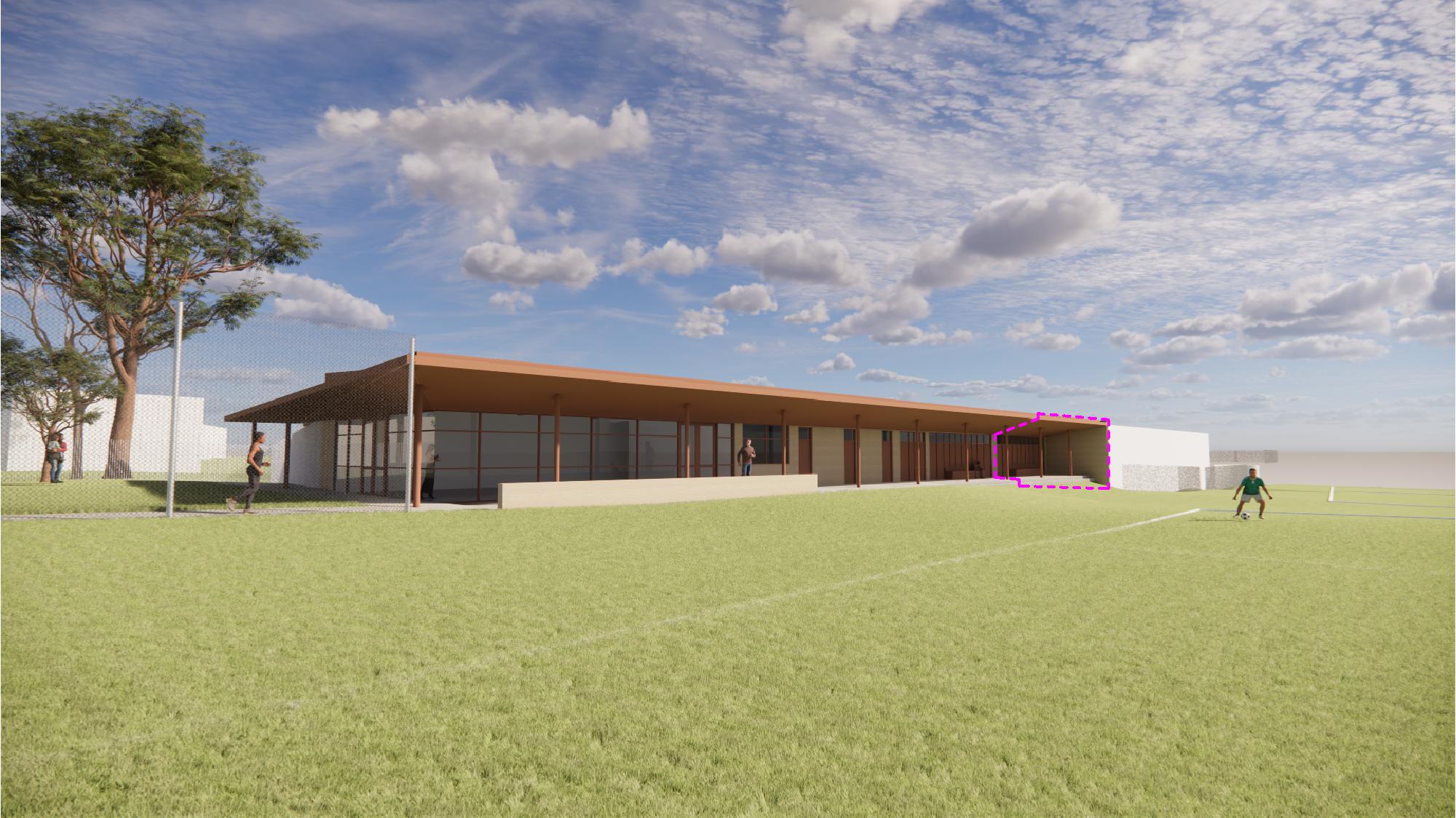
These plans include the expansion of current infrastructure and car park, development of the pavilion, and the building of futsal/basketball courts. The funding is a part of the Daniel Andrews state government’s Community Sports Infrastructure Program.

The ground received a $7 million upgrade during stages 1 and 2 of the redevelopment, which included a new main pitch, as well as a junior and full sized synthetic pitch, of which the state government provided $3.5 million. Today’s conference marked the completion of the upgrade as Spence announced further funding from the state government and Banyule City Council for stages 3 and 4.

Member of Ivanhoe Anthony Carbines attended the announcement and spoke to the crowd of Heidelberg United fans, local government officials, and media. 

“Olympic Park is a place where the community comes together. It’s fantastic that people in Heidelberg and surrounding suburbs will be able to enjoy sports facilities and a meeting place of such a high standard,” he said.

Heidelberg United president Steve Tsalikidis praised the announcement and the work that had been put into securing the funding for the ground.

“A key feature of Heidelberg United’s success on and off the pitch has been the game-changing upgrades here at Olympic Park, and we thank the Victorian government for their part in making the facilities even better.”

Also in attendance at the announcement was Banyule City Mayor Rick Garotti and Football Victoria CEO Kimon Taliadoros.

So far the Community Sports infrastructure Stimulus Package has funded 70 projects worth $335 million in Victoria.

Olympic Park was built in 1956 to accommodate and provide a training base for athletes competing in the 1956 Melbourne Olympics.
Previous ArticleNext Article

Football SA Unveils Sweeping Reform Plan for Men’s Soccer Competitions in Adelaide

Following the earlier announcement that Football South Australia had commissioned an independent review into the future direction of Senior Men’s Competitions in Greater Adelaide, the process has now concluded. The review, undertaken by Sports Advisory Partners Australia (SAPA), examined the current competition landscape and provided a series of recommendations aimed at strengthening player pathways, supporting club development, and ensuring the long-term sustainability of the game.

A Sport Growing Faster Than Its Structure

The review was commissioned against a backdrop of rapid participation growth. FSA’s competitions have grown 22.5% in team participation since 2023, with over 250 new teams formed in 2024 alone, the vast majority at junior level. Yet despite this boom, the data tells a troubling secondary story: roughly one in four players aged 16 and over did not return to the game the following season.

The report identifies a critical bottleneck for players transitioning out of underage and youth competitions, warning that the current structure offers insufficient pathways for players aged 16 to 23; precisely the age group where drop-off is most acute.

Meanwhile, the SAASL, which remains the largest holder of senior men’s players in Adelaide, accounting for 53% of the total, has seen a 21.1% decline in player participation over the same period, a trend the report attributes in part to structural fragmentation and the gradual migration of clubs toward FSA competitions.

Eleven Recommendations, Some Contentious

SAPA put forward eleven recommendations, covering everything from youth competition restructuring to salary caps and referee development. Football South Australia has responded formally to each.

The most significant proposal calls for FSA to restructure its supporting competitions beneath the NPL and State League first teams, transitioning from the current Reserves/U18 model to U23, U20 and U18 tiers. This aligns with Football Australia’s Player Roster Principles and mirrors approaches already operating in Victoria and Western Australia. FSA has supported the change, flagging potential implementation in the 2027 season pending consultation with clubs about capacity.

A proposed community competition within the FSA structure, sitting below the State League but open only to FSA-affiliated clubs, has generated more measured enthusiasm from the governing body. FSA described it as “not a priority,” though acknowledged it would require broad stakeholder consultation if pursued. The review argues such a competition is necessary to stop players from either leaving football altogether or forcing FSA clubs to field teams across multiple associations, creating administrative duplication and volunteer strain.

SAPA has also recommended reinstatement of a salary cap across NPL and State League competitions, which was in place until 2020 before being dropped due to compliance difficulties. FSA says it will consult clubs on feasibility, with a possible return in 2027. The review noted that informal player payments in SAASL competitions, reportedly reaching $400–500 per game in some top-division matches, are undermining the league’s amateur status and smaller clubs’ ability to compete.

The Three-Association Problem

Perhaps the most persistent theme throughout the report is structural misalignment. Adelaide’s senior men’s landscape is carved between three separate associations, FSA, SAASL and CSL, with no promotion or relegation between them, divergent rules and regulations, and increasing overlap in the clubs that participate across multiple competitions.

In 2025, 39 of the 127 registered clubs in metropolitan men’s competitions were fielding teams across two or more associations. A survey of over 1,500 stakeholders found that only 27% of administrators believed the current three-association model supported strategic alignment, and just 26% agreed it maximised player transition from youth to senior football.

The SAASL, which has served the community for over 60 years, was described in the report as operating largely in isolation from the broader football ecosystem, with rules that are not aligned to FSA or CSL frameworks. FSA has supported a recommendation for greater collaboration between the associations, including a shared review of rules and regulations to be undertaken during 2026 with implementation targeted for 2027.

The CSL occupies an increasingly complicated position. Originally an inter-collegiate competition, it now includes FSA-affiliated clubs fielding lower-division teams alongside traditional university clubs. A majority of CSL clubs reportedly do not want non-collegiate suburban clubs in their competition, though the CSL Board has indicated it will admit such clubs where they align with CSL values.

Referee Shortages and Volunteer Fatigue

Beyond structural concerns, the review flags a growing crisis in match official availability and volunteer sustainability. FSA currently supplies accredited referees to 90% of SAASL Division 1-4 matches and 80% of CSL fixtures, reflecting how dependent the affiliated associations have become on FSA resources.

Volunteer burnout was among the most frequently cited concerns across stakeholder workshops. The report recommends FSA hire dedicated club development staff and consider offering affiliation fee subsidies to clubs that actively recruit new referees- an incentive-based approach to address what is described as a systemic lag between participation growth and official availability.

Looking Ahead

FSA CEO Michael Carter confirmed that stakeholder meetings will be scheduled in coming weeks to work through the recommendations in detail.

The Elizabeth and Districts Junior Soccer Association (EDJSA), an unaffiliated body serving roughly 3,900 players across the northern suburbs, is also named as a key opportunity. Bringing EDJSA into the affiliated system could significantly improve the junior-to-senior pipeline, though it would require investment from both FSA and Football Australia to avoid increasing costs for participants.

The changes, if implemented, would represent the most substantial restructuring of Adelaide’s soccer landscape in years. It’s one aimed at ensuring the sport’s growing base of junior talent has somewhere meaningful to go.

Fremantle City Launches 2026 NPL Season with Focus on Youth and Community

Fremantle City FC has officially launched its 2026 New Balance NPL WA Men’s and Women’s seasons, championing a community-first approach that puts young players at the heart of the club’s future.In a vibrant ceremony at Hilton Park, club juniors presented first-team shirts to senior Men’s and Women’s squads, symbolising a critical pathway from grassroots to elite football within the Fremantle family.

“This is very important for us- our juniors presenting shirts to our NPL Women’s and Men’s teams,” said Club President Tony Estrano. “2026 is the ninth year of our academy, running from under-nines up to under-16s, for both boys and girls. Today’s shirt handover by our Under 13s Academy and JDL teams shows these kids there is a real pathway to the first team.”

Head coach Samantha Geddes has reaffirmed the sentiment, emphasising Freo’s commitment to club unity: “Getting the whole club involved like this is brilliant. It’s great for our young girls to see that connection to the senior team and for senior players to inspire and support the next generation.”

Momentum and Ambition for 2026

Fremantle’s Women’s side enters 2026 riding high after a historic State Cup triumph last season, with captain Annabelle Leek setting her sights even higher: “Winning the State Cup was massive. We’re ready to build on that momentum, with new signings and a renewed focus on finishing in the top four.”

On the men’s side, after avoiding relegation last year and freshening up the roster with key signings, captain Cam Edwards is confident: “We’re ambitious, and with this group, we know we can put on a good show.”

Fremantle City has committed itself to turning club culture and youth pathways into on-field results, inspiring the next generation to wear the crest at every level.

Most Popular Topics

Editor Picks

Send this to a friend