



The Man Who Built a Women’s Football Program from Nothing is now an Award-Winning Gender Equity Leader

Eight years ago, Spring Hills Football Club did not have a girls’ team. Today it has one of the most recognised women’s programs in Melbourne’s west, a senior NPLW side, and a head coach who has just been named Gender Equity Leader of the Year at the Melton City Council Volunteer Achievement Awards.

Tom Markovski, Spring Hills’ NPLW Head Coach, received the award at a ceremony coinciding with National Volunteer Week, recognised for his community leadership, promotion of gender equality and commitment to advancing the status of women and people of all genders in sport. The recognition comes from outside the football community entirely, awarded by a local council celebrating volunteers across every sector of civic life in one of Melbourne’s fastest-growing regions.

Building from scratch

When Markovski arrived at Spring Hills, women’s football at the club did not exist. His first act was to champion the establishment of the club’s first all-girls team, a process that required persuading a club culture built around men’s football that the investment was worth making.

Women’s football in community clubs has historically struggled to access the same facilities, scheduling priority, coaching resources and institutional support as the men’s game. Clubs have been slow to invest in programs whose return is less immediately visible than a senior men’s premiership, and in a growing outer-suburban community like Melton, where volunteer capacity is finite and demand across every program is high, the case for building something new always has to compete with the urgency of maintaining what already exists.

Markovski made the case anyway, and kept making it across eight years of coaching senior and junior NPL teams while simultaneously building the structural foundations of a women’s program designed to outlast any individual’s involvement. The club’s first all-girls team became multiple junior girls teams. Those junior teams created the pipeline for a senior women’s side. The senior women’s side created visible pathways for younger players to see where the game could take them within their own club.

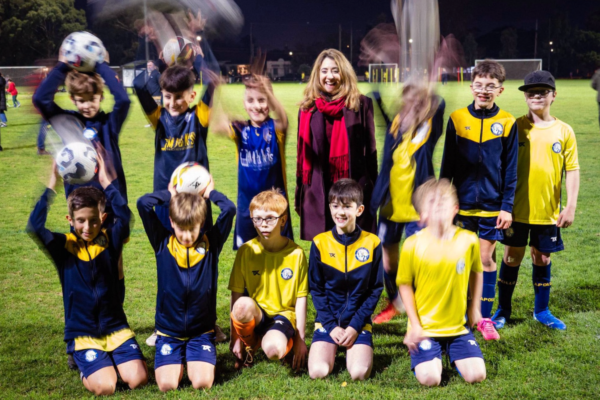
The outcome is a program that Spring Hills now holds up as central to its identity rather than supplementary to it. The club has become a leader in female participation in Melbourne’s west, and recently made history within the NPLW Victoria structure by fielding junior teams coached entirely by female coaches, a milestone that reflects the depth of the program Markovski helped build.

What the Award Recognises

The Melton City Council’s decision to name Markovski its Gender Equity Leader of the Year places his work in a frame that extends beyond football. Melton is one of the fastest-growing local government areas in Australia, a diverse and rapidly expanding community where the institutions that bring people together, like schools, councils, sporting clubs, carry an outsized responsibility for social cohesion.

Mayor Cr. Lara Carli, speaking at the awards ceremony, reflected on the role volunteers play in communities like Melton’s. “Volunteering creates friendships, strengthens communities and builds a sense of belonging,” she said. “It helps people feel connected, supported and valued, and those things are more important than ever in a growing and diverse community like ours.”

For the girls now playing football at Spring Hills who were not playing anywhere eight years ago, Markovski’s contribution is not abstract. It is the specific and concrete fact of having somewhere to play, someone to coach them, and a pathway that leads somewhere.
Previous ArticleNext Article

More than 220 coaches attend Football South Australia’s second NOVA Youth Club Championship workshop

Football South Australia drew more than 220 coaches to its second NOVA Youth Club Championship Coaches Workshop in late May, underlining the scale of engagement clubs are generating through the state’s restructured youth competition framework.

The online session was facilitated by Football SA Technical Director Michael Cooper, who also serves as Junior Matildas Head Coach. Cooper shared observations from the AFC U17 Women’s Asian Cup and Australia’s qualification for the FIFA U17 Women’s World Cup, giving club-level coaches a window into the demands and standards of elite international football.

The presenter line-up extended that international lens further. Lachlan Tosh and Cristiano Dos Santos spoke to their experiences in national tournament environments, while legendary Australian coach Tom Sermanni addressed the fundamentals of youth coaching. Colin Sanctuary from the University of Newcastle examined coaching language and its direct influence on player learning.

Themes running across the session included the primacy of long-term player development over short-term results, with presenters consistently emphasising technique, ball mastery, individual improvement, and decision-making under pressure. Coaches were encouraged to expose players to varied styles of play, facilitate practice outside organised training, and help young players retain possession longer in match conditions.

Post-session feedback pointed to strong practical value, with coaches singling out clear communication, relationship-building, and age-appropriate feedback as key takeaways.

The workshop series sits within the broader transition from the Youth Premier League to the Club Championship model, which ties coaching participation to championship points for clubs and CPD credits toward individual coaching diplomas. Six workshops are scheduled across the season, with four still to come.

1200 players to descend on Geelong for Football Victoria Country Championships as Regional Football Enters New Era

More than 1,200 junior footballers from across regional Victoria will converge on Geelong this weekend for the 2026 Football Victoria Country Championships, with players representing eight regions competing across the King’s Birthday long weekend at Stead Park and Myers Reserve.

The tournament, which has been running since 1978 and has grown into one of the largest junior football events in the country, takes on additional significance this year. It marks the first Country Championships since Football Victoria announced a restructured regional football model in December 2025, making this edition an early measure of how that new framework translates into competitive outcomes at the representative level.

Sixty-seven teams will compete across Under-11 to Under-16 age groups for both boys and girls, with finals day scheduled for Monday. All fixtures and results will be available through the DRIBL app.

More than silverware

FV Regional Development Manager Lauren Stevens said the tournament represented something beyond the competitive results it produces.

“The Country Championships are an exciting opportunity for players from across regional Victoria to come together, represent their region and create lasting memories both on and off the pitch,” Stevens said. “This tournament has a rich history and continues to play an important role in bringing regional football communities together while providing players with the chance to experience a high-level representative environment and talent identification opportunity.”

That dual function is central to what makes the Country Championships structurally significant. For many players travelling to Geelong this weekend, a regional representative tournament is the highest level of football they have experienced. For some, it will be the environment in which they first come to the attention of Football Victoria’s technical staff and pathway programs.

The talent identification dimension carries particular weight at a moment when Football Victoria’s participation numbers are at record levels and the pipeline from community football to elite competition has never been more closely scrutinised. The 2025 Annual Report documented a 14 percent overall participation increase, with junior football among the fastest-growing segments. Tournaments like the Country Championships are where that growth begins to translate into representative opportunity for players who live outside metropolitan Melbourne.

Regional football in transition

The timing of this year’s Championships against the backdrop of Football Victoria’s regional restructure adds a layer of context that will be watched closely by administrators and clubs. The December 2025 announcement of the new regional model represented the most significant structural change to regional football governance in the state in some years, and the process of transitioning Life Members from regional associations into the Football Victoria honour roll at last month’s AGM reflected the scale of that change.

How the eight regions perform this weekend will offer an early indication of whether the restructured model is serving regional communities effectively.

The Corrie Koppen Fair Play Award, introduced last year to celebrate the life and legacy of the late Cornelius Koppen, adds a dimension to the competition that sits alongside the on-field results. The award is given to the region judged to have played and conducted itself in the spirit of the game, a recognition that how communities behave at a junior tournament is as meaningful as what they win.

Most Popular Topics

Editor Picks

Send this to a friend