

Applications open for Sport Australia’s Women Leaders in Sport Grants

Sport Australia is now accepting applications for the 2021 Women Leaders in Sport (WLIS) Development Grants and Leadership Workshops.

Sport Australia is now accepting applications for the 2021 Women Leaders in Sport (WLIS) Development Grants and Leadership Workshops.

The WLIS Development Grants and Leadership Workshops form part of the broader WLIS program, featuring activities that help women in the sports industry obtain new skills, knowledge and qualifications to progress their leadership pathway in the sector.

The programs are run by Sport Australia, partnered with the Office for Women. The highly regarded WLIS workshops mark its 20th year, where over 25,000 women in the sports industry have achieved leadership development since 2002.

Women working in the sports industry can apply for individual grants up to $10,000 to support their professional development and to attend online leadership workshops. Organisations are able to apply for leadership development grants up to $20,000 that covers workshops, seminars and conferences for staff.

“We know that having a greater balance of men and women in executive leadership positions makes sporting organisations more dynamic and well-rounded in the way they conduct their businesses,” Sport Australia Acting CEO Rob Dalton said.

“Having that diversity at a leadership level has a direct impact on engagement in sport and ultimately, positively impacts the bottom line for sports.

“It is vitally important to ensure that our next generation of female sports leaders are provided with genuine development opportunities, which is what this program delivers and why it has been extended and expanded for a four-year cycle.

“Sport Australia is so pleased the Australian Government has acknowledged the importance of the WLIS program with an increased funding commitment of $3.4 million over the next four financial years, ensuring the program can expand and deliver even further development opportunities for women to reach their leadership potential in our industry.”

Individuals and organisations have until Wednesday, March 17 2021 at 5pm to apply for the WLIS Development Grants and Workshops.

Previous ArticleNext Article

LaLiga and CANAL+ strengthen anti-piracy alliance across nearly 50 countries

LaLiga and CANAL+ have strengthened their partnership with a new anti-piracy agreement covering almost 50 countries. The deal spans Europe, Sub-Saharan Africa and Haiti. It brings together the league’s anti-piracy capabilities with CANAL+’s technology, intelligence and enforcement resources. The move reflects a growing commercial priority for sports rights holders. Protecting live content has become essential to protecting the value of broadcasting deals.

LaLiga and CANAL+ will share intelligence and coordinate their response to illegal distribution networks. They will also work on joint investigations and enforcement activity. The partnership builds on an existing relationship between the two organisations. CANAL+ distributes LaLiga content across multiple international markets. The new agreement now takes their relationship beyond broadcasting.

The partnership creates a joint focus on protecting the underlying value of the rights being sold. While broadcasters invest heavily in football rights, illegal streaming undermines revenue and weakens the commercial proposition of legitimate broadcasters.

LaLiga’s latest figures highlight the importance of audiovisual income to professional clubs. Broadcast revenue across Spanish professional football fell 5.2% to $2.3 billion (1.43 billion Euros) in the 2024/25 season. Commercial revenue reached $2.4 billion (1.58 billion Euros) and became the largest revenue source.

Piracy therefore represents a direct business risk. Illegal access can reduce the value broadcasters place on future rights packages, ultimately affecting the money flowing back into clubs and competitions.

LaLiga and CANAL+ are responding by pooling resources. For CANAL+, the agreement also protects its investment in international sports rights. The broadcaster operates in nearly 70 countries and has expanded its relationship with LaLiga alongside its international growth. For LaLiga, stronger enforcement can help protect the value of its global media proposition.

The partnership also carries implications for the wider sports industry. Rights holders increasingly need technology, legal expertise and cross-border cooperation to tackle illegal distribution. The message is clear. Winning a rights deal is only part of the commercial battle. Sports organisations and broadcasters must also protect the content once it reaches the market.

LaLiga and CANAL+ are betting that closer cooperation can make that protection more effective. This agreement may provide a model for other leagues and broadcasters facing the same challenge.

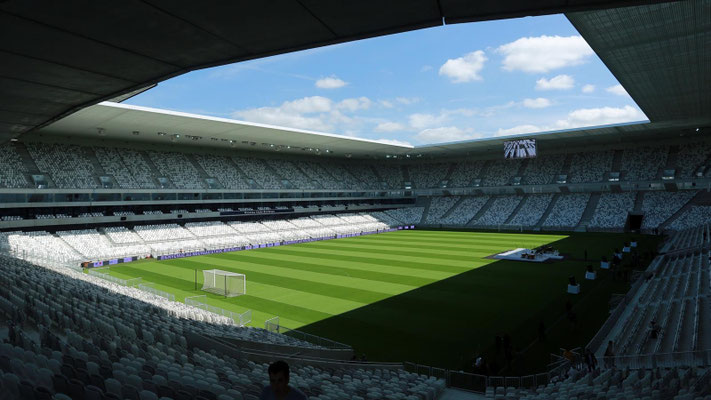
Bordeaux face uncertain future after American investor withdrawal

Girondins de Bordeaux face their biggest crisis yet after their exclusion from France’s national competitions was upheld and proposed investor Park Bench walked away from a takeover. The club is on the brink of liquidation after poor financial management and failed ownership takeovers. The Paris Administrative Court rejected Bordeaux’s appeal in August. The court backed the decision that prevents the club from playing in national competitions for the 2026-27 season. Bordeaux will therefore this season remain in Régional 1, the sixth tier of French football.

The ruling followed a financial dispute with French football’s financial regulator, the DNCG. Bordeaux had presented additional financial guarantees after its previous hearing. The court ruled that those commitments could not be considered as part of that procedure.

The decision has now had a major impact on the club’s ownership plans. Park Bench, the US investment group working with Sparta Capital, has withdrawn from its proposed takeover. The group said its offer depended on Bordeaux remaining in the national championships. With that condition no longer possible, Park Bench decided not to proceed.

The withdrawal leaves Bordeaux in a difficult position. The club had hoped new investment would provide financial stability and help rebuild its sporting operation. Instead, the failure of the takeover leaves the future of the six-time French champions uncertain. Bordeaux has already endured several years of financial problems. The club lost its professional status in 2024 after bankruptcy proceedings and a previous administrative relegation. It then rebuilt its senior team in the second and third tiers of French football.

The latest exclusion represents another major setback. Bordeaux now needs to find a way to keep the club operating outside the national leagues. That means securing funding, meeting its financial obligations and establishing a sustainable ownership structure. The threat of judicial liquidation now hangs over the club.

In a statement issued in late August, Bordeaux said it would explore every remaining legal option after the administrative court ruling. But with Park Bench no longer backing the proposed takeover, the club has fewer options available.

The next priority will be survival. Bordeaux must find new financial backing or another solution to protect the club from liquidation. For one of France’s most historic and successful clubs, the immediate target is no longer a return to Ligue 1. It is simply making sure there is a club left to climb back.

Most Popular Topics

Editor Picks

Send this to a friend