




Australia Cup Final Viewership Proves Football’s Popularity

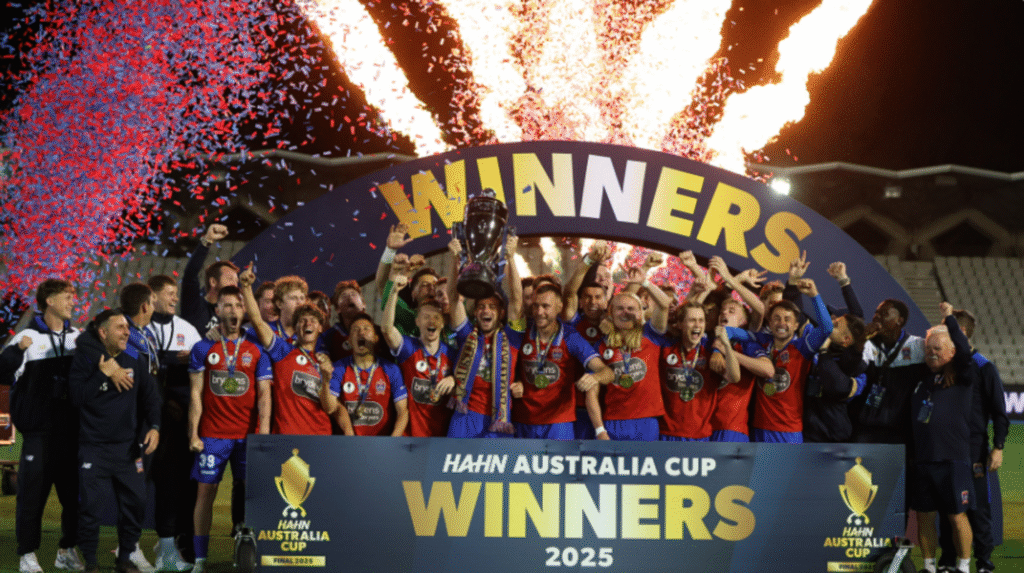
As the Hahn Australia Cup season finished this week, with Newcastle Jets winning against Heidelberg United Alexander, the football community are now preparing for the upcoming Australian Championship.

This includes pundits and football fans speculating what this year’s tournament has in store for the game and where it is heading in the future. But one thing is for certain: football is gaining a significant number of TV viewers compared to last year. Statistics from Australia’s leading TV blog, TV Tonight, record 506,000 total viewers of the Australian Cup final, dwarfing the 53,000 from last year’s broadcast.

The final, which aired on Network 10 and streamed on Paramount+, attracted 116,000 viewers aged 16-39 and 188,000 viewers aged 25-54. The remaining viewership numbers came from the pre- and post-game shows. However, the media does not view Australia as a football capital, unlike AFL and NRL.

The sports’ finals see millions of viewers and spectators from across the country tune in, showing the type of numbers and fan engagement you would see in European football matches.

From Grassroots….

In the 2024 National Participation Report, football clubs nationally have a total of 1.9 million participants since 2024, with a 16 per cent increase in girls’ and women’s teams in the local sectors, making the game the fastest-growing sport in relation to participation in the country for young players. The statistics also considered the number of people playing the sport recreationally and indoors, like in sporting centres and schools.

The increase in football enrolment can be pointed to the success and media attention of the Socceroos and the Matildas in recent years, making football more popular to general Australians, which in return makes the sport more appealing to younger people. In 2024, enrolment in football clubs has gone up by 11 per cent compared to the previous year, according to the 2024 National Participation Report.

The success of grassroots participation and local sport engagement can also be linked directly to the grants and incentives created by the state government and football governing bodies and received throughout the last few years. Programs like Football Australia’s Club Changer have worked with over a thousand clubs across the country to become empowered and inclusive for players, club members and fans.

Other supporters, like the newly established Parliamentary Friends of Football, embody a shift in the sporting environment of the state of Victoria, who are now representing the sport of football at all levels by securing the future of football in the state of Victoria in both the ministerial and practical sense.

With a group of politicians working alongside stakeholders and club presidents to bring grassroots and state league football into the main stage, it won’t take long until events like the Australian Championship gain wider notoriety outside the football community.

…. To The Major Leagues.

While grassroots clubs and the support they receive from fans and governing bodies play a big role, the major league clubs like Melbourne Victory and the international teams play just as big of a role as the media when representing football.

High-profile events like the 2026 Women’s Asian Cup, which will be hosted by Australia, increase public engagement simply by having the tournament held in the country, just like the FIFA Women’s World Cup 2023 and previous tournaments, which also contribute to the sport’s visibility.

National sports teams usually create a sense of national pride, as well as friendly rivalry between nations. Yet, the popularity of women’s football, as well as men’s, in the general sports-watching community in Australia is determined by how the Australian media portrays the games and broadcasting rights being dealt with by Australian television.

If the mainstream media treated football the way it represents the AFL and NRL, along with the amount of sponsors, merchandise and public acknowledgement of the sport being a part of Australia’s sporting history, you would see the ratings match the AFL Grand Final.

Overall, though football is seeing an increase in viewership and participation in the younger age groups, there’s still a lot more that needs to be done for the sport to evolve into the powerhouse it deserves.

Whether it is playing football in school, watching the upcoming Australian Championship on SBS VICELAND or on SBS On Demand, or actively attending grassroots matches in your community, you and those in the Australian sporting community should engage in the sport like over half a million did last Saturday.

Previous ArticleNext Article

Thornaby FC’s community commitment leads the way, but football fans continue to suffer

The cost of living crisis has impacted people and businesses worldwide and football is no different.

Football fans globally – and especially top flight British supporters – are being priced out of the game they created, and by the teams they have supported their whole lives.

In the 2024/25 season, 19 of 20 Premier League clubs raised their ticket prices. The highest single jump was a 28% increase, and additionally an 11% hike on tickets for children. Between 1990-2025, football fans in the UK have seen their ticket prices increase by an immense 800%. 

The fan reaction has been continually damning. Via the UK-based Football Supporters’ Association, over one hundred supporter groups campaigned for Premier League clubs to freeze ticket prices at home games for two seasons, as part of the Stop Exploiting Loyalty Campaign.

An FSA statement reads: ‘Football is for everyone. Rising prices are making it harder for regular fans, especially younger generations and working-class communities to attend matches.’ 

With fans of clubs from right across the country united on the matter, their position was clear: stop taking football from the people.

One club that did heed the message were North Yorkshire non-league side, Thornaby FC. This season, they are offering free season tickets to local residents for both men’s and women’s games.

Over 20,000 people are eligible thanks to the partnership between the club and the local council. With the club awarded AUD 12,000 (GBP 6,500), the initiative aims to bring the community together and drive locals to games.

This is not seen as a final solution, but certainly a major step in gaining support and interest for the team; in turn it will hopefully drive local investment, revenue and growth via the community that supports it, as opposed to investment groups that potentially hold less interest in the health of the club and its community. 

The Stop Exploiting Loyalty Campaign has also gained the support of MPs in Parliament. In March, they recognised the problem and as part of an Early Day Motion stated: ‘working-class and young supporters are being priced out; squeezing out local and dedicated fans poses an existential threat to the culture and community of football.’

While those words may be encouraging, what they can change in their current systematic position feels minimal.


The World Cup is another example of football fans suffering greatly at the hands of commercial interests.

On the grandest stage, where fans from around the world gather en masse to support their nations and the spirit of the game should in theory be at its most authentic, fans are deliberately exploited by FIFA.

According to Forbes Middle East, the 2026 edition in the USA, Canada and Mexico saw a rise in ticket prices for 90 of the 104 matches compared to the previous edition in Qatar.

Football is being held up by investors and governing bodies like a puppet on strings. They deem growth to be the only measure of success.

Growth is of course a key requirement of success, but what good is that when it sees the interests of local communities, including loyal football fans, pushed to the side? When it comes to modern day football, good deeds – such as those committed by Thornaby FC – are rarely seen as time well spent.

The pursuit for growth is also not just financial. Human attention is a newly monetised market; from streaming views to social-media engagement to email sign-ups. As football continues its global push into lounge rooms and onto smartphones, it is at major risk of overlooking those who commit their time and resources to stand in the terraces or sit in the stands.

Football Victoria campaign for upgrade to Baranduda Fields

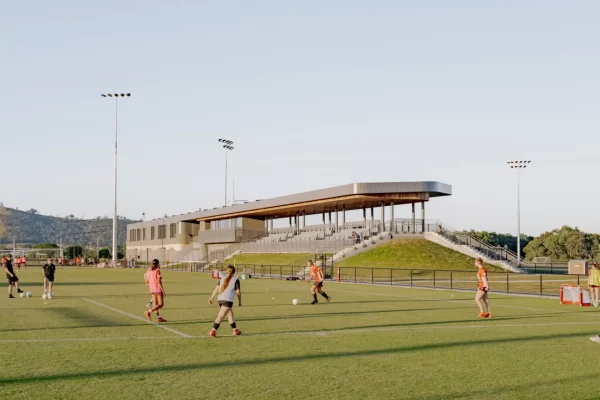
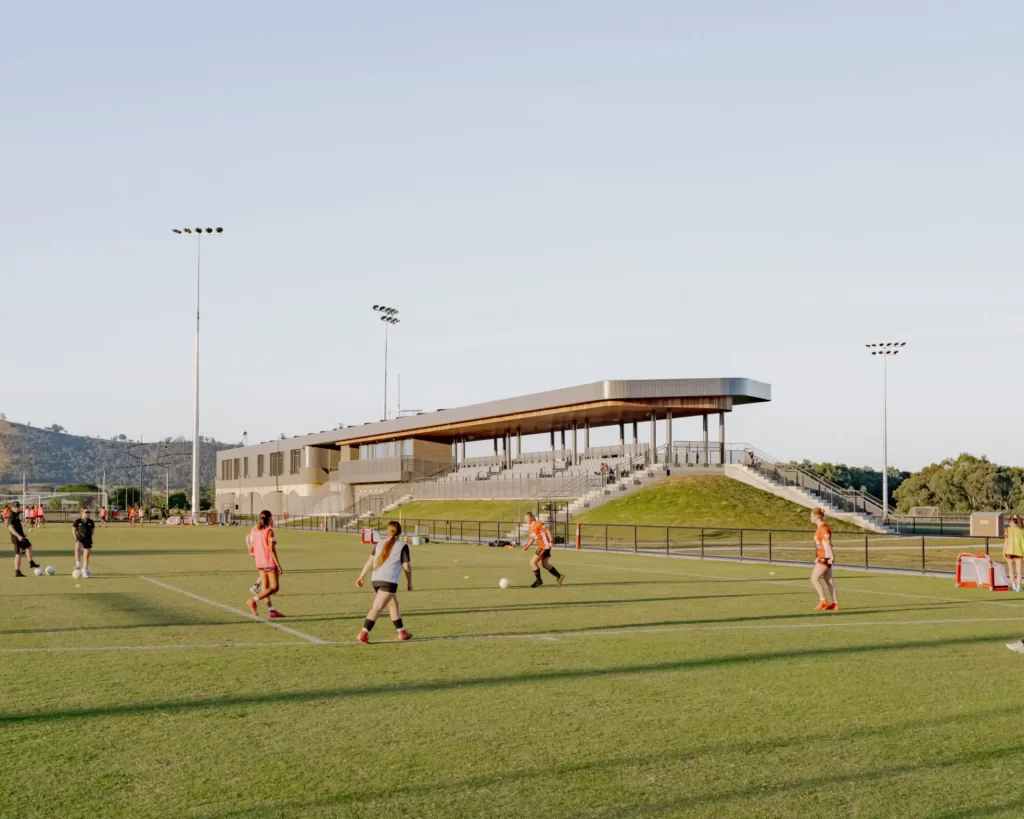
Football Victoria is partnering with the local community of Wodonga in advocating for a significant expansion of Baranduda Fields to help accommodate the rapid growth of football participation in the region.

Wodonga, a growing regional city south of the Victoria/New South Wales border, has seen involvement in football increase by over 130% in just six years.

A massive part of that is the growth of women’s & girl’s football, with participation increasing by almost 300% in the last six years alone.

With such a dramatic rise, the current facilities are not able to meet the demand. 

Alongside the local community, Football Victoria is campaigning for a synthetic pitch and lighting infrastructure to be provided for Baranduda Fields. This would provide players the chance to play year round, including at times when the weather may preclude use of traditional pitches.

It would not only help Murray United FC, who play and train there, but create a regional football hub capable of supporting the increase in activity within the local area.

Football Victoria’s Head of Government Relations & Facilities, Lachlan Cole, said in a press release, ‘The growth of football across this part of Victoria has been extraordinary, and the numbers tell only part of the story.’

‘Football Victoria has a strategic commitment to regional football, and Baranduda Fields gives us the opportunity to think beyond one club for the benefit of a whole region,’ he said.

Whilst the demand for football continues to grow across the country, areas like Wodonga are feeling the exponential rise more than others. Particularly highlighted by the dramatic increase in female participation, the need for upgraded accommodation is no longer a future consideration.

Speaking to Football Victoria, Murray United FC Chairman Pedro Afonso said, ‘A synthetic pitch and lighting would unlock much-needed access to the regions first synthetic football pitch, which provides major benefits to all year round participation and provides access in all weather conditions.’

‘More space and capacity gives Murray United and the sport in the region ability to keep growing. The demand is here – we need the infrastructure to match it.’

Whilst the games grows, the facilities need to be available to sustain it. Football Victoria’s pledge to help maintain that is exactly what the next generation requires.

Most Popular Topics

Editor Picks

Send this to a friend