





Blacktown District Soccer Football Association Launches Youth League and Poaching Program

Blacktown District Soccer Football Association has outlined a package of initiatives for the 2026 season centred on youth development, coach education and the celebration of female participation, as the Western Sydney association moves to raise standards across community football and strengthen pathways into state-level competition.

The centrepiece of the association’s development agenda is the Blacktown Youth Development League, a new competition structure spanning all youth Division One competitions in the Under-13 to Under-18 age groups, including Phoenix League female competitions involving both BDSFA and GDSFA clubs. The league applies a benchmarking framework adapted from Football NSW‘s junior competition standards, with clubs encouraged to implement structured training environments including a minimum of two sessions per week where possible.

BDSFA General Manager Owen Liiv said the initiative responded to clear demand from within the football community for more substantive development environments.

“It is pretty clear that people want more and better football experiences,” Liiv said. “The measure for us is high-quality youth football competitions within Blacktown and ultimately, stronger performances in state-wide competitions such as the Football NSW State Cup or Football NSW Champion of Champions.”

The referees branch will support the league by prioritising Division One fixtures and providing three-person match control where available, an operational commitment that acknowledges the role officiating quality plays in the overall development environment.

The Managerial Infrastructure

Running alongside the youth competition is a free coach education program, with Foundation of Football courses delivered across BDSFA’s 24 member clubs by permanent association staff. With more than 1,000 registered coaches across the district, BDSFA has set a target of 85 percent achieving Foundation of Football accreditation within three years. Removing cost as a barrier to accreditation is a deliberate structural choice, reflecting growing recognition across Australian football that coaching quality at community level is inseparable from participation outcomes.

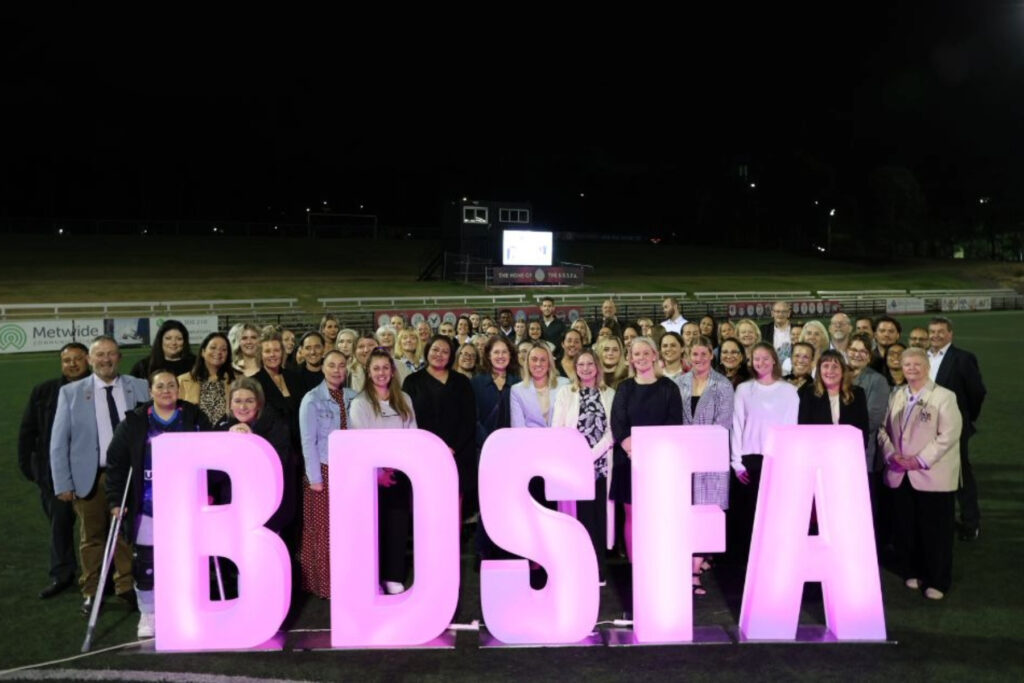
The association also launched Female Football Week with a “Cocktails on the Pitch” event at Blacktown Football Park, attended by close to 100 players, coaches, referees, administrators and volunteers. Former Matilda Leah Blayney addressed the gathering, speaking about her pathway from Wentworth Falls to international football. BDSFA has indicated the event is likely to become an annual fixture on the association calendar.

Taken together, the initiatives reflect an association investing deliberately in the structural conditions that determine whether community football grows sustainably rather than opportunistically.


Previous ArticleNext Article

Football Victoria Backs Campaign to Shield Junior Players from Gambling Harm

More than 600 sporting clubs across Victoria have enrolled in a state government program designed to limit young players’ exposure to gambling, with Football Victoria now urging its community clubs to join before a late-July registration deadline.

The Love the Game initiative asks clubs to formally commit to a set of principles: refusing sports betting sponsorships, developing internal harm prevention policies, and building environments where coaches, parents and players are equipped to discuss gambling risks with children.

The program’s public health rationale has a sharper statistical edge than its community-facing materials suggest. A 2025 study of Victorian secondary school students aged 12 to 17 found that nearly 30% had gambled at some point, and among those who had gambled in the past year, 7.5% met the criteria for problem-gambling and a further 26.8% were classified as ‘at-risk’. The research, commissioned by the state government and published earlier this year, also found that students exposed to gambling venues and advertising were more likely to gamble or to do so in a risky manner.

The most recent Victorian Population Gambling Study found that Victorians aged 18 to 24 are the group least likely to gamble overall, yet carry the highest rates of harmful gambling across all age groups. Young people aged 18 to 34 are around five times more likely to bet on sports than older cohorts.

When the data lands at the clubhouse door

Football Victoria’s support for the program reflects a broader recognition within community sport that participation rates and club culture are connected. The environments clubs create shape whether young people stay in sport and what norms they carry with them into adulthood. For football specifically, which draws participants across a wide range of socioeconomic backgrounds, that responsibility is not evenly distributed. Approximately 440,000 Victorians, or 8.5 per cent of the state’s population, are classified as being at some risk of experiencing problem gambling.

The Victorian Government’s program gives clubs more than symbolic membership. Registered clubs receive practical tools to develop governance frameworks around gambling harm, resources for coaching staff and volunteers, and standing as part of a growing network of clubs taking a formal position on the issue.

Researchers have described the current framing of gambling harm as a matter of personal responsibility as inadequate, arguing it is a public health issue requiring a systemic response. Community football clubs, with their reach into households across the state, are one of the institutional levers available to make that response visible.

More than 220 coaches attend Football South Australia’s second NOVA Youth Club Championship workshop

Football South Australia drew more than 220 coaches to its second NOVA Youth Club Championship Coaches Workshop in late May, underlining the scale of engagement clubs are generating through the state’s restructured youth competition framework.

The online session was facilitated by Football SA Technical Director Michael Cooper, who also serves as Junior Matildas Head Coach. Cooper shared observations from the AFC U17 Women’s Asian Cup and Australia’s qualification for the FIFA U17 Women’s World Cup, giving club-level coaches a window into the demands and standards of elite international football.

The presenter line-up extended that international lens further. Lachlan Tosh and Cristiano Dos Santos spoke to their experiences in national tournament environments, while legendary Australian coach Tom Sermanni addressed the fundamentals of youth coaching. Colin Sanctuary from the University of Newcastle examined coaching language and its direct influence on player learning.

Themes running across the session included the primacy of long-term player development over short-term results, with presenters consistently emphasising technique, ball mastery, individual improvement, and decision-making under pressure. Coaches were encouraged to expose players to varied styles of play, facilitate practice outside organised training, and help young players retain possession longer in match conditions.

Post-session feedback pointed to strong practical value, with coaches singling out clear communication, relationship-building, and age-appropriate feedback as key takeaways.

The workshop series sits within the broader transition from the Youth Premier League to the Club Championship model, which ties coaching participation to championship points for clubs and CPD credits toward individual coaching diplomas. Six workshops are scheduled across the season, with four still to come.

Most Popular Topics

Editor Picks

Send this to a friend