
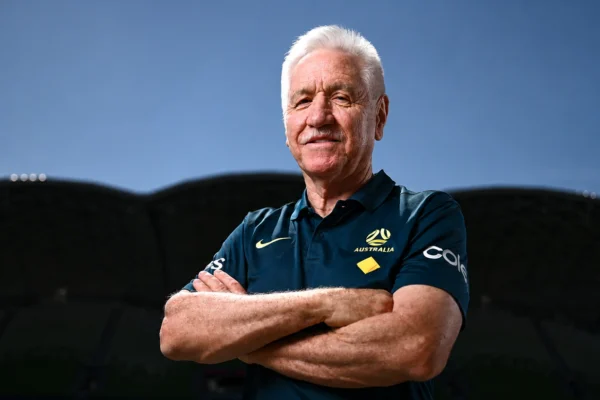



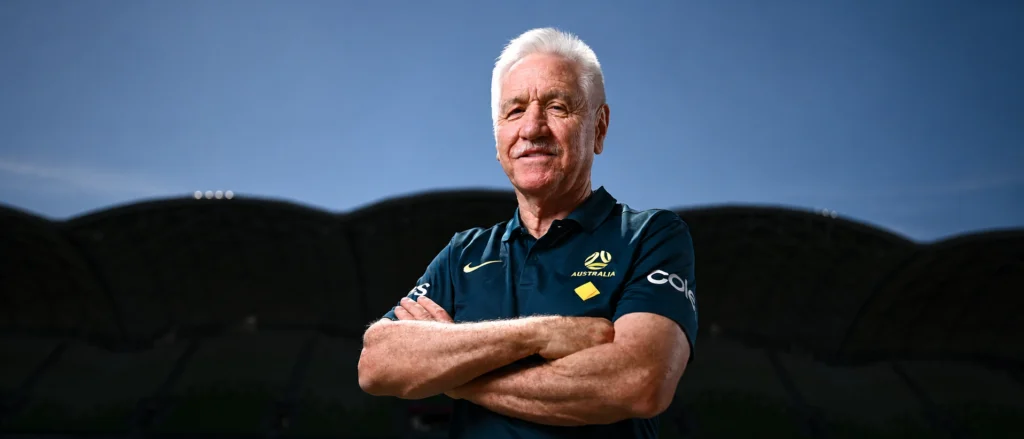
FCA to Host Exclusive Two-Part Goalscoring Workshop Series with Dr Ron Smith

One of Australian football’s most respected coaching minds shares decades of research ahead of the FIFA Men’s World Cup.

Football Coaches Australia (FCA) has announced an exclusive two-part coach education series featuring renowned coach educator and football analyst Dr Ron Smith, offering coaches a rare opportunity to explore the evolving science of goalscoring through the lens of one of Australia’s most influential football thinkers.

The online workshops, scheduled for June 1 and June 8, will examine the historical development, modern trends and future direction of goalscoring in football, drawing on extensive research that formed the foundation of Dr Smith’s doctoral studies.

For FCA, the sessions represent the culmination of more than a year of planning and provide a timely opportunity for coaches to deepen their understanding of attacking play ahead of the FIFA Men’s World Cup.

“Ron’s work on goalscoring has been years in the making and continues to evolve,” FCA President Ian Greener said.

“We felt there was no better time to bring this knowledge to the coaching community than in the lead-up to the World Cup, when coaches around the world will be analysing the game’s best teams and players.”

Across the two sessions, Dr Smith will present findings from his extensive research into goalscoring patterns and trends, examining how the game has changed over time and what coaches can learn from football’s biggest tournaments.

Topics covered throughout the series will include:

  • Historical analysis of goalscoring trends
  • How goalscoring has evolved in the modern game
  • Key patterns identified through Dr Smith’s research
  • Scoring trends across the last six FIFA Men’s World Cups
  • Comparisons between men’s and women’s World Cup tournaments
  • The role of pressing, transition moments and direct play in creating goals
  • Practical coaching implications for improving attacking performance

The two-part structure has been intentionally designed to build upon itself. Session One will focus on the evidence, data and research underpinning Dr Smith’s findings, while Session Two will explore the practical applications and coaching interventions that can emerge from that analysis.

Football Australia has accredited both workshops with one Continuing Professional Development (CPD) hour each, allowing coaches to earn two CPD hours by attending both sessions.

Dr Smith’s coaching and coach education credentials span decades. He has worked extensively with Football Australia, the Australian Institute of Sport and the Socceroos, while also holding coaching roles internationally in Iceland and Malaysia, as well as within the A-League.

His contributions to coach development have helped shape generations of Australian coaches, making this series a valuable opportunity for coaches across all levels of the game.

Event Details

History and Future of Goalscoring – Session One
Date: Monday, June 1, 2026
Time: 7:30pm AEST
Format: Online
CPD: 1 Football Australia-accredited CPD hour

Following the completion of the FIFA Men’s World Cup, FCA is also planning a special panel discussion featuring leading Australian and international coaching voices to analyse the key tactical developments, trends and lessons emerging from the tournament.

Further details regarding that event are expected to be released later this year.

FCA members can attend the workshops free of charge, while guest registrations are available through Eventbrite.
Previous ArticleNext Article

We should be celebrating Australia’s football exports

When Nestory Irankunda, Lucas Herrington and Alessandro Circati all completed high-profile moves, the headlines understandably focused on the massive transfer fees

Record deals, European giants, Australian talent making noise overseas.

But beneath the excitement lies a much bigger story.

For years, Australian football measured success by the players it could retain and attract. Today, success is increasingly being measured by the players it develops and sells.

That shouldn’t be looked at as a weakness of the domestic game.

It’s one of the A-League’s greatest strengths.

Changing landscape

The reality is, Australian clubs will continue to struggle to compete financially with Europe’s elite.

Trying to retain every emerging star was always going to be an impossible task.

Instead, clubs are embracing a model that has proven to be successful in countries across Europe and in leagues like the MLS in the United States.

Develop talented young players, provide them with first-team opportunities and a platform to showcase their talent.

Last year the A-League ranked in the top five for percentage of minutes by players aged 21 or younger across 55 leagues around the world.

These three recent transfers are not an isolated story, they are part of a broader trend.

European clubs are watching Australian football as closely as they ever have. The talent is there.

The World Cup effect

The Socceroos’ performance on the international stage have played a significant role in changing perceptions.

Australia is no longer viewed simply as a physical football nation. Increasingly, Australia is producing technically capable players who can adapt to the demands of Europe’s top leagues.

This exposure has provided players with a stronger opportunity to impress and demonstrate their ability.

The result is a transfer market where Australian players are genuine investments and viewed as integral pieces to a club’s future.

More than transfer fees

The financial benefit of player sales is obvious.

Transfer revenue provides clubs with opportunities to reinvest in academies, facilities, coaching and football operations.

But the impact extends much further.

Every Australian success story abroad raises the profile and trust of the domestic development system.

It encourages and gives European clubs greater confidence to scout Australian football more regularly and more intently.

It creates stronger relationships between local clubs and overseas markets and perhaps most importantly, it gives the next generation a clear pathway to elite football.

The next challenge

Evidently, producing talented players is not Australia’s most pressing challenge

Producing them consistently will be the real measure of how Australian football has progressed.

That requires continued investment in academies, coaching, facilities and national competitions.

Nestory Irankunda’s transfer to Sporting CP will reportedly fetch his junior club Adelaide Croatia Raiders approximately $220,000 under Fifa’s solidarity mechanism.

Fees like this are a reminder of the importance of well-developed pathways and a clear indication of how valuable strong investment in grassroots football can be.

Opportunity, not loss

Whenever another young Australian leaves for Europe, there is often discussion about what the A-League has lost.

Perhaps the better question is what Australian football has gained.

Every major transfer signals growing confidence in the country’s development pathway.

Every overseas success makes it easier for the next player to follow.

While it would be incredible to watch Nestory Irankunda play in the A-League every week, we should feel proud watching him play in the UEFA Champions League this year.

His journey is a reflection of the A-League’s success in giving young Australian footballers the opportunity and platform to reach that level.

Australia is unlikely to ever compete with Europe’s biggest leagues for salaries and prestige.

But it doesn’t need to.

If the game continues investing in youth development and embraces its position as one of the region’s leading producers of football talent, exporting player’s won’t be an indication of decline.

It will be a platform for fans to watch the next generation of world-class Socceroos playing right here on our own shores.


Global Institute of Sport hosts Masterclass on Athlete Management and Engagement

The Global Institute of Sport (GIS) held an Industry Masterclass on Athlete Management and Engagement, featuring guest speakers Brad Lloyd and Stefani Chinn.

This is part of its broader course offering, which includes a Master’s in Sports Business and Sports Analytics through the University of Newcastle.

The Masterclass addressed four themes: the day-to-day operations of player management, the construction of authentic athlete brands, the role of agents, and the impact of data.

The Panellists

Brad Lloyd is the founder of Apogee Sports Advisory, which develops micro-credentials in sport, and previously served as General Manager of Football at Carlton Football Club and as a player agent.

Stefani Chinn is a sports marketing consultant specialising in ambassador program design and formerly served as Senior Vice President of Global Marketing and Communications at the World Surf League (WSL).

Player management: the daily operations

Lloyd outlined the complexities of player management, drawing on his experience as General Manager at Carlton, highlighting the role of “list management.”

This involves negotiating player contracts and managing the composition of the list, including age profile and positional spread, to align with the club’s broader requirements.

Player welfare also falls within this remit, with a high-performance manager tasked with ensuring athletes remain fit and available.

“It’s all about attraction and retention,” Lloyd explained.

He noted that communication with club shareholders is a constant part of the role, with “talking up and down” the organisation requiring a strong team.

“Getting people, you trust with their credentials in these roles is paramount,” Lloyd explained.

Building Authentic Brands

Chinn addressed the construction of athlete-focused marketing strategies, arguing for a shift away from organisation-centred approaches.

“What was needed to do from a fan, athlete and commercial perspective was lead with an athlete-first approach.”

For this Chinn emphasised the importance of understanding athletes beyond their on-field performance.

“Knowing the athlete first is such an important piece, there is so much to the athlete than just how they play,” she said, also cautioning against an overreliance on social media metrics: “What we say is fit over followers, followers is a metric, but not a central one.”

Role of Agents

Lloyd addressed the function of agents, noting that while contract negotiation is central, agents must first understand the player and assess whether an opportunity is a suitable fit.

“I find if you get the agent onboard quickly, they will work with you,” Lloyd said.

Chinn distinguished between agents and managers: “Practically, in sports less governed, there are less agents and more managers”,

“It’s important to get the manager onside… the management team is critical” Chinn highlighted.

She noted that within the WSL, relatively few athletes have formal management, making direct engagement with players important.

The Impact of Data

Lloyd underscored the value of organised, accessible data that allows analytics to support and verify observations made within the team and the club’s image.

Though, he did stress that data-focused staff need to communicate their analysis clearly into club strategy.

Chinn discussed the evolution of data use in marketing, noting it was once used in a limited capacity, described as “spots and dots,” to determine audience reach.

Its current application allows more targeted decisions, resulting in what she described as “incredibly informed decisions.”

Though not football-focused at its core, the Masterclass offered insights applicable across codes.

Football’s scale means the club and agent-based environment is ever-present.

As individual athlete identities grow more prominent within sport, lessons from individually driven codes, offer valuable insight for a growing market.

These findings from other codes can be adopted into football; to benefit the whole system, it would be restrictive to not take these into account.

Most Popular Topics

Editor Picks

Send this to a friend