Soccerscene the only online publication dedicated to the Australian and international football industry. It serves as a practical guide for those involved in the business of running a football club and bringing readers up-to-date research and development across all football matters providing insights, discussion and information related to topics that matter.
FIFA World Cup 26 Mascots and Why FIFA’s New Videogame Title Is Interesting
Did you know FIFA has already unveiled the mascots for next year’s FIFA World Cup? Did you also know the mascots will be FIFA’s first “interactive mascots” in an upcoming video game?
Being held all over North America (Canada, the United States, and Mexico), the colourful trio, Maple the Moose, Clutch the Bald Eagle and Zayu the Jaguar, will represent their respective countries in the FIFA World Cup 2026.
The FIFA World Cup mascot is made to represent the country hosting the game, its culture, and, more importantly, the game of football and FIFA. As ambassadors of the game, carefully designed by a team of experts, they are made to advertise football as a family-friendly event, especially to appeal to children in hopes of future generations of supporters.
FIFA President Gianni Infantino stated in the press release announcing the mascots that they are central to the incredible, entertaining atmosphere the governing body has created for the game-changing tournament.
“They’ll win hearts and spark celebrations across North America and around the world,” he said.
“I can already picture them on children’s shirts, high-fiving football legends, and—in another first for this tournament—staring in video games played by millions worldwide.”
The video game he’s referring to is FIFA Heroes, FIFA’s new licensed title where professional football teams and the tournament itself are replaced by playable mascots. From the first-ever mascot, Willie, to the current group, you can put in teams of five.
To put it into context, the videogame, which will release on all current-gen consoles and mobile next year in line with the beginning of the World Cup, is made for younger fans. The videogame will also be a part of the growing portfolio of FIFAe, the electronic entertainment and esports department of the governing body, to make digital football accessible to more fans, the press release said.
FIFA are also partnering with Roblox to deliver in-game events and host quests illustrating each mascot’s role with themed rewards, which, in my humble opinion, may not be a good idea after the news surrounding how the site polices itself this year.
All up, the news is very clear: FIFA are going to try to engage young fans through video games next year. But this isn’t a new move for them.
FIFA’s Videogame Franchise
FIFA has always had a significant presence in the videogame market. The body’s nearly annual titles are shipped by the millions across the world, and that’s only counting the physical copies. If the current year’s game is a little too pricey, you can go over to the bargain bin and grab a previous year for the same console.
Furthermore, since the 1980s, World Cups have had video game tie-ins to celebrate the tournament and the qualifying teams when they play in them. It’s only since 2018, when the 2018 World Cup was relegated to a DLC (downloadable content) for FIFA 18.
The audience of these games are primarily young males and people who enjoy the sport recreationally; not to mention, the games usually score well with critics.
So, why make a grand new title when the franchise you’ve created works? There’s not a clear enough answer, but we can guess creating a brand-new game with three times the stadiums and locations and then having national football team branding as well as being able to know which ones will qualify for next year in time is more expensive to make than using already owned mascots in a 5v5 football game.
So, What Makes The News Interesting?
By FIFA creating a game, developed and published by ENVER in partnership with Solace, for an event that changes location every event, it is more cost-effective and could be successful in bringing more attention to the FIFA World Cup by breaking the mould of tie-ins like done with the Olympics.
Also, FIFA Heroes having mascots from every World Cup appear allows the governing body and the creators of the game the ability to use the title for the next event and maybe continue the game into a larger franchise through FIFAe.
Though, to be fair, since it will be on mobile and it’s aimed at children, FIFA would definitely have to watch and safeguard against predatory advertisements and incentives in regard to microtransactions, which could negatively affect their children player base. Think more stealing their parents’ credit card than loot boxes.
The A-League has just lost a Victorian club. The death of Western United and the suspension of its license by the Australian Professional Leagues (APL) on August 10th was inevitable. The club says it wants to rebuild and eventually return to the competition. That is unlikely to happen considering the search for new owners has to begin.
But one day after the announcement from Western United, South Melbourne stepped forward. The four-time NSL winners announced their intention to begin formal discussions with the APL about joining the A-Leagues. They believe the timing is right. Their argument is understandable. Their football credentials and history are stronger than most A-League teams.
But there is a problem. South Melbourne may have the history. It may have the supporters. It may even have one of the most attractive potential derbies in Australian football. But that does not mean it will get an A-League licence.
In fact, the more realistic prediction from my perspective is that South Melbourne will once again be told no.
South Melbourne has never been better placed
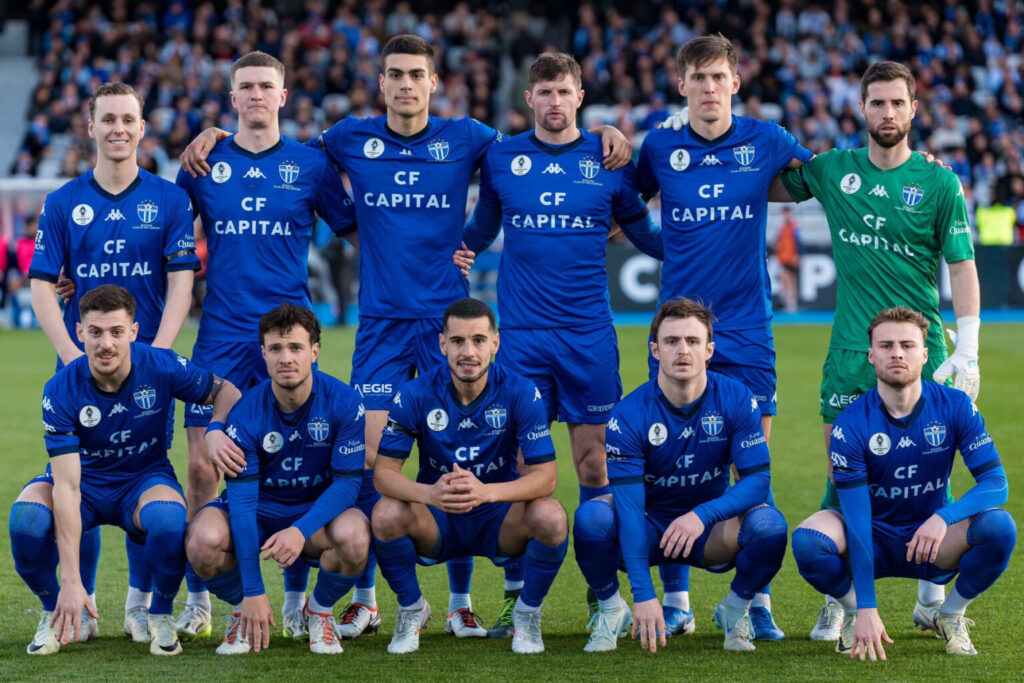
There is plenty to like about South Melbourne’s position. The club is not simply relying on its history. South Melbourne returned to national competition through the inaugural Australian Championship in 2025. It did not merely participate. South Melbourne won it. The club defeated Marconi Stallions 2-0 in the final to become the competition’s first champion.
That achievement matters. The Australian Championship was created to bridge state-based football and the professional game. Whilst it is seen as a second tier, there is no promotion and relegation with the A-League. But it has also continued to perform on the national stage. In the 2026 Australia Cup, which South Melbourne qualified for, they reached the final rounds and then produced one of the biggest results of the tournament.
Adelaide United came to Lakeside Stadium. South Melbourne won 2-1. Adelaide had won the Australia Cup three times. South knocked them out in front of its own supporters. They’re now into the quarter-finals of the 2026 Australia Cup.
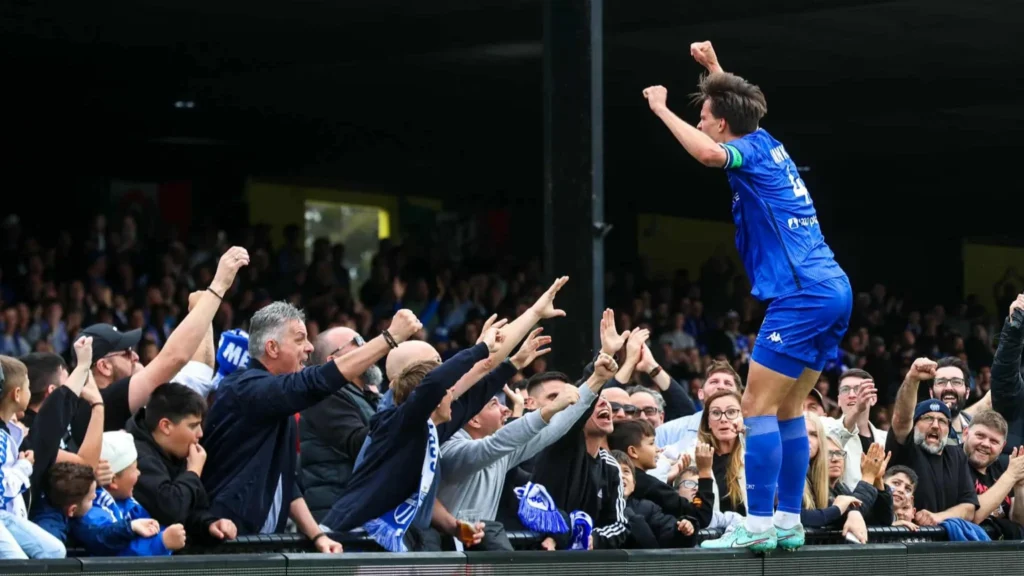
South Melbourne celebrating the Australian Championship Image Credits: South Melbourne FC
The club also has a much bigger story to tell than its recent results. Alongside its four NSL victories, the club also won the 1999 Oceania Club Championship and represented Oceania at the 2000 FIFA Club World Championship. The club has a dedicated supporter base and the history to deserve a place.
The club says its Oceania Professional League participation has helped make it Australia’s 13th professional football club. It has more than 150 businesses supporting it in 2026 and a long-term arrangement at Lakeside Stadium, in the heart of South Melbourne.
On paper, it is difficult to argue that South Melbourne is not ready. The problem is that readiness and admission are two different things.
Third time’s the charm?
South Melbourne’s current push is not new. It has been here before. The club was pursuing an A-League return almost immediately after the NSL disappeared. In 2007, South announced its interest in becoming the second Victorian A-League club.
Then came the 2008-09 process. South Melbourne backed the Southern Cross bid for the second Victorian licence. The club proposed a new team based around the redevelopment of Bob Jane Stadium and involvement from the broader Victorian football community.
It lost. The Melbourne Heart bid won the race and eventually became Melbourne City. That was South Melbourne’s first major warning. Its football heritage was not enough. Its second major attempt came almost a decade later.
The 2017-18 expansion process produced the most serious South Melbourne bid yet. South made the shortlist for an expanded A-League licence. It ultimately lost to Western United. Bill Papastergiadis has since explained that he did not genuinely expect South Melbourne to win in 2018, despite believing strongly that the club belonged in the A-League. He also reflected on the barriers facing a traditional club trying to enter the existing Victorian professional football ecosystem.
That is important context for today’s bid. South Melbourne is not entering negotiations without understanding how difficult the politics and economics of the Victorian football market can be. The club has tried the direct route twice. Neither time worked.
The Western United lesson
This is where the current situation becomes complicated. In isolation, adding South Melbourne would be fantastic for the A-League. Imagine South Melbourne against Melbourne Victory. The atmosphere would be enormous.
There is a genuine football rivalry waiting to happen. South itself points to the potential for ready-made derbies and commercial interest. But the argument that Melbourne should simply have three A-League clubs because Melbourne is a huge city ignores what has just happened to Western United.
Western United was supposed to represent Melbourne’s rapidly growing west. Its original vision centred on a major project in Geelong. The club eventually moved into Ironbark Fields in Tarneit in 2024.
Yet the geographic separation never became as clear as the original concept suggested. Western United was not a Geelong club. It was not a regional Victorian club in the traditional sense. It was a western Melbourne club based and that matters.
The A-League already has Melbourne City and Melbourne Victory. Adding South Melbourne would give the competition three clubs operating within the same metropolitan football market. It is not necessarily brilliant for the business model, which has already lost a club operating on the outskirts of Melbourne.
The NSL offers an interesting historical comparison. The Falcons provide an even more striking Victorian example. They became the first and only regional Victorian club to play in the NSL, reaching the finals in 1996. The distinction is important.
A national competition can expand its footprint by adding genuinely new markets. That is different from adding another club inside an existing Melbourne metropolitan market. That was what was envisioned for Western United, and it failed quickly.
Will the APL see South Melbourne as a safe investment? Despite the fact they’re a well-established club, I’d argue the answer is no.
Promotion and relegation is the only realistic route
There is one scenario where South Melbourne could eventually force its way into the A-League, and that’s the great missing piece of Australian football. Promotion and relegation. South Melbourne would not need somebody to decide that Melbourne suddenly has room for another licence. It would simply need to earn it.
They would have done just that in 2025, winning the Australian Championship if the football pyramid was open. Football Australia originally designed the National Second Tier with the possibility of promotion and relegation being considered once the competition matured.
The format connects NPL clubs and established foundation clubs with national competition. It does not provide a sporting pathway into the A-League. South Melbourne can win the Australian Championship, NSL and Australia Cup but none of those achievements automatically produce an A-League licence.
South Melbourne in the Oceania Championship Image Credits: Oceania Championship
Opening the pyramid is far more complicated than simply announcing promotion and relegation. Australia’s football calendar is fragmented. The A-League operates primarily through the summer months. The NPL operates through the winter and early spring. For the 2026-27 season, the A-League Men runs from October to June, while the NPL begins in February and finishes in September.
That creates an enormous structural problem for a fully connected pyramid. The clubs below the A-League would need to operate at a level capable of supporting professional football. If the A-League aligned with the NPL and the lower pyramid, it would compete in a football calendar that already has to coexist with Australia’s other major winter sports. That is a difficult feat against bigger leagues such as the AFL and NRL.
Beyond that, clubs lower down would need travel budgets and to survive commercially would take real sacrifice from all parties to make that work. The A-League’s existing clubs also have something to lose. They have invested heavily in their licences and their businesses.
Historically, A-League licences were extended through to 2034, while those licence arrangements have included provisions allowing promotion and relegation to be introduced. But the existing clubs will do everything in their power to block it. Promotion and relegation removes certainty. An A-League club can finish last in the current system with no threat to their place. Under relegation, its place is no longer guaranteed.
That is a major commercial change for clubs that have invested in securing their position in the competition. It is therefore difficult to imagine the A-League opening the door. The A-League’s licensing system gives the competition enormous control over who enters, and for South Melbourne historically they’ve been left out in the cold.
South Melbourne deserves the conversation.
The frustrating part is South Melbourne has probably never had a stronger argument. It has history, supporters, infrastructure, commercial support and most importantly, ambition. Beating A-League clubs in national competition proves the capability is there.
It deserves to be in the conversation. But being in the conversation is not the same as being selected. The Western United experience should be a warning. If the A-League could not make the Western United project work, it is difficult to see why it would suddenly decide that another Melbourne club is the answer.
South Melbourne may be the better football story. It may even be the better football club. But the A-League is not simply selecting the best football story.
It is selecting a professional competition, and until Australia embraces a genuine promotion and relegation system, South Melbourne’s path back to the top flight will remain dependent on someone handing it a licence.
That is the part of the dream that looks unrealistic. South Melbourne can keep knocking and it should. They always say third time’s the charm. But unless the pyramid is opened, I expect the door to remain closed.
The Saudi Pro League was designed to become football’s next global powerhouse.
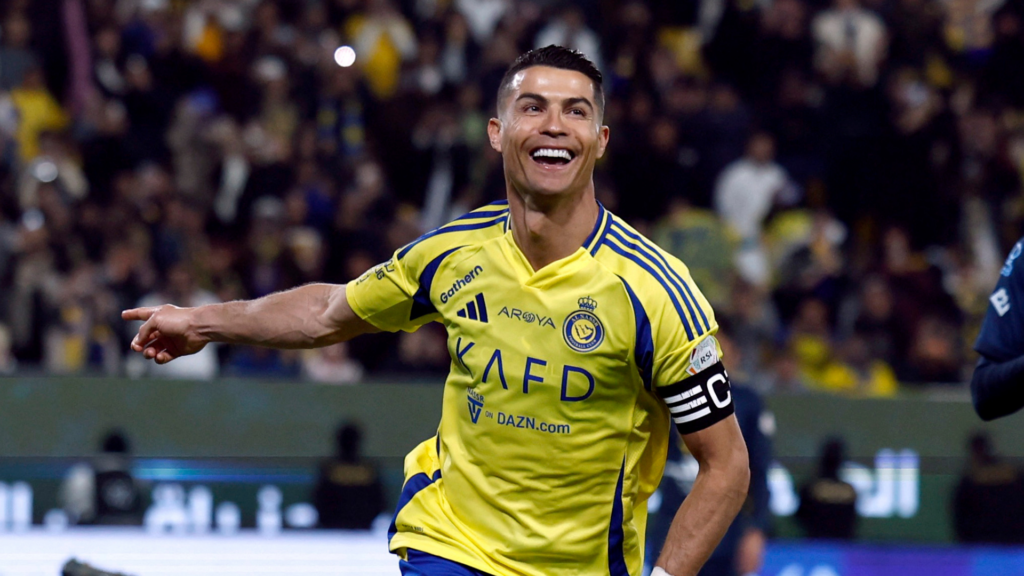
Starting in 2022, Saudi Arabia transformed its domestic competition from a league rarely discussed outside the Middle East into one of the biggest stories in world football. Cristiano Ronaldo arrived at Al-Nasar in 2022. Karim Benzema followed suit a year later. Sadio Mané, Neymar, N’golo Kante and other established stars made the move. Billions were spent, and suddenly the Saudi Pro League was impossible to ignore.
But the formula that created the league’s global attention is beginning to change. Cristiano Ronaldo has revealed that this season will probably be his last in professional football. Funding for Saudi clubs is being reduced, and the league’s transfer strategy is moving away from the ageing superstars that defined its rise.
So, is the Saudi Pro League entering the next stage of its development, or beginning to lose the very things that made it relevant?
Ronaldo’s final season could leave a huge hole
For all the talk about Saudi Arabia’s investment, there is no escaping one fact: Cristiano Ronaldo changed everything. When the Portuguese superstar moved to Al-Nassr during the 2022-2023 season, he became the face of the Saudi Pro League almost overnight. His arrival helped turn Saudi football into a global talking point and opened the door for other major names to follow.
Now, that era could be coming to an end. In an interview with Vogue, Ronaldo said that 2026–27 is “probably” his last year of football and that he wants to leave a “spectacular legacy”. At 41, the Al-Nassr captain has already reached the final stages of a career that has lasted more than two decades.
For the Saudi Pro League, however, his retirement is about more than one player. Ronaldo is a global marketing machine. His goals, interviews, and social media presence have given Al-Nassr and the league itself an international audience that few Saudi players could generate on their own.
The question is simple: when Ronaldo leaves, how much of that attention leaves with him?
The funding cuts change the equation
The second problem is money. The Saudi Pro League’s rapid growth has been built on extraordinary levels of investment. The Public Investment Fund’s (PIF) involvement in four of Saudi Arabia’s biggest clubs helped finance the recruitment of some of football’s biggest names.
Now, that spending is being reined in. The PIF sold 70% of its stake in Al-Hilal and has cut funding to the highly controversial LIV Golf league completely. That does not mean Saudi football is suddenly broke. It does, however, represent a significant change from the spending spree that made the league famous.
This is where the Saudi Pro League faces its biggest test. When you have almost unlimited financial power, attracting players is relatively straightforward. When the money becomes tighter, clubs have to compete on something else.
The league now has to prove that it can offer development and growth of its homegrown talent too. That will also help to build invested supporters and a sustainable football culture.
The superstar shopping spree is slowing down
The transfer market is already beginning to look different. In 2023, the Saudi Pro League’s recruitment strategy was difficult to miss: identify the biggest names in European football and bring them to Saudi Arabia. Ronaldo earns $6.1 million (3.2 million pounds) a week. Neymar remains the record signing of the SPL, costing Al Hilal $147 million (90 million euros) from Paris Saint-Germain.
The list went on. But the league’s approach is now shifting. Rather than simply targeting established stars in the latter stages of their careers, Saudi clubs are increasingly looking at younger players with potential and resale value. Al-Hilal’s signing of 24-year-old Dutch winger Crysencio Summerville is one example of that change.
That could be good business. But it is also less glamorous. There is a big difference between announcing Ronaldo or Neymar and announcing a promising 24-year-old winger. One generates worldwide headlines; the other requires dedicated fans who have been invested in the SPL because of those headline signings.
That could make the league harder to market internationally in the short term. Yet perhaps that is exactly what Saudi football needs. The league cannot rely forever on players who are already famous elsewhere, and the SPL will have to be increasingly smart with its investments.
There is a reason to believe in the project
It would be easy to look at Ronaldo’s retirement, reduced spending and fewer superstar signings and declare the Saudi Pro League will become irrelevant. The league has already achieved something that would have seemed unlikely only a few years ago: it has forced itself into the global football conversation.
Saudi clubs are now internationally recognisable, the competition has attracted genuine world-class talent and the league has a much larger global profile than it did before 2022.
More importantly, the shift away from ageing superstars could eventually make the competition stronger. Instead of spending endlessly on players approaching the end of their careers, Saudi clubs can invest in younger footballers, local talent and long-term development. The league has acknowledged that improving domestic football and giving Saudi players greater opportunities is a more sustainable goal than simply collecting famous names.
That is the real opportunity. Ronaldo may have been the reason millions of people first looked at the Saudi Pro League, but he does not have to be the reason they stay.
The next stage of Saudi football will not be judged on how it invests in football ahead of its 2034 FIFA World Cup. The Saudi Pro League has already proved that money can buy attention, but now it has to fight to keep it before the world descends on the country in eight years.