Football NSW to host Club Development Conference next year

Significant Sporting Events Program 2023-24

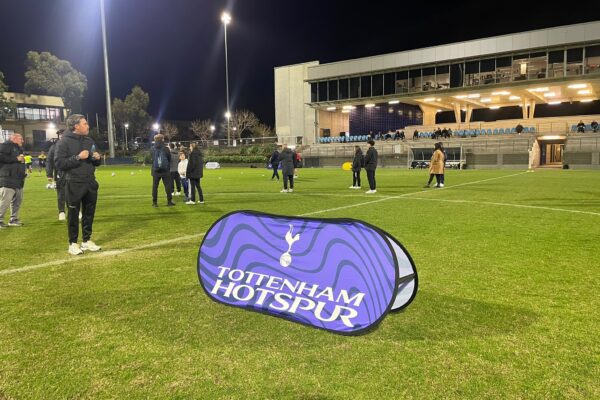
Football NSW is excited to host the second annual Club Development Conference at Valentine Sports Park on Saturday, 1 February 2025.

The Conference aims to empower community clubs by providing valuable insights, information, and tools to enhance their capabilities and support continuous growth in participation.

The conference will feature workshops, panel discussions, and keynote presentations covering a range of topics, including:

  • Club Leadership and Effective Governance
  • Ensuring Player and Member Safety
  • Strategies for Volunteer Retention and Engagement
  • Transforming Club Operations for Success
  • Facilities Development and Securing Funding Opportunities
  • Leveraging Marketing, Communication, and Data Insights
  • Promoting Positive Behaviour Among Players and Spectators
  • Enhancing Opportunities for Women and Girls in Football
  • Fostering Diversity and Building Inclusive Clubs

Tickets are currently available for purchase, with early bird pricing offered until December 31, 2024.

Click here for tickets.

Club Changer Ticket Offer

It has been confirmed that all Club Changer clubs will receive a complimentary ticket. To redeem the complimentary ticket, individuals should contact trevorh@footballnsw.com.au.

To qualify for a free ticket and progress toward the 1-star Club Changer accreditation before the conference, please fill out the expression of interest form and achieve your 1-star accreditation by December 9, 2024.

For more information about the event or anything else, click here.

Previous ArticleNext Article

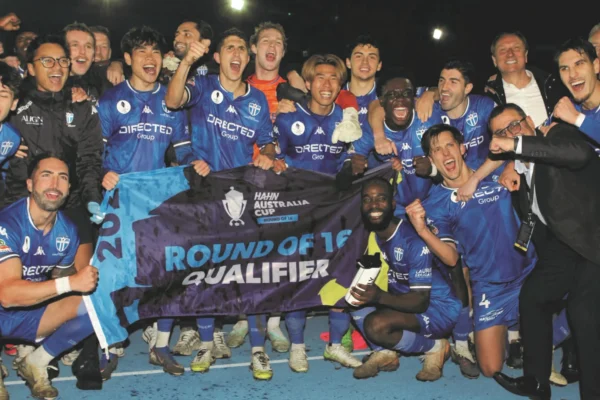
South Melbourne’s Australia Cup triumph reignites promotion and relegation debate

South Melbourne FC’s dramatic 2-1 victory over Adelaide United in the Hahn Australia Cup Round of 32 has reignited debate around promotion and relegation in Australian football, with Co-President Bill Papastergiadis stating the result is further proof that ambitious National Premier Leagues clubs deserve a pathway to the top tier.

The Victorian powerhouse produced one of the competition’s biggest upsets at Lakeside Stadium, overturning an early deficit to eliminate the Isuzu UTE A-League side and secure a place in the Round of 16.

While the result was celebrated as another example of the magic of the Australia Cup, Papastergiadis believes the victory carries a much broader message about the strength that exists outside Australia’s professional league.

Speaking following the win, Papastergiadis said South Melbourne’s performance demonstrated why the Australian football landscape should move towards a connected pyramid featuring promotion and relegation.

“The result was South Melbourne FC’s revenge 22 years in the making,” Papastergiadis said.

“It also demonstrates that clubs in the National Premier Leagues have the quality, professionalism and ambition to compete with A-League opposition when given the opportunity.”

For years, South Melbourne has been one of the strongest advocates for structural reform within Australian football, consistently calling for an open pyramid that rewards sporting merit rather than maintaining a closed league system.

Papastergiadis argued that Australia Cup fixtures continue to showcase the depth of talent throughout the domestic game, with NPL clubs regularly proving they can challenge and defeat professional opponents despite operating with significantly fewer resources.

He believes these performances should not simply be viewed as isolated “cupsets”, but as evidence that Australia’s football ecosystem is ready to embrace a promotion and relegation model that provides ambitious clubs with a genuine pathway to the top flight.

The result against Adelaide United adds another significant chapter to South Melbourne’s storied history. One of Australia’s most successful clubs, South Melbourne has long maintained aspirations of returning to the national stage, backed by a passionate supporter base, strong infrastructure and a proud footballing tradition.

For Papastergiadis, victories such as Thursday night’s reinforce the argument that clubs should earn opportunities through performances on the pitch.

“The Australia Cup continues to show what’s possible when clubs from different levels of the football pyramid compete against one another,” he said.

“Our football should be built on opportunity and merit. Clubs that perform consistently and invest in their communities should have the chance to progress to the highest level.”

South Melbourne will now turn its attention to the Round of 16, where it will look to continue its impressive cup run.

Beyond the result itself, however, the victory has once again fuelled discussion around the future of Australia’s football structure and whether the growing strength of clubs outside the A-League should accelerate the push towards a fully connected national competition.

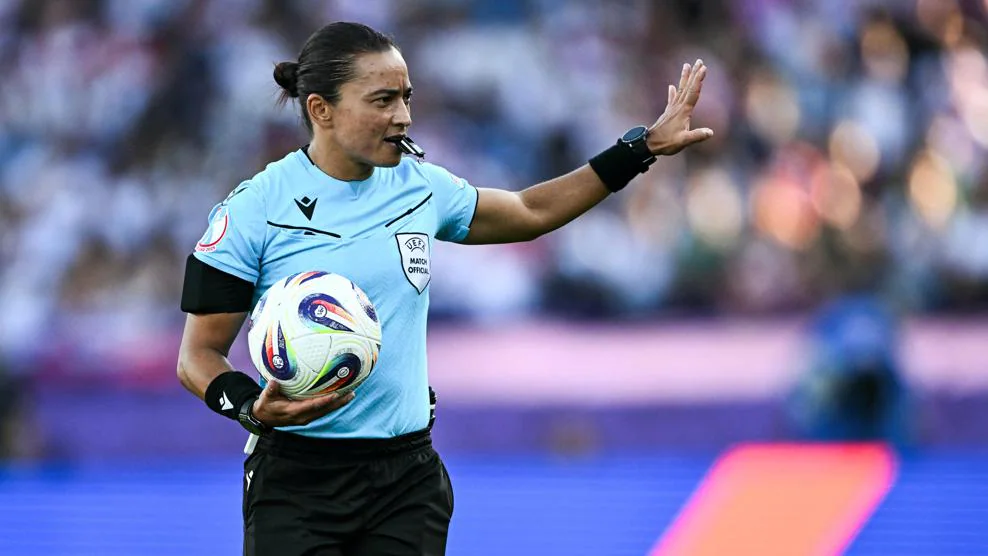
Referees to improve consistency with new UEFA guidelines

In a meeting between Chief Refereeing Officers within UEFA and its 55 national associations, enhancing consistency and clarity underpinned the principle goals for the upcoming season.

Improving officiating

Referees – and particularly the usage of VAR – are often at the centre of post-match debates.

As the introduction of new technology into match officiating increases year-on-year, referees are in the spotlight more than ever before. The expectation was that more technology would decrease errors and controversy, but the opposite has proven to be the case.

Which is why the agreement and alignment between European nations marks a key step in the future of match officiating; the meeting between UEFA, its national associations and a representative of the International Football Association Board (IFAB) displays intention and commitment to ensuring future in-game decisions are clear, not controversial.

Meeting chair and UEFA Director for Refereeing, Roberto Rosetti, outlined why the agreement will have a vital impact on the future of European football, both domestically and internationally.

“The fact that all 55 national associations and UEFA have agreed on guidelines towards a more consistent approach to the application of the Laws of the Game marks a significant milestone,” Rosetti said.

“It will help improve the understanding of refereeing decisions among players, clubs and supporters and all stakeholders in the game.”

“For the popularity of football it is essential to remove all doubt from the game and ensure that the laws are applied with clarity.”


Limiting technology use

A widespread criticism of match officiating in recent years is the regularity with which VAR intervenes and interrupts match tempo.

The issue, however, is not that VAR can review decisions – in fact, this summer’s FIFA World Cup displayed an effective use of VAR during a case of mistaken identity, in which a player received a yellow card offence for a foul committed by an opposition player. In this regard, VAR was a vital part of ensuring a simulation offence did not go unpunished.

Frustration, however, grows when the use of VAR goes beyond checking “clear and obvious” errors. Lengthy replays, a multitude of angle-checking clips and the disruption of game flow all contribute to feelings of frustration among fans.

But recent amdendments aim to limit this in the upcoming season. VAR is an essential part of fair officiating, but responsibility must lie with the referee.

The new rules introduced by the IFAB are available here, with further initiatives to follow from UEFA in the coming weeks.

Most Popular Topics

Editor Picks

Send this to a friend