
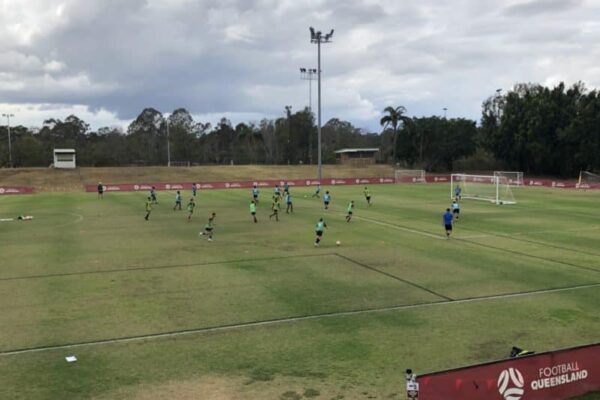




Designed to meet the targets and ambitions of a united, national strategy for the game, Football Queensland has released the 2023-2026 One Football Strategic Plan.
The purpose is to bring communities together through football and represent its vision as a leading football nation where everyone is inspired to live and love the game.
If the targets and ambitions of a united national strategy are to be successful, it is necessary to streamline the governance and administration and integrate critical strategic and operational functions and to support the execution of sport initiatives.
The transformation of moving towards an agile, modern, fit-for-purpose framework for football is in line with the international standards and best practices of sports governance in the country.
Football Queensland has dedicated its time and effort by working closely with Football Australia and other Member Federations to unify the sport behind a common purpose and a shared vision with a One Football pathway.
The Strategic Plan covers Football Australia’s vision detailing topics such as focus areas and measures of success across the four main pillars, providing the state of affairs from a national perspective while at the same time covering in-depth plans for implementation at the state level to delivering strong results for football in Queensland.
With the FIFA Women’s World Cup 2023 to be co-hosted by Australia and New Zealand, it is of utter importance that the next generation of female participants have a chance to be a part of the world game for which it will involve developing the right pathways, constructing the necessary infrastructure and increasing the support of clubs by delivering the right results in the states across the country.
The governing body of the state is bound to achieve 50/50 gender parity for participants, referees, committees and club officials by 2027. A key component is leaving a lasting legacy for future generations by welcoming the potential for all women and girls across all parts of the game, by giving the opportunity for all.
The four strategic pillars involved in Football Australia’s One Football Plan are Participants and Clubs, Elite Teams and Pathways, Fans and Unifying Football.
The first pillar’s ambition is to be the most accessible sport in the country where everyone can play any time, anywhere, with the focus areas ranging from driving participation retention and growth, especially for women and girls at the national level to evolving Football Queensland’s referee strategy and enhance the referee academy in the state level.
Football Queensland’s key targets are:
- 328,000 registered participants
- 9,400 registered coaches
- 62,000 women and girl participants
- 3,600 registered referees
The second pillar priority is to reimagine the Australian development for its players by producing world-class teams, players, coaches as well as referees in the country to build capacity in strengthening pathways for improved player results by providing the best technical practice into clubs through an expanded academy of Football Queensland and a coordinated club development program at the state ambitions.
Football Queensland’s key targets are:
- 20% national representation across all levels
- 15 Advanced Coaching Courses
- Home of Football project delivered before 2026
- 25 advanced female technical directors
National ambitions for the third pillar are to attract and increase an inspired fanbase who adore and devote their time and effort to Australian football properties, the focus areas involve enhancing the passion for the national teams and establishing modern products to drive fan engagement to organising new fan engagements around the current leagues, championships and competition products.
Football Queensland’s key targets are:
- 15,000-seat capacity tier 2 stadium
- Convert passive fans to active
- Celebrating achievements
- Festivals of Football
Lastly, the aspiration of the fourth pillar is to unite the sport and to recognise the true potential of football not only in the state but in the whole country. By doing this the focus areas will be that administration will be improved in maximising operational efficiencies and governance will need to be enhanced to achieve greater alignment and focus of the national level to improving the football experience, supporting club development and unlocking the achievements of critical strategic objectives.
Football Queensland key targets are:
- Football first decisions
- Deliver an agile modern fit-for-purpose framework
- Reposition resources in administration
- Increase revenue and efficiencies
Football Queensland has and always will value respect, pride, integrity and unity at all levels of the game.