


Football Queensland’s Drives Infrastructure Growth in the North

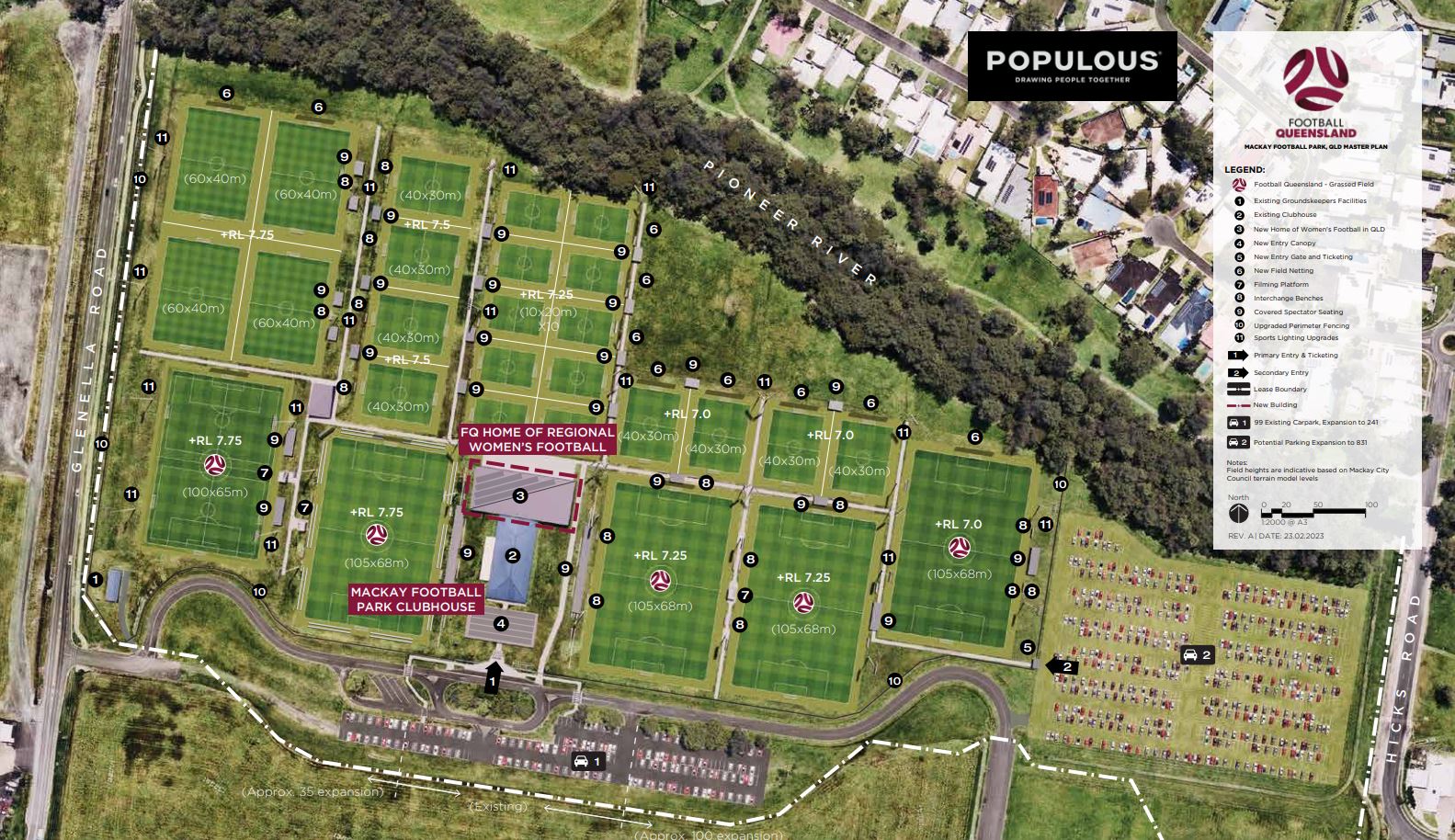
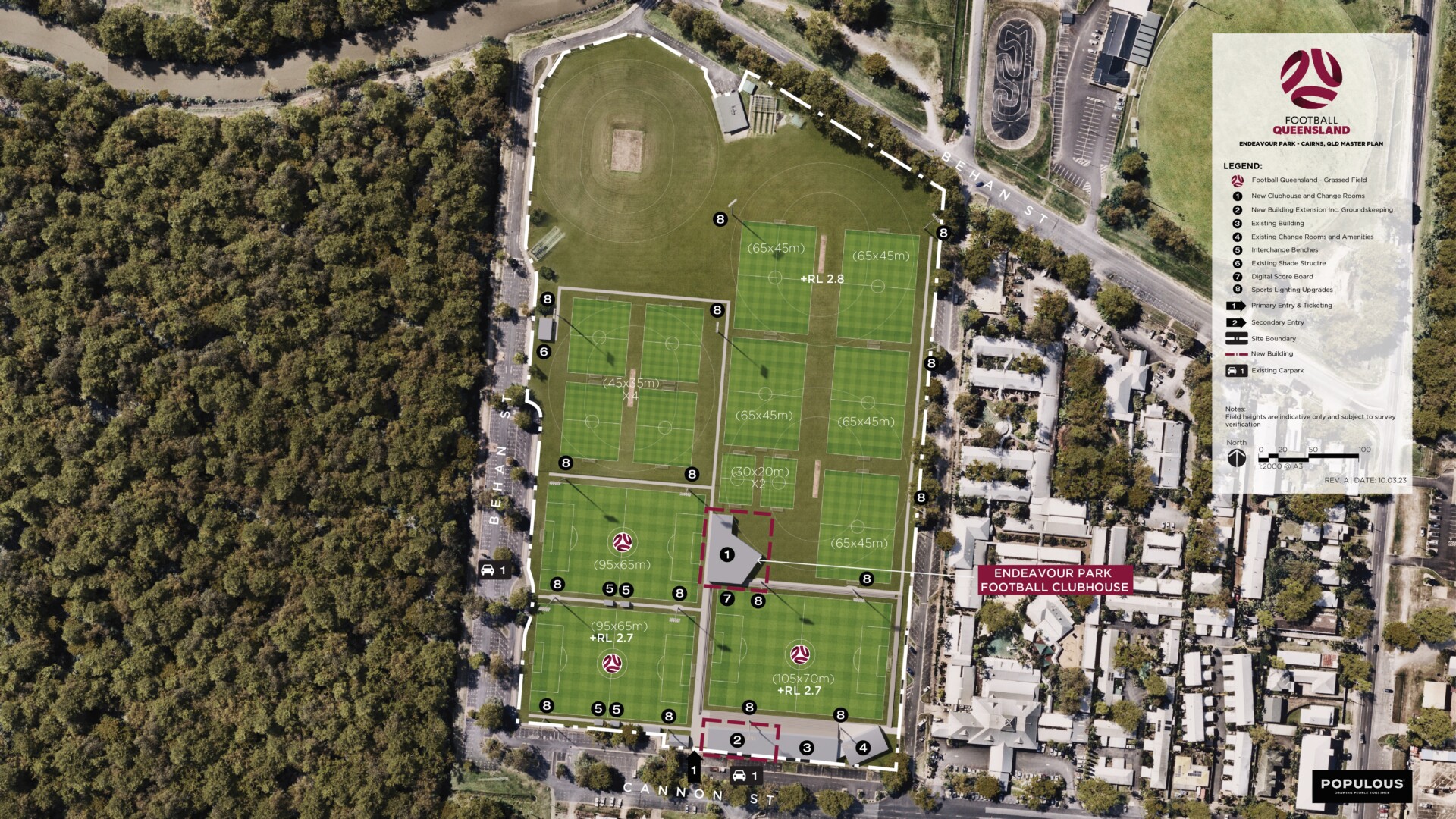
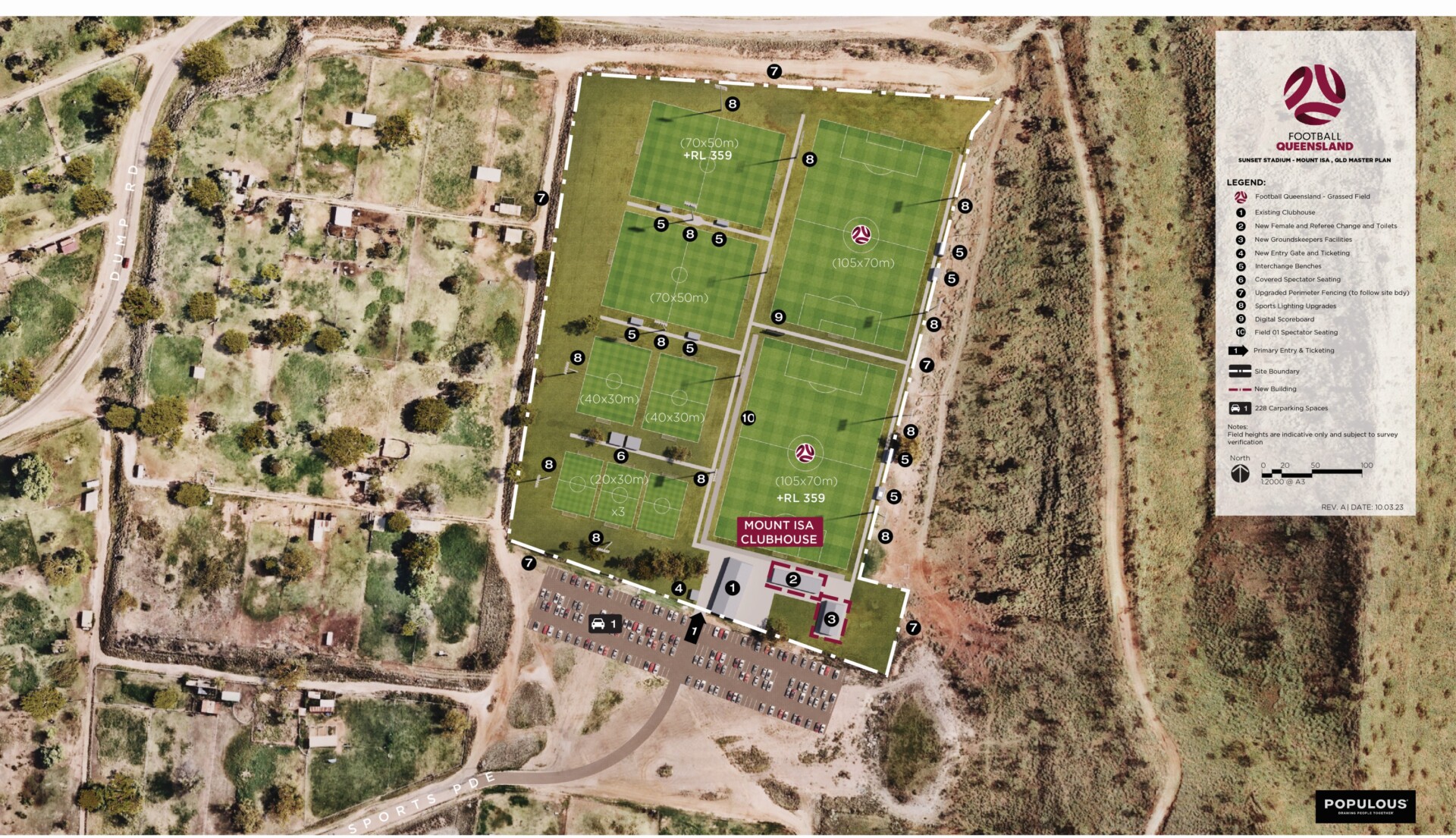
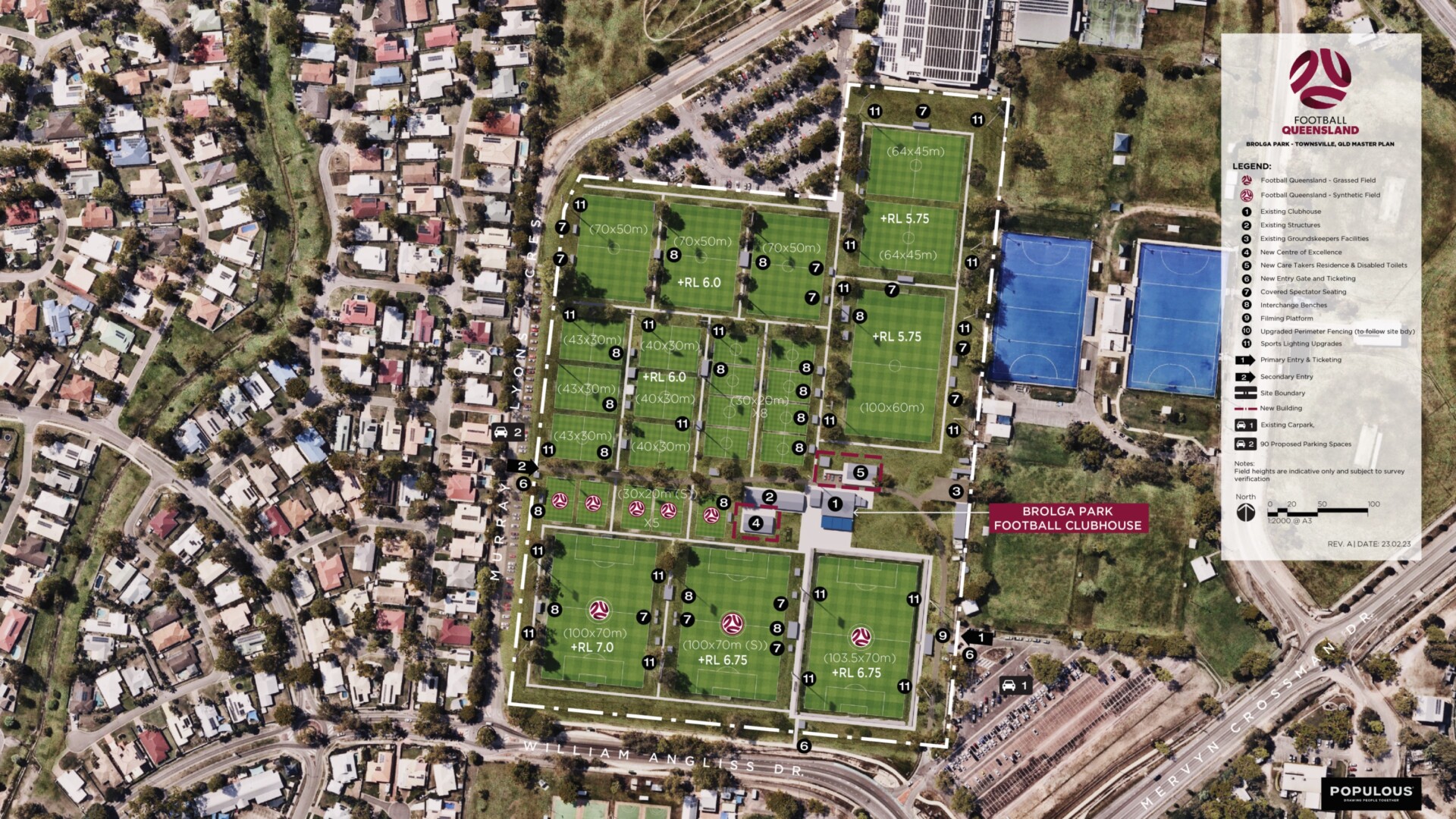
Football Queensland’s (FQ) strategic master planning and advocacy work is restructuring infrastructure in football across Northern Queensland, with more than $15 million secured in the past year through state and federal pre-election funding commitments and direct FQ investment. These funds are supporting upgrades at local clubs and progressing FQ’s four master-planned Northern football hubs.

The Future of Football reforms launched by FQ in 2020 initiated a statewide master planning process, shaped by a detailed needs analysis across Cairns, Townsville, Mackay and Mount Isa. These plans underpin a targeted government engagement strategy, aligning community priorities with a clear roadmap for delivery.

Football Queensland CEO Robert Cavallucci has welcomed a surge in infrastructure investment across Northern Queensland.

“Our Northern regions have always been strongholds for our game, but their infrastructure needs were overlooked for too long. That’s changing now as we’re now seeing government recognition and support starting to match the scale of football in the region – particularly in the Far North, where participation has grown by over 28% in 2024,” he said via press release.

“In addition to our direct investments into the four Northern hubs each year, our government engagement strategy led by the #EQUALISER campaign has delivered record infrastructure funding commitments statewide, including over $6 million in pre-election commitments during the 2024 state election for North Queensland and currently sitting at more than $9 million ahead of May’s federal election.”

In the Whitsunday Coast, Mackay Football Park’s master plan is delivering upgrades, including new changerooms, seating, and improved maintenance, supported by $800,000 in 2024 state election funding.

In Far North Queensland, a $4.1 million federal commitment is advancing the Macca’s Park master plan in Cairns, with new amenities and a Centre of Excellence to boost the venue’s role.

In the North West, $600,000 is funding major improvements at Mt Isa Football Park, including new female changerooms and upgraded facilities.

In Townsville, progress continues on the Paradise Park master plan, with FQ working to secure funding for a synthetic pitch to support year-round football for over 5,000 participants.

Beyond the hubs, local clubs across the Northern Conference are also benefiting, with over $2 million in pre-election funding committed to lighting upgrades, surface improvements, and amenity enhancements to support the region’s growing participation.

Cavallucci highlighted that the record funding reflects FQ’s long-term strategy, driven by the Future of Football reforms and a unified approach to advocacy.

“These record funding outcomes reflect FQ’s long-term strategic plan for regional infrastructure investment. The Future of Football reforms were critical in enabling FQ to advocate for investment through one unified voice to government. Progress is continuing to be made through a measured approach, as we invest over the next five years to bring to life and deliver the four master plans,” he continued on to say via press release.

Football Queensland will continue to collaborate with all government levels in the lead up to the 2025 federal election and beyond, advancing key projects and ensuring the needs of regional football are prioritised.


Previous ArticleNext Article

Bundesliga DNA to the Boardroom: German-born Martin Kugeler Takes the Helm at Football Australia

German-born executive, Martin Kugeler, shaped by Europe’s football culture and based in Australia since 2009, will step in as Football Australia CEO in February as the game eyes a defining 2026.

Reaching new heights

During the press conference held earlier this morning, Kugeler displayed both confidence and ambition as he prepares to lead a new era for Football Australia next month.

“Football in Australia has a strong foundation for growth. Our national impact is massive,” he said, highlighting both the immense number of participants and local clubs in Australia. He then continued to underline both the Socceroos and the Matildas as valuable assets in the nation’s football sphere.

“We have exceptional national teams that continually make us proud. They perform at a truly global scale and unite not only the football community, but the entire nation.”

With both the AFC Women’s Asian Cup and the FIFA Men’s World Cup both on the horizon in 2026, the year certainly represents a huge opportunity for both the men’s and women’s game to showcase Australian footballing talent on an international scale. But the focus, as Krugeler underlined, will extend beyond the national team and address all levels of football in Australia to help the game grow.

“Football brings people and communities together. For a healthy lifestyle, for connection, for enjoyment, for belonging, powered by a remarkable, passion [and] dedicated players, referees, coaches, volunteers and fans,” he continued.

An inspiring reminder to all those involved in the game across Australia, and one which will hopefully show participants and stakeholders at all levels that 2026 will begin a new period of stability, growth and innovation.


Expertise, passion and ambition

Of course, the dawn of a new era for Football Australia cannot be successfully achieved without addressing the past and current issues, while still keeping an ambitious eye on what football can become at both national and international level for Australia.

Alongside Kugeler in the FA leadership team will be Football Australia Chair, Anter Isaac, as well as former Matilda, and current interim CEO of Football Australia, Heather Garriock. With their combined industry expertise and true passion for the game, all fans, players and stakeholders can be optimistic for the future of football governance in Australia.

But while expertise and passion are undoubtedly valuable assets for the FA, it remains essential that these help to inform the decisions and solutions made with the game’s best interests at heart.


Central Coast Mariners enter into liquidation after financial troubles

It was announced on Monday this week that the Central Coast Mariners will be temporarily managed by the APL Board during the sales process. The decision comes after several years of uncertainty and financial challenges within the club.


Short-term survival, long-term stability

It has been no secret that the Central Coast Mariners have struggled to balance their success on the pitch with administrative security off it. Years of financial turbulence and ownership changes have brought significant challenges to the club, culminating in the decision to enter the club into liquidation and seek a new buyer. 

While a sales process is completed and a stable, long-term owner sought out to secure the long-term future of the Mariners, the APL will act as a managing body on an interim basis. APL Chair, Stephen Conroy, has affirmed the board’s intentions to ensure the club’s survival despite current uncertainty. 

‘The APL Board is resolute in its commitment to fans and stakeholders to protect the game’s best interests, and make decisive action to ensure the ongoing growth, stability and integrity of the A-Leagues,’, he said via an APL statement on Monday. 

‘As custodians of the game, we believe it is the best course of proactive action – for the short and long term interest of the Club – to terminate the current CPA under the current ownership, and run an expedited and robust sale process to find a new and stable long-term owner for the Mariners,’ he continued. 

For now, the priority remains with ensuring the survival of one of the A-League’s most successful clubs. It is, of course, not just about the short-term survival of financial or commercial assets, but about restoring the long-term stability of the club’s board and the trust of the Mariners’ loyal fanbase.


A-League funding difficulties 

When previous owner, Richard Peil, announced his departure from the club in 2024, issues with funding from the APL were cited as explanations for the financial challenges experienced during his tenure. Across the span of two seasons, the annual distribution from the APL to each club fell from $2.35 million to $530,000. 

With such a significant cut, the Central Coast Mariners struggled to continue operating. Peil departed in 2024, returning operations back to Mike Charlesworth who had acted as chairman from 2013 to 2022.

The move came as a shock to the league and to the Mariners’ fanbase, who had enjoyed an incredible treble-winning year in 2024 and became the first professional men’s football club to achieve the feat. With such impressive achievements on the pitch overshadowed by challenges off it, the Central Coast Mariners are unfortunately not the first club faced with conflicting fortunes.

Mere months ago, Western United entered a period of ‘hibernation’ during the 2025/26 season to address several financial and legal issues. The decision left players and staff stranded, and featured as a source of criticism for the APL in the A-League Men Report 2024/25.


Hope for the future

Despite the troubling implications of another A-League club plagued by financial issues and with news breaking yesterday that the Central Coast Mariners’ Academy has also entered into liquidation, the future of the club is by no means over. 

As the main professional sports team representing the entire Central Coast, the club has huge potential to be both a sporting and commercial centre for the region going forward. Furthermore, with an impressive training infrastructure at the Mariner’s Centre of Excellence, and a proven history of high-quality players and coaches, the club has some of the essential ingredients to achieve new levels of success. 

The one thing which of course still remains, is a reliable and stable team behind the scenes who can steer the club back to the top of the A-League. To this end, Conroy has expressed his confidence in the APL to find the right buyer. 

“We believe in the value that Central Coast Mariners bring to the A-leagues. They’ve shown with the right investment and community engagement, they have a vibrant fanbase and a proven ability to consistently compete for on field success,” he said. 

“We are confident that with the engaged local and international interest, we can find the right buyer for the Mariners to take the Club forward and ensure their long term success.”

While uncertainty remains around the Mariners’ current situation and future owners, it will be hoped by fans, players and staff that years of off-pitch turbulence can be put to rest by a more stable and successful future. 


Most Popular Topics

Editor Picks

Send this to a friend