





Football Victoria’s Female Football Week Awards Recognise the People Empowering Women’s Football

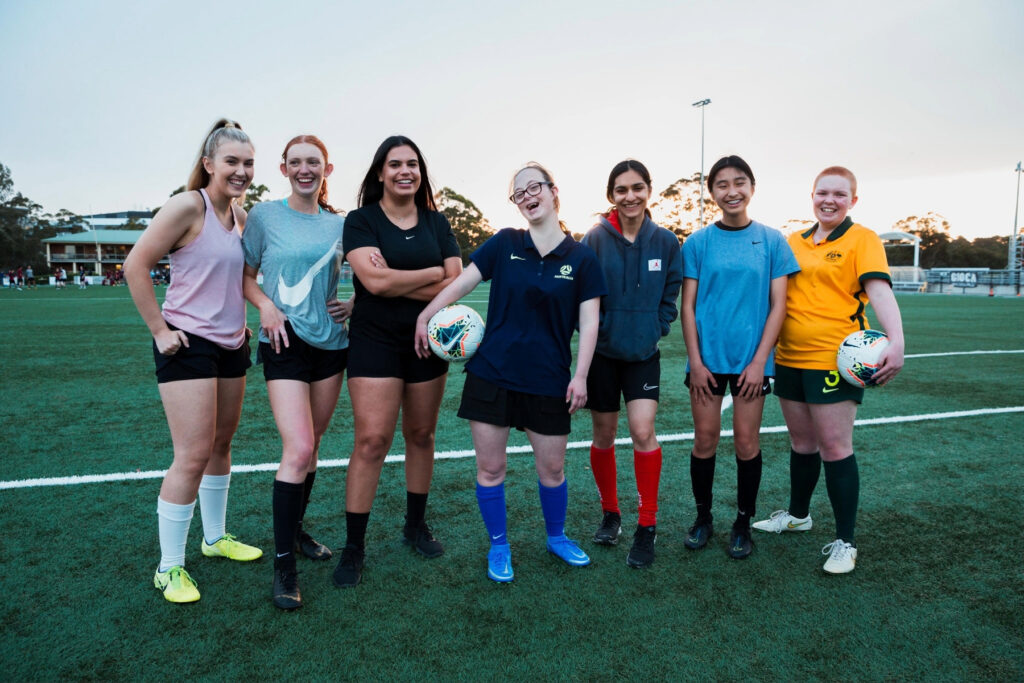
Football Victoria has named its 2026 Female Football Week Award winners, recognising five women whose contributions across playing, coaching, refereeing, volunteering and community leadership represent the human infrastructure behind the most significant period of growth in Australian women’s football history.

The announcements come in the final days of Female Football Week, a ten-day national celebration that has taken on particular resonance in 2026 following a record-breaking AFC Women’s Asian Cup on Australian soil. The tournament filled stadiums, broke attendance records and generated a level of public enthusiasm for women’s football that governing bodies are now under pressure to translate into something lasting. These five recipients are among the people who will determine whether it does.

Brooke Wyatt of Trafalgar Victory FC has been named Volunteer of the Year. Her contribution was coordinating the MiniRoos, managing match days, organising club events and driving recruitment efforts that have helped the club field new junior teams. Wyatt’s work is the kind of work that keeps community football functioning without ever appearing in a match report. Wyatt has also been central to strengthening Trafalgar’s women’s program, building the welcoming environment that determines whether female players feel the club was built with them in mind.

Karishma Wijeyesinghe of Victoria Park FC has been recognised as Community Champion of the Year. Serving simultaneously as Senior Women’s Liaison Officer, voting committee member and club captain while maintaining a demanding professional career, Wijeyesinghe has built the women’s program infrastructure that clubs across the country require. Her presence at the decision-making table at Victoria Park is precisely the kind of representation that shapes whether female players feel the game is for them from the moment they walk through the door.

The cost of showing up

Chelsea Phillips of Mt Eliza SC has been named Player of the Year in a recognition that goes well beyond her captaincy of one of the club’s most successful Under-18 groups. Over the past year, Phillips faced a serious neurological health condition that temporarily affected her vision and mobility. She continued attending training and matches throughout, supporting teammates from the sidelines and maintaining a leadership presence during a period when most people would have stepped away entirely. Her club has described the impact on those around her as profound; a reminder that what players model for each other in difficult moments shapes the culture of a program far more than results alone.

Hannah Riess has been named Referee of the Year for her rapid progression to NPL Women’s Under-20 officiating level and her active mentorship of emerging referees across Gippsland. Female referees remain significantly underrepresented at every level of the game in Australia. The pipeline that will change that is built by people like Riess, those experienced enough to progress, invested enough to bring others with them rather than simply move ahead alone.

Building the pipeline that sustains the boom

Natasha Groves of Darebin Falcons has been recognised as Coach of the Year for her work across junior, senior and women’s social football programs, including her delivery of Football Victoria’s PlayHER initiative and her completion of advanced coaching accreditation. Groves has consistently created environments at Darebin where women and girls new to the game feel genuinely welcome, addressing the retention challenge that sits directly behind every participation surge the women’s game generates.

Taken together the five recipients illustrate something the attendance figures from the AFC Women’s Asian Cup cannot. Record crowds are the visible outcome of decades of invisible work, by volunteers, coaches, referees and community builders who showed up long before the cameras did, and who will still be there long after the tournament has moved on.


Previous ArticleNext Article

1200 players to descend on Geelong for Football Victoria Country Championships as Regional Football Enters New Era

More than 1,200 junior footballers from across regional Victoria will converge on Geelong this weekend for the 2026 Football Victoria Country Championships, with players representing eight regions competing across the King’s Birthday long weekend at Stead Park and Myers Reserve.

The tournament, which has been running since 1978 and has grown into one of the largest junior football events in the country, takes on additional significance this year. It marks the first Country Championships since Football Victoria announced a restructured regional football model in December 2025, making this edition an early measure of how that new framework translates into competitive outcomes at the representative level.

Sixty-seven teams will compete across Under-11 to Under-16 age groups for both boys and girls, with finals day scheduled for Monday. All fixtures and results will be available through the DRIBL app.

More than silverware

FV Regional Development Manager Lauren Stevens said the tournament represented something beyond the competitive results it produces.

“The Country Championships are an exciting opportunity for players from across regional Victoria to come together, represent their region and create lasting memories both on and off the pitch,” Stevens said. “This tournament has a rich history and continues to play an important role in bringing regional football communities together while providing players with the chance to experience a high-level representative environment and talent identification opportunity.”

That dual function is central to what makes the Country Championships structurally significant. For many players travelling to Geelong this weekend, a regional representative tournament is the highest level of football they have experienced. For some, it will be the environment in which they first come to the attention of Football Victoria’s technical staff and pathway programs.

The talent identification dimension carries particular weight at a moment when Football Victoria’s participation numbers are at record levels and the pipeline from community football to elite competition has never been more closely scrutinised. The 2025 Annual Report documented a 14 percent overall participation increase, with junior football among the fastest-growing segments. Tournaments like the Country Championships are where that growth begins to translate into representative opportunity for players who live outside metropolitan Melbourne.

Regional football in transition

The timing of this year’s Championships against the backdrop of Football Victoria’s regional restructure adds a layer of context that will be watched closely by administrators and clubs. The December 2025 announcement of the new regional model represented the most significant structural change to regional football governance in the state in some years, and the process of transitioning Life Members from regional associations into the Football Victoria honour roll at last month’s AGM reflected the scale of that change.

How the eight regions perform this weekend will offer an early indication of whether the restructured model is serving regional communities effectively.

The Corrie Koppen Fair Play Award, introduced last year to celebrate the life and legacy of the late Cornelius Koppen, adds a dimension to the competition that sits alongside the on-field results. The award is given to the region judged to have played and conducted itself in the spirit of the game, a recognition that how communities behave at a junior tournament is as meaningful as what they win.

Football West and Cook Government extend $960,000 mental health partnership through to 2027

Football West will host its fourth annual Think Mental Health Round across all leagues and competitions on 25-26 July, backed by a renewed state government commitment worth $960,000 to support mental health and wellbeing programs in Western Australian football.

The Cook Government has extended its Healthway partnership with WA Football until 2027, with funding directed toward initiatives including Talk to a Mate BBQs, mental health education and training across both men’s and women’s competitions.

The round, run in partnership with Healthway’s Think Mental Health campaign, invites clubs to participate through events, signage, social media messaging and facilitated wellbeing sessions. Football West is also organising a series of mental health and wellbeing sessions for clubs in partnership with A Stitch in Time, with details to be confirmed. The partnership also supports an expansion of the Footy Fundamentals program, which targets fundamental movement skills in early childhood.

A Fixture in the Football Calendar

Think Mental Health Rounds have featured in the WA football calendar since 2022, following an earlier rollout in country competitions. This year’s metropolitan round aligns with Round 11 of the West Australian Football League and Round 12 of the West Australian Football League Women’s, placing mental health messaging at the centre of both competitions simultaneously.

For club administrators, the round offers a low-barrier activation opportunity. Clubs can register and access resources through Football West’s online portal, with options ranging from hosting a BBQ to completing the True Sport eLearning module on mental health and wellbeing awareness.

Sport and Recreation Minister Rita Saffioti said the partnership reflected the reach of football across Western Australian life.

“So many Western Australians have links to local football, whether they play, volunteer or support from the sideline, so this is a fantastic partnership and great way to generate awareness about this important issue,” Saffioti said.

Mental Health Minister Meredith Hammat said football clubs were well-positioned to shift the conversation around seeking support.

“WA Football’s upcoming Think Mental Health Rounds serve as a reminder of how important it is to check in and support one another, and make sure no one faces their struggles alone,” Hammat said.

Preventative Health Minister Sabine Winton said the government’s goal was to build capacity at club level.

“Through Healthway’s partnership with WA Football, we are equipping clubs with the tools and knowledge to champion mental health and wellbeing, build resilience and create stronger communities,” Winton said.

Just an awareness campaign?

Beyond the health outcomes, rounds like this carry practical significance for the football ecosystem. Clubs that foster psychologically safe environments tend to retain players and volunteers at higher rates, a factor that matters in a state where grassroots football competes for participants across a crowded sporting landscape.

Volunteer burnout and player dropout are persistent pressure points for football administrators across Australia. Programming that addresses mental health at club level, rather than directing participants elsewhere, positions clubs as genuine support structures within their local areas. That reputation has tangible effects on registration numbers, family engagement and the willingness of people to take on coaching and administrative roles.

The $960,000 commitment across two years also signals that the state government views football infrastructure as more than turf and floodlights. Embedding health initiatives within the competition calendar gives federations and clubs a degree of programming certainty, reducing the reliance on ad hoc grant applications to fund welfare activities.

For Football West, the extension means mental health support sits within a funded, multi-year framework through the back half of the decade, rather than being renegotiated season by season. In a state as geographically dispersed as Western Australia, where clubs in regional areas often operate with limited resources, that continuity carries weight beyond the metropolitan competitions it most visibly supports.

Most Popular Topics

Editor Picks

Send this to a friend