

In recent years, women’s football in Japan – the only nation to have won the FIFA Women’s World Cup across senior, U-20, and U-17 levels, has experienced an upward trajectory.
The WE League, Japan’s first fully professional women’s football league, was established by the Japan Football Association (JFA) in September 2021 with 11 teams.
Its mission includes becoming one of the world’s leading women’s leagues and promoting gender equality in Japan.
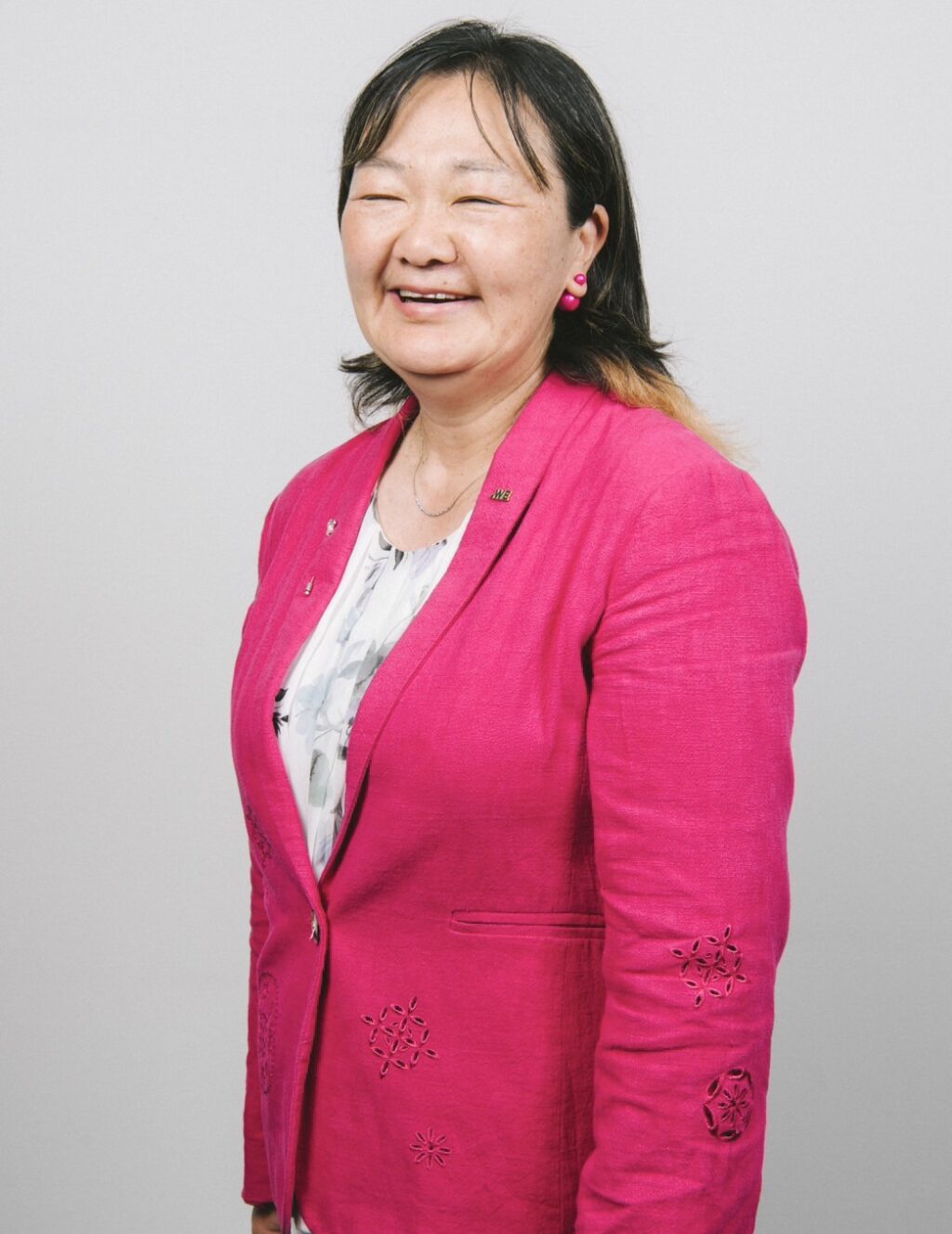
During an in-depth conversation with Alex Bagdasarian, former Women’s Empowerment Football League Board Member and former Head of its Empowerment Division, Miyuki Kobayashi discusses her career up until now, the challengers of wanting to change what the public thought of football in Japan, and the struggles of pushing the WE League into full-time work.
Tell us about yourself and your career up until now.
Miyuki Kobayashi: I started football when l was in college as l had no interest in football at an earlier age because it hadn’t been popular in Japan until l reached the age of going to high school, there was no professional football teams so baseball was and still is the most popular sport.
While l was a freshman a friend of mine and a neighbour of the dormitory liked soccer, but never played, asked me to play soccer because it is fun, we decided to join the club at the university with her but the university didn’t have a women’s soccer team back then, so we decided to start a team and took us four years to have members in the state that my university was in.
Then l went to America to study English while l was at college, the school l went to while l was there had a soccer team and we had a professional coach and personal trainer which was impressive to see considering we didn’t have that in Japan back then. To play soccer at the time, it would mean you are a boy and why are you playing soccer even though you are a woman.
I was very impressed with the formulation of women’s America, which was a major difference between the two countries. We started by kicking the ball around but after l came back l was supposed to graduate but l wanted to play soccer more so l decided to continue at the graduate school, l went to graduate school not to study. Women’s soccer had just started in and around the Tokyo region, so we formed the university women’s league and we started with six teams and also formed the association so that’s how l am connected to soccer.
After two years at the university, l went back to America to study more and to play soccer, and l was involved with the Japan Football Association (JFA), and at that time in 1991 the Women’s World Cup started in China so l went to watch a game. Then in 1999 the Women’s World Cup was being held in the United States which was a huge moment for the country because they are famous for women’s soccer as they wanted to win the tournament and to promote the sport for women. I wanted to be involved in the World Cup so l decided to volunteer, the opening game had about 80,000 fans and the final had 90,000 spectators, l was very impressed.
Japan has qualified for every Women’s World Cup, and of course nobody knows about women’s soccer, so then l came back and l couldn’t join a university at the time as l wasn’t eligible anymore, so l made a local team with junior high school students. Post Women’s World Cup 1999, FIFA asked every member association to promote women’s football so JFA whether or not they wanted to do it or not were forced to make a women’s committee but didn’t know how to, l was asked to be a member for the committee and then we started women’s soccer project in the JFA to promote it.
At that time there wasn’t many female coaches, so l decided to take coaching licenses and then we created a female coach development project in JFA, l was coaching at one of the local teams and was asked to be a coach for one of the top teams in the division, JEF united, and then l became General Manager for the team which is now a WE League team.
I have been a member of the JFA Women’s Committee and developing women soccer and diversity in the sport, so we thought to make it a professional league with the WE League beginning in 2021 and l became a board member for the WE League, supporting women’s empowerment but also assisting woman in gender equality ever since then.
You mentioned on the Inside FIFA website when you returned from America you wanted to change what the public thought of football in Japan, what has been the challengers doing that?
Miyuki Kobayashi: Society thinks coaches needs to be a man, it’s not only for the sports world but also for the business world and l think we need to change that perception showing that a woman can be a leader.
Female players think that being coached by a man is a normal thing so l think changing that interpretation has been the most challenging.
What have been the struggles of pushing the WE League into full time work?
Miyuki Kobayashi: The players involved in the Nadeshiko League had a job as well as playing soccer until 2011, working full-time 9-5 and then playing soccer 7-9 but after 2011 the environment improved because the players had much more support by working reduced hours during the day, which would mean the training sessions would begin earlier but it also meant they were paid the full salary.
The company offers athletes to work for them, which is a successful mechanism for both parties, but when the players retire they continue to work for the company switching full-time, however this is a problem employing full time workers because it comes at a cost so it does have its struggles to make it full-time, we do have to change that mindset as well.
Is the WE League looking for inspiration from other leagues internationally? If so which league(s) and what are they?
Miyuki Kobayashi: l think we are one of the first women’s league in the world to have training compensation, which means paying the clubs who developed the players in the youth teams, the clubs are not only paying the salary but also the compensation, the clubs who have been developing many great players has benefitted them.
The Women Empowerment League has been an inspiration for the world, most importantly for women’s soccer.
How ambitious are the players to stay in the country to advocate for this issue?
Miyuki Kobayashi: That is an issue, because Japanese people grow up being humble and not wanting to stand out, especially for the women they are raised to be very humble, calm and not speak about themselves. Women soccer players have gotten used to seeing men’s soccer teams having natural grass field and going on business class flights, whereas the women play on turf pitches and travel in economy class, so they don’t even question whether it is inequality.
A reporter had asked a female soccer player playing for the national team after they won the 2011 World Cup ‘do you think there is inequality between the female and male soccer’ she responded ‘l never think about that,’ because the women think it is a normal thing, even though the men’s hadn’t won a single group stage game in the 2014 World Cup.
So it is something we need to advocate for because there is inequality and they were the World champions in 2011, they were coached by a man for that World Cup, and they were told to make short passes because they cannot kick the ball long, this is the most challenging thing that we have to advocate for.
It has been three years since the WE League started and we have been doing seminars for the players, we are trying to raise awareness and it is changing gradually but the players are still humble.