





Global Institute of Sport hosts Masterclass on Athlete Management and Engagement

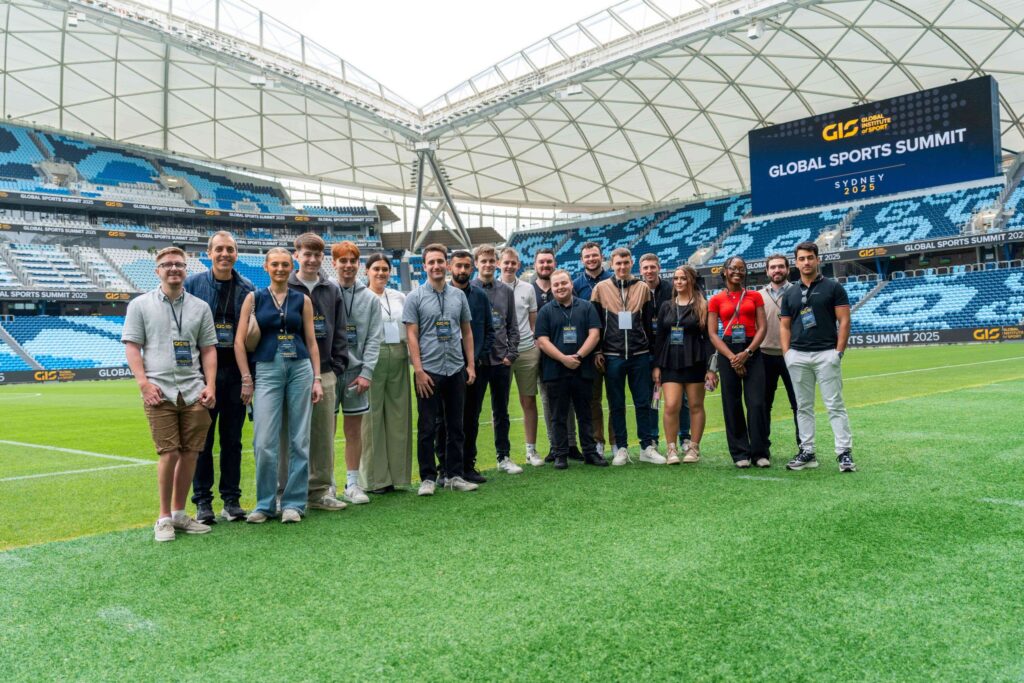
The Global Institute of Sport (GIS) held an Industry Masterclass on Athlete Management and Engagement, featuring guest speakers Brad Lloyd and Stefani Chinn.

This is part of its broader course offering, which includes a Master’s in Sports Business and Sports Analytics through the University of Newcastle.

The Masterclass addressed four themes: the day-to-day operations of player management, the construction of authentic athlete brands, the role of agents, and the impact of data.

The Panellists

Brad Lloyd is the founder of Apogee Sports Advisory, which develops micro-credentials in sport, and previously served as General Manager of Football at Carlton Football Club and as a player agent.

Stefani Chinn is a sports marketing consultant specialising in ambassador program design and formerly served as Senior Vice President of Global Marketing and Communications at the World Surf League (WSL).

Player management: the daily operations

Lloyd outlined the complexities of player management, drawing on his experience as General Manager at Carlton, highlighting the role of “list management.”

This involves negotiating player contracts and managing the composition of the list, including age profile and positional spread, to align with the club’s broader requirements.

Player welfare also falls within this remit, with a high-performance manager tasked with ensuring athletes remain fit and available.

“It’s all about attraction and retention,” Lloyd explained.

He noted that communication with club shareholders is a constant part of the role, with “talking up and down” the organisation requiring a strong team.

“Getting people, you trust with their credentials in these roles is paramount,” Lloyd explained.

Building Authentic Brands

Chinn addressed the construction of athlete-focused marketing strategies, arguing for a shift away from organisation-centred approaches.

“What was needed to do from a fan, athlete and commercial perspective was lead with an athlete-first approach.”

For this Chinn emphasised the importance of understanding athletes beyond their on-field performance.

“Knowing the athlete first is such an important piece, there is so much to the athlete than just how they play,” she said, also cautioning against an overreliance on social media metrics: “What we say is fit over followers, followers is a metric, but not a central one.”

Role of Agents

Lloyd addressed the function of agents, noting that while contract negotiation is central, agents must first understand the player and assess whether an opportunity is a suitable fit.

“I find if you get the agent onboard quickly, they will work with you,” Lloyd said.

Chinn distinguished between agents and managers: “Practically, in sports less governed, there are less agents and more managers”,

“It’s important to get the manager onside… the management team is critical” Chinn highlighted.

She noted that within the WSL, relatively few athletes have formal management, making direct engagement with players important.

The Impact of Data

Lloyd underscored the value of organised, accessible data that allows analytics to support and verify observations made within the team and the club’s image.

Though, he did stress that data-focused staff need to communicate their analysis clearly into club strategy.

Chinn discussed the evolution of data use in marketing, noting it was once used in a limited capacity, described as “spots and dots,” to determine audience reach.

Its current application allows more targeted decisions, resulting in what she described as “incredibly informed decisions.”

Though not football-focused at its core, the Masterclass offered insights applicable across codes.

Football’s scale means the club and agent-based environment is ever-present.

As individual athlete identities grow more prominent within sport, lessons from individually driven codes, offer valuable insight for a growing market.

These findings from other codes can be adopted into football; to benefit the whole system, it would be restrictive to not take these into account.

Previous ArticleNext Article

The Spreadsheet Is Dead: Majestri’s Fix for How Clubs Actually Assess Players

If you’ve ever sat through a club’s end-of-season review, you’ll know the drill. A coach pulls out a folder of notes, someone half-remembers what a player was like back in Round 3 and a parent quietly wonders what they actually got for their rego fees beyond a team photo. Football club platform Majestri says it has a fix for that, and it’s built directly into its Player Assessment module.

Why clubs bother assessing players in the first place

According to Majestri, clubs run player assessments for one of three reasons – usually more than one at once. Some are chasing genuine development, using the data to lift the level across their high-performance squads. Others are after a fairer way to pick teams, putting every player on the same measurable scale so selection is based on evidence rather than a coach’s gut feel about who “looks the part.” And for clubs operating under a Football Australia or state federation licence, assessments at set intervals often aren’t optional – they’re a compliance requirement, with the paperwork to prove it when asked.

Whatever the motivation, Majestri’s pitch is the same: don’t let that assessment data die in a spreadsheet on someone’s laptop.

Build your own assessment, your way

There’s no one-size-fits-all template here. The Assessment Designer lets technical directors set their own criteria, sort them into whatever categories their coaching staff already use – think core skills, possession, defending, attacking – and decide what each point on the rating scale actually means. Crucially, every criterion also gets a comment field, because a bare number rarely tells the full story of a player’s development.

The Assessment Module Builder for an NPL Juniors assessment
The Assessment Module Builder, showing an NPL Juniors assessment with a 1-10 rating scale banded from under performing through to excelling and role-specific criteria grouped into core skills, possession, defending and attacking. Source: Majestri.

Build it once and it’s reusable every time that assessment cycle comes around, so every player and every coach – is working off the same yardstick.

Something for the parents to actually take home

One of the more relatable pain points Majestri is targeting: most families never see much tangible return from a season of fees beyond a team photo. Player Assessment addresses that with report cards – colour-coded against the same scale coaches used, grouped by category with averages calculated automatically, and delivered as a PDF or an interactive web page a parent can read without needing a coaching badge themselves.

A player report card for an under-15 player
A report card for an under-15 player, colour-coded from under performing to excelling, with a score for every criterion and a group average across core skills, possession, defending and attacking. Source: Majestri.


Turning the numbers into something useful

The real value, though, sits in what Majestri calls the Player Analysis Lab. This is where clubs can plot a player against their team-mates or an entire age group across two categories at once, spotting clusters and outliers at a glance. Every score gets read against the group average – so a “7” actually means something in context – and clubs can report at the broad category level or drill into individual fields underneath. The results can be filtered down and exported for selection meetings or grading purposes.

The Player Analysis Lab comparing players in an under-15 and under-16 squad
The Player Analysis Lab comparing seven players across under-15 and under-16 squads, with a scatter plot, a sortable table of scores against the player average, and controls for choosing which categories and fields to report on. Source: Majestri.

The admin side nobody enjoys, made easier

Beyond the flashy analytics, there’s a practical layer built for the volunteers actually running the process:

  • Sweep monitoring – a quick view of which assessments are done and which are still outstanding, organised into defined assessment periods so progress can be tracked against peers.
  • Individual development plans – every player gets a personalised plan, and clubs can group common improvement areas to run cross-team training sessions that lift the whole club rather than just one squad.
  • Access control – coaches and technical staff can only see assessments for the teams they’re responsible for, and completed assessments are only visible to people linked to that player’s registration.
“Hard numbers to draw on when you review coaching staff and curriculum – and something tangible for the players and parents who pay the fees.” – Majestri


The bigger picture

Majestri frames all of this as sitting on top of the club’s own data – assessment results live on each player’s profile inside the platform rather than in a spreadsheet that walks out the door when a technical director moves on. For committees, it also means hard numbers to lean on when reviewing coaching staff or curriculum, rather than relying on anecdote.

It’s a fairly clear read on where club administration software is heading: less about digitising paperwork for its own sake, and more about making the data clubs already collect actually work for player development, team selection and compliance  without adding to the workload of the volunteers who run the show.

For more information on Majestri’s Player Assessment module, visit majestri.com.au/player-assessment.

From Classroom to Global Football: GIS Opens New Career Path

The Global Institute of Sport (GIS) has opened new opportunities for students who want to build careers in football. GIS has partnered with the World Football Summit (WFS). The partnership offers two exclusive scholarship and internship opportunities.

Students can gain practical experience while studying. They can also build industry contacts and learn how the global football business works.

Two Football Industry Roles

The first opportunity focuses on partnerships and commercial development. Students in the Partnership Executive Intern role will support WFS commercial activity. They will learn how football organisations build and manage partnerships.

The second role focuses on clubs, leagues and federations. The Club, League & Federation Relations Intern will support WFS relationships with football organisations. This includes key stakeholders inside football.

Both roles give students direct exposure to the business side of the sport.

International Experience

The placements also offer flexibility. Full-time students can complete a six-month internship or placement. WFS will tailor the experience to each student’s profile and availability.

Part-time students can complete two six-month placements. This gives them exposure to different areas of the WFS business. Students may work remotely or at the WFS headquarters in Madrid. The final setup will depend on the student and WFS requirements.

A Global Football Network

WFS has built a major international football network since its launch in 2016. The organisation has hosted events across 11 countries. More than 44,600 people have attended its events. Its network now includes more than 153,000 football industry professionals.

WFS events have also featured major football figures. These include FIFA President Gianni Infantino, Ronaldo Nazário, Rio Ferdinand, Didier Drogba and Javier Tebas. The partnership gives GIS students access to this wider football ecosystem. It also connects academic study with real industry work.

Applications Open for 2026

Applications opened on 18 August 2026. New and existing GIS students can apply. The deadline is 14 September 2026.

For students targeting careers in football business, the opportunities offer a direct route into the industry. They can develop commercial skills and can build professional networks. They can also gain experience with the relationships that drive modern football.

To learn more about the GIS scholarship program click the link here.

Most Popular Topics

Editor Picks

Send this to a friend