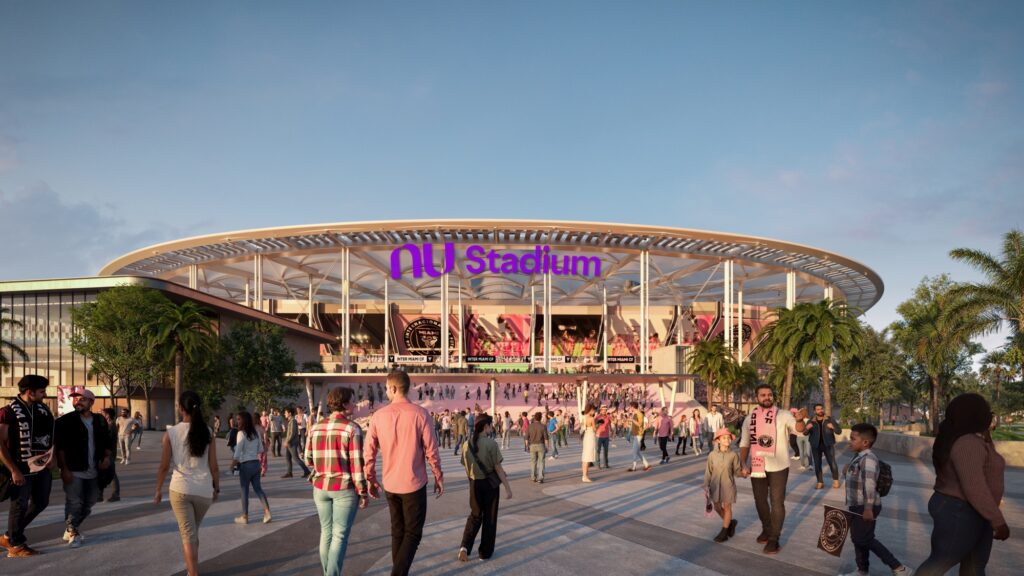
Soccerex will bring the global football industry to Miami in September 2026, with the organisation announcing Nu Stadium as the host venue for its flagship international gathering.
The leading global football business platform will stage Soccerex Miami from September 23–25, 2026, bringing together senior executives, investors, clubs, leagues, federations, brands, media organisations, technology companies and other commercial stakeholders from across the international game.
The event will take place at Nu Stadium within the Miami Freedom Park site, positioning Soccerex at the centre of one of football’s fastest-growing markets as the sport continues to expand its influence across North America.
For nearly three decades, Soccerex has served as a meeting point for the global football industry. The 2026 event represents a further step in the organisation’s evolution towards a year-round platform focused on creating strategic connections, commercial opportunities and long-term value across the game.
Soccerex Miami 2026 will feature conferences, curated networking opportunities, strategic business meetings and industry programming designed to connect decision-makers and facilitate new partnerships.
A key component of the event will be Soccerex’s expanding Deal Network platform, which is designed to create more targeted connections between investors, rights holders, decision-makers and strategic partners throughout the year.
The gathering will also continue the expansion of HerSoccerex, Soccerex’s dedicated initiative focused on increasing investment, visibility, leadership opportunities and commercial growth across women’s football.
Soccerex CEO Garrett Navia said Miami represented an increasingly important location for the global football industry.
“Miami has become one of the most important crossroads in global football,” Navia said.
“The city sits at the intersection of the Americas, international business, culture, investment and the future growth of the sport itself.
“Bringing Soccerex to Nu Stadium is not just about hosting another event, it is about establishing a long-term home for the global football industry in one of the most dynamic football markets anywhere in the world.”
Navia said Soccerex was focused on expanding its role beyond traditional events and developing a platform capable of creating measurable outcomes across the football ecosystem.
“For nearly 30 years, Soccerex has connected the global game,” he said.
“What we are building now is much bigger, a year-round platform designed to create business opportunities, strategic relationships and measurable outcomes across football while also using the reach and influence of the sport to create meaningful impact and lasting legacy within the communities it touches.”
Soccerex Miami 2026 will also place an emphasis on community engagement and impact initiatives, with the organisation aiming to use football as a vehicle to create opportunities and leave a positive legacy in the communities connected to the event.
Nu Stadium, which opened in April 2026 as the home of Inter Miami CF, will provide the backdrop for discussions around some of the most significant issues shaping football’s future.
Investment, infrastructure, sponsorship, media, technology, innovation, fan engagement, women’s football and the continued globalisation of the game are all expected to feature prominently across the three-day gathering.
Located within the wider Miami Freedom Park development, the 26,700-seat venue represents one of South Florida’s newest major football and entertainment destinations.
Additional announcements regarding speakers, strategic partners, community initiatives and industry activations are expected in the lead-up to the event.
Soccerex was founded in 1996 and has since developed into one of football’s leading business platforms, connecting clubs, leagues, federations, brands, investors, media companies, technology providers and rights holders from across the global game.
Through its international events, executive experiences, Deal Network and HerSoccerex initiatives, the organisation is seeking to expand its role as a year-round platform connecting capital, commerce, innovation and leadership across the football industry.
Soccerex Miami 2026 will take place from September 23–25, 2026, at Nu Stadium in Miami, Florida.