


Growing Football Grant to Benefit Victorian Clubs

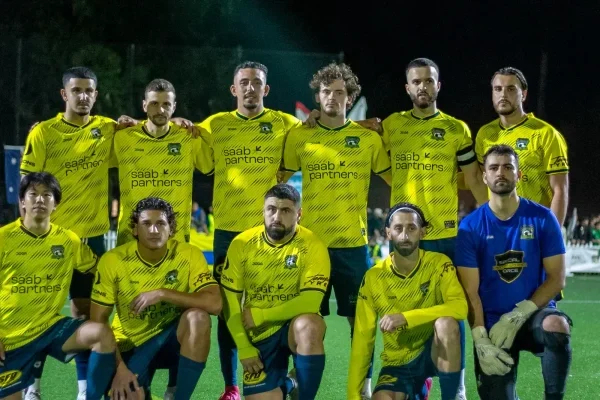
Alamein FC

The Growing Football Grant will provide funding to 16 Victorian football clubs.

The Commonwealth Bank of Australia has renewed its support for 2025–26, placing a clear focus on boosting women’s involvement in the sport. As a result, the initiative aims to strengthen clubs and associations by improving awareness, safety, and infrastructure for women and girls.

In Melbourne’s northern suburbs, Darebin United, Keilor Park, and Watsonia Heights football clubs will receive support. Meanwhile, in the west, the grant will fund Altona East SC, Balmoral FC, Footscray United Rangers FC, Sunshine Heights Junior FC, Truganina Lions FC, and Werribee City FC. Additionally, Melbourne University Soccer Club and Monash Soccer Club are included in the allocation.

Beyond Melbourne, regional clubs will also benefit. In Gippsland, Gippsland United FC and Trafalgar Victory FC will receive funding. Further east, the Yarra and Dandenong Ranges will see support for Monbulk Rangers SC. Finally, in rural north-eastern Victoria, Murray United FC Inc will be among the beneficiaries.

Overall, the funding aims to expand and strengthen women’s representation in football. Clubs will use the bursary to reduce barriers to participation through equipment subsidies, female-only programs, and introductory sessions for new players. In turn, these initiatives hope to empower young women with mentoring, education, and opportunities on and off the field.

Ultimately, continued investment in women’s football reflects a long-term commitment to growth and inclusion and supports the goal of reaching 50,000 female players by 2026.

This renewed backing not only amplifies opportunities for women and girls but also reinforces a system where community clubs can thrive through stronger pathways, safer environments, and greater accessibility. With these resources, Victorian football is positioned to foster lasting participation and build a more equitable future for players across the state.
Previous ArticleNext Article

Boroondara Eagles Secure Landmark Victory as Macleay Park Set to Become NPLW Home

A long-awaited breakthrough for the Boroondara Eagles Football Club has brought the vision of a permanent home for women’s football one step closer, with Boroondara City Council endorsing plans for an NPLW-compliant pitch at Macleay Park.

For the Eagles, the ambition to provide women with deserving facilities took a significant step forward this week after the Boroondara City Council committed to upgrading the pitch as part of the Macleay Park Masterplan.

This masterplan involved new sports lights on Macleay Park Oval 3 but failed to see any further development to the soccer facilities or the Boroondara Eagles until Monday night.

The decision marks a defining moment in the club’s history and provides a platform for sustained growth, particularly for its thriving women’s and girls’ football programs.

While the resolution represents an important planning milestone, its significance extends well beyond the construction of a new playing surface. It signals a commitment to ensuring female footballers have access to facilities capable of supporting elite development pathways while remaining connected to their local community.

Purpose-built facilities remain one of the biggest challenges facing women’s football across Australia. As participation continues to surge, many clubs have outgrown venues originally designed around significantly smaller player bases.

For a club that has experienced rapid growth in recent years, the announcement provides the opportunity to establish a permanent home capable of meeting the demands of National Premier Leagues Women’s football.

The investment also reflects a broader shift within local government and football stakeholders towards recognising the infrastructure required to support the continued growth of the women’s game.

The Council’s decision was underpinned by strong community support, with players, families, coaches, volunteers and supporters filling the Council Chamber in a powerful display of unity.

The overwhelming attendance demonstrated the depth of connection between the club and the local community, highlighting how football facilities can become important social and sporting assets beyond matchday.

Although the inclusion of the NPLW-compliant pitch within the Macleay Park Masterplan represents a significant victory, the project remains at the beginning of its journey.

Funding, planning and delivery will now become the focus as the Boroondara Eagles works alongside Council, partners and the wider community to bring the Macleay Masterplan to life.

The club has already called on local businesses, sponsors and community members to become involved in the next phase, recognising that delivering modern sporting infrastructure is a collaborative effort.

Should the project progress as envisioned, Macleay Park has the potential to become more than simply the club’s home ground. It could emerge as a center point for women’s football in the local Boroondara community, supporting participation, talent development and community engagement for years to come.

For the Boroondara Eagles, the Council resolution is not the destination—it is the foundation upon which the club can build its next chapter.

Tottenham Hotspur deliver player development workshop for Football NSW

The workshop focused on sharing knowledge and insights regarding player development, bringing together more than 120 coaches from across NSW with those from Tottenham Hotspur.


Experience, insight and education

Valentine Sports Park hosted the Continuing Professional Development (CPD) workshop, uniting Football NSW coaches and members of Tottenham Hotspur’s coaching staff to encourage discussion and learning opportunities about player development.

Tottenham’s player development pathway – from the academy to the first team – has produced some of the most respected names in Premier League history, including Harry Kane and Ledley King.

Under the leadership and guidance of Tottenham Hotspur Player & Coach Pathway Co-ordinator (and UEFA A Licence Coach), Jimmy Martin, as well as members of Tottenham’s coaching staff, Shannon Maloney, Kevin Moffatt and Tyler Blackwood, the workshop was a unique opportunity to learn from some of the most experienced coaches in the game.

“Coach education is a vital part of developing football across NSW, and having more than 120 coaches attend this workshop highlights the appetite within our football community to continue learning and improving,” explained Football NSW Head of Football, Edward Ferguson.

Ferguson continued to outline the value of learning from an organisation like Tottenham Hotspur, a team who have helped grow some of the game’s most exceptional talents. The lessons taken will consequently help to inform future approaches to coaching in NSW.

“The focus remains on creating better learning environments for players, encouraging decision-making, creativity and long-term development.”

What the workshop involved

The workshop encouraged coaches to dive into all aspects of player development: the technical, tactical, physical and mental aspects which contribute to the English academy setup.

Furthermore, Maloney, Moffatt and Blackwood – all of whom helped deliver a practical session for attendees – showed how a club’s playing identity can work alongside challenging training environments for players.

Game understanding, creative problem-solving and technical proficiency underpinned the main themes driving the workshop. In an age where individual expression on the pitch appears a dying art, Tottenham Hotspur coaches remain committed to encouraging players to feel confident adapating to a range of in-game scenarios.

Football NSW coaches were also able to attend a Q&A session with King, who spoke about his playing experiences for both club and country.


Final thoughts

As Australia continues to nurture the current and upcming generations of talented footballers, workshops such as this are a vital, fundamental part of the journey.

The fastest way to be among the best is to learn from them. The aim now is for Football NSW coaches to take the lessons learned, and apply them to football development in their own academies and teams across the state.

Most Popular Topics

Editor Picks

Send this to a friend