





Macarthur Bulls Strengthen Ties with Better Life Mobile

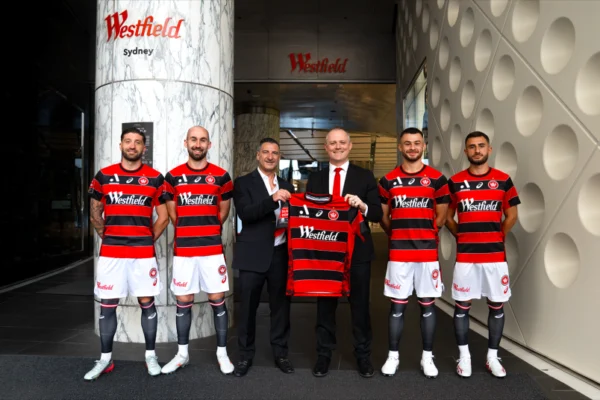
Macarthur Bulls FC has confirmed that Better Life Mobile will join the club as a major supporter for the current season.
This new alliance brings together two organisations dedicated to value, community involvement and inclusion, with Better Life Mobile set to feature on the sleeve of the Bulls’ 2025/26 jersey.

Better Life Mobile is Australia’s “fair mobile phone company,” operating as a certified social enterprise through Social Traders and earning global recognition for its innovative efforts to keep vulnerable communities connected.

Its social impact has been acknowledged internationally, with the company receiving the Most Impactful MVNO award at the MVNO Nation Awards in Spain for both 2024 and 2025 ceremonies, highlighting its leadership and commitment to environmental, social, and governance (ESG) excellence.

Better Life Mobile began when its founders, Russel and Adrian, set out to help people experiencing homelessness access affordable mobile service, a need they saw was being ignored. Since then, the mission hasn’t changed: to make mobile phone use more equitable and affordable for everyone.

Through its connection with Macarthur Bulls, Better Life Mobile will offer members, fans, and club staff access to its prepaid mobile and internet services delivering strong coverage, flexible plans, and competitive pricing, while supporting the club’s commitment to affordability and community accessibility.

Better Life Mobile CEO Ante Zizic, shared his enthusiasm for the new collaboration.

“Partnering with Macarthur Bulls is a perfect match for Better Life Mobile. We believe strongly that access to affordable, transparent mobile and internet services is a key enabler for community participation and connectivity. By working together with the Bulls, we can offer supporters and members a real alternative in telecommunications – one without hidden fees, one that supports inclusion, and one that gives value. We’re excited to play our part in the club’s success and its connection with the local community,” he said via press release.

Macarthur Bulls FC Chief Commercial Officer Mark Jensen, reflected on the significance of the new collaboration for both the club and its community.

“We are thrilled to welcome Better Life Mobile as a major partner of the Macarthur Bulls,” he said via press release.

“This partnership strengthens our commitment to making our club accessible, community-focused and future-facing. With Better Life Mobile’s flexible and fair prepaid mobile and internet solutions, our supporters, players and volunteers will benefit, and the club’s reach and digital engagement will be enhanced. We look forward to a successful and dynamic collaboration.”

Better Life Mobile seeks to give back to the community through a range of social initiatives, providing mobile phones with free credit to those most in need. Its annual “Santa Calls” campaign supplies community organisations and welfare agencies across Australia with free phones and call credit.
Previous ArticleNext Article

Spain’s Domestic and Global Success: What can Australia Learn?

Spain has now won back-to-back UEFA Women’s Nations League titles following their decisive victory over Germany in the final on Tuesday. Goals from Vicky Lopez and Claudia Pina helped ‘La Roja’ to their third international trophy in three consecutive years, prolonging the team’s dominant status within the women’s game. The achievement not only solidifies Spain’s standing at the top of international football, but displays an essential model for other nations to follow when developing women’s football.

In Australia, as the excitement of hosting the AFC Women’s Asian Cup 2026 builds and the buzz around women’s football is reignited, looking to Spain’s investments could be the first crucial step in ensuring both short and long-term success for women’s football across the country.

International Investment

Just a week before Spain achieved its second consecutive Nations League trophy, multinational renewable energy company, Iberdrola, reaffirmed its dedication to supporting the women’s game both on and off the pitch.

Since 2016, Iberdrola has cemented its position as the main supporter of women’s football in Spain. Its partnership with the Royal Spanish Football Federation (RFEF) has led to member numbers reaching over 100,000, as well as fan attendance and viewership skyrocketing in recent years.

Television viewership has seen similar momentum, increasing by 90%. The final of the most recent European Championship against England reached a 42% audience share and peaked at almost 6.5 million viewers.

The growing number of fans attending live matches was evident at the final on Tuesday evening in Madrid, where the Riyadh Air Metropolitano witnessed a record-breaking crowd of 55,843 fans. Given that the previous record was 32,657, it is clear to see that women’s football in Spain is attracting fans on scales far beyond the numbers currently seen in the A-League Women. According to the ALW Report, the league saw an average attendance of 1,559 last season.

Although the gap may appear impossible to overcome, it shows that women’s football is more than capable of attracting crowds large enough to rival the men’s game when backed by meaningul investment.

Domestic Developments 

It is not only the national team which has seen the benefits of continued investment into women’s football over the last decade. Clubs like Barcelona have seen their women’s team achieve huge success both in La Liga and in the UEFA Women’s Champions League, winning two of the last three competitions.

However, one of the crowning achievements of the last decade for women’s football in Spain was a world record set at Barcelona’s Camp Nou in 2022, where 91,648 fans were present for a UEFA Women’s Champions League match against Wolfsburg.

Although there are few clubs on the planet with both the infrastructure and football culture to match Barcelona, it nevertheless, shows that when resources and attention are directed towards the women’s game, it can encourage success on the pitch alongside a strong community of dedicated fans off it.

The Women’s Game in Australia – Time for Change?  

Last month’s A-League Women Report, released by the PFA, underlined a desperate need for investment if the ALW is to keep pace with foreign leagues.

The report highlighted that the increasing talent drain, falling attendances and financial insecurity for players are some of the main issues negatively impacting the growth of the ALW. Following the FIFA Women’s World Cup in 2023, attendances dropped by 26%, showing a failure to capitalise on the buzz surrounding the tournament jointly hosted by Australia and New Zealand.

Furthermore, with player dissatisfaction increasing and calls to professionalise the women’s game growing louder, the need for change is becoming more and more desperate. If Australia is to ensure the sustained success of women’s football on both the international and national stage, then looking at the work of the RFEF in Spain could be a valuable first step.

How do we Move Forward?

In the last decade, Spain has shown that consistent investment into the women’s game can bring huge success both domestically and globally. Therefore, by following this example, governing bodies can see how long-term commitment and meaningful investments could improve the structure of Australia’s domestic leagues and ultimately raise the profile of Australian women’s football on the global stage.

While women’s football in Australia has reached a decisive moment, recent developments still indicate reasons to remain optimistic. CommBank’s renewed support for the Matildas ahead of the AFC Women’s Asian Cup™ due to be held in Australia in March 2026 displays their intention to continue backing the development of the women’s game.

Ensuring this support is acknowledged and then followed through after the tournament has heard the final whistle will be crucial.

PFA and Fans Association Unite to Bring Fans Closer to Players

Professional Footballers Australia (PFA) and the Football Supporters Association Australia (FSAA) have confirmed a new partnership aimed at establishing an official link between professional players and their fans.

The agreement sets out for the two organisations to work together on initiatives that:

  • Foster stronger, more genuine connections between players and supporters

  • Enhance the involvement of players and fans in football decision-making

  • Produce data-driven insights to support the long-term growth of the game

Founded in 2023, the FSAA is a volunteer organisation created to provide a unified, independent voice for Australian football supporters, prioritising a supporter-first approach.

The FSAA represents the interests of fans across all levels of the game and has recently submitted supporter-focused recommendations to Football Australia (FA) and the Australian Professional Leagues (APL).

PFA Chief Executive, Beau Busch highlighted the significance of the new strong foundation already established with the FSAA and the potential for future collaboration.

“Since the establishment of FSAA, we have been able to build an effective working relationship, and this agreement represents another step forward in our shared pursuit of building the game,” he said via PFA press release.

“Globally, we have seen firsthand the benefits of strong collaboration between fan groups and player unions.

“Together we believe we are better equipped to shape the future of Australian football and ensure that the voices of fans and players are heard and respected.”

FSAA Chair, Patrick Clancy described the accord with the PFA as a natural connection between the organisations representing Australian football’s two key groups, players and supporters.

“Australia’s professional players have an inextricable connection with supporters. Many have grown up on the terraces and in the stands and then progress to taking on the game as a career,” he said via FSAA official media release.

“For supporters, there is that strong emotional connection with the players of the club they support week in, week out.

“FSAA wants to continue to foster and grow this important relationship, leverage off our mutual understandings and improve the game in Australia for players and supporters alike.”

A Memorandum of Understanding (MoU) was signed on 20 October 2025 by PFA CEO Beau Busch and FSAA Chair Patrick Clancy, formalising the partnership.

This represents the FSAA’s first MoU with another organisation, with the expectation of establishing additional partnerships in the near future.

Most Popular Topics

Editor Picks

Send this to a friend