
Melbourne’s A-League Rivals Unite to Tackle Racism Through Statewide Initiative

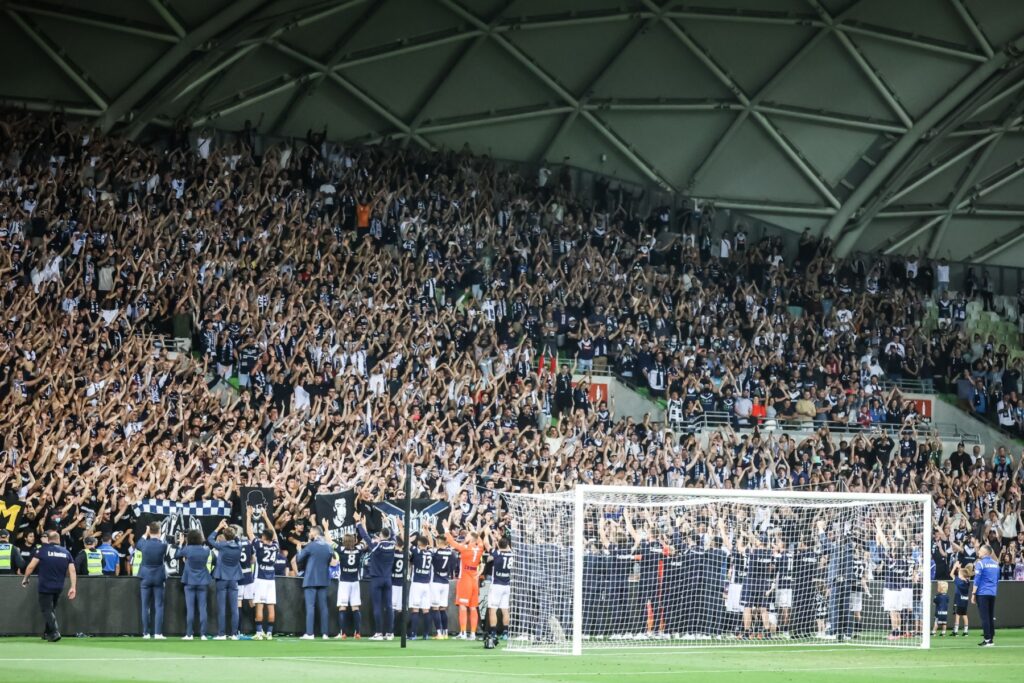
Melbourne’s A-League rivals Melbourne Victory and Melbourne City have put competition aside to lead a major new anti-racism initiative aimed at promoting inclusion and respect across Victoria.

Backed by the Victorian Government, the Local Anti-Racism Initiatives (LARI) Program will engage more than 10,000 young people over the next four years through athlete-led workshops, football-based education sessions, community visits and school programs. The partnership will culminate in the inaugural Anti-Racism Symposium in 2026, bringing together players, educators and community leaders to share stories and strategies.

Developed initially by Reflect Forward in collaboration with Professional Footballers Australia (PFA), the initiative harnesses the unifying power of football to challenge racism both on and off the field.

To mark the launch, the captains of Victory and City will wear specially designed Reflect Forward armbands during this weekend’s Melbourne Derby – a powerful symbol of solidarity and the clubs’ shared commitment to inclusivity.

Earlier this week, the two clubs co-hosted a special screening of the ABC documentary series End Game at AAMI Park, which explores racism in Australian sport. The event was attended by government officials, media representatives and football stakeholders to celebrate the partnership’s official launch.

Reflect Forward’s Jamal Elsheikh said the collaboration represents the next step in a growing national movement.

“What started as a collaboration between Reflect Forward and PFA in 2021 is now growing – bringing clubs, athletes, and communities together to take real action against racism,” he said.

Melbourne Victory Managing Director, Caroline Carnegie, said the club is proud to lead by example.

“By working with Reflect Forward and Melbourne City, we believe we can help decrease the instances of racism in sport. “Collaborating on this project will create places in schools and football clubs that ensure all Victorians feel a greater sense of pride and belonging,” she stated.

Melbourne City’s Head of Community, Sunil Menon, added: “Melbourne City has always believed in the power of football to make a difference. Through our community programs, we’ve seen how the game can bring people together and build understanding across cultures.”

PFA Chief Executive, Beau Busch, said the program highlights players’ ongoing commitment to driving cultural change.

“Australian football is the beneficiary of our multicultural communities and diversity across our nation. With that comes the responsibility to proactively protect those who contribute so much,” he concluded.

Previous ArticleNext Article

Google expands football footprint with AI partnerships at five European giants

Google has announced long-term partnerships with five of Europe’s biggest football clubs.

Expanding the role of artificial intelligence in fan engagement through collaborations with Arsenal, Barcelona, Bayern Munich, Liverpool and PSG.

Google Gemini will become each club’s official consumer AI Partner, while Google Pixel will serve as the official smartphone partner.

The partnerships are designed to deliver AI-powered match insights, personalised fan experiences and exclusive behind-the-scenes content across the clubs’ digital platforms.

Supporters will be able to use Gemini to access tactical insights, historical statistics and match analysis while Pixel devices will be used by club media teams to capture content through the company’s “Shot on Pixel” initiative.

A key component of the partnership is the commitment to increasing the visibility of women’s football.

Google confirmed the agreements cover both men’s and women’s teams, with AI tools and Pixel technology set to help produce content and expand the reach of the women’s game through club media channels.

The announcement continues Google’s growing investment in football technology.

Google initially had individual agreements with several of the clubs, including PSG and Liverpool.

By bringing the partnerships together under the Gemini and Pixel brands, Google is positioning artificial intelligence as a core part of the modern football fan experience rather than simply a commercial sponsorship.

For football clubs, the collaboration highlights a broader industry trend towards technology partnerships that extend beyond branding.

AI is increasingly being used to produce personalised content, deliver deeper match analysis and strengthen engagement with large global audiences.

Clubs continue to invest in these growing digital platforms alongside their traditional commercial portfolios.

The partnerships also reinforce the growing intersection between football and technology, with leading clubs increasingly working alongside global technology companies to enhance supporter experiences and explore new ways of connecting with fans on matchday and beyond.


Football Has the Audience. Does It Have the Commercial Strategy?

Soccerscene has launched Survey 4: Commercial Confidence in Football, calling on clubs, sponsors, governing bodies, commercial leaders and football industry professionals to assess whether the game is making the most of its enormous commercial potential.

Football has the audience, participation base and community reach to be one of Australia’s most powerful commercial platforms. But does the industry have the commercial strategy, professionalism and infrastructure required to turn that potential into sustainable growth?

That is the question at the centre of Soccerscene’s latest industry research.

The survey examines how attractive grassroots football is to potential commercial partners, what industry professionals believe is limiting football’s commercial potential, and whether clubs are presenting themselves professionally enough to sponsors.

It also explores what sponsors value most when engaging with football – from community reach and participation scale to brand alignment, values and purpose – as well as whether improved facilities could directly contribute to stronger sponsorship outcomes.

Is football fully capitalising on its commercial opportunity?

Football continues to provide brands with access to highly engaged communities across grassroots, community and elite environments. Yet the commercial landscape remains fragmented, with clubs operating with vastly different levels of resources, capability, governance, media infrastructure and commercial expertise.

Soccerscene’s survey is designed to capture the industry’s perspective on where the opportunities exist – and where football may be leaving commercial value on the table.

The research will look specifically at four key areas:

  • Commercial attractiveness – How attractive is grassroots football as a commercial partnership?
  • Commercial barriers – What is holding football back from reaching its full commercial potential?
  • Club professionalism – Are clubs presenting themselves effectively and professionally to sponsors?
  • Sponsor value – What are sponsors really looking for when they invest in football?

The survey also asks whether better facilities would have a direct impact on sponsorship outcomes, highlighting the potential relationship between infrastructure, commercial presentation and investment.

Have your say

Soccerscene is encouraging football clubs, sponsors, commercial professionals, governing bodies, administrators, media professionals and industry stakeholders to participate.

The findings will contribute to Soccerscene’s ongoing program of industry research, designed to provide a clearer picture of the challenges and opportunities facing football and the organisations operating within it.

Take the Survey: Commercial Confidence in Football

Complete the Commercial Confidence in Football Survey here

The survey will close on 30 August 2026 at midnight, with responses received before the deadline included in the final analysis.

Football has the audience. The question is whether it has the commercial strategy to match.

Most Popular Topics

Editor Picks

Send this to a friend