


OFC UN Women Partnership for Gender Equality

OFC UN Women

The Oceania Football Confederation (OFC) and UN Women have renewed a memorandum of understanding to improve gender equality across the Pacific.

Having first joined forces in 2022, the reinvigorated partnership will enable both organisations to tackle gender-based violence and discrimination by empowering women and girls on and off the pitch.

UN Women will support the OFC through the Pacific Partnership to End Violence Against Women and Girls (Pacific Partnership) programme, an initiative predominantly resourced by the Australian Government alongside the European Union and organised by UN Women and the Pacific Community (SPC), in a strategic partnership with the Pacific Islands Forum (PIF).

UN Women Fiji Country Office Representative, Delphine Serumaga outlined why the UN elected to continue the partnership with the OFC.

In the Pacific Islands, sports play an important role in shaping attitudes, values and behaviours that can promote gender equality and prevent violence against women and girls. UN Women is pleased to support OFC and the member associations in their commitment to make football safe, equal and inclusive,” she said in a press release.

OFC General Secretary Franck Castillo expressed how vital it was to have continued support from UN Women to progress the Confederation’s work.

“Gender equality has taken an even greater focus in our region following the FIFA Women’s World Cup 2023, the first senior FIFA World Cup to be held in Oceania. The development and launch of This Is How We Football as one of our legacy programmes is a testament to this,” he said in a press release.

“Using the power of football to drive gender equality also means continuing to develop women’s football from grassroots to the elite level. Ensuring girls and women have the opportunity to perform on the field is a key part of our work to change attitudes and perceptions.

“We’ve achieved a lot in our partnership with UN Women so far and are excited to continue building on those foundations.”

The This Is How We Football initiative is a Football for Good programme designed to tear down barriers preventing women and girls from playing football. Implemented in eight countries in 2024 (Solomon Islands, Tahiti, Vanuatu, Samoa, New Caledona, Fiji, Tonga and Kiribati), the programme will add a ninth in 2025 with the addition of Papua New Guinea.

In combination with the OFC’s Just Play programme, both initiatives have rapidly improved capacity building for women. Of the 600 participants for volunteer and coaching courses in 2024, 65% were female.

Furthermore, the OFC and UN Women partnership has already achieved a litany of major successes, such as the Gender Equality Playbook 2022, The Power of Football 2023 social responsibility strategy, a localised 16 Days of Activism against Gender-based Violence Campaign and a range of regional workshops to support women across the Confederation.

Previous ArticleNext Article

Capital Football Introduces Pink Armband to Protect Junior Referees

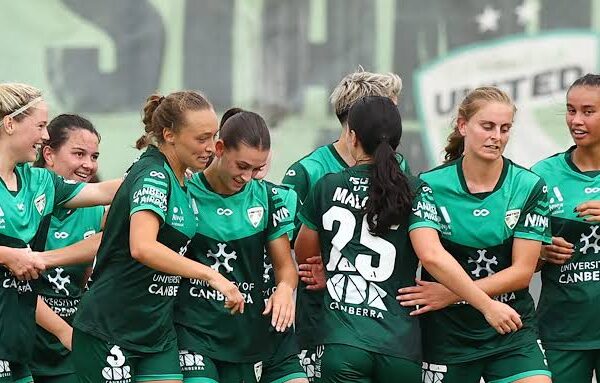
Capital Football has launched a visible identification program for referees under 18, requiring them to wear a pink armband during matches. It’s intended to build awareness surrounding the concern across Australian football about the abuse driving young officials out of the game.

The Pink Armband Initiative, effective immediately across Capital Football’s competitions in the ACT and surrounding region, makes junior referees identifiable to players, coaches and spectators. The federation says the marker is designed to set clear behavioural expectations and signal that many match officials are minors still developing their skills.

Capital Football acknowledged a referee crisis as far back as 2022, at which point it restructured its entire referee department in partnership with Football Australia. The pink armband program is the latest layer of that response; this time by targeting the cultural conditions on match day rather than systems of recruitment and pay.

A problem that spans codes and states

Research has consistently linked referee abuse to declining retention rates, with officials quitting in growing numbers due to sustained mistreatment, a trend researchers warn will reduce the pool of skilled match officials available at all levels of the game. Studies also show that young, less experienced referees are disproportionately likely to be subject to abuse.

Capital Football is not alone in reaching for a visible solution. Similar programs operate across Football Queensland, Football South Australia, Football South Coast and several other federations, while Basketball Victoria and Basketball South Australia have adopted comparable measures through the Green Whistle initiative. The spread of these programs across codes and states reflects a shared administrative problem: many grassroots referees are teenagers and volunteers who do not officiate for money but because they love the game, and abuse is eroding that foundation.

For a federation overseeing nearly 29,000 registered players, fewer referees means fewer matches. Fewer matches means reduced participation. The pink armband is a low-cost intervention with structural consequences if it works.

Compliance and competition: Everton ordered to pay compensation following major verdict

In a landmark decision by the Premier League Independent Disciplinary Commission, Everton must now pay Burnley upwards of AUD 66 million (£35 million) after breaching financial rules in the 2021-22 season.

Behind the verdict

Playing in the Premier League is, in itself, one of the most lucrative positions for a club to be in. This year’s Championship Play-off final – a contest deemed ‘the richest match in football’ – guaranteed winners Hull City a revenue uplift of AUD 389 million (£205 million) according to Deloitte’s Sports Business Group.

It is no wonder, therefore, why teams are so desperate to stay at the top of the pyramid, especially given that relegation can lead to heavy financial hits in revenue, wage reduction and transfer spending power.

Competition is certain – and the football is all the better for it. But when this competitive edge overtakes compliance, what happens off the field is just as impactful.

In 2023, the Premier League charged Everton with breaching financial rules during the 2021-22 season – the same season which saw the Toffees finish just four points above relegated Burnley. Everton received an initial 10-point deduction, which ultimately decreased to six points on appeal.

That season, Everton stayed up. But for Burnley, had the points deduction come at an earlier date, their survival in the top-flight may have been secured.


What did the ruling find?

In its verdict, the Premier League’s Independent Disciplinary Commission deemed that Everton gained a competitive advantage over Burnley as a result of financial breaches.

Burnley will now receive AUD 66 million (£35 million) in compensation from Everton, although the Merseyside club will appeal the  commission’s decision.

“This ruling sets a dangerous and unworkable precedent for English football, given it is constructed on a principle that a club can be in breach of financial rules at any point in a financial year,” Everton said via an official club statement.

Burnley, on the other hand, reaffirmed its position that the case was a question of fair play and ensuring a level playing field.

“Our action has always been about making football fair,” the club said via an official statement.

“Clubs that comply with the rules deserve to compete on a level playing field. Fans deserve it. The sport demands it.”


The impact of the case

This is a landmark decision which may have profound effects on the future of financial compliance in English football.

In the past, financial breaches remained within the realm of just that – finances. But with the ruling between Everton and Burnley, it now opens up further questions on what compliance is actually worth in the game.

And whether future investigations may lead to similar – or even higher – compensation packages to affected clubs.

Most Popular Topics

Editor Picks

Send this to a friend