




QUT’s Future of Sport Conference to Shape the Next Era of Global Sport

As Australia accelerates toward the Brisbane 2032 Olympic and Paralympic Games, the Queensland University of Technology (QUT) is set to host a landmark event that will bring together some of the brightest minds in sport, technology, and innovation.

The Future of Sport Conference 2026, taking place on March 27 at QUT’s Gardens Point campus in Brisbane, will unite international and Australian leaders to explore how research, technology, and cross-sector collaboration are redefining the global sporting landscape.

Held as a one-day flagship event, the conference represents a critical platform for dialogue across sport, government, academia, and industry. The aim is to collaborate for a shared vision of sport’s future in a rapidly evolving world.

Driving innovation ahead of Brisbane 2032

Positioned within the broader momentum of Brisbane’s Olympic decade, the conference will examine how emerging technologies and data-driven strategies are reshaping performance, fan engagement, and sporting infrastructure.

Delivered in collaboration with global partners including the MIT Sloan School of Management and supported by major industry stakeholders such as Cisco and PMY Group, the event highlights the increasing convergence between sport and advanced technology.

Key themes include:

  • Emerging sports technologies and performance analytics
  • Mental health and wellbeing in high-performance environments
  • The business of sport and sustainable futures
  • Inclusion and social impact through sport

These focus areas reflect a broader shift within the industry towards positioning sport as a driver of social change, economic growth, and community wellbeing, not just measuring its performance.

A global lineup of industry leaders

The conference will feature an impressive roster of speakers drawn from elite sport organisations, academia, and global technology firms.

International expertise will be complemented by leading Australian voices, including executives, high-performance specialists, and researchers shaping the future of sport both domestically and abroad.

Among them are figures working across professional sport, data science, and innovation, offering attendees rare insight into the trends and strategies defining the next decade.

Collaboration at the core

Beyond keynote presentations, the conference is designed to foster meaningful collaboration. An industry roundtable and networking opportunities will allow stakeholders to exchange ideas, build partnerships, and explore practical solutions to shared challenges.

From grassroots development to elite performance systems, the emphasis on collaboration reflects a growing recognition that the future of sport will be shaped not by isolated innovation, but by connected ecosystems.

Shaping sport’s future

As sport continues to intersect with technology, health, and society, events such as the Future of Sport Conference play a vital role in aligning vision with action.

By bringing together diverse perspectives, from athletes and academics to policymakers and industry leaders, QUT is positioning itself at the forefront of global sport innovation.

With Brisbane 2032 on the horizon, the conference offers a timely and influential platform to not only discuss the future of sport but actively shape it.
Previous ArticleNext Article

Netflix’s Women’s World Cup deal puts IMG’s technology in the spotlight

Netflix’s first exclusive football deal will see the next year’s FIFA Women’s World Cup at the centre of it’s live-sport strategy. The US-streaming service company has appointed IMG as its production partner for all 64 matches in Brazil, as well as more than 100 hours of live studio programming. The deal includes English and Spanish coverage for viewers within the US, and English and French-language coverage for those in Canada. IMG will also support Netflix’s coverage of the tournament’s draw in December.

The 2027 Women’s World Cup runs from June 24 to July 25 across eight host cities, and will be the first edition to feature 32 teams. The scale of the tournament makes it an ambitious first foray into sports broadcasting for Netflix – which means IMG’s involvement will be of great significance.

IMG’s production engine

IMG has built its reputation on producing and distributing live sport at scale. It’s Stockley Park, London facility includes broadcast studios, production galleries, edit suites and facilities for radio, podcasting, dubbing and visual effects. The company has worked across major properties including the Premier League, Major League Soccer and other international sporting events.

For a World Cup, this infrastructure provides more than a place to make television; it creates a central point where production teams can manage feeds, graphics, replays, commentary, editing and distribution while events are taking place thousands of kilometres away.

Remote production is the key

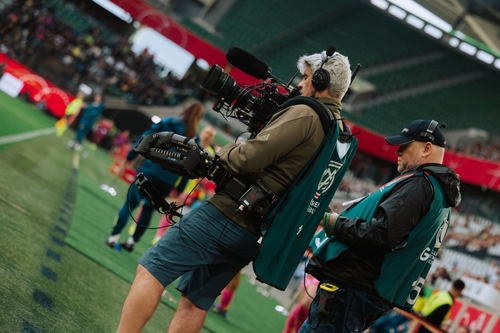
The most important technology for a tournament spread across eight Brazilian cities is connectivity. IMG has invested in remote-production workflows that allow production teams to work across locations, rather than putting every specialist inside each stadium. Its wider production operation has used fibre, satellite, cloud and IP-based connectivity to move live signals between venues and production centres.

That model can reduce the amount of equipment and specialist staff required at every venue while allowing senior producers, directors, replay operators and graphics teams to work from centralised facilities. IMG has also demonstrated long-distance IP production, including a 20,000-kilometre link between Tokyo and London that carried uncompressed, low-latency video. For Netflix, those capabilities are particularly relevant. The platform is building a single viewing experience for audiences in two markets, but the raw ingredients will come from stadiums spread across Brazil. A resilient network becomes just as important as the cameras themselves.

From stadium to stream

The technology chain does not end when the pictures leave the venue. A modern sports production operation has to manage ingest, replay, media asset management, graphics, audio, quality control, archiving and transmission. IMG’s facilities have been built around those workflows, with master control and transmission capabilities alongside post-production and archive operations.

That infrastructure also gives IMG the ability to turn the live tournament into a wider stream of content. A goal can become a replay, a highlight, a social clip or part of a studio package without waiting for the match to finish. For Netflix, that fits a platform built around on-demand discovery as much as live viewing.

A new test for Netflix

Netflix has already made a significant investment in football through documentaries and other programming. The 2027 Women’s World Cup takes it up a level. FIFA describes the agreement as the first competition Netflix has acquired in full, making the tournament a major test of its live sports operation. IMG therefore has a job that goes beyond producing 64 matches; it must help Netflix build the technical backbone for a month-long, multi-venue broadcast, while maintaining consistent production standards across languages and locations.

The viewer may simply press play and see a World Cup match appear instantly. Behind that button will be a complex network of cameras, connectivity, control rooms, production systems, people and data. That is the real significance of Netflix’s IMG deal: the streamer is bringing the tournament to its platform, but IMG is providing much of the machinery that can make a global football event feel seamless.

Oz Shipping Containers expands Newcastle Jets partnership with front-of-shirt move

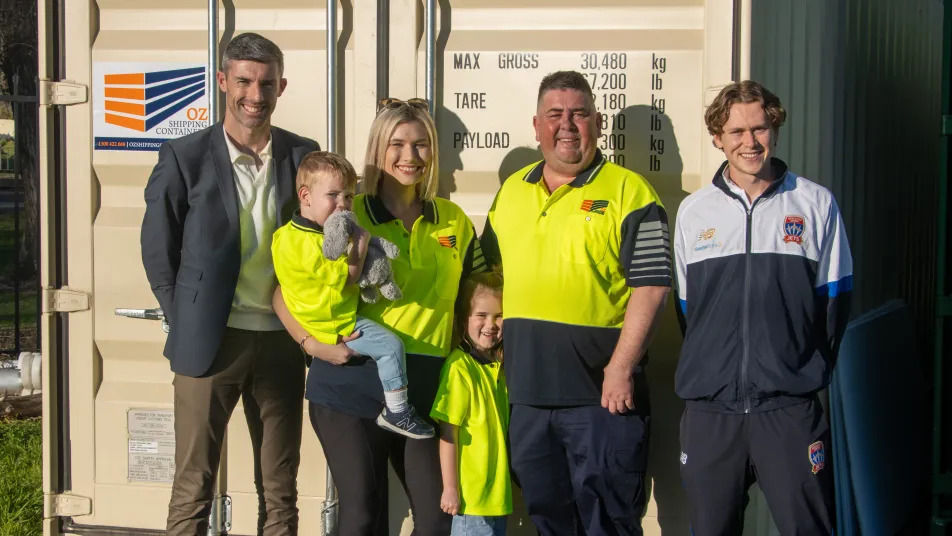
Newcastle Jets have upgraded their relationship with Oz Shipping Containers, with the Newcastle-based business becoming Principal Partner of the A-League Men’s team for the 2026/27 season.

The agreement represents a significant increase in the company’s involvement with the club, moving from a sleeve sponsorship last season to the front of the Jets’ men’s playing shirts.

Oz Shipping Containers will feature on the club’s home, away and goalkeeper kits throughout the campaign, giving the business a substantially larger presence across matchday, broadcast and club content.

The partnership also provides another example of the Jets developing commercial relationships with locally based businesses and increasing their investment over time.

Oz Shipping Containers specialises in the supply and modification of shipping containers, serving customers across residential, commercial and industrial markets.

Newcastle Jets Executive Chairman Maurice Bisetto said the club was excited to build on the existing partnership.

“It is great to continue our close association with a successful local business operating on a global stage,” Bisetto said.

The expanded partnership comes as the Jets prepare for a season that will include both A-League Men’s football and AFC Champions League Elite competition, increasing the club’s exposure across domestic and Asian markets.

For Oz Shipping Containers, the front-of-shirt position provides a much broader platform than its previous sleeve placement, putting the brand at the centre of the Jets’ visual identity throughout the season.

With the Jets entering a new campaign as defending Australia Cup champions and competing in Asia, Oz Shipping Containers will now have a significantly larger platform through which to build its association with the club.

Most Popular Topics

Editor Picks

Send this to a friend