



Football’s biggest wins don’t always happen on the pitch. Often, they start in boardrooms, local clubs, and community halls, anywhere people come together to connect, collaborate, and build trust. From volunteers running grassroots clubs to commercial partners investing in growth, and even friends of business creating unexpected opportunities, relationships are the invisible engine driving football forward. Yet, for many governing bodies, this is still one of the most undervalued strategies in the game.
Why Relationship Building Matters
At every level of football, relationships form the foundation of success. Governance isn’t just about structures, rules, and strategies. It’s about people. It’s about conversations, shared ambitions, and mutual respect that hold the game together.
Volunteers are the heart of Australian football. They paint lines, run barbecues, manage teams, and keep the lights on. Their connection to local associations and federations often determines how valued and supported they feel. When governing bodies invest time in listening, not just speaking, they strengthen the grassroots fabric that supports the entire pyramid.
Commercial partners represent a different but equally important relationship. Their involvement is not purely transactional. When partnerships are built on shared values, community engagement, inclusion, and youth development, they transcend sponsorship. They become collaborations that deliver both commercial return and social impact.
Governing bodies that treat partners as part of the football family, not just as funders, build credibility and long-term loyalty.
And then there are the friends of business, the connectors, advocates, and community leaders who bridge the gap between sport, government, and industry. Their relationships often bring football opportunities that no policy or marketing campaign could achieve alone.
Yet one of the most underutilise relationships in football governance remains formal MoUs with the private sector. These agreements, when structured thoughtfully, can unlock resources, expertise, and new initiatives that benefit both parties.
Too often, governing bodies have relied on ad-hoc partnerships or sponsorships, overlooking the strategic potential that comes from a long-term, mutually committed relationship with private enterprises.
How Relationships Drive Positive Change and Disruption
Change in football doesn’t happen in isolation. It’s driven by trust, collaboration, and a willingness to embrace new ideas. When federations, clubs, and partners trust one another, they share ideas more freely, challenge old ways of doing things, and create the conditions for positive disruption that moves the game forward.
Strong relationships allow organisations to test new initiatives knowing that success – and even failure – will be met with shared accountability, not blame. They foster an environment where learning never stops, where innovation is encouraged, and where unexpected opportunities can emerge from left field.
Opportunities often come from surprising sources, whether it’s a new partnership idea, a regional tournament concept, or a media collaboration that suddenly gathers momentum. These moments only happen when relationships are open, inclusive, and built on respect.
For governing bodies, leading with openness and transparency builds confidence. When stakeholders understand not just what decisions are made, but why, they are more likely to engage constructively and contribute to meaningful change.
Collaboration between federations and clubs, between football and local councils, or between governing bodies and media partners, has already shown how powerful shared vision can be in driving both positive change and disruption across the game.
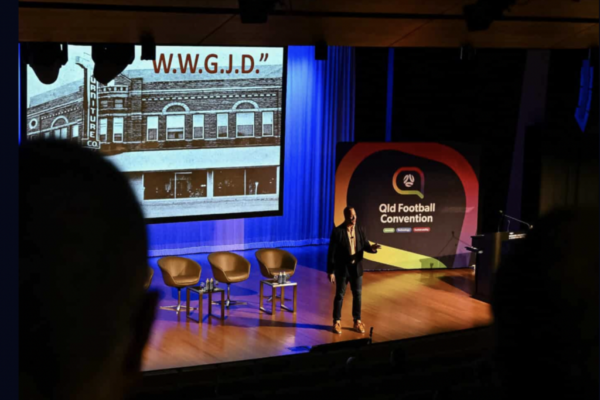
The Football Convention in Queensland demonstrates what is possible when state governing bodies work hand in hand with industry, media, and grassroots representatives. It’s not just an event; it’s a living example of relationship-driven progress.
As former Football Australia Chairman Chris Nikou once said, Football succeeds when everyone, from the grassroots to the elite, feels they’re part of the same story.
That simple truth captures the essence of why relationships matter. When people feel included, when they feel ownership of the game’s direction, they contribute with passion and purpose.
The Social Impact of Connection
Strong relationships create stronger communities. Football is the most accessible sport in Australia and arguably the most diverse. It brings together people of all ages, cultures, and abilities.
But that inclusivity only thrives when governing bodies prioritise relationships over bureaucracy.
When federations build genuine partnerships with community organisations, local government, and schools, football becomes a vehicle for social cohesion. It’s not just about growing participation, it’s about fostering connection, belonging, and identity.
The social impact can be enormous. A single community football club, supported by its governing body and local partners, can influence public health, youth engagement, and regional economies.
Football, at its best, reflects the character of the community it serves.
Being Part of the Journey
Perhaps the most powerful part of relationship building in football governance is the shared sense of journey. Everyone, from the volunteer running the canteen to the CEO in the boardroom, contributes to a common story.
When people feel that their effort matters and that they’re part of something with direction and meaning, remarkable things happen.
Being part of the journey also means showing up, not just when it’s convenient, but when it’s hard. It’s about having conversations that are honest and sometimes uncomfortable, yet always constructive. It’s about acknowledging the people who make the game what it is, even when the spotlight isn’t on them.
Relationships built on respect and shared experience endure well beyond individual roles. They create a culture of trust that allows football to keep evolving, one season, one club, one collaboration at a time.
Achieving Positive Outcomes
When governing bodies invest in relationships, they invest in the future of the game. Strong relationships lead to more resilient clubs, more confident administrators, and more connected communities.
They make football not just something we watch, but something we belong to.
The positive outcomes are seen not only in participation numbers or financial reports but in the energy around the game, the excitement at junior matches, the pride in local tournaments, and the willingness of partners to reinvest because they believe in the vision.
In the end, football governance isn’t about control, it’s about connection.
The most successful federations understand that leadership in football is relational, not hierarchical. They lead through inclusion, collaboration, and shared belief.
When that happens, when volunteers, partners, and governing bodies move together, football doesn’t just grow. It transforms.
Football thrives not because of systems, but because of people, their connections, their shared journey, and the unexpected opportunities that emerge when we collaborate.