

Soccerscene Confirmed as Official Media Partner for Football Queensland’s 2025 Convention

Football Queensland has confirmed Soccerscene as the Official Media Partner for the 2025 Queensland Football Convention.

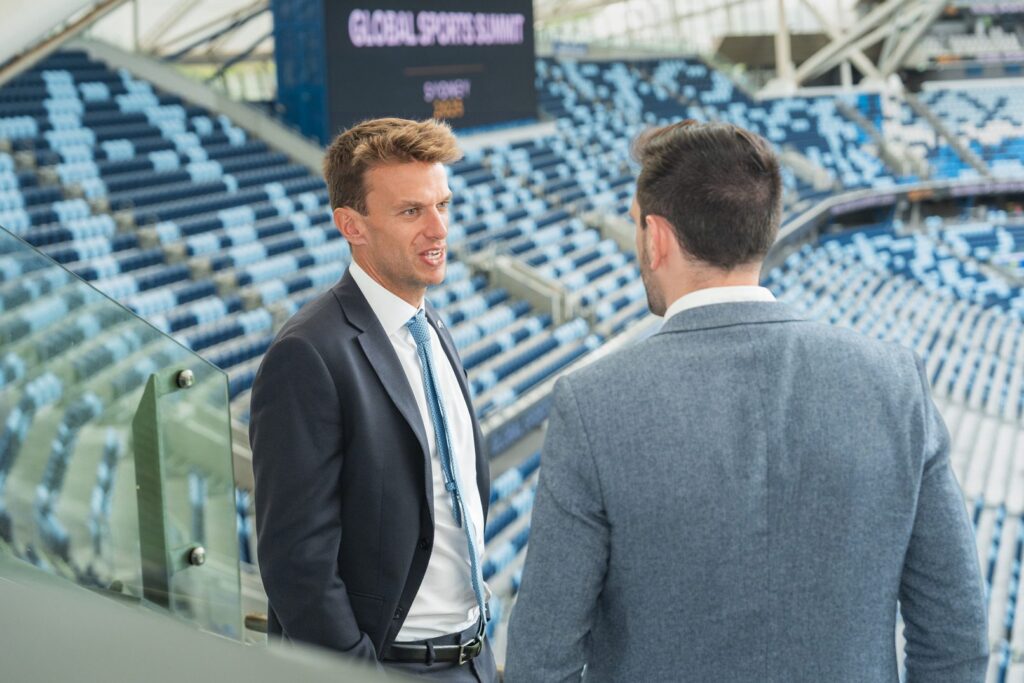
As part of the strategic collaboration, Soccerscene will deliver comprehensive coverage of the two-day convention, where the Queensland football community will convene to address the key pillars of Growth, Sustainability, and Technology.

This collaboration marks a significant milestone, with Soccerscene becoming the first private publication in the country to formally partner with a state member federation as an official media partner for a major event.

Football Queensland CEO, Robert Cavallucci, highlighted the support from Soccerscene for the convention along with the shared values of both organisations.

“It is wonderful to have the support of Soccerscene as the Queensland Football Convention returns in 2025,” he said via FQ press release.

“As a well-respected football publication, Soccerscene’s commitment to supporting the growth of football across the country aligns seamlessly with our main convention agenda of driving the progress and success of football across the state.

“We are looking forward to welcoming them as they join us at the Queensland Football Convention as our official media partner and assist us in delivering a fantastic event for our football community.”

Soccerscene CEO, Stace Ioannidis, was excited to join forces with FQ mentioning the mission of the company has always been about elevating the people, organisations and the industry.

“Soccerscene is proud to partner with the Queensland Football Convention as its official media partner. Our mission has always been to help grow the game by empowering people, supporting organisation, and strengthening the industry,” he said via FQ press release.

“Together, we are building a platform that celebrates progress and sets the foundations for the future of football.”

The Queensland Football Convention, will be held from 25–26 October 2025, bringing together clubs, coaches, and participants statewide for collaborative sessions aimed at shaping the future of football.
To find out more information and to purchase your tickets for the Queensland Football Convention, click here.

Previous ArticleNext Article

UEFA set to end FIFA boycott threat after World Cup investment plan collapse

UEFA is set to withdraw its threat to boycott FIFA competitions after receiving assurances that a controversial private investment plan will not return. The dispute originally centred on FIFA President Gianni Infantino’s proposal to bring private investors into the commercial rights of the World Cup and other FIFA tournaments.

UEFA strongly opposed the plan. European football leaders argued that major international competitions should not become investment products. FIFA later withdrew the proposal. However, UEFA continued to demand guarantees that it would not be revived.

Those assurances now appear to have eased the immediate conflict.

FIFA’s money move

The dispute was about more than football governance. It raised a major question about who controls football’s most valuable commercial assets.

Infantino’s proposal involved creating a new commercial structure that could have attracted billions of dollars from private investors. Reports put the proposed business at around $28 billion ($20 billion USD), with investors set to take a stake in the new entity. For FIFA, private capital could have created new opportunities to expand commercial revenue and fund football development. For investors, World Cup-related rights would offer exposure to one of the world’s most valuable sporting properties.

But UEFA’s opposition highlighted the risks. Selling part of the commercial upside could reduce FIFA’s control over future revenue and create pressure to prioritise financial returns.

Why it matters for football

The outcome could shape how football’s biggest competitions are financed in the future. FIFA still controls enormous global media, sponsorship and commercial assets. Any move to bring outside investors into those assets could change the balance of power across the sport.

The failed proposal also exposed tensions between FIFA and major football confederations. UEFA, CONCACAF and the AFC all criticised the original plan.

For clubs, broadcasters and sponsors, stability matters. A prolonged dispute between FIFA and UEFA could create uncertainty around competition. The FIFA Under 20 Women’s World Cup kicks off on September 5th. Not only was there debate over whether European nations would participate, but the tournament is being held in the European nation of Poland.

With the boycott officially over, the disruption to the tournament has been alleviated, but wider tensions still remain.

The conflict is not over

UEFA may now drop its boycott threat, but its discontent with Infantino’s leadership remains.

UEFA leaders continue to push for a change at the top of FIFA. European football figures have also called for greater transparency and stronger consultation with football stakeholders. So whilst the immediate business threat has eased, the bigger question remains. Who should control football’s future commercial growth and who could contest Infantino in March at the next presidential election?

Global Institute of Sport hosts Masterclass on Athlete Management and Engagement

The Global Institute of Sport (GIS) held an Industry Masterclass on Athlete Management and Engagement, featuring guest speakers Brad Lloyd and Stefani Chinn.

This is part of its broader course offering, which includes a Master’s in Sports Business and Sports Analytics through the University of Newcastle.

The Masterclass addressed four themes: the day-to-day operations of player management, the construction of authentic athlete brands, the role of agents, and the impact of data.

The Panellists

Brad Lloyd is the founder of Apogee Sports Advisory, which develops micro-credentials in sport, and previously served as General Manager of Football at Carlton Football Club and as a player agent.

Stefani Chinn is a sports marketing consultant specialising in ambassador program design and formerly served as Senior Vice President of Global Marketing and Communications at the World Surf League (WSL).

Player management: the daily operations

Lloyd outlined the complexities of player management, drawing on his experience as General Manager at Carlton, highlighting the role of “list management.”

This involves negotiating player contracts and managing the composition of the list, including age profile and positional spread, to align with the club’s broader requirements.

Player welfare also falls within this remit, with a high-performance manager tasked with ensuring athletes remain fit and available.

“It’s all about attraction and retention,” Lloyd explained.

He noted that communication with club shareholders is a constant part of the role, with “talking up and down” the organisation requiring a strong team.

“Getting people, you trust with their credentials in these roles is paramount,” Lloyd explained.

Building Authentic Brands

Chinn addressed the construction of athlete-focused marketing strategies, arguing for a shift away from organisation-centred approaches.

“What was needed to do from a fan, athlete and commercial perspective was lead with an athlete-first approach.”

For this Chinn emphasised the importance of understanding athletes beyond their on-field performance.

“Knowing the athlete first is such an important piece, there is so much to the athlete than just how they play,” she said, also cautioning against an overreliance on social media metrics: “What we say is fit over followers, followers is a metric, but not a central one.”

Role of Agents

Lloyd addressed the function of agents, noting that while contract negotiation is central, agents must first understand the player and assess whether an opportunity is a suitable fit.

“I find if you get the agent onboard quickly, they will work with you,” Lloyd said.

Chinn distinguished between agents and managers: “Practically, in sports less governed, there are less agents and more managers”,

“It’s important to get the manager onside… the management team is critical” Chinn highlighted.

She noted that within the WSL, relatively few athletes have formal management, making direct engagement with players important.

The Impact of Data

Lloyd underscored the value of organised, accessible data that allows analytics to support and verify observations made within the team and the club’s image.

Though, he did stress that data-focused staff need to communicate their analysis clearly into club strategy.

Chinn discussed the evolution of data use in marketing, noting it was once used in a limited capacity, described as “spots and dots,” to determine audience reach.

Its current application allows more targeted decisions, resulting in what she described as “incredibly informed decisions.”

Though not football-focused at its core, the Masterclass offered insights applicable across codes.

Football’s scale means the club and agent-based environment is ever-present.

As individual athlete identities grow more prominent within sport, lessons from individually driven codes, offer valuable insight for a growing market.

These findings from other codes can be adopted into football; to benefit the whole system, it would be restrictive to not take these into account.

Most Popular Topics

Editor Picks

Send this to a friend