
State Federations unite together for bushfire relief

A number of state football federations in Australia have expressed their support for those affected by bushfires across the summer.

Football Victoria, Football NSW, Football Queensland and Football South Australia have already released statements and will roll out initiatives to help contribute their donations to the cause.

Football Victoria CEO Peter Filopoulos has kickstarted the campaign by donating $10,000 to the Victorian Bushfire Appeal.

It has also been confirmed that the annual Community Shield matches and Round 1 of the NPL Victoria Men’s season (February 13th-16th 2020) will be a Bushfire Relief Appeal round.

Both Community Shield games will take place at City Vista Reserve, the new home of Caroline Springs George Cross FC.

In the men’s match, 2019 Dockerty Cup holders Hume City FC will take on 2019 NPL Victoria Champions Bentleigh Greens SC on Saturday, February 8, 2020, from 5pm.

The women’s match will see 2019 Nike F.C. Cup winners Calder United FC face NPLW Victoria Runners-Up FC Bulleen Lions on the weekend of March 15, 2020 (exact match date and time TBD).

In a statement by Football NSW CEO Stuart Hodge, the entire federation have expressed their sympathy for the people who have been caught up in the bushfires that have shocked everyone here and around the world, while thanking all the brave firefighters and emergency workers for the selfless role of protecting affected towns and communities.

Football NSW have said they are working with Football Federation Australia (FFA) and other Member Associations and Clubs about how to unite and add to the massive fundraising efforts already on display.

So far, Football NSW have confirmed they will make a donation to the Red Cross Disaster Relief and Recovery Appeal and also dedicate Round 1 of the NPL NSW competitions as a Bushfire Relief Round.

Football Queensland have committed to the bushfire appeal by working closely with Football Federation Australia (FFA), Brisbane Roar, regional zones and clubs.

CEO Robert Cavallucci has been involved in engaging the football community through fundraising initiatives and kick-started this with a donation to the Red Cross Disaster Relief and Recovery Appeal.

Not only will Round 1 of the NPL Queensland men’s season be dedicated as a Bushfire Appeal Round, but two special charity matches will also take place.

The first is a charity match between Brisbane Roar Legends vs an NPL Queensland Select Team and Celebrity VIP’s. It will be played before the Brisbane Roar v Wellington Phoenix A-League match at Suncorp Stadium on Saturday January 18, 2020.

The second of the charity matches will be The Football Foundation Cup, FQ’s curtain-raiser to the NPL Men’s season. NPL Queensland Premiers Lions FC will take on FQPL Premiers Sunshine Coast Wanderers on Saturday February 1, 2020 at Lions FC.

In a statement by Football South Australia, they have also given their support during this tough time, with more details to be released from them soon.

“Football SA is deeply saddened by the tragedies, losses and suffering that have resulted from bushfires in South Australia and around the nation.

We want to support the community at this time and will provide details in the coming days.

Our thoughts are with all people affected by the devastating events.”

In addition to these vital initiatives, FFA will dedicate the upcoming two rounds of Hyundai A-League and Westfield W-League to raise funds for those impacted by the disasters.

If you have been affected by the bushfires and need support, please reach out to Lifeline.

Support is available 24/7 on 13 11 14, or nightly via Lifeline Text.

Lifeline Text is available 6pm – midnight (AEDT) on 0477 13 11 14.

You are not alone. Bushfire Relief tool kits are also available at lifeline.org.au

Previous ArticleNext Article

Bordeaux face uncertain future after American investor withdrawal

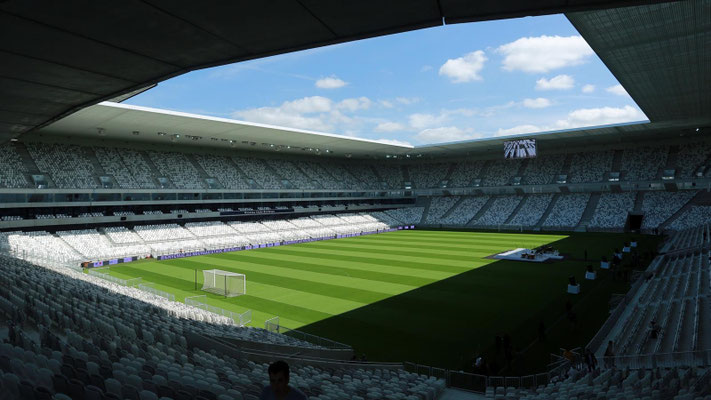
Girondins de Bordeaux face their biggest crisis yet after their exclusion from France’s national competitions was upheld and proposed investor Park Bench walked away from a takeover. The club is on the brink of liquidation after poor financial management and failed ownership takeovers. The Paris Administrative Court rejected Bordeaux’s appeal in August. The court backed the decision that prevents the club from playing in national competitions for the 2026-27 season. Bordeaux will therefore this season remain in Régional 1, the sixth tier of French football.

The ruling followed a financial dispute with French football’s financial regulator, the DNCG. Bordeaux had presented additional financial guarantees after its previous hearing. The court ruled that those commitments could not be considered as part of that procedure.

The decision has now had a major impact on the club’s ownership plans. Park Bench, the US investment group working with Sparta Capital, has withdrawn from its proposed takeover. The group said its offer depended on Bordeaux remaining in the national championships. With that condition no longer possible, Park Bench decided not to proceed.

The withdrawal leaves Bordeaux in a difficult position. The club had hoped new investment would provide financial stability and help rebuild its sporting operation. Instead, the failure of the takeover leaves the future of the six-time French champions uncertain. Bordeaux has already endured several years of financial problems. The club lost its professional status in 2024 after bankruptcy proceedings and a previous administrative relegation. It then rebuilt its senior team in the second and third tiers of French football.

The latest exclusion represents another major setback. Bordeaux now needs to find a way to keep the club operating outside the national leagues. That means securing funding, meeting its financial obligations and establishing a sustainable ownership structure. The threat of judicial liquidation now hangs over the club.

In a statement issued in late August, Bordeaux said it would explore every remaining legal option after the administrative court ruling. But with Park Bench no longer backing the proposed takeover, the club has fewer options available.

The next priority will be survival. Bordeaux must find new financial backing or another solution to protect the club from liquidation. For one of France’s most historic and successful clubs, the immediate target is no longer a return to Ligue 1. It is simply making sure there is a club left to climb back.

Australia football needs to fix its football governance before it can fix its referees

The clearest image yet of Australian football’s refereeing crisis arrived on Wednesday night as Sydney FC and Melbourne Victory met in an Australia Cup semi-final at Jubilee Stadium.

A first ever Big Blue in the competition – and towards it’s pointy end – should have been a showcase event for Australian football but instead, the referees were in the spotlight. Not because of the quality of their officiating, but because of the dire situation the game finds itself in and it’s present need to resort to international imports.


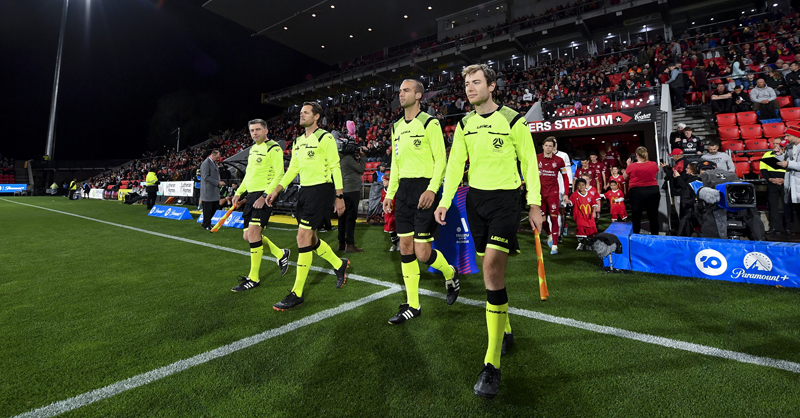
Four Singaporean referees were in charge of the fixture, which Victory won 2-0. Australian referees had refused appointments because of their ongoing dispute with Football Australia. The issue is no longer theoretical. Australian referees are not simply threatening industrial action – their absence has already changed how major matches are delivered. That is a governance failure on the part of Football Australia and the Australian Professional League.

What are the referees fighting for?

Around 90 elite Australian match officials are currently without contracts. That includes referees, assistant referees, fourth officials and video match officials working across the A-Leagues and Australia’s national competitions. The previous contracts expired last month. Some officials are also waiting for outstanding payments from A-League trial matches.

The Professional Football Referees Association (PFRA) has set three main requirements:

  • It wants the existing contracts extended until June 30, 2027, or until a new agreement or independent refereeing structure is established. 
  • It wants all outstanding match fees and expenses paid.
  • It wants a professional refereeing structure that does not place elite officials directly under the APL, which is controlled by the clubs they officiate. A new central structure is what the referees are demanding and should get.

Evgeny Vizelman, chairman of the PFRA, believes that whilst the strike action is extreme, it is necessary to protect Australian referees.

“We do not take the decision to stop officiating matches lightly,” Vizelman told Sydney Morning Herald last week.

“Our referees are being asked to perform in one of the most scrutinised roles in Australian sport without basic certainty around their employment and, in some cases, without even being paid for work already completed. That is not acceptable.”

Football Australia and the APL have been working towards a new structure, but one in which the two organisations contract separately for Australia Cup and A-League matches. The referees believe that is the wrong model.

Their concern is simple: The APL is 67.7% owned by the A-League Club Unitholders. Essentially, the clubs are appointing their own referees. That creates a perceived conflict.

If the referees sit under Football Australia as a regulator, it ensures there is no conflict of interest and that A-League clubs have no opportunity to influence the referees they may be appointed to matches.

England shows another way

England has already built the structure Australia is struggling to create. Professional Game Referees, or Pro Ref, is the central body overseeing refereeing across the Premier League, EFL, WSL Football and FA competitions. It is funded by those aforementioned competitions.

The important distinction is those competitions do not each run their own separate professional refereeing workforce. Pro Ref manages the system. It oversees appointments, development, training and performance. For the 2026-27 season, its new Professional Referee Group will service the Premier League and EFL Championship.

Officials work within the same professional structure and can be selected across competitions. That centralisation brings consistency. It also allows referees to be treated as a professional group rather than a collection of officials contracted separately by different competitions.

Whilst it is centralised, the system is not perfect. England has also recognised the need for greater independence in assessing referee performances due to Pro Ref being owned and funded by leagues and, as a result, the clubs they represent. However, as the body is also owned in part by the English FA, the governing body can oversee practices.

Pro Ref has also implemented world-leading officiating practices. Its Key Match Incidents panel includes former players and coaches, alongside representatives from the Premier League and Pro Ref, and reviews major decisions independently each week.

Pro Ref now has dedicated development groups, specialist coaching, sports science, psychology and performance analysis. 37 Pro Ref officials are currently on the FIFA International List. That does not prove centralisation alone creates better referees. But it shows what happens when refereeing receives a professional structure, long-term investment and consistent management.

Australian football needs to collaborate

This is where the Australian dispute becomes bigger than referees. Football Australia and the APL have been unable to secure agreement over who funds the referees over a long period of time, leading to this standoff; it comes at the same time as the APL’s difficulty in negotiating a new CBA with the players’ union.

Both organisations have a role in running their respective parts of the Australian game, but again an industrial dispute has the game appearing in shambles on the eve of another domestic season.

The most frustrating part of this dispute is that everyone needs the same thing. Football Australia and the APL need referees; there is no doubt the refs deeply value their employment at the elite level. With due respect to Wednesday’s flow-in Singaporean officials – themselves from a valued partner member through our shared position in the AFC – nobody wants to see the circumstances under which they were required on Wednesday continue any longer.

The PFRA dispute should therefore be treated as more than an industrial disagreement. It is an opportunity to fix the structure. Australia should learn from the principle behind Pro Ref and the English system. Centralise, professionalise and protect the officials who manage the game.

Most Popular Topics

Editor Picks

Send this to a friend