


The A-League’s Mover and Shaker: Can Steve Rosich Kickstart Football’s Next Chapter?

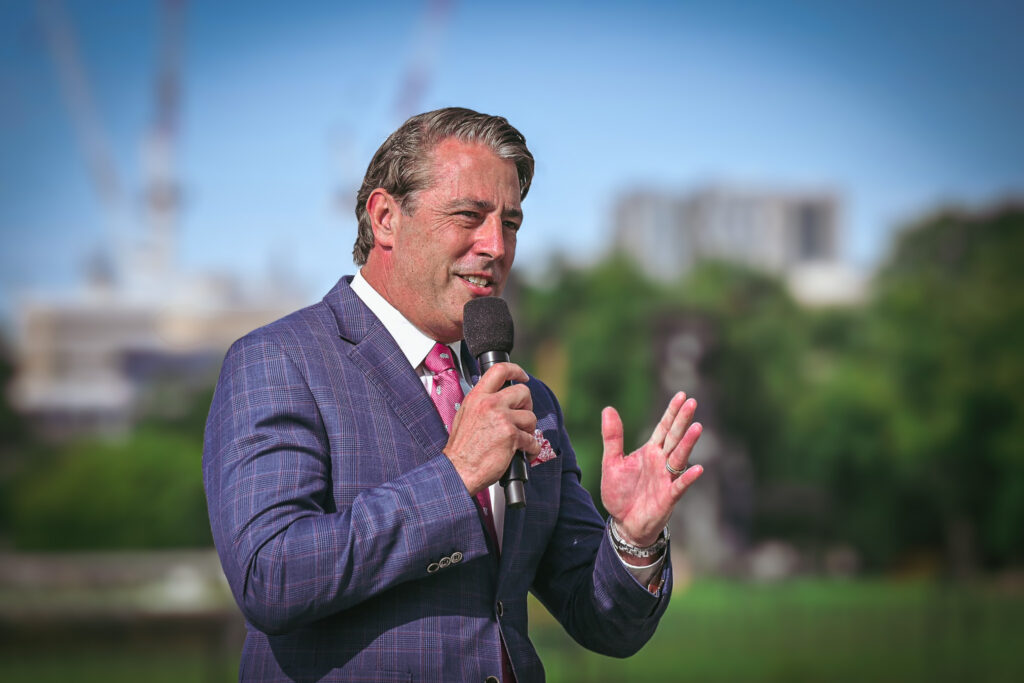
Could Steve Rosich be the mover and shaker Australian football has been waiting for? From leading the Melbourne Cup to transforming elite sporting clubs, Rosich now takes the reins of the A-Leagues with a powerhouse network of sponsors, a Chartered Accountant’s discipline, and a proven record of turning sports into commercial gold. Is this finally the game-changer football needs to kickstart its next chapter?

When the Australian Professional Leagues confirmed Steve Rosich as the new CEO of the A-Leagues, the football community couldn’t help but ask: Is this the mover and shaker who can finally kickstart the next chapter of our game? Curiosity, cautious optimism, and genuine hope are natural reactions. But after examining his résumé, leadership pedigree, and proven ability to transform sporting organisations into commercial powerhouses, one thing is clear: Steve Rosich has the potential to be exactly what Australian football needs right now.

If we are honest with ourselves, the A-Leagues are not short of passion. They are short of penetration. Football has the numbers, the multicultural breadth, the participation base and the long-term demographic wind behind it. What it has lacked is commercial conviction. This role requires a central figure who can mobilise investment, convince networks, and turn football from the ‘nearly product’ into a genuine entertainment powerhouse.

That is why Rosich’s appointment matters.

A Leader Forged in High Pressure Environments

Rosich does not arrive at the A-Leagues as an experimental project. His leadership record is built across three different elite sporting sectors, each requiring different forms of authority and strategic thinking.

At the Fremantle Dockers, he spent 11 years steering cultural shifts, long-term commercial planning, and stakeholder management in one of the most pressured environments in Australian sport, the AFL. You do not last a decade in that seat unless you can manage ego, media, board tensions, and commercial growth simultaneously.

Then came the Victoria Racing Club, custodian of the Melbourne Cup Carnival, The Race That Stops a Nation. That event is not a sporting fixture. It is a cultural institution. Rosich guided that organisation through pandemic disruption, shrinking tourism, shifting public sentiment, and operational uncertainty. Yet the Melbourne Cup retained its brand, its commercial partners and its relevance. That alone suggests a steady hand and a strategic head.

People forget he also stepped briefly into the medical technology sector with BrainEye, an unusual move but one that shows intellectual range, not a narrow sporting silo. Now he returns to football as CEO of the APL, stepping into the role officially in January 2026.

None of this is theory. It is hard-earned leadership.

The Commercial Rolodex That Matters

Elite sport grows on broadcast relevance, corporate investment, and scalable storytelling. It requires deal-making, not hope.

Rosich brings a corporate phonebook that can activate capital quickly. His longstanding relationships with brands such as Lexus (Toyota Australia), Crown, Kirin Beer, TCL and Howden are not superficial handshakes. They are built on years of commercial execution. If the A-Leagues are serious about revitalising sponsorship, broadcast engagement and experiential entertainment, then having a CEO capable of making the right calls to the right people is half the battle won.

Football does not just need ‘partners.’ It needs investors, activators and cultural amplifiers. Rosich has dealt with those brands before. He understands their expectations. He knows how to pitch ambition in commercial language, not sporting desperation.

If he can even convert a fraction of those relationships into aligned investment, the A-Leagues’ commercial landscape changes overnight.

Professional Discipline Not Just Passion

There is another aspect of Rosich’s appointment that deserves attention: his professional discipline. Rosich is a Chartered Accountant and at Soccerscene, we take that qualification seriously. We have been vocal in calling for Australian football administrators to adopt structured CPD frameworks, including professional standards and continuing education.

He is not a practising accountant, but he continues to uphold his membership by completing his CPD requirements and ongoing training. That signals accountability, standards, governance literacy and a commitment to continuous improvement.

We cannot demand a more professional football industry while accepting outdated administrative habits. Rosich represents the opposite, someone who keeps sharpening the tools rather than dining out on old achievements.

This is what modern sport requires.

The Strategic Assignment Waiting for Him

The football landscape Rosich inherits is not broken, but it is underleveraged.

The next two to three years must focus on:

• Commercial rebirth
• Fan-first narrative building
• Broadcast evolution
• International relevance
• Club alignment and industry unity

This requires a CEO who can think beyond short-term firefighting. Rosich has overseen environments where stakeholder diplomacy decides survival. He knows how to run a league as both an economic organism and a cultural asset.

And importantly, he understands that football cannot win hearts without winning the market.

A-League Football Needs a Catalyst Not a Caretaker

For too long, we have accepted incrementalism in football. Growth that is “good enough.” Strategic plans that tick boxes rather than punch holes through barriers.

The next chapter requires a catalyst, someone comfortable being a lightning rod for change.

Rosich does not need to pretend to be a lifelong football romantic. What he needs to be, and what his track record suggests he is, is a sports entertainment strategist. A deal-maker. A leader who knows how to change the expectation curve.

If he digs deep into his contact book, leverages his credibility and builds a unifying narrative around the game, then investment can return, broadcast value can lift, and the A-Leagues can finally behave like the entertainment product Australia keeps saying it wants.

A Final Assessment

Steve Rosich arrives with pressure on his shoulders. Great leaders need pressure.

He arrives with expectations. Football has waited long enough.

Most importantly, he arrives with the capacity to change the commercial gravity of the code.

If Australian football is serious about unlocking its next era, then we should back a leader who has already turned major sporting properties into economic brands.

In short, Rosich might be the right person at exactly the right time, and for a code that has spent decades asking for belief, that is a very encouraging starting point.


Previous ArticleNext Article

JH Allan Reserve in Keilor East to undergo lighting upgrades

After strong backing from the community and Football Victoria, Moonee Valley City Council confirmed the green light for upgrades to proceed later this year.

Resounding support

Ahead of the council meeting on Tuesday 24 March, Football Victoria and five Moonee Valley Council clubs created a petition backing lighting improvements at JH Allan Reserve.

What followed was an astounding 624 signatures – a demonstration of the power of united, community support. As a result, main tenants Moonee Ponds United SC and four addition clubs (including Essendon Royals FC, Avondale FC, FC Strathmore and the Moonee Valley Knights) will all benefit from the developments.

“As one of the only facilities within Moonee Valley not shared with other codes, ensuring that JH Allan Reserve meets the needs of our participants is crucial for Football Victoria,” said FV Head of Government Relations and Strategy, Lachlan Cole.

“It was fantastic to see participants and officials from those five clubs come together, support this project, and unite to speak on behalf of their needs. And it was even more heartening to see the wider football community throw their support behind the development by signing the petition.”


A long-awaited verdict

The decision comes as a huge step forward for the local football community, arriving after an extended process of consultations and surveys.

In September 2022, Moonee Valley City Council endorsed the Moonee Valley Soccer Strategy, which sought to identify potential upgrades at JH Allan Reserve.

Furthermore, during the community consulation between March and April 2023, 365 people participated in a survey regarding the developments. In the end, 65% of responses supported or strongly supported the installation of sports lighting at the ground.

It is therefore clear that, for much of the community, this was a cause worth fighting for. Over three years since the initial endorsement from Moonee Valley City Council, JH Allan Reserve is now set for a vital upgrade.

Final thoughts

More importantly, however, are the current and future athletes who will feel the benefit from these developments.

Football participation is growing and will continue to do so, in Moonee Valley, Victoria and Australia as a whole. That is why developments like this are so vital.

They are not merely nice to have, but are fundamental to supporting future footballers in the community by providing them with the facilities and environment to play.

Football SA Commits $100,000 to Referee Fuel Subsidy as Cost-of-Living pressure Mounts

Football South Australia has announced a fuel subsidy scheme for match officials across its semi-professional competitions, allocating up to $100,000 for the remainder of the 2026 season in response to rising fuel costs that the governing body says are threatening the delivery of fixtures across the state.

The subsidy, effective immediately, covers referees officiating across the RAA National Premier League, Apex Steel Women’s National Premier League, Apex Steel Women’s State League, HPG Homes State League 1 and State League 2. The subsidy spans senior, reserves and under-18 competitions across both men’s and women’s football.

Under the metro scheme, reimbursements will be tiered against the average Adelaide unleaded petrol price recorded each Friday, applying to all matches played in the following seven-day period. Officials will receive $30 per match day when the average price sits at $3.25 or above, $25 between $2.75 and $3.24, and $20 between $2.35 and $2.74. No subsidy applies below $2.34. For regional matches, referees travelling to Port Pirie, Barossa and Whyalla will see their per-kilometre reimbursement rise from 88 cents to $1.26 when petrol prices exceed $2.35.

All subsidy payments will be funded directly by Football SA, with no cost passed to competing clubs.

The Economics behind the Whistle

Fuel prices in South Australia, as across much of Australia, have been running at elevated levels against the backdrop of an ongoing imperialist war on Iran that has sent shockwaves through global oil markets. Iran’s targeting of the Strait of Hormuz, through which a significant proportion of the world’s oil supply passes, has disrupted shipping and contributed to price surges that are being felt at service stations in Adelaide as acutely as anywhere.

For match officials, who are overwhelmingly volunteers or low-paid part-time workers travelling to multiple venues across a season, those price surges are not an abstraction. They are a direct financial disincentive to take on appointments, particularly in outer metropolitan and regional areas where travel distances are significant and the cost of attending a game can approach, or exceed the payment for officiating it.

The consequences are cancelled fixtures, forfeited points, disrupted seasons and players who stop turning up to clubs that cannot guarantee them a game.

“This initiative recognises the critical role match officials play in delivering competitions,” CEO Michael Carter said in the announcement, “and aims to reduce the impact of travel costs across the 2026 season.”

A Structural Problem, a Seasonal Solution

The subsidy applies only to the 2026 season. Football SA has been careful to frame it as a response to current conditions rather than a permanent structural change. The $100,000 allocation is described as subject to fuel prices remaining at current levels, with the final amount invested likely to vary as the weekly threshold calculations play out across the season.

That framing is honest about what the scheme is and isn’t. It does not resolve the underlying question of whether referee payments in community and semi-professional football are adequate relative to the demands placed on officials. It remains a question that transcends the current fuel price environment and will outlast it. What it does is buy time and goodwill in a moment when both are in short supply.

Sport, and football in particular, depends on a volunteer and semi-volunteer workforce that is increasingly being squeezed by the same cost-of-living pressures affecting every other part of Australian life. When the price of petrol rises, the people who feel it first are not the players or the clubs, it’s the officials, the committee members and the volunteers who make the infrastructure of community sport function.

Football SA’s decision to absorb that cost rather than pass it to clubs is a recognition that the referee pipeline is fragile in ways that are not always visible until it breaks. The SAPA review into South Australian football, released earlier this month, identified referee development and retention as one of the most pressing structural challenges facing the game in the state, recommending greater investment in recruitment and suggesting affiliation fee subsidies for clubs that bring new officials into the system.

Friday’s announcement does not go that far. But in a season already defined by uncertain economic and geopolitical circumstance, the levy sends a clear enough signal about where Football SA’s priorities lie.

The fuel levy will be calculated each Friday using average Adelaide prices listed on Fuel Price Australia, with payments made to officials on the regular weekly schedule.

Most Popular Topics

Editor Picks

Send this to a friend