

Valencia CF presents revised stadium upgrade plans

Valencia CF President Anil Murthy has stated the club will not deliver a “low-cost stadium” after holding talks with Mayor Joan Ribó over reviving the long-running Nuevo Mestella project.

Valencia’s stadium, the Nuevo Mestalla, was originally under construction in 2009. However, over the last 12 years, due to financial issues and negotiation breakdowns, construction has never been completed and the situation has become known as one of the world’s most notorious stadium projects.

Murthy presented revised plans to a Council delegation led by Ribó, with the club seeking to recommence work on the stadium in order to ensure it retains the advantages granted to it under an ATE construction license given in 2012.

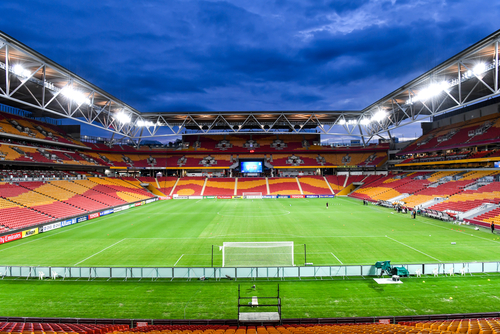
The plans presented to the council include a stadium capacity between 43,000 to 46,000, expandable to 60,000. The stadium would have a second ring dedicated almost exclusively to leisure and restaurant offerings, while the roof will be fitted with solar panels in an effort to drive sustainability.

Valencia Mayor, Joan Ribo:

“Initially it is proposed for a capacity comparable to that which the (Mestalla) stadium currently has (48,500), but expandable to 62,000 spectators. But I think this is not the fundamental element,” he said.

“The fundamental element is the novelty of this second ring that has seemed to me to be a remarkable element that is not in many football stadia. They propose a roof that is made of photovoltaic panels, which is an example at that level that I want to value.

“They have assured us that they have guarantees with the bank where they have the debt, which is now Caixabank.

“They have presented us with a calendar where in June 2022 the works of the sports centre would begin, in October 2022 the start of the works of the stadium and in August 2024 the inauguration of the new Mestalla. The calendar seems realistic and possible, but if it is not met, they will listen to us.”

In December, Valencia revealed plans to use funds from LaLiga’s strategic venture, with global investment fund CVC Capital Partners to help finance the construction of its new stadium. Valencia is reportedly set to receive approximately $189 million AUD from LaLiga as part of the LaLiga Impulso venture. $125 million of which is set to head to the stadium project.

Valencia CF President, Anil Murthy:

“The meeting has been very positive. After the two meetings with the Generalitat, today we have taken an important step by formally presenting the project we have to the important institution, which is the City Council,” he said.

“We have agreed on recommencing work as soon as possible, after presenting the project to the Generalitat and the City Council.

“Nobody talks about a low-cost stadium. It’s going to be a stadium that’s going to give a lot of people a lot of hope and it’s going to mean a lot of investment in the city. It’s going to be something different and something attractive.”
Previous ArticleNext Article

Central Coast Mariners Women secure future under Holman Barnes Group

The future of the Central Coast Mariners Women has been secured after the Holman Barnes Group (HBG) reached an agreement to become the new operator of the club’s A-League Women program. The deal ends uncertainty surrounding the team’s participation in the 2026/27 season.

The agreement between HBG, the Australian Professional Leagues (APL) and Total Soccer Growth Holdings (TSG) ensures the Mariners will remain in the Ninja A-League Women competition. It also introduces a new operating model designed to provide long-term stability.

The uncertainty emerged following TSG’s acquisition of the Central Coast Mariners’ men’s side and academy in June. The women’s program was excluded from the original takeover. TSG already owns English football side Queens Park Rangers (QPR) and MLS club Los Angeles FC. The omission placed the future of the 2025 A-League Women champions in doubt. It also prompted the APL to seek a sustainable solution ahead of the new campaign.

A new operating model

Under the new arrangement, HBG will oversee all operational aspects of the women’s team. This includes the football program, staffing and day-to-day management. TSG will retain the club licence and continue overseeing the men’s program and academy. It will also support the women’s operation through its broader football network.

The agreement represents an innovative partnership between the three organisations. It has been designed to strengthen the long-term sustainability of professional women’s football on the Central Coast. HBG’s plans extend beyond the senior team. They include a strong focus on developing participation pathways and creating greater opportunities for female footballers throughout New South Wales.

Attention turns to the new season

The transition comes at a crucial time with preparations for the 2026/27 Ninja A-League Women season underway ahead of its October 16 start. The new operators are expected to begin managing the program immediately. This remains subject to the completion of the remaining regulatory processes. The team currently has no sponsors and games are expected to be moved away from Central Coast Stadium.

The A-League had previously set a July 31 deadline for new owners to be found to secure a place in the upcoming competition. With that now achieved, HBG will be on the clock to ensure the season begins without disruption and becomes a commercial success.

For the Central Coast Mariners Women, the agreement delivers certainty after a turbulent off-season. It also allows the club to shift its attention to the 2026/27 campaign and the team’s on-field performance.

South Melbourne’s Australia Cup triumph reignites promotion and relegation debate

South Melbourne FC’s dramatic 2-1 victory over Adelaide United in the Hahn Australia Cup Round of 32 has reignited debate around promotion and relegation in Australian football, with Co-President Bill Papastergiadis stating the result is further proof that ambitious National Premier Leagues clubs deserve a pathway to the top tier.

The Victorian powerhouse produced one of the competition’s biggest upsets at Lakeside Stadium, overturning an early deficit to eliminate the Isuzu UTE A-League side and secure a place in the Round of 16.

While the result was celebrated as another example of the magic of the Australia Cup, Papastergiadis believes the victory carries a much broader message about the strength that exists outside Australia’s professional league.

Speaking following the win, Papastergiadis said South Melbourne’s performance demonstrated why the Australian football landscape should move towards a connected pyramid featuring promotion and relegation.

“The result was South Melbourne FC’s revenge 22 years in the making,” Papastergiadis said.

“It also demonstrates that clubs in the National Premier Leagues have the quality, professionalism and ambition to compete with A-League opposition when given the opportunity.”

For years, South Melbourne has been one of the strongest advocates for structural reform within Australian football, consistently calling for an open pyramid that rewards sporting merit rather than maintaining a closed league system.

Papastergiadis argued that Australia Cup fixtures continue to showcase the depth of talent throughout the domestic game, with NPL clubs regularly proving they can challenge and defeat professional opponents despite operating with significantly fewer resources.

He believes these performances should not simply be viewed as isolated “cupsets”, but as evidence that Australia’s football ecosystem is ready to embrace a promotion and relegation model that provides ambitious clubs with a genuine pathway to the top flight.

The result against Adelaide United adds another significant chapter to South Melbourne’s storied history. One of Australia’s most successful clubs, South Melbourne has long maintained aspirations of returning to the national stage, backed by a passionate supporter base, strong infrastructure and a proud footballing tradition.

For Papastergiadis, victories such as Thursday night’s reinforce the argument that clubs should earn opportunities through performances on the pitch.

“The Australia Cup continues to show what’s possible when clubs from different levels of the football pyramid compete against one another,” he said.

“Our football should be built on opportunity and merit. Clubs that perform consistently and invest in their communities should have the chance to progress to the highest level.”

South Melbourne will now turn its attention to the Round of 16, where it will look to continue its impressive cup run.

Beyond the result itself, however, the victory has once again fuelled discussion around the future of Australia’s football structure and whether the growing strength of clubs outside the A-League should accelerate the push towards a fully connected national competition.

Most Popular Topics

Editor Picks

Send this to a friend