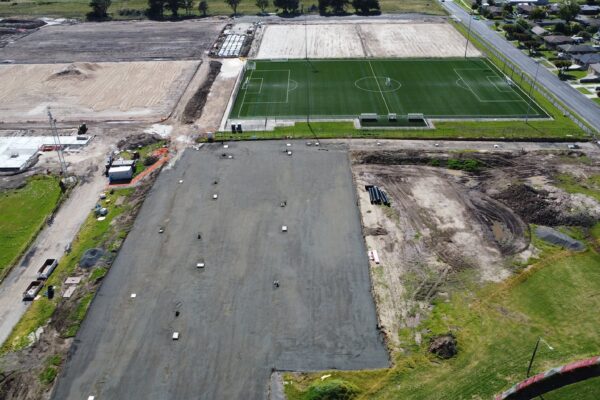


Cromer Park’s $2 million redevelopment now complete

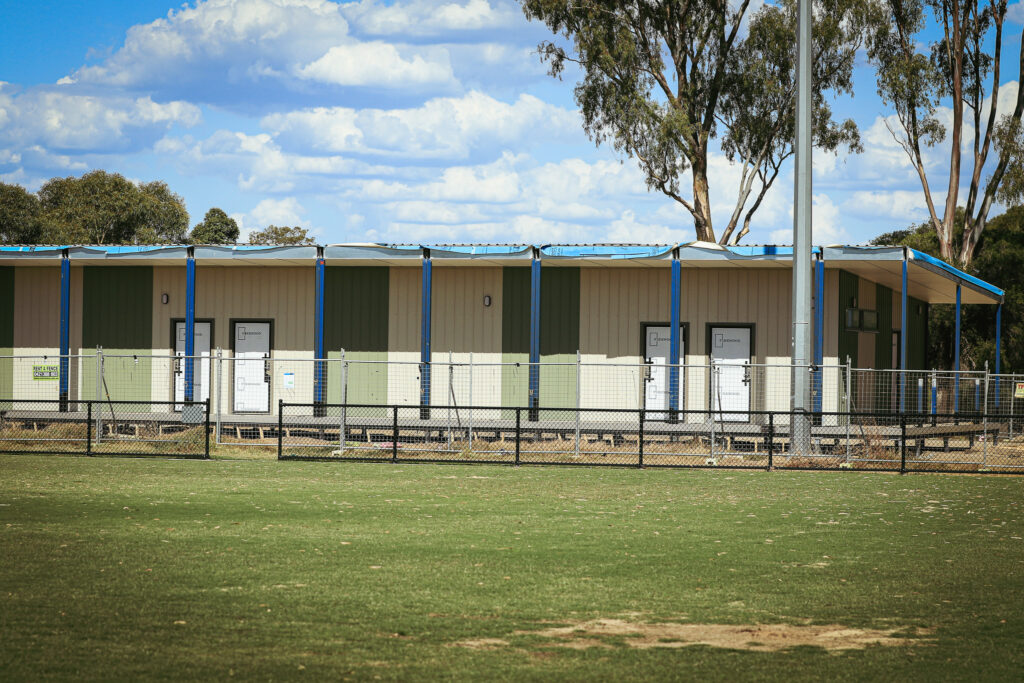
Cromer Park has seen the completion of a $2 million redevelopment for its famous precinct in the Northern Beaches suburb of Sydney.

Cromer Park has seen the completion of a $2 million redevelopment for its famous precinct in the Northern Beaches suburb of Sydney.

Funding of $500,000 was secured via the Community Development Grants Program and a further $20,000 was secured through the NSW Government’s Community Building Partnership.

In addition, the combined efforts of home tenants Manly Warringah Football Association, Manly United FC and Manly Warringah District Football Club meant that the long-awaited upgrades to Cromer Park’s facilities were ensured.

Manly Warringah Football Association CEO David Mason was delighted to have finalised the upgrades for Cromer Park.

“The redevelopment of the Manly Warringah Football Club has been on the agenda for the best part of a decade with various projects and plans considered to rejuvenate the facility,” he said.

“The latest plans started three years ago when all football bodies on the Northern Beaches came together to prioritise the project.

“Funding from the football community was put in place and when we received a $500,000 from the Australian Government through the Community Development Grants Program it gathered serious momentum. Construction on the project started in January 2021 and was completed on time and on budget in 6 months.

“We have designed and constructed a facility that makes Cromer Park the true ‘Home of Football’ on the Northern Beaches.”

Building ‘Homes of Football’ is one of five key infrastructure priorities identified by Football NSW in their Infrastructure Strategy document. Homes of Football are essential to improving access to football programs, pathways and development services across the association.

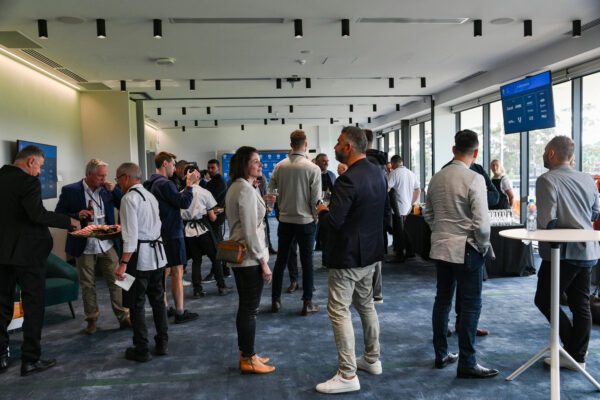
“The Manly Warringah Football Club includes a modern Social Club that will be for the use of the entire Manly Warringah football community and the general public with café, bistro and bar facilities as well as function and meeting rooms for the MWFA clubs, Manly United and registered footballers,” Mason continued.
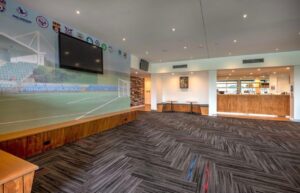
Cromer Park interior

“We have also constructed a first-class physiotherapy, injury rehabilitation and gymnasium for the Manly Warringah football community and upgraded the administration offices for the MWFA and Manly United.

“The Manly Warringah Football Club is now a first-class community facility providing a focal point and meeting place for the football community for years and generations to come.

“This project has been the culmination of many years of planning and collaboration from all members of the Northern Beaches football community that has been made possible by funding from the Australian and NSW Governments as well as money that has been raised and contributed by the football community.

“It is a wonderful example of what can be achieved when football works cohesively and collaborates with all stakeholders in a unified way to bring to life a vision and dream.”
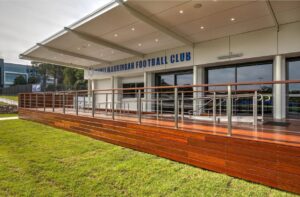
Cromer Park

Prior to the upcoming 2022 season, Cromer Park No.1 will also receive an upgrade to its synthetic surface after Northern Beaches Council were successful in the recent Greater Cities Sports Facility Fund – Round 1.
Previous ArticleNext Article

The Vision AI Game-Changer Australian Football Can’t Afford to Ignore

Ultralytics’ YOLO26 arrived quietly in January, but make no mistake: in the global arms race for vision analytics, this is the biggest leap forward the football industry has seen in years. For Australian football, which is too often left to play catch-up with European and Asian rivals, the new YOLO26 pipeline is a game-changer hiding in plain sight. Right now, not a single professional team or major federation in Australia has embedded this technology into their pathway, while clubs and analysts overseas are moving lightyears ahead.

A Model Built for the Pitch, Not Just the Cloud

So what makes YOLO26 different? The answer is simple: it’s the first state-of-the-art computer vision tool that was actually built for real-world deployment. While most analytics systems in use across the A-League and even at national team level demand heavy cloud infrastructure, technical gatekeeping and consultant support, YOLO26 strips all that away. It runs on-site, on ordinary devices, and you get instant, actionable insight.

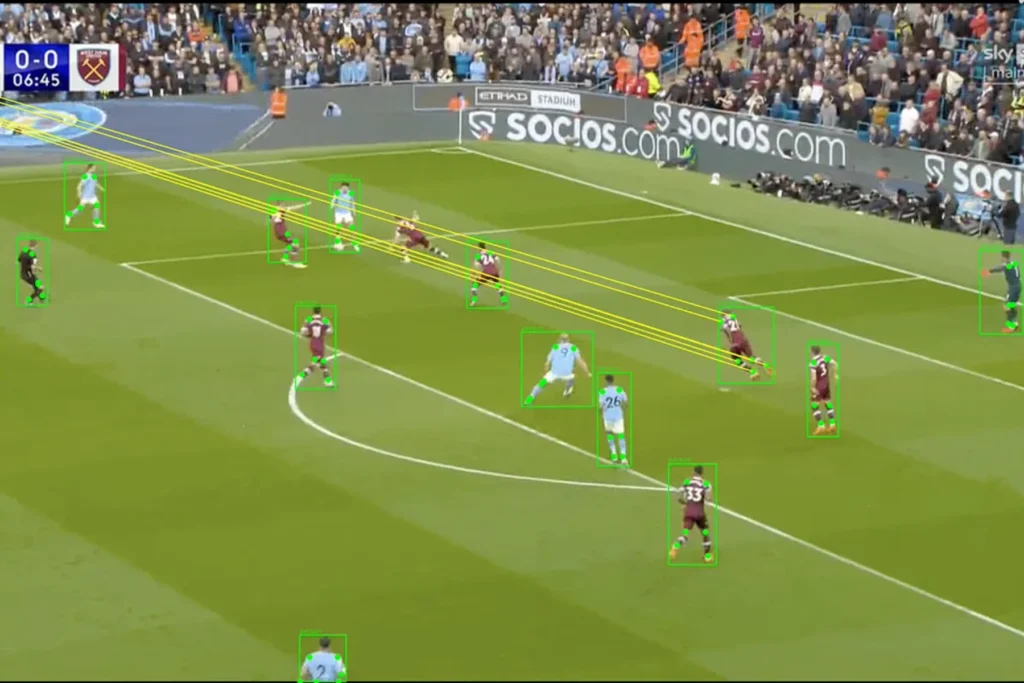
In the current Australian landscape, coaches and analysts are still scheduling long post-match review sessions and leaning on commercial cloud platforms, because live, high-performance vision AI has always meant spending big and waiting for results. YOLO26 is tuned for what actually happens on the ground: tracking and profiling every player, every run, every contested ball, and flagging tactical patterns as they unfold—not hours later in an analyst’s office.

Comprehensive, Real-Time Performance

Here’s the kicker: YOLO26 doesn’t just handle basic object detection. The model performs deep image classification, unlocks true instance segmentation (drawing a line between players in a goalmouth scramble), performs pose estimation (vital for load management and injury prevention), and even delivers oriented bounding box detection, needed for analysing drone footage or any overhead angle. All of this can happen as the match is unfolding.

Also crucial for the Australian game is YOLO26’s speed. On CPUs, it’s up to 43 percent faster than what most clubs are using today. No internal VAR setup in Australia operates in real time for grassroots or NPL levels. With YOLO26, even clubs at the lower tiers could get instant footage review and actionable stats with off-the-shelf equipment and minimal technical overhead.

Accessible, Flexible, and Ready for Local Workflows

What really sets YOLO26 apart from big-name competitors, including expensive overseas deployments and software packages used by most A-League clubs, is how accessible it is. The days of paying six-figure fees for a siloed analytics suite, locked behind legal red tape and incompatible formats, are over. YOLO26 supports export to anything. Integratable with NVIDIA GPUs, Apple devices with CoreML, Intel’s OpenVINO stack. The same model can be plugged into different workflows, from basic sideline laptops to top-end analytics labs.

A Growing List of Global Partners

Ultralytics isn’t operating in isolation. YOLO26 is at the heart of new collaborations with major global tech partners including Sony, Axelera, Intel, STMicroelectronics and deepX. These partnerships ensure YOLO26 is supported across a huge range of embedded devices, accelerators, and edge hardware. Sony is integrating YOLO26 within next-generation camera sensors. Axelera and deepX are making sure the model runs optimally on cutting-edge AI chips designed for resource-limited settings. Intel and STMicroelectronics are pushing YOLO26’s capabilities into IoT, making the tech available for everything from stadium surveillance to pitch-side scouting.

You see YOLO26 at work powering camera systems for automated highlight reels and tracking in some of Asia’s biggest leagues. In the UK and Europe, clubs are already running their own scouting and medical workloads through YOLO. Smart startups are building fan-facing AR overlays, pushing broadcast graphics to new heights. US youth academies are using YOLO models to take their junior pathways to a level that, bluntly, Australia is not matching.

Why Isn’t Australia on Board?

Despite all this, in Australia the uptake is nil. There’s a cultural hesitation where clubs and federations still see computer vision as a luxury or a post-match resource, not an urgent competitive tool. This is a luxury Australian football can’t afford. Our closest Asian neighbours and European trade partners are not only racing ahead on the field; they’re embedding next-gen tech in everything they do.

Football is a game built on moments, on the difference between knowing and hoping. If Australian clubs waited to sign overseas talent until every other market was picked clean, they’d never compete; so why do the same with analytics?

YOLO26 isn’t just another algorithm. It’s a pipeline. It fits with platforms that let clubs manage, deploy and monitor AI tools from one dashboard. It plugs into open-source Python workflows for those who want control, and it integrates with video formats Australia already uses.

The AI Shift is Now

AI barriers are now psychological and political. The technology is here; the world is moving. YOLO26 is the tool that, if embraced, would help Australia unlock actionable, real-time vision AI. The AI shift is happening now, not next decade.

The world’s best are moving. Our A-League, NPL and even NTC programs can either watch, or take the leap themselves.

Clifton Hill FC Set for New Era as Pavilion Upgrade Nears Completion

Community football in Melbourne’s inner north is set for a major boost, with Clifton Hill FC preparing to usher in a new chapter following the redevelopment of its pavilion at Quarries Park.

The upgraded facility, delivered with support from Yarra City Council, is expected to significantly enhance the matchday and training experience for players, families, and volunteers while supporting the club’s continued growth.

A long awaited upgrade for Clifton Hill FC

Club President Michael Tyrikos said the redevelopment represents a long-awaited milestone for the grassroots club.

“We’ve been waiting close to 10 years for this,” Tyrikos told SoccerScene. “I’ve been involved with the club for over two decades and improving the facilities has always been a major goal for us.”

The new pavilion replaces previously limited amenities, with the club formerly operating with just two change rooms and minimal communal space. The upgraded facility will provide modern change rooms, social areas, and improved spectator amenities.

Supporting growth in participation

Tyrikos explained the redevelopment will be particularly significant in supporting participation growth, including the club’s expanding girls’ program.

“Previously, we only had two change rooms, which made it difficult as our girls’ program continued to grow,” he said. “Now players can feel comfortable using proper facilities with access to showers and dedicated spaces, which is something we simply didn’t have before.”

Image Credit: One-Nil Media

Beyond player development, the pavilion is also expected to strengthen the club’s role as a community hub. The addition of indoor social spaces will allow families to engage more closely with the club environment, particularly during Melbourne’s winter months.

“Parents can now sit inside and watch games, and we can finally host club events, kids’ parties, and social gatherings,” Tyrikos said. “Before, we just didn’t have the capacity to bring people together like that.”

A new era at Quarries Park

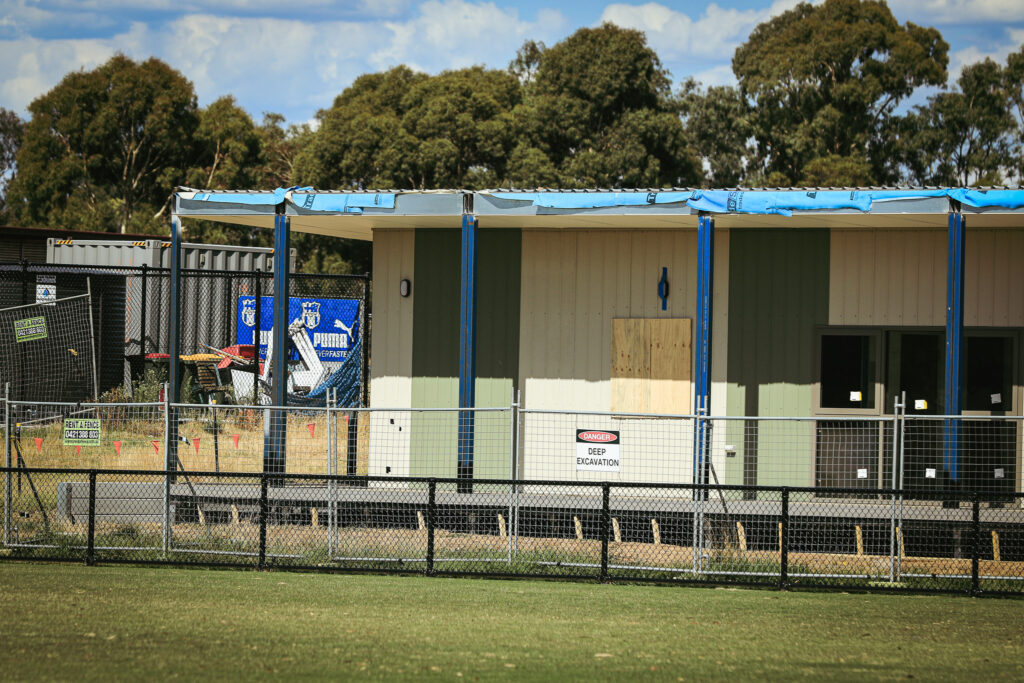
Tyrikos also acknowledged the broader infrastructure improvements delivered alongside the pavilion redevelopment, including new lighting towers and an upgraded playing surface, highlighting the importance of council support in driving the project forward.

Clifton Hill FC is hopeful the new pavilion will be operational in time for its anticipated first home fixture scheduled for mid-May, marking the beginning of a new era for the community-focused club.

Image Credit: One-Nil Media

Most Popular Topics

Editor Picks

Send this to a friend