

FC Leopold boosted by $1.57 million facility upgrade project

FC Leopold are set to reap the rewards of a $1.57 million facility upgrade project at Estuary Reserve, the club’s home ground.

Funding provided by the City of Greater Geelong Council and the Victorian Government’s World Game Facilities Fund will enable the construction of a modular pavilion, which will include female friendly changerooms, as well as spaces for amenities, storage and social activities.

The Victorian Government will contribute $250,000 to the project with the remainder funded by the local council.

Co-founder of FC Leopold, Jared Larkins, was heavily involved the process of acquiring the grants needed to fund the proposal.

“For some time, we had been lobbying through various groups such as the City of Greater Geelong Council, as well as the local and federal members – to fund this project,” he told Soccerscene.

“We got out and attended our own drawings and we created plans to really envisage what we wanted the site to be.

“We really just kept on council’s back that we needed this upgrade as our club was ever-growing and our two-room facility just wasn’t fit for purpose for any of our members.

“When the World Game Facilities Fund came along it provided an opportunity for the City of Greater Geelong to get on board. They had another project in Geelong they wanted to make happen, so I think that also helped us significantly.”

Larkins is optimistic that barring any COVID related issues, FC Leopold members will be in their new digs before the end of 2022.

“We are hoping that site works begin in either September and October,” he said.

“We should be in them by the end of year, they are modular and being built off site and then they’ll drop them on site and they should be finished off within a couple of weeks.”

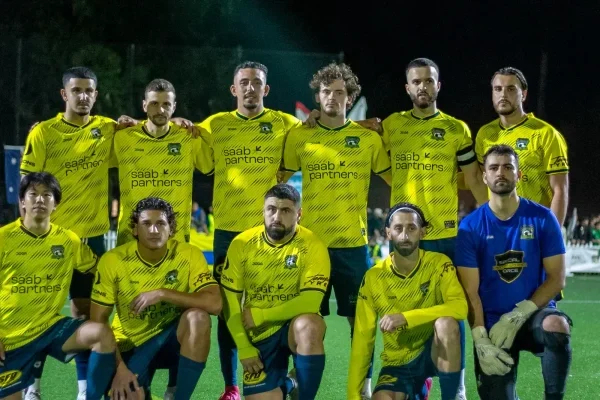
The club itself was established just five years ago in 2016, registering multiple senior men’s teams, a senior women’s side and a handful of junior teams.

Although it has a relatively short history, the club is set to be benefitted by the upgrades in a wide range of ways.

“In terms of the club, it will allow our younger members and female members a little bit more comfortability in changing and playing at the club,” Larkins said.

“The current facilities are not the friendliest or most inviting of spaces, and we did have some members who wouldn’t change at the club for that reason.

“I think it will make our club more inviting and allow us to hold functions, which is something we haven’t been able to do since our inception. That will obviously allow us to raise some more funds, as at the moment if we want to hold a function, we have to rent out another venue.

“It will also give the club a chance to generate revenue in general, through canteen revenue, various functions and things like that, and because of that hopefully the club can grow its membership base.”

FC Leopold wants to continue to engage with the community and believes the new facilities will provide the locals with an appropriate avenue to connect through sport.

“The area of Geelong and Leopold is growing quite rapidly and there’s soccer clubs fifteen minutes either side of where we are positioned, so it allows the local community a spot closer to home to be able to play and be active,” Larkins said.

The club has ambitions to grow further and expand in future years, but according to Larkins, that wouldn’t be possible if they didn’t receive these facility grants.

“I don’t think our club would have been able to grow further without it,” he said.

“Without these additional facilities, we would be capped at the number of teams we have now.

“We have already probably expanded too much for what we’ve got at the moment, in terms of things we own such as equipment (as we don’t have enough space to store it on site), so without these new facilities we wouldn’t grow.”



Previous ArticleNext Article

Adelaide United renews StudyAdelaide partnership for Asian campaign

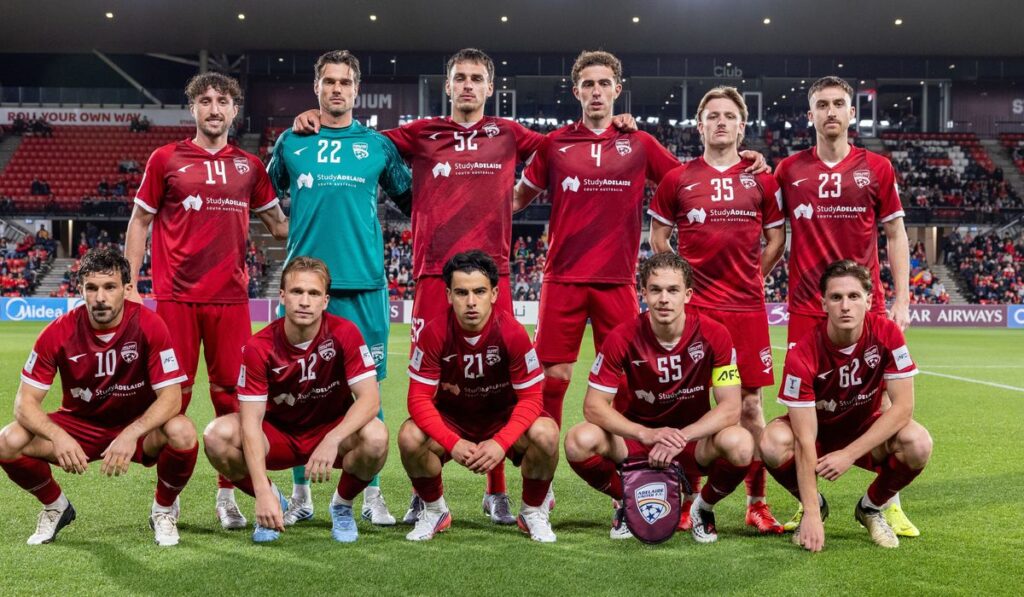
Adelaide United has brought back a familiar commercial partner for its return to continental competition, with StudyAdelaide signing on as front-of-shirt sponsor for the club’s 2026/27 AFC Champions League Two campaign.

The partnership reconnects two South Australian organisations after StudyAdelaide previously featured on Adelaide United’s shirt during their 2010 AFC Champions League campaign.

Adelaide commenced their six-match group-stage campaign on Thursday at Hindmarsh, defeating Hong Kong’s Tai Po 3-0.

For StudyAdelaide, the value of the partnership extends beyond traditional football sponsorship. The organisation, a partnership between the South Australian Government and more than 50 education institutions, is using Adelaide United’s Asian competition to promote South Australia as an international study destination.

The club’s continental schedule provides exposure in several key Asian markets, with Adelaide travelling to face BG Pathum United in Thailand and Lion City Sailors in Singapore during the group stage.

StudyAdelaide chief executive Jane Johnston said the partnership would provide a great opportunity to connect with young people across Asia.

“Having StudyAdelaide featured throughout this international competition is a unique platform to connect with young people across Asia and highlight the many reasons South Australia is their best option to study, live and build a career,” Johnston said.

The deal illustrates how football’s international competitions can provide commercial value beyond traditional brand exposure, particularly for organisations looking to promote to a specific or new region.

The Reds’ ACL Two campaign continues against BG Pathum United in Thailand on October 15.

Active Club Program offers South Australian football clubs a funding boost

South Australian football clubs can tap into another round of government support, with the Active Club Program offering grants of up to $3,000 to help clubs improve participation and strengthen their local communities. The Office for Recreation, Sport and Racing (ORSR) opened its new round of funding on the 28th of August. Clubs have until midday on Wednesday, 14 October 2026 to apply.

The grassroots benefits

The South Australian Government has allocated $1.448 million to the round. Clubs with fewer than 100 members can receive $1,500. Clubs with 100 or more members can receive $3,000. The program targets grassroots sport, including football. It helps clubs purchase equipment and resources that make participation easier and more affordable.

Football clubs can use the funding for sporting equipment, uniforms and protective gear. They can also fund playing venue maintenance equipment, professional development, medical equipment and training. The program also supports projects that improve inclusion. Clubs can use grants for positive health initiatives and hardship subsidies. These measures can help remove barriers that stop people from playing sport.

That focus creates opportunities for football clubs to support more women and girls. It can also help clubs create more welcoming environments for players of different ages and backgrounds. Water and energy efficiency also form part of the program. Clubs can fund eligible initiatives that reduce water use or improve energy efficiency. That could prove particularly valuable for football clubs managing local playing venues and facilities. The program also allows minor club infrastructure upgrades and technology that directly supports participation or club sustainability.

Who is eligible?

To qualify, a club must operate as a not-for-profit sport or active recreation organisation in South Australia. It must have at least 20 members and have operated for at least 12 months.

ORSR will also consider a club’s participation profile when assessing applications. The assessment looks at female and male junior and senior participation, alongside factors such as the club’s affiliation and when it last received Active Club Program funding.

How to apply

The funding can make a direct difference at grassroots level. In the previous round, 558 South Australian clubs shared more than $1.4 million. The government says the investment helped clubs meet essential costs while supporting participation and inclusion.

For football, that support can stretch beyond the playing field. Stronger clubs create more opportunities for players, coaches and volunteers. They also provide places where people can build connections and stay active. Applications for Round 56 will be screened in November, assessed in December, with clubs notified in January 2027.

To learn more about the South Australian Active Club Program, visit their website.

Most Popular Topics

Editor Picks

Send this to a friend