

Football can start to unite at the grassroots
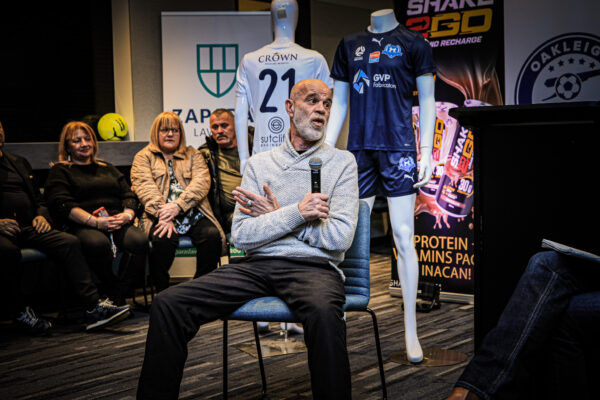
David Mason has worked in elite football with Australian national teams at multiple FIFA World Cups. He now devotes his boundless energy into community football as CEO of the Manly Warringah Football Association.
According to Mason, digital competition management and administration is an area where the game in Australia can truly unite.
“The most important thing that our game can benefit from is one system that allows everyone to register and participate in football. This information would flow into a centralised competition management system,” he said.
“A platform of this nature allows all match day tasks to be performed effectively, referees to be paid and players to know the details of their matches and leagues. The same system can provide commercialisation opportunities for football associations and clubs. If all football stakeholders can get together and somehow pull that off, that would truly unite the sport.”
In 2016, Australian company Dribl had a vision to use technology to change grassroots football. By delivering efficiencies and digital revenue opportunities with their competition management and member registration platform, this has allowed clubs to lower the cost of participation and increase member and community engagement.
Football clubs traditionally have survived through community financial support and volunteers. Dribl’s staff live the football experience. They are now using that connection in the digital space to deliver innovation with technology – benefitting players, volunteers, officials, sponsors, clubs, communities, and regions.
The driving force behind Dribl’s digital tech-based approach according to CEO and co-founder Rob Georgievski, is to give all associations and clubs the right tools.
“For us it is about delivering a complete and unified football experience to grassroots football. Why should it just be the top flight leagues and clubs providing that experience? Why can’t we bring that same experience to community football.”

Rob Georgievski has a son playing in the SAP development program in Sydney. Co-founder Chris Boulamatsis is a “B” license coach and is involved with grassroots football at Strathfield in Sydney’s inner west.
This engagement is the fundamental reason why Dribl will be successful, and backed by Ian Holmes – the CEO of the Canterbury & District Soccer Football Association.
“The people driving this at Dribl are people who play, coach, have kids playing and are supporters. These are people who are fully immersed in football, and this is such a critical element. These are football people building a football system for community football,” Holmes said.
“They continually look to make enhancements not just based on our feedback from clubs, but also from them being active participants in the game.”
Dribl has partnered up with football Federations and Associations to provide a complete competition management solution, including a member registration system. Georgievski outlines that their vision is for the football community at large to be connected through a centralised digital management hub.
“Every association that we have spoken to had struggled to run and manage their competitions. There was a significant gap between the tools and resources available to them and bringing a level of professionalism and standard at the grassroots level. We set out to build those tools and deliver those capabilities. I believe we have achieved that,” he said.
“Tasks that would have taken them weeks previously now take them a fraction of that time with our platform. It provides structure, flexibility and agility with significant time savings. We have engaged extensively with our partners, taken their needs on board and designed solutions to solve their specific football problems.”
Mason recalled the Manly Warringah Football Association moved to Dribl in the 2021 season.
“What Dribl is very good at is listening to problems and challenges, fixing them and making sure the system continually evolves and gets better. They understand what the users want and know why and what areas need to improve, because they are involved in the game and that makes a difference,” he said.
Ian Holmes believes Dribl provides the best and most efficient system for his members.
“Dribl has tweaked their system to deal with some of the elements that are unique to us. When it comes to presentation to the end users, their system is really good,” he said.
“We have implemented their competition management and member registration system, so we have everything on the one platform and this brings significant efficiencies. In the past the transfer of data from one system to another often had problems with it. We have gone from manual to fully digitised through Dribl. The transition has been very smooth.”
Dribl sees its platform as solving a core need of every football Association. The member registration system seamlessly integrates directly with the competition management platform, eliminating complexity and error for the grassroots game. The same platform allows a player, volunteer, coach, referee, official, sponsor, club, association and federation to input information to maximise collaboration and information flow.
Mason elaborated further: “The user experience for 97% of football are players wanting to register for the sport they love easily and effectively. That feeds into a competition management system that allows clubs and associations to manage players in teams and competitions. The players want draws to pop up on their phones with match details, have a great game of football with their friends and be able to see the other results in the league.”
The potential for clubs and associations to commercialise this space is also significant. It will provide an avenue to lower the cost of playing the game and improve facilities, coaching and equipment.
This can be achieved by tapping into the sizeable participant and supporter base which has traditionally been underutilised by Australian grassroots football.
“Dribl allows the clubs to use their system to better serve their sponsors. It’s a digital platform that communicates with every part of its community,” Holmes said.
This can expand to include team management & player welfare, community messaging, chat, social media sharing, sponsorship and supporter engagement.
The next generation of digital tools will also assist in the technical development of all participants. An artificial intelligence camera system using machine learning is being developed by Dribl which will serve as the cornerstone for its automated football analytics platform. This will provide highly accurate tracking and performance data, automated video analysis and provide an immersive football experience across the board.
“This system will generate data on players for the use of scouting purposes, tracking players on the pitch to assess their work rate and skills execution under match conditions. It will allow coaches to properly analyse matches. This system is really something to behold,” Holmes explained.
The aim is to give grassroots football every chance to successfully integrate into the digital sporting landscape, by making the technology affordable and accessible for everyone. Dribl plans to stay ahead of the technology curve in delivering on its goals.
Holmes has no doubt where Dribl is ultimately heading: “They will be a world leading provider of competition and player registration systems in the next few years, there is no question about that,” he said.
“2022 is our centenary season. As we enter our next century we want to be at the cutting edge of the use of technology in the game.”
Like most things in life, football works best when it’s driven by passion. Passion for the game is at the core of Dribl. Their expertise in technology and data has placed them at the forefront of a tech led transformation of the world’s biggest sport.