
Sportec Solutions the new officiating provider of Bundesliga

Sportec Solutions, the sports technology joint venture between Deltatre and DFL, has announced it has assumed the majority shareholding of Vieww – a leading provider of goal-line technology (GLT) and video assistant referee (VAR) solutions. 

As a result, it has been confirmed that Sportec Solutions has become the new officiating technology partner for the Bundesliga and Bundesliga 2. 

Sportec Solutions will utilise Vieww technology in a deal that will run for an initial five years, beginning next season (2022/23), to encompass all Bundesliga and Bundesliga 2 games including relegation play-offs and Super Cup fixtures, as well as DFB competition matches. 

Vieww is a FIFA-inspected provider of goal-line technology and video assistant referee access, supplying next-generation officiating systems for football and other major sport federations. 

It utilises advanced smart camera technology, which is continuously synchronised to a microsecond. In addition to fully automatic goal detection, all cameras provide 200 HD images per second for analysis and verification of critical goal area scenes. 

The majority acquisition will allow global sports federations to benefit from continued investment into, and development of, a cutting-edge and comprehensive video officiating system, as well as future integration between Vieww’s officiating services and camera technology, and Sportec Solutions’ advanced data capture and analysis ecosystem. 

In addition, Sportec Solutions and Vieww will tap into Deltatre’s market-leading fan engagement and technological expertise, and work in partnership to expand its products with a focus on developing innovative, engaging solutions around officiating, and future-proofing leagues’ owned data and video ecosystems. 

Andrea Marini, CEO, Deltatre: “This agreement is testament to the growth and development of Sportec Solutions and underlines the ambition we have for the company. 

“We know there is an incredible pace of development in this space, which is why we’re delighted to be working with a forward-thinking and talented team at Vieww. We believe we’re bringing together best-in-class data provision and a leading officiating system. We are looking forward to the next Bundesliga season, where we’ll see this capability in action.” 

Hendrik Weber, MD, Sportec Solutions AG: “We are delighted to integrate Vieww’s expert team and market-leading technology into the Sportec Solutions organisation. The opportunities afforded by a fully integrated data and officiating ecosystem, coupled with Deltatre’s fan engagement expertise, represent a significant and exciting evolution in our proposition for leagues and federations.” 

Florian Götte, MD, DFB Schiri GmbH: “We believe this is the beginning of an exciting partnership. We focus on providing a reliable referee assistance technology, that is based on our needs for refereeing in professional football. Besides that, we want to develop existing technologies and innovative solutions to further improve refereeing on and off the pitch. We are looking forward to our partnership with Sportec Solutions.” 

Founded in 2016 and based in Munich, Germany, Sportec Solutions is a joint venture between global sports and entertainment technology provider, Deltatre, and Deutsche Fußball Liga (DFL). Sportec Solutions offers advanced gathering, storage, analysis and distribution of detailed, live match data to clubs, licensees, partners, and clients. 

In November 2020, Deltatre acquired majority shareholding of Sportec Solutions. As part of that agreement, its offering, which is concentrated in Germany, became available to the international market. To learn more about Sportec Solutions and Vieww, please click here

About Sportec Solutions 

As a joint venture between Deltatre and DFL Group, headquartered in Munich, Sportec Solutions develops next-gen solutions in the fields of match data and sports technology. It delivers products and solutions that enable international sports properties to truly maximise the potential of their owned data ecosystems. Sportec Solutions offers the most advanced gathering, storage, analysis, distribution, and analytics of live match data to clubs, licensees, partners, and clients. It also collaborates with renowned companies and scientific institutions to enhance its product development through expanded data processing. 

About Vieww 

Vieww specialises in the development, installation and operation of camera-based systems for digital real-time image processing in the professional sports sector. This includes FIFA licensed goal line technology as well as a complex video referee assistance system (VAR) with virtual offside line (VOL). Vieww develops innovative software technology solutions with the highest standards of reliability, speed and flexibility for real-time support in sports. 

The Engelhardt Family and Elsässer & Rolfes will stay minority shareholders in Vieww. Through this construction the former player Simon Rolfes owns indirectly a minority equity in Vieww of less than 1/8. He has not, and will not, hold an operational role within the company. He has signed a contract confirming this. This matter had been externally audited by an independent company and is contractually secured as requested and approved by DFL. 

About Deltatre 

Deltatre is the global leader in fan-first video experiences. Named in Fast Company’s prestigious annual list of the ‘World’s Most Innovative Companies for 2020’, Deltatre’s market-leading product and services portfolio has helped redefine the way the world consumes sport, media and entertainment by offering specialist innovations in over-the-top streaming, websites and apps, graphics, data, officiating systems, user experience, and product design. Over its 35-year history, the company has grown to employ more than 1,000 staff who are globally distributed across its hubs in 19 key cities. 

Previous ArticleNext Article

South Melbourne’s A-League dream is still a bridge too far

The A-League has just lost a Victorian club. The death of Western United and the suspension of its license by the Australian Professional Leagues (APL) on August 10th was inevitable. The club says it wants to rebuild and eventually return to the competition. That is unlikely to happen considering the search for new owners has to begin.

But one day after the announcement from Western United, South Melbourne stepped forward. The four-time NSL winners announced their intention to begin formal discussions with the APL about joining the A-Leagues. They believe the timing is right. Their argument is understandable. Their football credentials and history are stronger than most A-League teams.

But there is a problem. South Melbourne may have the history. It may have the supporters. It may even have one of the most attractive potential derbies in Australian football. But that does not mean it will get an A-League licence.

In fact, the more realistic prediction from my perspective is that South Melbourne will once again be told no.

South Melbourne has never been better placed

There is plenty to like about South Melbourne’s position. The club is not simply relying on its history. South Melbourne returned to national competition through the inaugural Australian Championship in 2025. It did not merely participate. South Melbourne won it. The club defeated Marconi Stallions 2-0 in the final to become the competition’s first champion.

That achievement matters. The Australian Championship was created to bridge state-based football and the professional game. Whilst it is seen as a second tier, there is no promotion and relegation with the A-League. But it has also continued to perform on the national stage. In the 2026 Australia Cup, which South Melbourne qualified for, they reached the final rounds and then produced one of the biggest results of the tournament.

Adelaide United came to Lakeside Stadium. South Melbourne won 2-1. Adelaide had won the Australia Cup three times. South knocked them out in front of its own supporters. They’re now into the quarter-finals of the 2026 Australia Cup.

South Melbourne celebrating the Australian Championship Image Credits: South Melbourne FC

The club also has a much bigger story to tell than its recent results. Alongside its four NSL victories, the club also won the 1999 Oceania Club Championship and represented Oceania at the 2000 FIFA Club World Championship. The club has a dedicated supporter base and the history to deserve a place.

The club says its Oceania Professional League participation has helped make it Australia’s 13th professional football club. It has more than 150 businesses supporting it in 2026 and a long-term arrangement at Lakeside Stadium, in the heart of South Melbourne.

On the football side, it wants to continue competing in the NPL, Australian Championship and Oceania competition even if it enters the A-Leagues. It also has lofty ambitions to introduce an A-League women’s side.

On paper, it is difficult to argue that South Melbourne is not ready. The problem is that readiness and admission are two different things.

Third time’s the charm?

South Melbourne’s current push is not new. It has been here before. The club was pursuing an A-League return almost immediately after the NSL disappeared. In 2007, South announced its interest in becoming the second Victorian A-League club.

Then came the 2008-09 process. South Melbourne backed the Southern Cross bid for the second Victorian licence. The club proposed a new team based around the redevelopment of Bob Jane Stadium and involvement from the broader Victorian football community.

It lost. The Melbourne Heart bid won the race and eventually became Melbourne City. That was South Melbourne’s first major warning. Its football heritage was not enough. Its second major attempt came almost a decade later.

The 2017-18 expansion process produced the most serious South Melbourne bid yet. South made the shortlist for an expanded A-League licence. It ultimately lost to Western United. Bill Papastergiadis has since explained that he did not genuinely expect South Melbourne to win in 2018, despite believing strongly that the club belonged in the A-League. He also reflected on the barriers facing a traditional club trying to enter the existing Victorian professional football ecosystem.

That is important context for today’s bid. South Melbourne is not entering negotiations without understanding how difficult the politics and economics of the Victorian football market can be. The club has tried the direct route twice. Neither time worked.

The Western United lesson

This is where the current situation becomes complicated. In isolation, adding South Melbourne would be fantastic for the A-League. Imagine South Melbourne against Melbourne Victory. The atmosphere would be enormous.

There is a genuine football rivalry waiting to happen. South itself points to the potential for ready-made derbies and commercial interest. But the argument that Melbourne should simply have three A-League clubs because Melbourne is a huge city ignores what has just happened to Western United.

Western United was supposed to represent Melbourne’s rapidly growing west. Its original vision centred on a major project in Geelong. The club eventually moved into Ironbark Fields in Tarneit in 2024.

Yet the geographic separation never became as clear as the original concept suggested. Western United was not a Geelong club. It was not a regional Victorian club in the traditional sense. It was a western Melbourne club based and that matters.

The A-League already has Melbourne City and Melbourne Victory. Adding South Melbourne would give the competition three clubs operating within the same metropolitan football market. It is not necessarily brilliant for the business model, which has already lost a club operating on the outskirts of Melbourne.

The NSL offers an interesting historical comparison. The Falcons provide an even more striking Victorian example. They became the first and only regional Victorian club to play in the NSL, reaching the finals in 1996. The distinction is important.

A national competition can expand its footprint by adding genuinely new markets. That is different from adding another club inside an existing Melbourne metropolitan market. That was what was envisioned for Western United, and it failed quickly.

Will the APL see South Melbourne as a safe investment? Despite the fact they’re a well-established club, I’d argue the answer is no.

Promotion and relegation is the only realistic route

There is one scenario where South Melbourne could eventually force its way into the A-League, and that’s the great missing piece of Australian football. Promotion and relegation. South Melbourne would not need somebody to decide that Melbourne suddenly has room for another licence. It would simply need to earn it.

They would have done just that in 2025, winning the Australian Championship if the football pyramid was open. Football Australia originally designed the National Second Tier with the possibility of promotion and relegation being considered once the competition matured.

The format connects NPL clubs and established foundation clubs with national competition. It does not provide a sporting pathway into the A-League. South Melbourne can win the Australian Championship, NSL and Australia Cup but none of those achievements automatically produce an A-League licence.

South Melbourne in the Oceania Championship Image Credits: Oceania Championship

Opening the pyramid is far more complicated than simply announcing promotion and relegation. Australia’s football calendar is fragmented. The A-League operates primarily through the summer months. The NPL operates through the winter and early spring. For the 2026-27 season, the A-League Men runs from October to June, while the NPL begins in February and finishes in September.

That creates an enormous structural problem for a fully connected pyramid. The clubs below the A-League would need to operate at a level capable of supporting professional football. If the A-League aligned with the NPL and the lower pyramid, it would compete in a football calendar that already has to coexist with Australia’s other major winter sports. That is a difficult feat against bigger leagues such as the AFL and NRL.

Beyond that, clubs lower down would need travel budgets and to survive commercially would take real sacrifice from all parties to make that work. The A-League’s existing clubs also have something to lose. They have invested heavily in their licences and their businesses.

Historically, A-League licences were extended through to 2034, while those licence arrangements have included provisions allowing promotion and relegation to be introduced. But the existing clubs will do everything in their power to block it. Promotion and relegation removes certainty. An A-League club can finish last in the current system with no threat to their place. Under relegation, its place is no longer guaranteed.

That is a major commercial change for clubs that have invested in securing their position in the competition. It is therefore difficult to imagine the A-League opening the door. The A-League’s licensing system gives the competition enormous control over who enters, and for South Melbourne historically they’ve been left out in the cold.

South Melbourne deserves the conversation.

The frustrating part is South Melbourne has probably never had a stronger argument. It has history, supporters, infrastructure, commercial support and most importantly, ambition. Beating A-League clubs in national competition proves the capability is there.

It deserves to be in the conversation. But being in the conversation is not the same as being selected. The Western United experience should be a warning. If the A-League could not make the Western United project work, it is difficult to see why it would suddenly decide that another Melbourne club is the answer.

South Melbourne may be the better football story. It may even be the better football club. But the A-League is not simply selecting the best football story.

It is selecting a professional competition, and until Australia embraces a genuine promotion and relegation system, South Melbourne’s path back to the top flight will remain dependent on someone handing it a licence.

That is the part of the dream that looks unrealistic. South Melbourne can keep knocking and it should. They always say third time’s the charm. But unless the pyramid is opened, I expect the door to remain closed.

Bentleigh Greens launch fundraiser to support former president Meno Menelaou

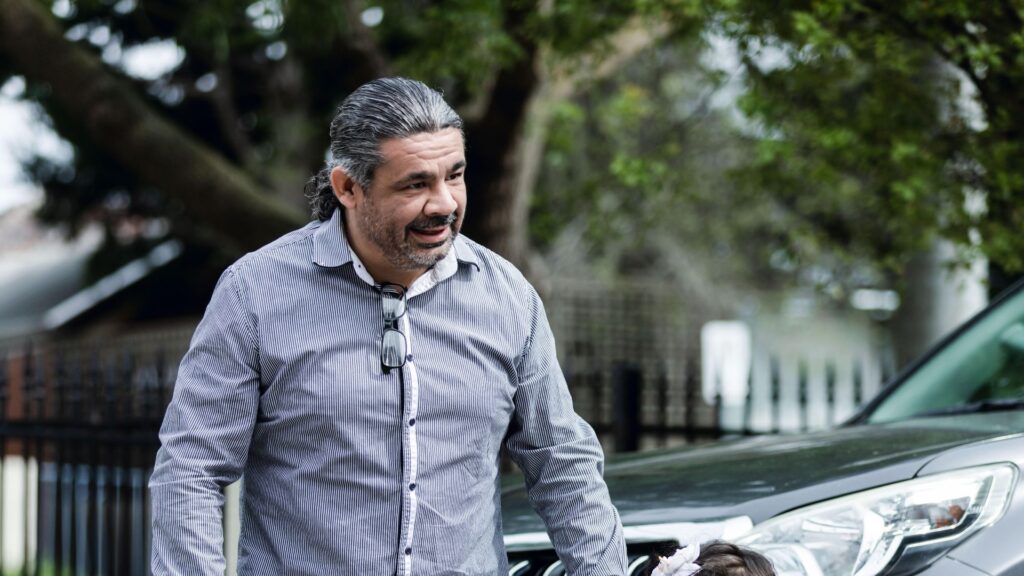
Bentleigh Greens has launched a fundraising campaign to support former president and long-serving volunteer Meno Menelaou following his recent diagnosis with Multiple Sclerosis.

A highly respected figure at the NPL club, Menelaou has spent decades serving the Bentleigh Greens community in a range of volunteer and leadership roles, helping shape the club both on and off the field.

The fundraiser will assist Menelaou and his family with the costs of undergoing Autologous Haematopoietic Stem Cell Transplantation treatment overseas.

The treatment is aimed at halting the progression of the disease but involves significant medical and travel expenses.

In announcing the initiative, Bentleigh Greens said the campaign was an opportunity for the football community to support someone who has dedicated years of service to the club.

“Meno has given so much to our club over many years. Now it’s our turn to give back,” the club said.

The club has encouraged supporters and members of the wider football community to contribute to the fundraiser or share the campaign to help raise awareness.

Bentleigh Greens said the support would help ease the financial burden on Menelaou and his family, allowing him to focus on his treatment and recovery.

Click the link to donate.

Most Popular Topics

Editor Picks

Send this to a friend