



A-Leagues and PFA partnership with GoBubble Community aims to silence social media hate

A-Leagues and Professional Footballers Australia have announced a first-of-its-kind partnership with GoBubble Community, a discrete automated solution that hides hateful comments on social media channels.

In what is believed to be a world first, the social media channels of an entire sporting league (all A-Leagues clubs and players) will be shielded from abusive, derogatory, harmful or offensive language, thanks to the roll out of GoBubble Community’s technology.

Launched late last year, GoBubble Community uses machine-learning based software that monitors social media accounts in order to identify and deal with abusive, derogatory, harmful or offensive content.

With hate speech increasing across platforms, this partnership effectively puts safeguards in place to protect the wellbeing of A-Leagues footballers, as well as the community of managers who run the official club social media channels.

A-Leagues CEO Danny Townsend:

“Football has a unique power to connect people from all walks of life, and we want the A-Leagues to be the most welcoming and safe place at every level – in our online communities and in real life.

“There is no place for online abuse in our game, and this move is part of our duty of care to players and our fans. GoBubble Community’s technology shields anyone who follows player, club and league accounts from seeing harmful abuse and keeps our communities safe.”

PFA Co-Chief Executive Kathryn Gill:

“Social media is a powerful tool that allows players to connect and positively engage with fans, promote their careers and clubs, and share their development as people on and off the pitch.

“But their presence on these platforms unfortunately exposes them to hate and abuse which has no place in our sport or society. This partnership with GoBubble Community continues our commitment to addressing the issue of online harm in partnership with the APL – and ensures we protect the wellbeing of our players and encourages positive experiences online.”

GoBubble Founder Henry Platten:

“GoBubble Community is proud to be working in partnership with A-Leagues and Professional Footballers Australia, as they make a powerful stand to eradicate online hate and discrimination through the use of our innovative software.

“The A League is taking the lead to roll out use of this technology across all clubs, and we now hope to see this approach replicated by sports governing bodies across the globe. This powerful step will protect teams, players and communities from online abuse, and promote a positive and supportive virtual experience across their social channels.”

eSafety Commissioner Julie Inman Grant:

“These days we often find the cheapest seats in the house are behind a keyboard, with players being subjected to terrible online abuse in the course of doing their jobs. Back in November last year we met with some of the biggest sporting codes in the country and pledged to work together to do more to protect players, coaches and support staff from online abuse.

“I think it’s great to see the A-Leagues and PFA making good on this pledge and taking a proactive approach to protecting their athletes. eSafety will continue pushing the major tech companies to embed Safety by Design into their platforms so that sporting organisations don’t need to take matters into their own hands to keep their players safe on these platforms.  And as always, eSafety is also here to help and all Australians can report serious online abuse to us at www.esafety.gov.au.”

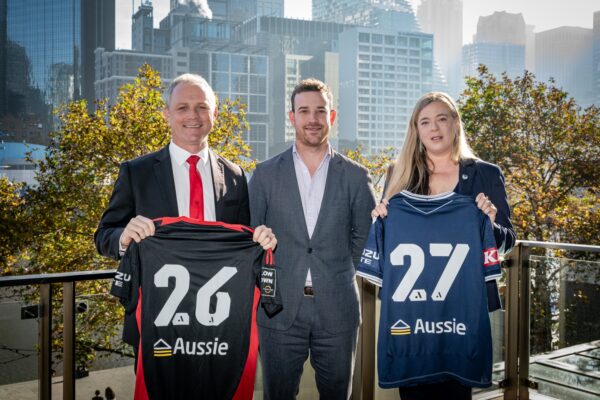
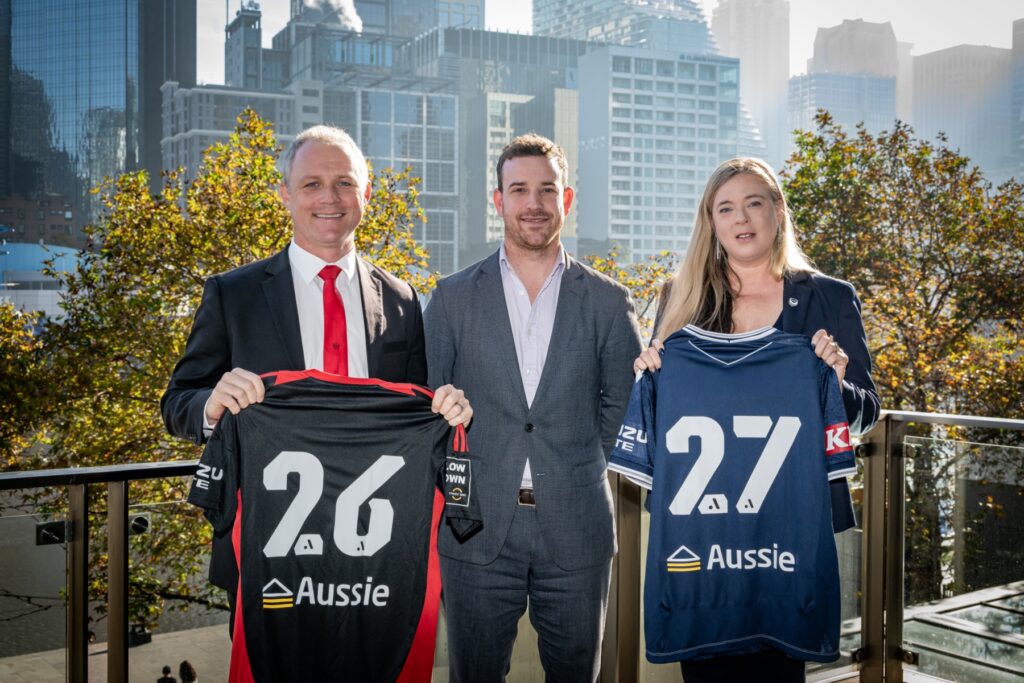
This announcement follows a successful trial between February 25 and 26 by A-Leagues and PFA, using GoBubble Community’s software on the Twitter profiles of Adelaide United, Melbourne Victory and Central Coast Mariners – the clubs participating in the Pride Cup Double Header.
Previous ArticleNext Article

Two CEOs, One Code: Why Alignment Between Football Australia and the A-Leagues Matters More Than Ever

The NSL didn’t fail because of football. It failed because of structure, money and misalignment. With new CEOs at Football Australia and the A-Leagues, the sport now stands at a crossroads it has faced before.

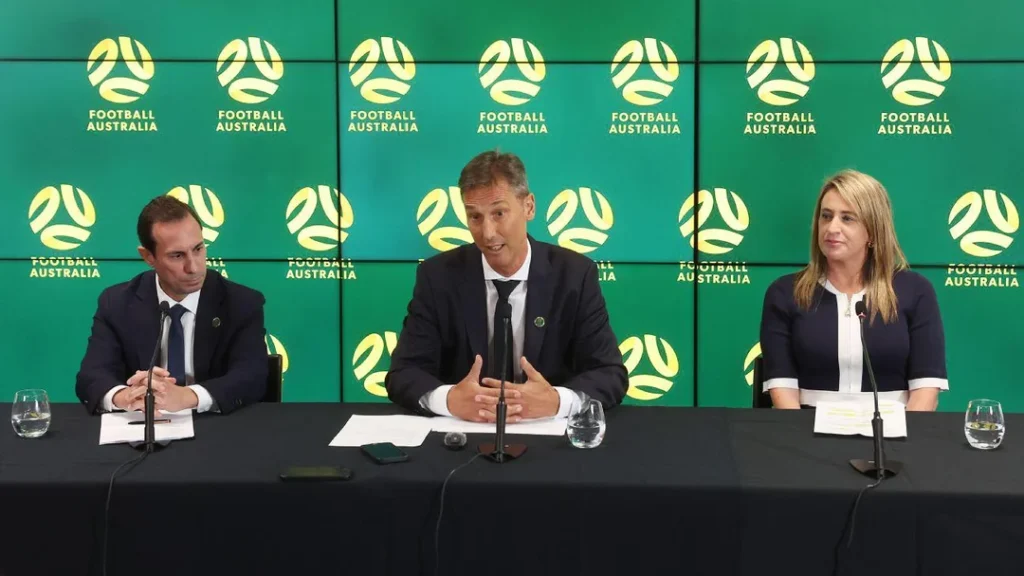
Australian football finds itself at a rare inflection point. Not because of a single appointment, but because of two. With Martin Kugeler set to commence as CEO of Football Australia on 16 February 2026, and Steve Rosich now installed as CEO of the Australian Professional Leagues, the code has, perhaps for the first time in a long while, a genuine opportunity to align governance, commercial ambition and strategic execution across its two most powerful institutions.

This moment matters. Not symbolically, but structurally.

Kugeler arrives at Football Australia with a background that is markedly different from many of his predecessors. As former CEO of Stan and a senior leader across finance and strategy roles, he brings a media-native, commercially fluent mindset into a federation grappling with modern realities. Football Australia’s most recent financials tell a complex story: record revenues of $124 million, alongside a record $8.5 million loss. Chair Anter Isaac has been clear that grassroots programs and national teams will not be impacted, and projections suggest a return to surplus by 2026. But the message beneath the numbers is unmistakable: football can no longer rely on participation alone to sustain its future.

This is where Kugeler’s skillset becomes relevant. His mandate is not simply to steady the ship, but to modernise how Football Australia thinks about audiences, digital platforms, commercial partnerships and long-term value creation. Increasing commercial revenue, improving digital engagement and strengthening the federation’s market relevance are not optional objectives; they are existential ones.

Crucially, Kugeler does not inherit Football Australia in isolation. His tenure begins alongside Steve Rosich’s leadership of the A-Leagues, and that duality could become Australian football’s greatest advantage, if handled correctly.

Rosich, as previously outlined in my last CEO opinion, is not a caretaker. He is a commercial operator forged in high-pressure environments: the AFL, the Melbourne Cup Carnival and elite corporate sport. He understands sponsorship activation, broadcast value, governance discipline and the language of major brands. Where Kugeler brings media and platform intelligence, Rosich brings commercial deal-making and entertainment-led strategy.Together, they represent something Australian football has often lacked: complementary leadership at the federation and league level.


View this post on Instagram


A post shared by Soccerscene (@soccerscene.au)

For too long, the relationship between governing bodies and professional leagues has oscillated between tension and tolerance.

The recent Football Australia AGM made clear that, at least publicly, the relationship with the APL is currently characterised by “complete cooperation and collaboration.”

That sentiment must now be operationalised, not merely stated.

The $4.1 million expected credit loss linked largely to monies owed by the APL is a reminder that financial alignment, transparency and shared accountability are not abstract governance ideals. They are practical necessities. Disagreements over historical balances cannot be allowed to morph into structural dysfunction. Kugeler and Rosich must treat alignment not as diplomacy, but as strategy.

The real test of that alignment may arrive sooner than expected in the form of the Australian Championship.

The inception of a national second-tier competition is, in principle, a positive and necessary evolution for the game. But early signs should concern anyone paying attention. Clubs have already borne the brunt of operational and travel costs. Broadcast timings have been questionable, with examples such as Heidelberg United playing 1pm Sunday matches that clash directly with family and community priorities. There has been no major commercial sponsor announced, no broadcast-led narrative strategy, and no licensed merchandise program attached to the competition.

This is not sustainable.

Australian football has lived this movie before. The National Soccer League did not fail because of a lack of passion or history. It failed because of structure, economics and misaligned responsibility. The Crawford Report in 2003 was unequivocal in its findings: when Soccer Australia directly controlled the NSL’s operations, funding and commercial arrangements, inherent conflicts emerged. The governing body lacked the specialist commercial expertise to run a financially viable league, while the league itself became a financial burden that distracted from core responsibilities such as governance, development and national teams.

The solution then was clear: a licensed, semi-independent league model, aligned but not controlled. The A-Leagues were born from that logic.

The Australian Championship must not drift into the same structural grey zone that doomed the NSL. Kugeler will need to assess, early and decisively, where this competition sits within the ecosystem. Who carries the commercial risk? Who controls broadcast strategy? How are clubs protected from cost blowouts? And critically, where does the revenue model come from?

This is where alignment with Rosich becomes essential. Football Australia should not be attempting to commercialise a national competition in isolation, just as the APL should not be expected to absorb costs without strategic clarity. Joint sponsorship frameworks, coordinated broadcast planning and shared commercial storytelling are not nice-to-haves. They are safeguards against repeating history.

More broadly, the opportunity for knowledge-sharing between Kugeler and Rosich extends well beyond one competition. Both bring deep corporate networks. Both understand boardrooms, not just dressing rooms. Both speak the language of partners who expect return on investment, not goodwill.

If leveraged properly, this dual leadership can reshape how football presents itself to government, broadcasters, sponsors and global stakeholders ahead of the 2026 World Cup cycle. It can also restore confidence internally, among clubs, administrators and fans who have grown weary of fragmented strategy and reactive decision-making.

The warning is simple: alignment must be intentional. History shows that Australian football suffers most when roles blur, responsibilities overlap and commercial logic is secondary to sentiment. The promise, however, is equally clear. With Kugeler focusing Football Australia on governance, national teams and commercial modernisation, and Rosich driving the A-Leagues as a serious entertainment product, the code finally has the chance to operate as a coordinated system rather than competing silos.

Two CEOs. Two institutions. One code.

If they learn from the past, share expertise openly and resist the temptation to repeat structural mistakes, this period could mark not just a reset, but a genuine maturation of Australian football.

The opportunity is there. The question now is whether the game is ready to take it.

Zaparas Lawyers rejoins the Melbourne Victory family

The club announced on Wednesday last week that it would be partnering once again with Zaparas Lawyers, reestablishing connections between two entities with strong ties to the Melbourne community.

Reuniting old partners

The connection between Melbourne Victory and Zaparas Lawyers, although recently announced, is far from new. They previously enjoyed a partnership spanning three seasons between 2017 and 2020, a period which saw the club finish as runners-up in the A-League Men’s Championship in 2017 and as champions in 2018.

Melbourne Victory Managing Director, Caroline Carnegie, revealed her excitement ahead of another season partnered with the Victoria-based law firm.

“We are excited to have reignited our partnership with Zaparas Lawyers, who have provided vital legal support to families across Victoria and been long-time supporters of football at all levels,” Carnegie said via press release.

“As the newest partners of the Victory Academy, we are grateful for the support Zaparas Lawyers will help us continue to provide for the next generation of talent coming through the Club and we look forward to continuing our relationship into the future.”

For Melbourne Victory, partnering with a dedicated and community-focussed team in Zaparas Lawyers gives plenty of reason to be optimistic. Zaparas has long-been committed to supporting Victorian clubs both on and off the field, proving to be a valuable source of support for youth development and long-term community growth.

A history of support

News of a reforged alliance between Zaparas Lawyers and Melbourne Victory comes as no surprise when considering the law firm’s commitment to supporting the football landscape in Victoria.

In December 2025, NPL VIC outfit, The Oakleigh Cannons, announced Zaparas Lawyers as their official grandstand sponsor of Jack Edwards Reserve. With connections to two clubs in the Victoria community, it is clear that Zaparas Lawyers remains as committed as ever to giving back to the community.

The mission going forward will be to continue making a positive, meaningful impact on the fans, players and future talents associated with football in Victoria.


About Zaparas Lawyers

Founded in 1981 as a family business, the firm has grown into a larger organisation of over 200 members. Their team of  dedicated professionals specialises in personal injury and compensation law, as well as addressing WorkCover, TAC (road accident), superannuation, public liability, occupational diseases and hearing loss.

For over 40 years, Zaparas Lawyers has developed into a law firm renowned for balancing compassion, expertise and a desire to truly help their clients get their lives back on track.


Most Popular Topics

Editor Picks

Send this to a friend