
Football Coaches Australia addresses Dwight Yorke appointment

Football Coaches Australia (FCA) has today congratulated Australian Professional Leagues (APL) on securing FC Barcelona to play an exhibition match against the A-League All Stars team in Sydney next month.

FCA’s mantra is to promote and strengthen the reputation of football in Australia and the reputation of Australian football on the world stage.

FCA acknowledges the appointment of Dwight Yorke as the All Stars head coach in this exhibition game, however strongly believes that the All Star team should be led by an Australian A-League or national team coach.

This will be Dwight’s first official head coaching appointment at any level, and FCA wishes him all the best with his future football management aspirations. His football pedigree and his outstanding contribution as a player with Sydney FC, at the inception of the A-League, are recognised by all.

FCA president Phil Moss, who was appointed assistant coach of the last A-League All Stars team for the 2014 match against Italian giants Juventus, said:

“Whilst FCA supports the inclusion of Dwight Yorke in the coaching staff as he launches his managerial career, the missed opportunity for an Australian coach to gain invaluable experience and exposure internationally as the Head Coach is disappointing,” Moss said.

“We understand the profile and interest having Dwight Yorke involved and what it will add to this game, and also understand the logistical issues of not knowing who the Isuzu Ute A-League final four coaches will be.

“But we are about providing opportunities for Australian coaches to grow, and show the world what we are capable of and this is a missed chance to do that.

“I was involved as the assistant in 2014 and know first-hand what a huge development opportunity that was for me and we feel there are numerous coaches with the right capabilities and experience to lead the All-Star team in the game against Barca.

“Whilst we anticipate the appointment of Australian coaches to assist Dwight, we can’t ignore the fact this would have been an ideal opportunity to promote our own Australian A-League head coaches to the football world.”

Australian football coaches deserve to be further acknowledged for their efforts in guiding their respective teams throughout the past two seasons, particularly in extremely challenging COVID circumstances. An All Stars head coach appointment would have been a fitting reward.

Previous All Stars appointments have been Ange Postecoglou (2013 v Manchester United) and Spaniard Josep Gombau (2014 v Juventus). These appointments were chosen by fans who voted.

FCA believes that A-Leagues Men and Women competitions should not only be a pathway to the global football world for players, but also our elite coaches, and we should use every opportunity to support them in their career development.

FCA also encourages the APL to consider the unique experience the All Star game would provide an Australian woman coach in one of the assistant coach roles.

Previous ArticleNext Article

Melbourne Victory partners with The Pass to expand fan experience

Melbourne Victory has added The Pass to its commercial portfolio, with the partnership designed to give supporters more ways to follow the club away from matchday.

The Pass becomes an ‘Associate Partner’ of Victory, while Hickens Hotel has been named the club’s ‘Official Away Game Venue Partner’. The arrangement will see the Russell Street venue host Victory watch parties and provide a dedicated gathering point for supporters during away fixtures.

The partnership also gives Victory supporters access to The Pass’ broader network of more than 200 venues around Australia, extending the relationship beyond a single location.

For Melbourne Victory, the deal forms part of a wider approach to creating commercial partnerships around the supporter experience rather than limiting sponsorship to traditional branding opportunities.

Hickens Hotel will host Victory fans for selected away matches, while The Pass will provide members with access to offers and experiences through its venue network.

The agreement also connects with Victory’s broader business community, with The Pass joining the club’s commercial network and creating potential opportunities for corporate engagement alongside its consumer-facing activity.

The partnership comes ahead of the 2026/27 A-League Men and Ninja A-League Women seasons, with Victory continuing to develop its commercial offering around both its membership base and matchday audience.

For The Pass, football provides a way to bring its network of hospitality venues into the supporter experience, giving fans a physical destination to watch matches when Victory is playing on the road.

The agreement reflects a broader trend across professional football, with clubs increasingly looking to partnerships that can provide tangible benefits to supporters while creating additional opportunities for commercial partners.

Brazil is coming. But what is the real price of bringing football’s giants to Australia?

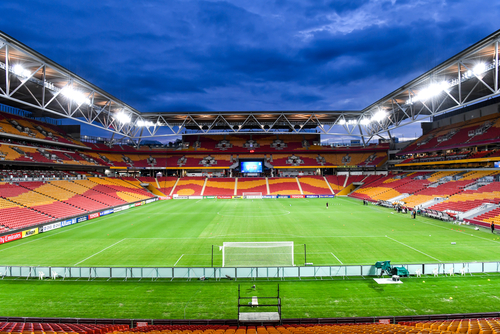
There is something undeniably exciting about Brazil coming to Australia. The five-time World Cup winners will face the Socceroos twice in Queensland from Friday, with Townsville and Brisbane set to host the blockbuster fixtures.

For Australian football, these are the kind of games that should be anticipated, celebrated and capture the public’s attention. But they also raise questions: how much should Australian football pay to bring the world’s biggest nations here, and when does the bill become too big? 

The cost of bringing the big names

Australia has always paid up to bring big names down under. Last week’s NFL game in Melbourne, at a cost of between $10 and 15 million dollars to the Victorian Government, is just the latest example.

It could cost the same amount to bring Brazil to Queensland. A report in The Sydney Morning Herald last year revealed Brazil was reportedly seeking around $7.5 million per match to play in Australia. The fee is in line with other major international events; Western Australia reportedly faced a bill of around $12 million in taxpayer funding for the recent Perth Italian Football Festival.

I’m worried Football Australia won’t get return on investment to make this particular event worthwhile. The enormous fee to bring Brazil to Australia can’t immediately be justified as an investment in our footballing future. Instead, Football Queensland and the state government could have put these funds into grassroots facilities. Part of Football Queensland’s scrapped state headquarters investment plan was to spend $8.5 million to refurbish fields, lights, drains and irrigation at Mappas and Meakin parks. Instead of these plans to invest in the state’s youth players and academies, money has been spent on two international friendlies.

So ahead of the fixtures, the question remains: will these games inspire the future generation, and will participation grow? The NFL match was impossible to ignore: a sold-out MCG and a live audience of 2.1 million on free-to-air, not even including those watching on ESPN and Netflix. Football Australia is not simply buying 90 minutes of football; it is buying the attention that comes with Brazil. So let’s see if they can maximize returns. 

Ticketing Tells a Story

Ticket sales provide insight into the interest in the fixture. Brisbane has sold much quicker than Townsville, but neither have sold out as yet. The fact these games didn’t immediately sell out may be considered surprising as there is a genuine appetite in Australia for elite international football at the moment, evidenced by SBS’ World Cup viewership numbers of 17.1 million.

Brazil is bringing some of its brightest stars: Vinicius Junior, Raphinha, Bruno Guimaraes, Marquinhos and Endrick are among the headline names in their squad. The star power is there. So why haven’t these matches sold out? There’s a chance it comes down to the competition and the visibility of the event.

The viewing problem

The timing of this fixture could raise eyebrows amongst fans. As much as Australia and Brazil will draw huge crowds, both games fall on either side of the AFL Grand Final. The 2024 AFL Grand Final, which involved Queensland’s Brisbane Lions, drew over 4 million viewers on free-to-air. Brisbane, who have won the last two premierships, will feature once again on Grand Final day. Therefore, fans who could’ve attended may instead be making the trip to Melbourne.

Then comes the strangest part: one of the fixtures Australia will play will not even be available on free-to-air television. The Townsville match will be shown free on Network 10 and 10 Streaming, as well as Paramount+. The Brisbane match, however, will be available exclusively on Paramount+. That creates a disconnect. If governments and football administrators are spending millions to bring a global sporting brand to Australia, why should a large section of the Australian public need a subscription to watch the second match?

The Brisbane game is behind a paywall, limiting the national reach of the event. Reach is surely part of the justification for spending big on Brazil, it’s not just that 50,000 people get to sit inside Suncorp Stadium. It is that millions of Australians get exposed to the spectacle and if that audience is restricted, the value of this fixture is limited.

A solution could be to spend the money on advertising the match to the public to try to generate interest across streaming and free-to-air. With less than a week until the first game I don’t believe the advertising has done enough to generate enough interest to justify a $15 million price tag for the two game series. 

The Brazil friendlies will be spectacular. They should attract big crowds, create memories and give the Socceroos an excellent test against one of football’s most recognisable nations. But for the appropriate return, attention must be measured. Does this fixture carry on the Socceroos hype and keep the eyeballs of the general public on our sport? I’m not convinced. However, if these matches bring new fans to football, strengthen the national team and create lasting investment in the sport, the enormous price tag could still be justified. But if they simply produce two nights of football before the attention disappears, then Australian football has paid a premium for a very expensive show.

Most Popular Topics

Editor Picks

Send this to a friend