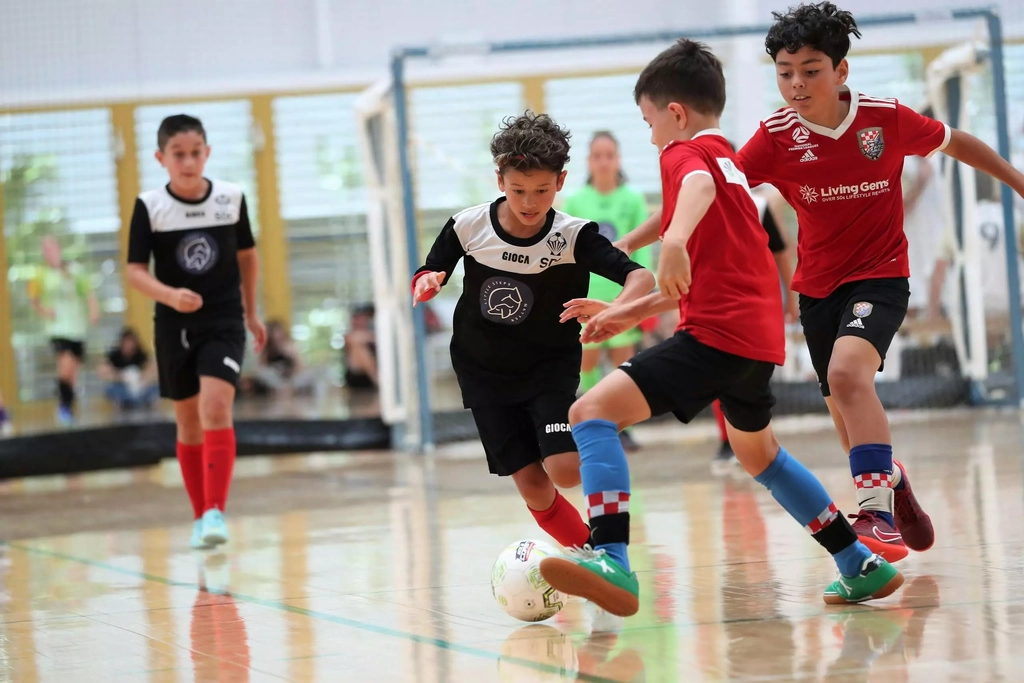
Image Credits: Experience Gold Coast
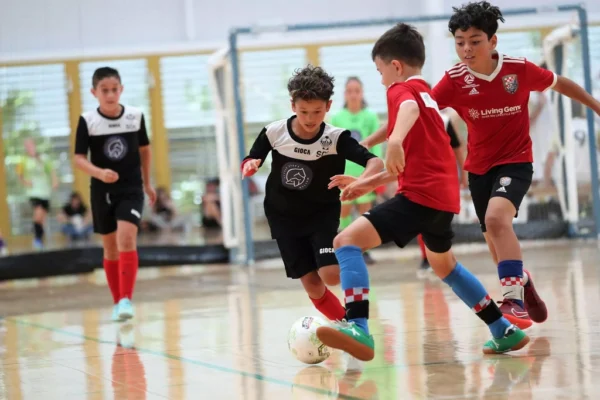
The 2027 Gold Coast International is set to be the biggest year of growth in the tournament’s history. The tournament has become one of Australia’s premier futsal events. Attracting the best teams from not just Australia but around the world. Andrew Parkes is the founder and managing director of the Gold Coast City Futsal Association and an advisory board member at Football Queensland. He says the tournament, and its international reputation, is only strengthening.
“Registrations are actually a step up from what they were last year,” Parkes said.
“We’ve got several teams from New Zealand. At the moment, we’ve got some Pacific Island teams that have expressed interest in coming. We got interest from Japan, and from England as well.
“We’ve got over 140 teams so far, and that’s not including anything from the local areas.”
Over 200 teams attended the 2026 edition, and the Gold Coast International is well set to break that record next year. The figures show the tournament is becoming more than a local competition. It is building a strong national and international presence.
Football Queensland and Football Australia unite behind growth
Parkes believes collaboration has played a major role in the development of futsal in Queensland. The tournament is sanctioned by both Football Queensland and Football Australia. He praised Football Queensland for its work across the sport. He said the organisation has helped create a stronger and more professional futsal system. This relationship between state and national bodies and the event has allowed the Gold Coast to play host to the national competition as well. This ensures shared resources including referees and courts.
“Football Queensland have been a major driving force and a godsend in relation to the development of futsal,” Parkes said.
“We’ve got the nationals the week before the Gold Coast International now. We’re working in harmony and synergy and supporting each other.
“I think the proofs in the pudding, not just with the Gold Coast International, but with the exposure and obviously the diversity of teams that attend. But then the further development in our local leagues, and that’s resulted in.”
E-sports adds another pathway for players and clubs
E-sports has become another major part of the Gold Coast International. Parkes said he had explored the idea for several years and that the tournament allows the community to grow beyond just the physical players on the court. The use of e-sports also allows friends and families to have an interactive experience with simulators and games whilst at the Gold Coast International.
“We launched e-sports about 2 years ago, just with a bit of a light feel. We’ve incorporated the competition into the tournament fees, which is excellent. So it doesn’t cost anybody anymore to be part of it,” Parkes said.
“It actually allows the clubs and academies to extend on their current offerings as it is at the moment and allows gaming players to be part of the club, to be part of the atmosphere and to join and that unity and be part of that sporting community.”
“We had three times the amount of teams that we had from the first year of e-sports. We’re looking to probably even double that again this year, which is really exciting as well.”
New pathways shape the tournament’s future
Parkes wants the Gold Coast International to keep expanding. He is now looking at ways to create pathways beyond the tournament itself. He said the use of its international experiences that can be earned through the tournament is not only about investing in players. But ensuring coaches have a more time-efficient avenue to be involved with futsal. It also gives more coaches the chance to work with players at an international tournament.
“We’ve now created the Gold Coast International All Stars, which is now embraced by many of the coaches and the players,” Parkes said.
“That also provides coaches who don’t have the time or the ability or whatever for the state teams, and the commitment that they need to put in the state teams throughout the year.”
“It allows us to have a lot more outreach to far more coaches that have a lot of passion and enthusiasm, and be part of the Futsal community. They want to build on the players’ abilities but may not have that year-long or eight-month-long exposure that is required by the state Futsal team coaching staff.”
For Parkes, the future is about widening access while continuing to raise standards. The tournament is growing its international reach, strengthening partnerships and creating new opportunities for both physical and e-sports players. The Gold Coast International is no longer just a tournament. It is becoming a broader platform for the development of futsal and its wider community.
For more information on the Gold Coast International and to inquire about competing in the 2027 edition, visit their website.